Is functional neurological disorder a mental illness? It’s one of the first questions that comes up after diagnosis — and the honest answer is: it’s not as simple as yes or no.
The question matters because it carries weight. For many people, “mental illness” still sounds like “it’s all in your head,” “it’s psychological,” “it’s controllable.” And when the wrong label sticks, it shapes how your family treats you, how doctors approach the case, and, in the end, how you see yourself.
So let’s tread carefully. Functional Neurological Disorder (FND), also called conversion disorder, lives on a border — and understanding that border changes everything, including treatment.

Is FND neurological, psychiatric, or both?
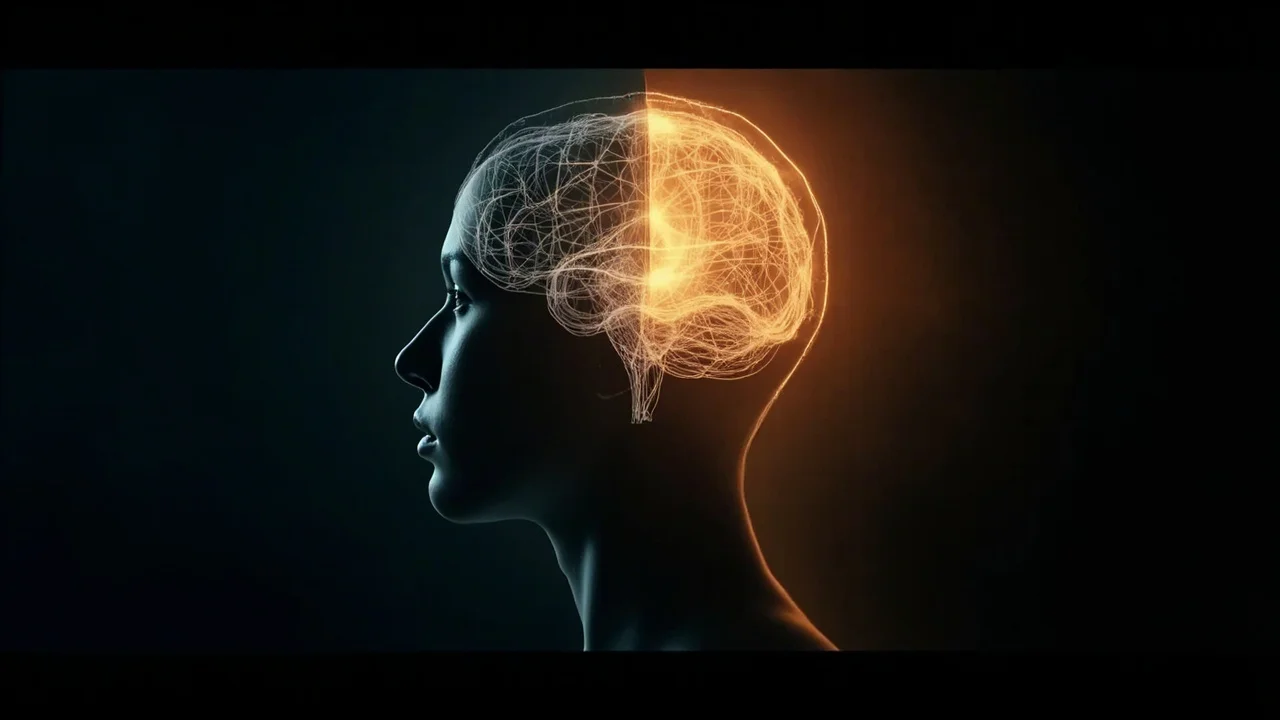
The short answer: at its core, FND is a neurological condition — with a strong link to the psychological side. It’s not “one or the other.” It’s both sides of the same door.
Why it’s neurological
The FND symptom happens in how the brain functions. There’s a real problem in the way the brain sends, receives, and processes the signals that command the body. That’s why the diagnosis is made by neurologists, and the symptoms — weakness, tremor, seizures, sensory changes — are neurological symptoms.
There’s no visible lesion, but there is dysfunction. As neurologist Jon Stone explains on neurosymptoms.org, it’s a problem of function, not structure. That doesn’t make it any less real.
Why the psychological side comes in
At the same time, emotional factors play a role. Stress, anxiety, and trauma can contribute to the onset or maintenance of symptoms. In some cases they’re the trigger; in others, fuel that keeps the picture alight.
That doesn’t mean FND “is psychological” in the sense of imaginary. It means mind and brain aren’t separate compartments — and FND is living proof of that.

Why there’s so much confusion about this label
If even the manuals have changed their minds, it’s no wonder people get confused.
The legacy of the name “conversion”
The term “conversion disorder” comes from an old theory: that an emotional conflict was “converted” into a physical symptom. The idea shaped decades of medical language — and left a trail of stigma.
Today, the understanding is more sophisticated. It’s not “drama turning into symptom.” It’s a real failure of brain processing, in which emotion is one of the factors, not the single explanation. Anyone who still hears that conversion disorder “is drama” is stuck in that outdated legacy.
The dangerous leap: “normal tests, so it’s mental”
The other source of confusion is the test results. When everything comes back normal, many people conclude: “so it’s in the head.” That leap is false. Normal tests don’t mean absence of illness — they mean the illness isn’t in the structure. The idea that FND is “all in your head” deserves a chapter of its own, precisely because it’s so misunderstood.

What the medical manuals say (DSM and ICD)
Here’s where it gets interesting — and revealing.
The change in DSM-5
DSM-5, the American psychiatric diagnostic manual, classifies the condition as “Functional Neurological Symptom Disorder.” Notice the choice of words: “functional neurological.”
More importantly: DSM-5 removed the requirement to identify a prior psychological conflict to make the diagnosis. In other words, modern psychiatry stopped assuming there’s always a hidden trauma behind it. The diagnosis came to be made by positive clinical signs, not by assumption.
ICD-11 and the border between specialties
ICD-11, the WHO’s international classification, lists functional neurological dissociative disorders, recognising that hybrid nature. FND appears at both ends — neurology and psychiatry — because it genuinely belongs to both.
The practical takeaway: not even the manuals treat FND as “just a mental illness.” They treat it as a condition at the interface, one that needs a view from both fields.

Why the label matters for treatment
This isn’t an academic debate. The label changes the path of care.
The risk of falling into the gap between specialties
When FND is seen as “purely psychiatric,” the neurologist may feel it’s not their remit. When it’s seen as “purely neurological,” the emotional side goes untreated. The patient falls into the gap — with no doctor taking on the whole case.
Understanding that FND belongs to both areas prevents that abandonment. The treatment that works is multidisciplinary: education about the condition, specialist physiotherapy when there’s a motor symptom, and approaches that work on mind and body, like CBT and clinical hypnosis.
The right label reduces stigma
Calling FND a “mental illness” in the popular sense pushes people away from treatment — out of shame, out of fear of judgement. Calling it what it is, a neurological condition with an emotional component, opens the door. And when anxiety travels alongside FND, treating it stops being an admission of weakness and becomes a logical part of care.
Frequently asked questions (FAQ)
So is conversion disorder a mental illness or not?
It’s a neurological condition with a psychological component — it doesn’t fit cleanly into either box. The manuals place it on the border between neurology and psychiatry. Simply saying “it’s a mental illness” is incomplete and carries a stigma that doesn’t match current understanding.
Who treats conversion disorder: a neurologist or a psychiatrist?
Ideally, a team. The neurologist usually makes and confirms the diagnosis. Treatment, though, is multidisciplinary and may involve a psychiatrist, psychologist, physiotherapist, and therapists who work on the mind-body relationship. What matters is that someone coordinates the care.
Does having conversion disorder mean I have a hidden psychological problem?
Not necessarily. DSM-5 stopped requiring a psychological conflict for the diagnosis precisely because one isn’t always there. In many cases there are emotional triggers; in others, there aren’t. The absence of a “hidden trauma” doesn’t invalidate the diagnosis.
Will the diagnosis show up as psychiatric in my records?
It may appear with codes from both areas, depending on who recorded it and the system used. That reflects the hybrid nature of the condition, not a verdict that “it’s all mental.” If that worries you, talk openly with the professional following your case.
Conclusion
Is functional neurological disorder a mental illness? The truest answer is: it’s a neurological condition that lives on the border with the psychological — and reducing it to a single label does more harm than good.
Three things to hold on to: FND is real and neurological, with emotional factors that matter; the manuals themselves place it at the interface, not as “just mental”; and the right label keeps you from falling into the gap between specialties.
If you’re trying to understand where your case fits and which treatment makes sense, a one-on-one conversation clears up a lot. For human, stigma-free support, get in touch with Fabio Morus.