
You open your mouth to speak, but nothing comes out. Or your voice sounds shaky and weak, as if someone had turned down the volume.
This has happened at work, at a family gathering, or on the phone. People ask if you’re sick. You start avoiding situations that require you to speak.
If your vocal cord exams, laryngoscopy, and MRI all came back normal, what’s happening is likely neurological—and it can be treated.
What are functional speech disorders?
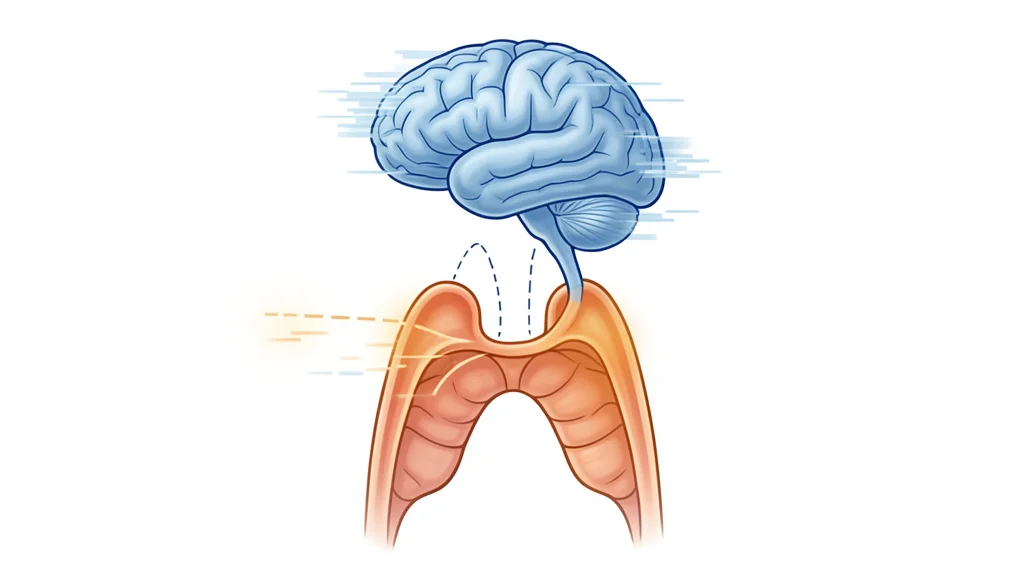
Speech problems associated with Functional Neurological Disorder (FND) are changes in the voice or articulation that have no structural cause. The vocal cords are intact. The muscles are intact. The problem lies in the control mechanism—in the brain’s “software” that controls speech.
The most common types:
Functional dysphonia: a hoarse, breathy, or strained voice, or one that simply disappears at specific times. The person can cough normally, which shows that the vocal cords are functioning—they just do not respond to the command to speak.
Functional stuttering: sudden onset, usually in adulthood, with no prior history. Repetitions and blocks vary depending on the context—they worsen on the phone but improve when singing.
Conversion aphonia: total loss of voice, usually following a stressful event. The person articulates words with their lips, but no sound comes out. They can laugh or cry audibly, but cannot speak.

Why Speech Is So Vulnerable in FND
Speech is one of the most complex motor acts of the human body. It involves coordination between breathing, the larynx, the tongue, the lips, and the jaw—all within milliseconds.
In FND, where the brain has difficulty executing automatic motor programs, speech is particularly affected. The “autopilot” system that normally handles vocal production malfunctions—and the person has to “think” about each word, which further worsens the symptom.

Therapy That Works
The good news is that functional speech problems respond very well to the right treatment. The wrong approach is to keep repeating laryngeal exams or taking medications for reflux that have no effect.
Speech-language pathology specializing in FND. This isn’t traditional speech therapy involving breathing exercises and tongue vibrations. Speech therapy for FND uses desensitization techniques, a hierarchy of difficulty, and—crucially—attentional redirection. See what the scientific evidence says about CBT for FND.
Cognitive-Behavioral Therapy (CBT). It identifies catastrophic beliefs (“I’ll never be able to speak in public again”) and avoidance patterns that reinforce the symptom. Gradual exposure to speaking situations reduces anticipatory fear.
Hypnotherapy. Particularly effective for functional dysphonia and aphonia. Hypnosis allows access to the motor control of the voice in a state of deep relaxation, creating a “bridge” between the brain that knows how to speak and the body that obeys.
Vocal grounding techniques. Exercises that shift the focus away from self-monitoring—such as humming, reading texts aloud by yourself, or using a metronome to regulate the rhythm of speech.

The Attention Paradox of Speech
The more you monitor your voice, the worse it gets.
“Oh no, is my voice coming out right?”—this thought activates the brain’s alert system, which tenses the laryngeal muscles and interrupts the automatic flow of speech.
Effective treatment isn’t “trying to speak better.” It’s learning to stop monitoring your own voice.

Frequently Asked Questions
Are speech problems in FND permanent?
No. Unlike structural neurological lesions (such as a stroke), speech problems in FND are potentially reversible. With proper treatment, most patients regain a normal or near-normal voice.
How long does therapy take to show results?
Initial improvements usually appear within the first 4 to 6 sessions of specialized speech-language therapy. Full recovery takes 2 to 6 months, depending on the duration of the condition and the presence of other FND symptoms.
Does hypnosis really work for the voice?
Yes—and it’s one of the areas with the best results. The voice is particularly sensitive to emotional state (think about how your voice changes when you’re nervous). Hypnosis works precisely on this connection between internal state and vocal production.
How can you cope with the frustration of not being able to speak?
Frustration is understandable, but it also fuels the symptom. Practical strategies: have a “Plan B” for communication (texting on your phone, using gestures combined with those close to you), let the person you’re talking to know in a natural way (“my voice is a little shaky right now, give me a minute”), and read about how to explain FND to your family.
If your voice fails you when you need it most, it’s not just a whim. It’s neuroscience—and there’s a solution.
Schedule a consultation and let’s figure out what’s blocking your voice. FND Hope and Neurosymptoms have specific resources on speech problems related to FND.