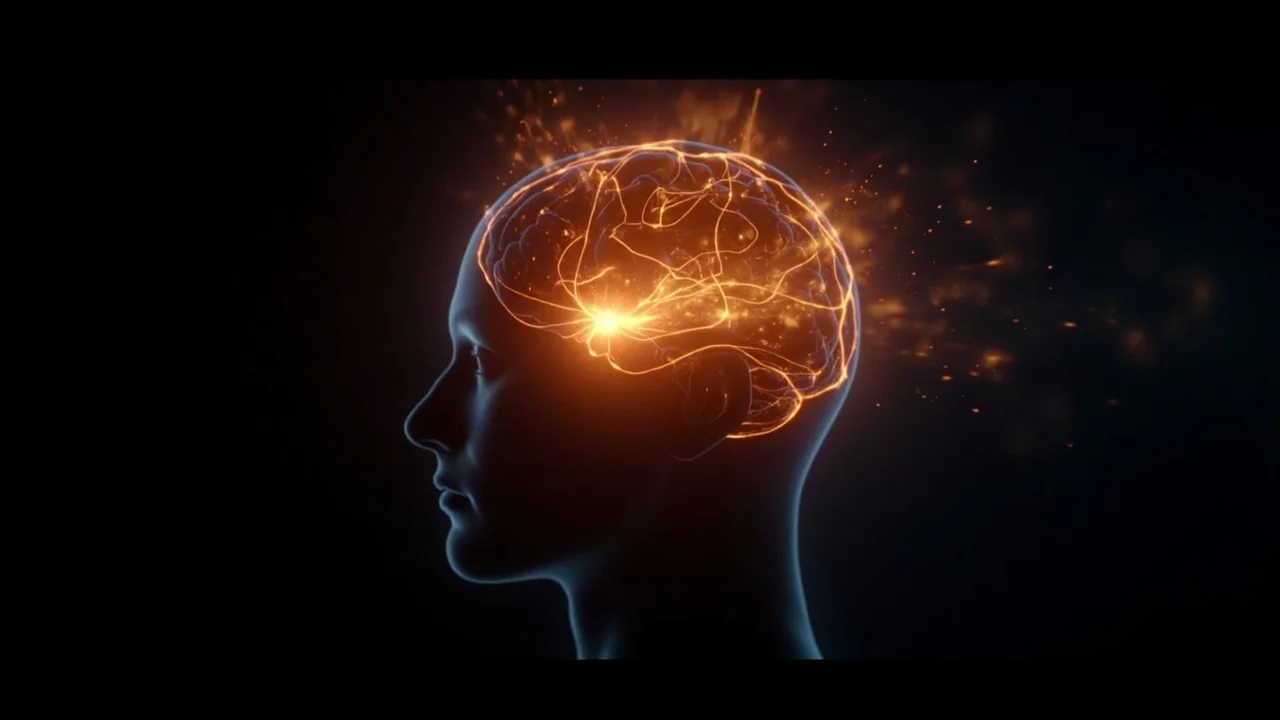

“That’s all in your head.” When someone says that about FND, they usually mean: you made it up, it’s imagination, you just need to control it.
Here’s the twist: in a certain sense, FND really is in your head — but not in the sense that phrase carries. It’s in your head the same way a migraine is, or epilepsy: because it happens in the brain, a physical organ, and not because you’re faking.
The difference between “in the brain” and “imaginary” is everything. This piece explains what actually happens in the brain of someone with Functional Neurological Disorder (FND) — and why understanding that changes how you live with the condition.
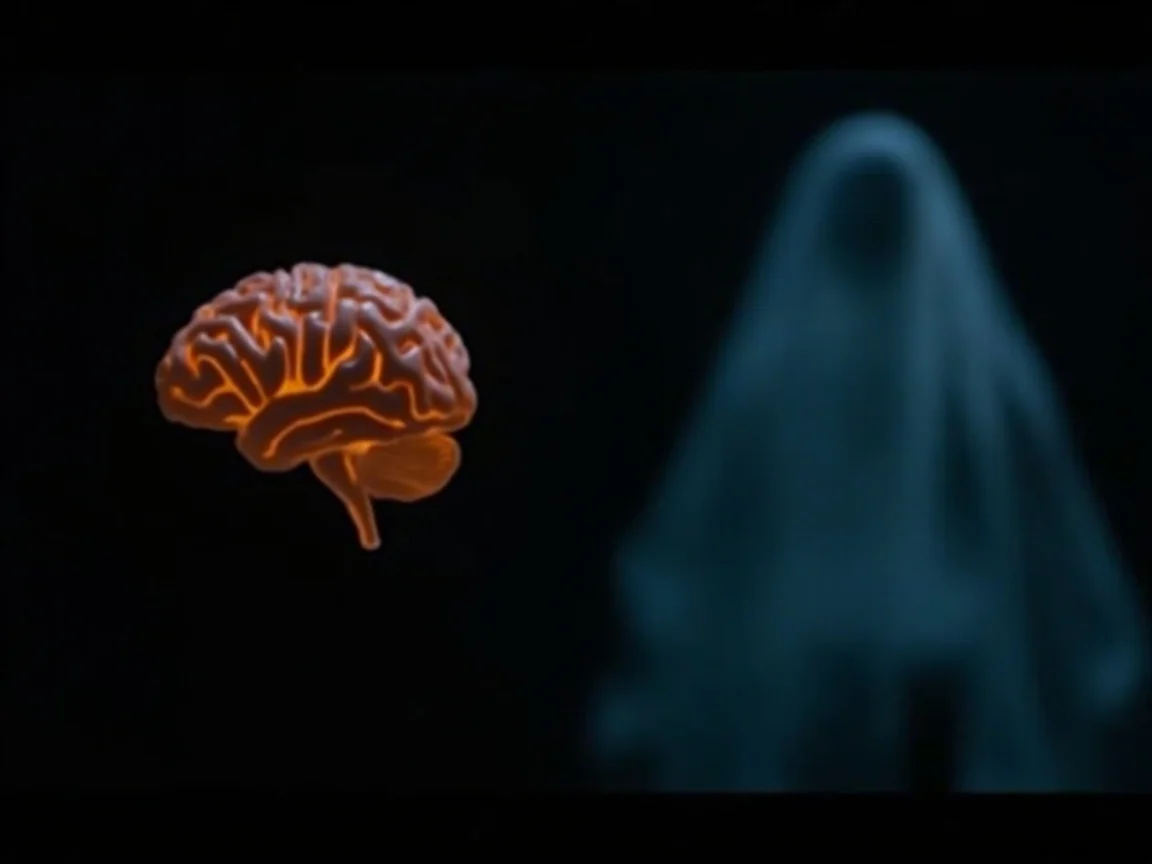
”In your head” doesn’t mean imaginary
The brain is an organ. Everything you feel, move, and perceive passes through it. So, in a literal sense, almost everything is “in your head” — including the pain of a broken bone, which only hurts because the brain processes the signal.
The problem is the word, not the fact
When someone says “it’s in your head” to dismiss you, they’re confusing two meanings:
- In the brain — the symptom is generated by a physical organ, with real mechanisms.
- In the imagination — the symptom doesn’t exist, it’s made up.
FND is the first case, never the second. The symptoms are real, measurable in their impact, and involuntary. As neurologist Jon Stone explains on neurosymptoms.org, FND is a problem in how the nervous system functions — not a fantasy.
Why the confusion is so common
The confusion piggybacks on normal tests. With no visible lesion, culture concludes “it’s not physical, so it’s mental, so it’s imaginary.” It’s a triple leap, and all three steps are wrong. That same misunderstanding feeds the idea that conversion disorder is drama — which is why it’s worth separating things clearly.

What actually happens in the brain
Let’s get to the mechanism. In plain terms, without turning into a neurology lecture.
Intact hardware, faulty software
The best analogy is the computer. In FND, the brain’s “hardware” is intact: the nerves, the muscles, the structures — all in place. The problem is in the “software”: in how the brain sends commands and interprets the signals it receives from the body.
It’s like a program that freezes. The machine is fine, the part isn’t broken, but the execution fails. That’s why the leg doesn’t respond, the tremor appears, or the seizure happens — with every test normal.
The brain that predicts too much
There’s a fascinating detail in current science. The brain isn’t passive: it makes predictions all the time about what the body will feel and do. In FND, those predictions go off the rails.
If the brain “expects” the leg to fail, it can generate the failure. If it learns to expect a seizure, it can trigger one. Excessive attention to the symptom reinforces the error — the more the brain watches, the more it interferes. The symptom becomes a self-fulfilling prophecy, with no conscious decision of yours.
Why the symptoms are involuntary
This is the point that frees you. If it’s the brain generating the symptom without your command, then blame leaves the scene.
You’re not “letting yourself stay this way”
In FND, the voluntary path — the “I want to move my leg” — is what’s blocked. But the system underneath works. That’s why there are clinical signs that prove the symptom is real and involuntary: strength reappears in automatic movements, even when it vanishes under direct command.
In plain terms: it’s not a lack of effort. Trying harder, in fact, usually makes it worse, because it increases attention and tension on the movement.
Awareness isn’t control
Someone with FND notices the symptom clearly. That awareness, though, doesn’t grant control. It’s like trying not to think of an elephant: direct will doesn’t command the process. The brain is running the symptom at a level below conscious decision.

The role of emotions (without blaming you)
Talking about emotion in FND is delicate, because it’s easy to sound like “so it’s psychological, so it’s your fault.” It isn’t. Let’s be precise.
Emotion as a factor, not an accusation
Stress, anxiety, and trauma can influence FND — as a trigger, as fuel, or as nothing, depending on the case. When they do influence it, it’s not moral weakness: it’s biology. Intense emotions affect the same brain circuits that regulate movement and sensation. That’s why trauma sometimes connects to FND, and why treating the anxiety that travels alongside helps.
Mind and brain are the same system
The idea of separating “a body problem” from “a mind problem” is outdated. In FND, it becomes obvious: emotion affects the brain, the brain affects the body, and all of it is physical. That’s why FND lives on the border between the neurological and the psychiatric, and why approaches that work on mind and body — like CBT and clinical hypnosis — make sense.
Frequently asked questions (FAQ)
If it’s in my head, can I just think differently to cure it?
No. “In the brain” doesn’t mean “under conscious control.” The symptom runs at a level below direct will. Positive thinking won’t unblock a functional leg, just as it won’t cure a migraine. What helps is specific treatment that re-educates the brain, not willpower.
Does FND show up on any brain scan?
On routine scans (MRI, CT), no — because they look at structure, and FND is about function. Research with more sophisticated imaging has already shown differences in brain activity in people with FND, reinforcing that there’s a real mechanism. But the diagnosis is still clinical, by positive signs.
Does feeling that it’s “psychological” mean I’m crazy?
No. FND isn’t madness or psychosis. It’s a condition in which brain and emotion interact in a way that generates real physical symptoms. Having an emotional component doesn’t diminish you or invalidate the suffering — it’s just how the system works.
Why does trying harder make it worse?
Because effort increases attention on the movement, and excessive attention is part of the FND mechanism. The more the brain watches and tries to force, the more it interferes. That’s why many treatment approaches teach you to shift attention, not to “fight harder.”
Conclusion
Is FND all in your head? Yes — in the sense that it happens in an organ called the brain. No — in the sense of imagination or choice.
Three things to take away: “in the brain” isn’t the same as “imaginary”; the mechanism is software that fails, with a brain that predicts too much; and the symptoms are involuntary, so blame has no place here.
If you want to understand your specific mechanism and what can re-educate it, a one-on-one conversation helps map the path. For support that respects both the science and your experience, get in touch with Fabio Morus.