
You wake up feeling dizzy. You walk around feeling dizzy. You sit down, and you’re still dizzy.
It’s not vertigo where the room spins. It’s a constant feeling of instability—as if you were on a boat, or your head were too heavy for your neck.
You’ve already seen an ENT specialist and a neurologist, and you’ve had an MRI, a VHIT test, and caloric tests. Everything came back normal.
If this lasts more than three months and gets worse when you stand up or are in environments with a lot of visual stimulation, the likely diagnosis is PPPD—Persistent Postural-Perceptual Dizziness.

What is PPPD?
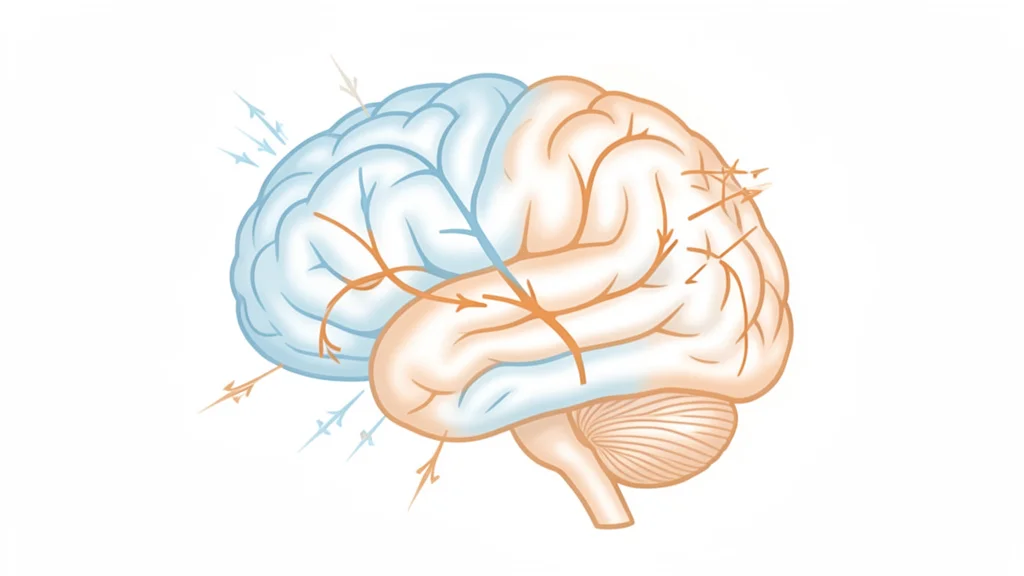
PPPD (Persistent Postural-Perceptual Dizziness) is the most common type of functional dizziness. It is a Functional Neurological Disorder (FND) that affects the brain’s processing of balance—not the inner ear.
In PPPD, the brain enters a state of “postural hypervigilance.” It treats normal balance information as if it were a threat, creating a constant sensation of instability.
The three classic triggers:
- Upright posture (worsens when standing, improves when lying down)
- Self-initiated movement (walking, turning the head)
- Complex visual stimuli (supermarket, crowds, geometric patterns)
Why Tests Come Back Normal
PPPD is not a lesion in the labyrinth. It is a software problem—the hardware is intact.
It’s like a fire alarm going off without a fire. The vestibular system is functioning, but the brain interprets the signals as a danger.
Generally, PPPD begins after an acute episode of vertigo (an attack of labyrinthitis, vestibular neuritis, or even a panic attack with dizziness). The original episode passes, but the brain remains “traumatized”—and keeps the alarm system activated.
This explains why most patients see 4 to 6 different doctors before receiving the correct diagnosis. The ENT specialist examines the ear and finds nothing. The neurologist looks at the MRI and finds nothing. But the patient remains dizzy—because the problem isn’t in the ear or in the brain’s structure. It’s in the programming.

Treatment That Works
Personalized vestibular rehabilitation. Unlike rehabilitation for labyrinthitis, PPPD rehabilitation focuses on desensitizing the brain to the stimuli that trigger dizziness—gradual exposure to supermarkets, head movements, and complex visual environments. See the evidence on CBT for PPPD.
Cognitive Behavioral Therapy (CBT). Essential. PPPD creates a vicious cycle: dizziness → fear of falling → hypervigilance → more dizziness. CBT breaks this cycle.
Hypnotherapy. Grounding and desensitization techniques under hypnosis help the brain “recalibrate” the balance system, reducing the threat response to normal stimuli.
Medication (in selected cases). Low-dose SSRIs can help regulate the brain’s alert system. They do not treat dizziness directly, but they reduce the hypervigilance that fuels it.

The PPPD Paradox
The more you monitor whether you’re dizzy, the more dizzy you become.
This is the central principle of the treatment. It’s not about “ignoring” the dizziness—but about training your brain to stop treating it as a threat.

Frequently Asked Questions
Is PPPD curable?
Most patients show significant improvement with proper treatment. About 70% become asymptomatic or have minimal symptoms within 6 to 12 months of consistent treatment.
How long does treatment last?
The first results appear within 4 to 8 weeks. Complete treatment lasts 3 to 12 months, depending on the chronicity of the condition.
Do I need to stop working during treatment?
No. PPPD treatment can be done alongside your normal daily life. In fact, avoiding activities out of fear of dizziness can make the condition worse.
How can I explain PPPD to someone who’s never heard of it?
“It’s as if the brain’s balance software has a bug—the ear’s hardware is perfect, but the program that processes balance is too sensitive.” Read about how to explain FND to your family.
If you’ve been feeling dizzy for months and your tests show nothing wrong, it’s not just in your head. It could be PPPD—and there is treatment available.
Schedule a consultation. FND Hope and Neurosymptoms have detailed information about PPPD.