
Your leg stops answering you, or an attack arrives that looks like a seizure, and the scans come back clear. A neurologist tells you it is functional neurological disorder (FND). Then comes the harder question: what actually helps?
Hypnotherapy is one of the options people ask me about most. This guide sets out what the research shows and what it does not, how hypnosis fits next to physiotherapy and psychological therapy, and what sessions with me look like in practice.
Key points
- FND is a real problem with how the nervous system works, not a structural disease and not imagined. In a Scottish study of 3,781 new neurology outpatients, 16% had functional and psychological symptoms as their main diagnosis (Stone et al., 2010).
- A 2024 systematic review found 35 studies of hypnosis and suggestion for FND, including 5 randomised trials. Most patients improved in the short term, but the evidence is not strong enough for firm recommendations (Connors et al., 2024).
- Hypnotherapy is a complementary approach. The core treatments are specialist physiotherapy and psychological therapy, coordinated by a neurology team.
- Seek medical review for any new, different or rapidly worsening symptom, even after an FND diagnosis.
On this page
- What FND is, in brief
- Why hypnosis is relevant to FND
- What the research shows
- Where hypnotherapy fits in treatment
- What sessions look like
- Which symptoms it is used for
- Limits and when it is not the right choice
- Choosing a practitioner
- Frequently asked questions
What FND is, in brief
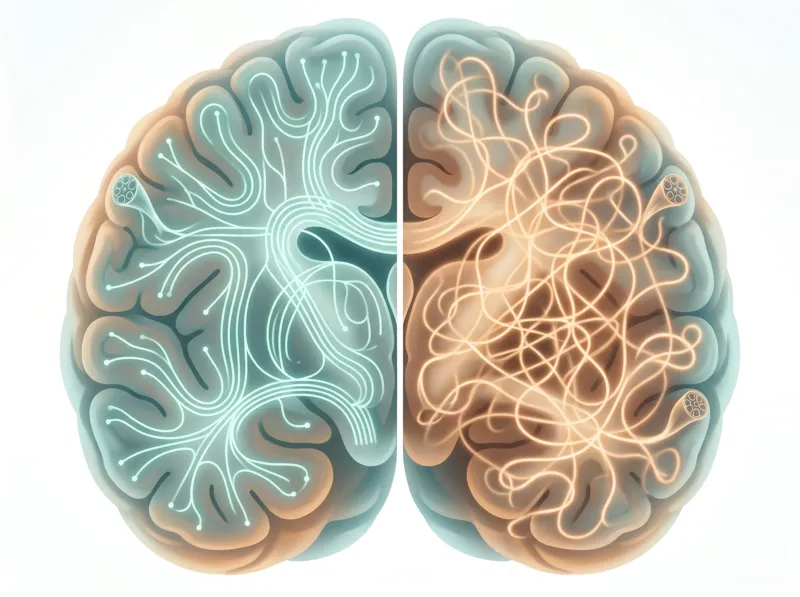
In FND, the brain’s control of movement, sensation or awareness stops working properly while the structure of the nervous system stays intact. Common symptoms include weakness, tremor and jerks, walking problems, functional (dissociative) seizures, numbness, speech changes and fatigue. NHS inform describes it as a problem with how the brain sends and receives messages to and from the body (NHS inform).
The diagnosis is made by a neurologist on positive signs, not only by ruling things out. Hoover’s sign in functional leg weakness and the way a functional tremor changes with distraction are two examples. For a fuller overview of symptoms, causes and diagnosis, see what functional neurological disorder is.
Why hypnosis is relevant to FND

The link between hypnosis and functional symptoms is old. In the nineteenth century, neurologists such as Charcot used hypnosis both to reproduce and to treat what was then called hysteria. The modern interest is more specific. Hypnosis and FND both involve attention, expectation and the sense of control over the body. Under hypnotic suggestion, people can experience a movement as happening “by itself”, which is close to how many people describe a functional symptom.
That overlap does not prove hypnosis is a treatment. It does explain why researchers keep testing it. If attention and expectation help keep a symptom going, a method that trains attention and works with expectation is a reasonable thing to try, as long as it is tested honestly.
What the research shows
The most complete summary so far is a 2024 systematic review in General Hospital Psychiatry. The authors searched a century of literature and found 35 group studies of hypnosis or suggestion for FND: 5 randomised controlled trials, 2 non-randomised trials and 28 before-and-after studies. Of 1,584 patients, 1,379 (87%) showed significant improvement, many with short-term resolution of symptoms. The authors were clear that the limitations of these studies prevent definitive recommendations (Connors et al., 2024).
Two Dutch randomised trials by Moene and colleagues show why “it depends” is the honest answer:
- Outpatients. People with motor-type conversion disorder who received weekly hypnosis-based sessions improved more than a waiting-list group, and the gains held at six months (Moene et al., 2003).
- Inpatients. In a comprehensive inpatient programme, patients improved with or without hypnosis. Adding hypnosis made no extra difference, and how hypnotisable someone was did not predict the outcome (Moene et al., 2002).
Read together, these suggest that structured, active treatment matters, and hypnosis is one way to deliver it rather than a special ingredient. That fits the wider picture. In the large UK trials of the two main treatments, specialist physiotherapy for functional motor disorder (Physio4FMD, 2024) and CBT for dissociative seizures (CODES, 2020), neither beat the comparison group on its main outcome at 12 months, although both did better on several secondary measures. FND treatment research is hard, and no single method has settled the question.
Where hypnotherapy fits in treatment

The usual starting point is a clear explanation of the diagnosis, followed by rehabilitation. Neurosymptoms.org, written by FND neurologists, lists the main options as physiotherapy and exercise, occupational therapy, psychological therapy, speech and language therapy and, for some people, medication for pain, sleep or mood (neurosymptoms.org). The broader treatment picture is covered in FND treatment options.
Hypnotherapy can be added to that plan in three ways:
- Practising control. Rehearsing movement, posture or speech in a focused state, then carrying the same cues into daily life and physio exercises.
- Calming the alarm system. Many people with FND live with constant body scanning and high arousal. Self-hypnosis gives a short, repeatable way to lower that state.
- Working with what keeps symptoms going. Fear of the next attack, avoidance, exhaustion and, for some people, stress or past trauma. When trauma is central, trauma-focused psychological therapy is the main route, and hypnosis supports it rather than replacing it.
What sessions look like
The first session is a conversation, not hypnosis. I ask what the neurologist told you, which symptoms you have, what makes them better or worse, and which other treatments you are already having. If you have not had a neurology assessment, I will ask you to get one first.
After that, sessions usually combine a brief induction (focused attention, slower breathing, a sense of safety), practice of a specific goal such as standing, a smoother step or a calmer response to the first warning sign of an attack, and a short self-hypnosis routine to use at home. Sessions can be online or, in Jersey, in person. Online works well for many people with FND, especially when travel is tiring or unpredictable; see online hypnotherapy for how that works.
I review progress with each client after the first few sessions. If nothing is changing, we adjust the approach or I suggest a different kind of help. Hypnotherapy should earn its place in your week.
Which symptoms it is used for
Functional movement symptoms
Weakness, tremor, jerks and gait problems are where most of the hypnosis research has been done, including both Moene trials. In sessions, the focus is on movement that feels automatic again: rehearsing it in imagery, then in small real steps, with attention placed away from the affected limb. This matches the logic of specialist FND physiotherapy, which is why I prefer to work in step with a physiotherapist when there is one.
Functional (dissociative) seizures

For functional seizures, the first step is to recognise the warning phase: racing heart, breathlessness, dizziness, numbness or a sense of unreality. Neurosymptoms.org describes treatment as learning strategies to regain control at that point, including distraction and sensory grounding (neurosymptoms.org). Hypnosis can be used to rehearse that response so it is available under pressure. If you also have epilepsy, which is not rare, the plan must be agreed with your neurologist. The differences are explained in functional seizures vs epilepsy.
Pain, sensory symptoms and fatigue
Hypnosis has a longer research record in pain than in FND itself, and it can help some people with pain, numbness or tingling. For fatigue, the work is usually about pacing and recovery rather than pushing through. If fatigue is your main problem, see FND and chronic fatigue.
Limits and when it is not the right choice
Hypnotherapy is not a diagnostic test, and it is not a cure. It is not suitable as the main treatment when symptoms have not been assessed by a neurologist, when there is a new or changing symptom, when there is significant depression or suicidal thinking that needs mental health care first, or when severe trauma symptoms call for trauma-focused therapy. It also works poorly when someone has been told, in effect, that the problem is “all in the mind” and is attending to prove a point. Understanding and accepting the diagnosis comes first.
Choosing a practitioner

Look for someone who:
- has substantial training in clinical hypnosis, not a weekend course
- understands FND and uses the current language for it
- asks about your neurology care and is willing to work alongside it
- explains how progress will be reviewed
- does not promise a cure or a fixed number of sessions
Be wary of anyone who offers to find the hidden cause of your symptoms under hypnosis. That idea has little support and can do harm.
Frequently asked questions
Does hypnotherapy work for FND?
It can help some people, but the evidence is still limited. A 2024 systematic review found 35 studies of hypnosis or suggestion for FND, and most patients improved in the short term, yet the authors said the quality of the studies does not allow firm recommendations. Hypnotherapy works best as one part of a plan led by a neurology team.
Can hypnotherapy replace physiotherapy or psychological therapy for FND?
No. Specialist physiotherapy, psychological therapy and, where needed, speech or occupational therapy are the core treatments. Hypnotherapy can sit alongside them as a way to practise attention, movement and calming the alarm response.
How many sessions are usually needed?
There is no fixed number. I review progress with each client after the first few sessions. If nothing is shifting, we change the plan or I suggest a different kind of help rather than carrying on regardless.
Do I need a diagnosis before starting?
Yes. FND should be diagnosed by a neurologist, using positive clinical signs. Hypnotherapy is not a way to find out whether symptoms are functional, and new or changing symptoms always need medical review.
Is hypnosis safe for people with functional seizures?
When it is used by a trained practitioner who knows FND and works within the medical plan, it is generally well tolerated. You stay aware throughout. If you have functional seizures, tell your hypnotherapist in advance so you can agree together what to do if an attack starts during a session.
Conclusion
Hypnotherapy has a long history with functional symptoms and a growing, still imperfect evidence base. Used well, it is a practical way to rehearse control, calm the body’s alarm and support the rehabilitation you are already doing. It is not a replacement for that rehabilitation.
If you have an FND diagnosis and want to know whether hypnotherapy could fit your plan, book a first conversation. We will look at your symptoms, your current care and whether this is the right next step.
About the author
Fabio Morus is a behavioural therapist and clinical hypnotherapist in Jersey, Channel Islands, focused on anxiety, phobias, sleep and trauma. His training covers Neuro-Systemic Hypnotherapy, CBT (Beck Institute) and EMDR (EMDR Association UK). He works online in Portuguese and English. Clients in Jersey are also seen in person.
This article is for information only. It does not replace assessment by a neurologist or other qualified health professional. If you are struggling to cope, you can contact Samaritans on 116 123 (UK and ROI, free, 24/7). In Jersey, contact your GP, emergency services or the local crisis line.