
You’ve probably heard someone say your symptoms are “just psychological.” Maybe it came across as dismissive. Maybe it felt like they were saying you were faking it.
Here’s what I want you to understand: conversion disorder and trauma are connected in ways that mainstream medicine is only starting to grasp. And for most people dealing with this, the symptoms make a lot more sense once you see the full picture.
This article breaks down that connection. Not to blame you — but so treatment can finally look in the right place.
What Conversion Disorder Actually Is
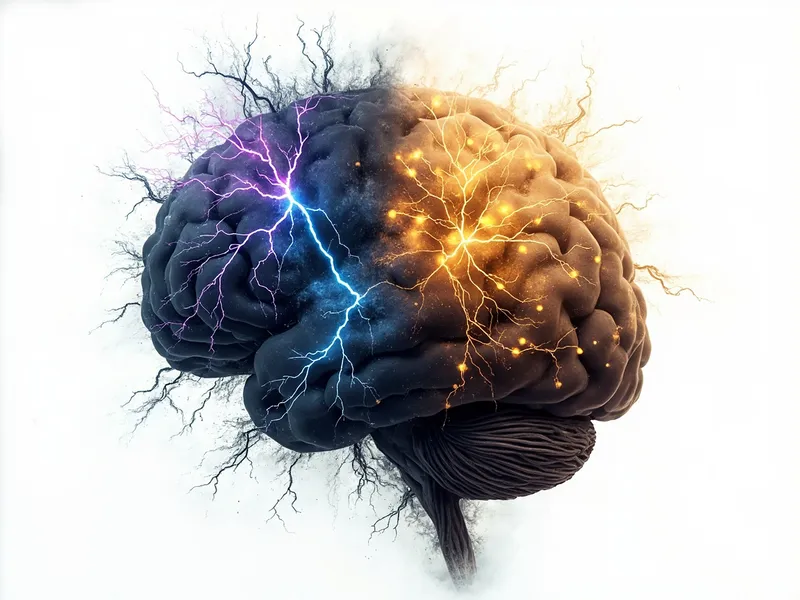
Conversion disorder (also called functional neurological disorder, FND) is a condition where the brain produces real neurological symptoms — tremors, seizures, numbness, motor problems — without any structural damage to the nervous system.
The symptoms are genuine. The person is not pretending. The brain is generating something the body experiences as completely real.
The exact mechanism is still not fully understood. But the data is consistent: unprocessed trauma shows up as a strong predictor of symptom onset. That’s not speculation — that’s what the research shows.
The Trauma Connection

Let me cite the evidence directly.
Stone et al. (2018) found a significant correlation between childhood trauma and dissociative symptoms in conversion disorder patients (p<0.01). Emotional abuse emerged as the most significant predictor — more than physical abuse.
The Cambridge article “Conversion disorder and the trouble with trauma” identifies trauma as one of two major psychogenic models central to the condition.
Decades of clinical research point in the same direction.
What This Looks Like in Practice
When a traumatic event happens — especially in childhood — the nervous system sometimes creates a protective pattern. The brain essentially locks the experience away so it doesn’t interfere with daily functioning.
But that lock doesn’t disappear. The body keeps carrying the weight of that memory.
When the nervous system detects that there aren’t enough resources to process the backlog — accumulated stress, a new trigger, anything — it shifts tactics. Instead of thinking about the experience, it converts it into a physical symptom.
That’s the “conversion” part. Not faking. Not conscious. A literal neurological response to unprocessed experience.
Emotional Memory Is Physical

“Emotional memory” sounds like a metaphor. It’s not.
The limbic system stores emotional memories differently than the cerebral cortex does. An emotional memory can be triggered by a smell, a sound, a physical sensation — even without conscious awareness of the original event.
In conversion disorder, the brain uses dissociation: it separates the emotion from conscious experience. Emotion doesn’t vanish. It finds another route out — through the body.
That’s why symptoms come and go without clear explanation. And why they intensify under stress — the nervous system is signaling danger, even when no real threat exists.
The PTSD and Dissociation Overlap

Clinicians started noticing something: many conversion disorder patients also meet criteria for PTSD or dissociative disorder.
BMC Psychiatry (2017) demonstrated that patients with functional neurological symptoms and patients with PTSD share similar profiles of traumatic burden and altered emotional regulation.
The DSM-5 documents that a history of sexual or physical abuse is present in one-third to one-half of patients with dissociative disorder — the spectrum conversion disorder falls on.
This overlap has direct clinical implications. Addressing only the physical symptoms while ignoring the underlying trauma is like treating a fever without checking for infection.
Also read: Conversion Disorder and Anxiety: The Connection No One Explains to understand how anxiety fits into this pattern.
What Treatment Actually Looks Like
Trauma-focused psychotherapy — including hypnotherapy, EMDR, and specific cognitive-behavioral approaches — works directly on the pattern underlying the symptoms.
In practice, the process typically involves three components:
- Nervous system regulation — grounding and reframing techniques that reduce the frequency and intensity of episodes
- Trauma memory processing — helping the brain archive the experience in a less activating way
- Symptom reinterpretation — learning to read symptoms as signals rather than threats
Recovery doesn’t happen overnight. But it happens. The literature documents meaningful improvement in patients who receive appropriate psychological treatment.
Also read: Is Conversion Disorder Curable? for prognosis details and treatment options.
What This Changes About How You See Your Case
If you’ve been dealing with unexplained symptoms — if you’ve heard “there’s nothing wrong” but you knew something was off — this reframes the conversation.
Conversion disorder is not faking. It’s not “in your head” in the way people mean when they say that.
It’s a nervous system response to experiences that haven’t been fully processed. And it has treatment.
The next step: find a professional who understands this connection. Someone who sees trauma not as a throwaway explanation, but as a gateway to recovery.
If you think clinical hypnotherapy could play a role in your recovery path, reach out. We’ll assess together whether it’s the right fit.
This article is for informational purposes only and is not a substitute for professional medical advice. If you are in crisis, seek emergency medical help immediately.