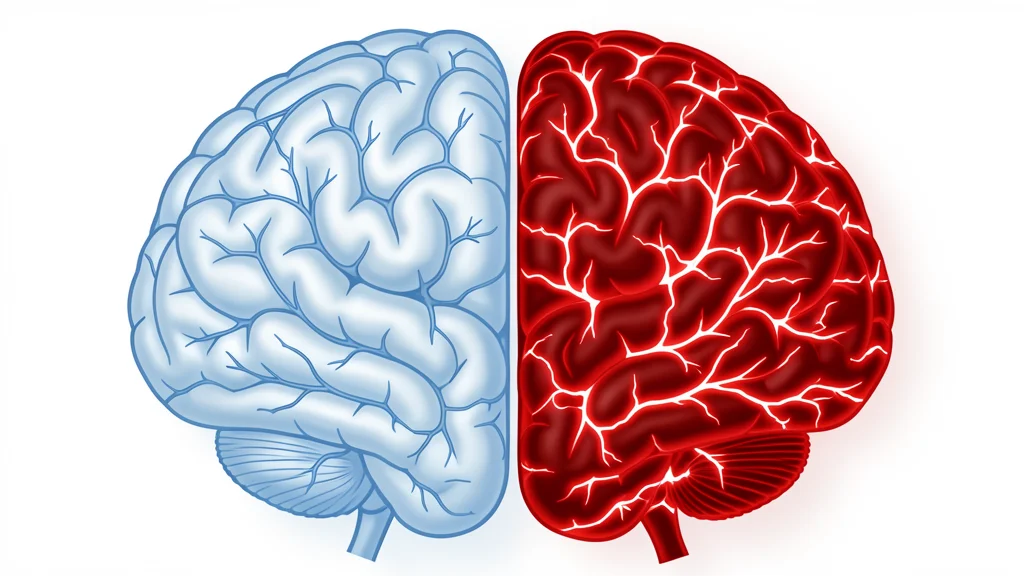

A seizure in front of you looks like an emergency, and the first thought is usually epilepsy. Yet many people sent to specialist epilepsy services turn out to have functional seizures instead, or as well. Telling the two apart changes the treatment completely.
This guide explains what each condition is, how specialists tell them apart, why the diagnosis so often takes years, and what treatment looks like once the picture is clear.
Key points
- Functional (dissociative) seizures are real, involuntary attacks caused by a problem in how the brain functions, not by abnormal electrical discharges (neurosymptoms.org).
- The most certain diagnosis comes from recording a typical attack on video-EEG (LaFrance et al., 2013).
- Both conditions can coexist: about 22% of people with functional seizures also have epilepsy (Kutlubaev et al., 2018).
- Anti-seizure medicines do not treat functional seizures. Treatment focuses on regaining control, mainly through psychological therapy.
On this page
- What functional seizures are
- What epilepsy is
- How the two differ
- How the diagnosis is made
- Why diagnosis takes so long
- When someone has both
- Treatment
- First aid for any seizure
- Frequently asked questions
What functional seizures are
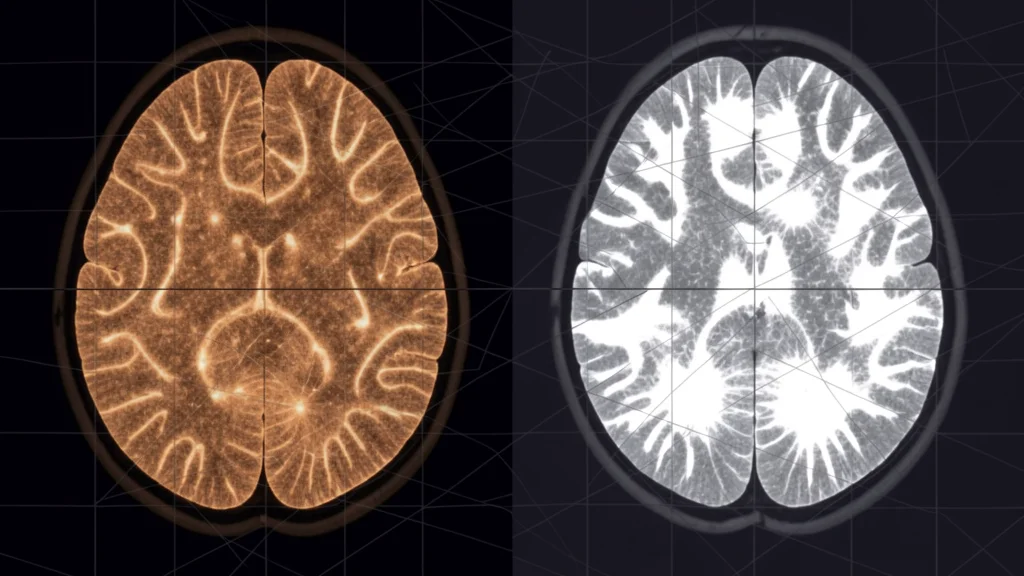
Functional seizures are episodes of shaking, stiffening, collapse or loss of awareness that look like epileptic seizures but have a different mechanism. They have had many names: dissociative seizures, non-epileptic attack disorder and psychogenic non-epileptic seizures (PNES). “Functional seizures” is the term most neurologists use now, and they are one of the commonest forms of functional neurological disorder (FND).
Neurosymptoms.org, written by FND neurologists, explains that functional seizures are not due to abnormal electrical activity and happen through a process called dissociation: the brain partly disconnects from what is going on, often in response to a surge of physical alarm that the person may not feel as fear (neurosymptoms.org). The attacks are not faked and not under voluntary control.
Stress and trauma are risk factors for some people, not all. Many people with functional seizures cannot point to a trigger, and that does not make the diagnosis wrong.
What epilepsy is
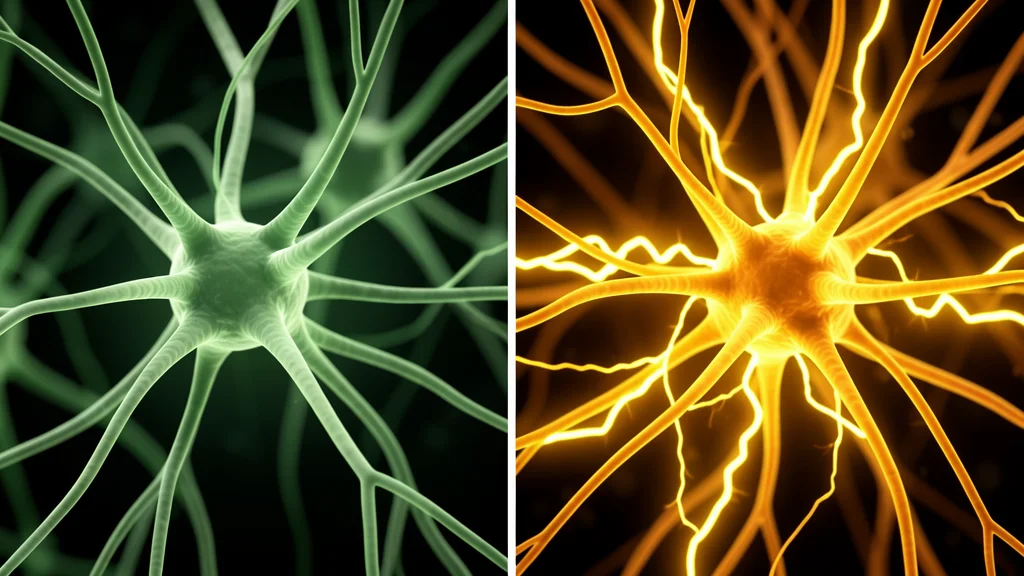
Epilepsy is a tendency to recurrent, unprovoked seizures caused by sudden bursts of abnormal electrical activity in the brain. Causes include genetic factors, brain injury, stroke, infection and structural changes, and in many people no cause is found. An EEG recorded during a seizure shows the abnormal activity, and anti-seizure medicines control seizures for most people with epilepsy.
How the two differ
No single sign settles the question, and only a specialist should weigh them. These are the features neurologists commonly look at:
| Feature | More typical of functional seizures | More typical of epileptic seizures |
|---|---|---|
| Electrical activity on EEG during the attack | None | Present |
| Eyes during the attack | Often closed, and may resist opening | Usually open |
| Duration | Often long, sometimes many minutes | Usually one to two minutes |
| Course | Movements may stop, start and change | Usually a set pattern |
| Unresponsiveness | Can be prolonged, sometimes without movement | Usually short, followed by confusion |
| Response to anti-seizure medicines | None | Usually helpful |
Ictal eye closure is one of the better-studied signs: in a video-EEG study, eyes closed during the attack was a reliable indicator of a functional seizure (Chung et al., 2006). Neurosymptoms.org adds long duration and prolonged unresponsiveness to the list, and notes that brain scans are not helpful for diagnosing dissociative seizures (neurosymptoms.org).
How the diagnosis is made
An expert task force of the International League Against Epilepsy set out four levels of diagnostic certainty (LaFrance et al., 2013). The highest, “documented”, requires a typical attack recorded on video-EEG with no epileptic activity immediately before, during or after it. Lower levels rely on the history, an eyewitness account, a clinician seeing an attack, or a video recording without EEG.
In practice, a good home video helps a great deal. Neurosymptoms.org reports that specialists reviewing video recordings of attacks reach the right answer in about nine out of ten cases. If someone close to you has attacks, ask them, when it is safe, to film one from start to finish.
Why diagnosis takes so long
In a German epilepsy centre study, people with functional seizures were diagnosed on average 7.2 years after their attacks began (Reuber et al., 2002). Delay was longer in younger patients, when an EEG between attacks showed epileptiform changes and when people were already taking anti-epileptic drugs.
The reasons are understandable. Attacks rarely happen in front of a doctor, emergency teams have to treat a convulsion as epilepsy until proven otherwise, and routine EEGs between attacks can be normal in epilepsy too. Meanwhile, people may spend years on medicines that do not help them, with side effects and restrictions on driving and work.
When someone has both
Having both conditions is not rare. A 2018 meta-analysis found that about 22% of people with functional seizures also had epilepsy, and about 12% of people with epilepsy also had functional seizures, with wide variation between studies (Kutlubaev et al., 2018).
This is why a diagnosis of functional seizures should never lead someone to stop an anti-seizure medicine on their own, and why the person and their family benefit from learning to describe the two kinds of attack separately. Your neurologist decides what to treat with medicine and what to treat in other ways.
Treatment
For functional seizures

Treatment starts with understanding the diagnosis. Neurosymptoms.org describes the aim as finding strategies to regain control during the warning phase, which can include a racing heart, breathlessness, numbness, dizziness or a feeling of unreality. Strategies include challenging catastrophic thoughts about the attack, distraction and sensory grounding (neurosymptoms.org). Signs of progress are a longer warning phase, fewer attacks, or staying aware during one.
Psychological therapy, usually CBT-based, is the main treatment. The largest trial, CODES, found that adding CBT to specialist medical care did not reduce seizure frequency more than medical care alone at 12 months, although several secondary outcomes favoured CBT and seizure frequency was lower at 6 months (Goldstein et al., 2020). Physiotherapy helps when there are also functional movement symptoms, and anxiety, depression or trauma symptoms need treatment in their own right.
Hypnotherapy can be one complementary tool, mainly for rehearsing a calmer response to the warning phase. The evidence and its limits are covered in hypnotherapy for FND.
For epilepsy
Anti-seizure medicines are the first-line treatment and control seizures for most people. Other options include surgery for some focal epilepsies, vagus nerve stimulation and, especially in children, the ketogenic diet. These decisions belong with an epilepsy specialist.
First aid for any seizure
You will not always know which kind of seizure you are seeing, so start with the same safe first aid. Epilepsy Action advises (Epilepsy Action):
- protect the person from injury by moving harmful objects away, and cushion their head
- time how long the seizure lasts
- do not hold them down or put anything in their mouth
- once the jerking stops, place them gently in the recovery position and stay until they have fully recovered
Call an ambulance if it is their first seizure, if it lasts more than five minutes, if one seizure follows another without recovery in between, if they are seriously injured, or if they have trouble breathing afterwards. If the person has a known diagnosis of functional seizures and an agreed care plan, follow that plan, which often avoids unnecessary emergency medicines. A calm voice helps: neurosymptoms.org notes that part of the person is often aware during the attack.
Falls during functional attacks can also look similar to functional drop attacks, which have their own guide.
Frequently asked questions
Can functional seizures turn into epilepsy?
No. They are different mechanisms, and having functional seizures does not cause epilepsy. A person can have both, though: in a 2018 meta-analysis, about 22% of people with functional seizures also had epilepsy.
How is the diagnosis confirmed?
The most certain way is video-EEG: recording a typical attack on video while the EEG shows no epileptic activity before, during or after it. When that is not possible, a specialist reviewing a good home video together with the history can reach a probable or clinically established diagnosis.
Do anti-seizure medicines help functional seizures?
No. Anti-seizure medicines treat epileptic activity, which is not what causes a functional seizure. If you have both conditions, your neurologist decides which medicines to keep. Never stop an anti-seizure medicine on your own.
Are functional seizures dangerous?
They are not caused by brain damage, but they are not harmless. People can be injured in falls, and the attacks often affect work, driving, study and confidence. Repeated emergency treatment as if the attacks were epilepsy can also cause harm, which is one reason an accurate diagnosis matters.
Can hypnotherapy help with functional seizures?
It can be one complementary tool, mainly for recognising the warning phase and practising a calmer response to it. Psychological therapy is the main treatment, and any plan should be agreed with your neurologist.
Conclusion
Functional seizures and epilepsy can look alike from the outside and still need opposite approaches. The most useful steps are a specialist assessment, a video of a typical attack, and a clear plan that says what to do during one. If you are living with functional seizures, recovery is often a matter of learning to catch the warning phase and widen it, with support from people who understand the condition.
If you already have a diagnosis and want help with the warning phase or the anxiety around attacks, get in touch to talk about whether hypnotherapy could fit alongside your current care.
About the author
Fabio Morus is a behavioural therapist and clinical hypnotherapist in Jersey, Channel Islands, focused on anxiety, phobias, sleep and trauma. His training covers Neuro-Systemic Hypnotherapy, CBT (Beck Institute) and EMDR (EMDR Association UK). He works online in Portuguese and English. Clients in Jersey are also seen in person.
This article is for information only. It does not replace assessment by a neurologist or other qualified health professional. In an emergency, call 999 (UK and Jersey) or your local emergency number. If you are struggling to cope, you can contact Samaritans on 116 123 (UK and ROI, free, 24/7).