
Your leg gives out out of nowhere. You’re standing, walking, or even just standing still—and suddenly you’re on the ground.
There was no dizziness beforehand. There was no loss of consciousness. It just happened.
If this has happened to you more than once, you may be dealing with functional drop attacks—a symptom of Functional Neurological Disorder (FND) that frightens both those who experience it and those who witness it.
The problem isn’t with your muscles or your inner ear. It lies in the way the brain processes the command to stand.
And that changes everything when it comes to treatment.
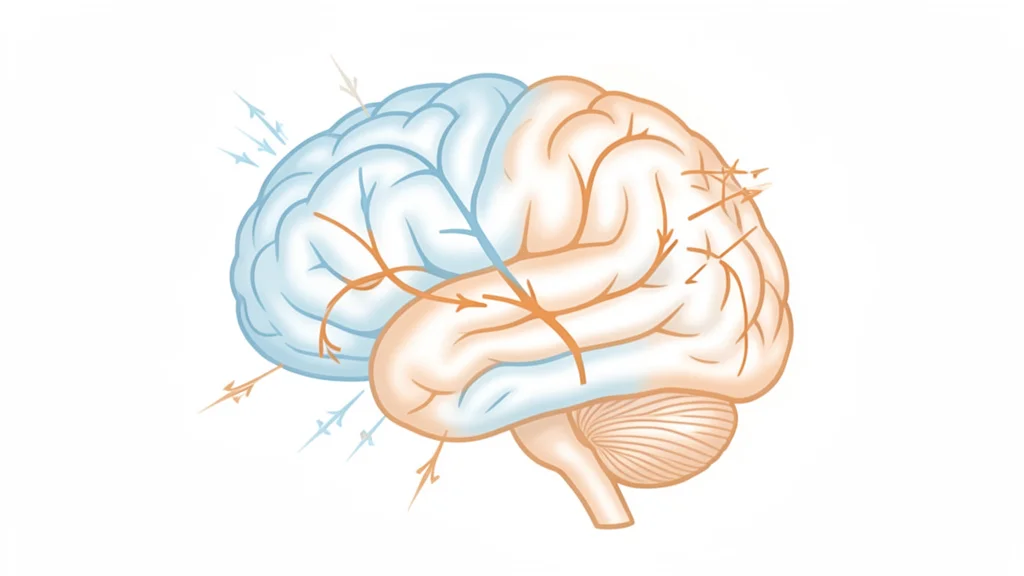
What are functional drop attacks?
Functional drop attacks are sudden episodes of the legs giving way, with no identifiable structural cause. The person falls—sometimes to their knees, sometimes completely—but remains conscious the entire time.
In FND, the brain temporarily interrupts motor control of the legs. It’s not actual muscle weakness: it’s a “short circuit” in the software, not the hardware.
This explains why tests such as MRI, electroneuromyography, and CT scans usually come back normal. The brain simply “turns off” postural support for a few seconds—then returns to normal as if nothing had happened.

How to distinguish it from other causes of falls
Not every sudden fall is functional. Before confirming the diagnosis, it is essential to rule out structural causes. The main differences:
Functional fall: no loss of consciousness, no prior dizziness, normal test results, and preserved memory of the episode.
Syncope (fainting): brief loss of consciousness, pallor, sweating before the fall.
Epileptic seizure: loss of consciousness, involuntary movements, post-event confusion. How these differ from functional attacks is explained in functional seizures vs epilepsy.
Vestibular fall: intense vertigo before the fall, sensation of spinning.
A neurologist experienced in FND can differentiate these conditions based on the patient’s medical history. Additional tests help rule out organic causes, but the functional diagnosis is essentially clinical.

What to Do During a Falling Attack
If you experience falling attacks, some practical measures can reduce the risk of injury:
1. Learn to recognize the prodromal signs. Many people notice a sensation of “wobbly legs” or disconnection seconds before the fall. If you notice this sign, crouch down or sit down immediately.
2. Adapt your environment. Avoid exposed furniture corners, use non-slip rugs, and keep hallways clear. Falls at home are the most common.
3. Use the floor to your advantage. If you feel yourself falling, don’t resist it. Direct the fall forward (knees and hands) rather than backward (risk of head injury).
4. After the fall, breathe. The shock triggers the brain’s alarm system, which can prolong the episode. Take deep breaths for 30 seconds before trying to get up.
5. Don’t force yourself to get up quickly. Wait until you feel completely in control again. Getting up too soon increases the risk of a second fall in quick succession.

Treatment: What Really Works
The good news is that functional falls respond well to the right treatment. The bad news is that many people spend months or years on the wrong path—trying medications for dizziness, undergoing repeated tests, and being referred from one specialist to another.
What works:
Physical therapy specializing in FND. This isn’t ordinary physical therapy—the focus is on retraining the brain to trust its motor control. Dual-task exercises (walking while performing another cognitive activity) are particularly effective.
Cognitive-Behavioral Therapy (CBT). It helps identify and break the attention patterns that fuel the symptoms. In FND, the more you worry about falling, the more “hypervigilant” the brain becomes—and the more falls occur. See what scientific evidence says about CBT for FND.
Hypnotherapy. Clinical hypnosis works directly with the altered attention and sensory processing mechanisms seen in FND. Grounding techniques and attentional reorientation under hypnosis have shown significant results in reducing the frequency of episodes.
Psychoeducation. Understanding that the symptom is real but not dangerous in itself (it’s not a stroke; it’s not a seizure) reduces the anticipatory fear that fuels the cycle.

The Role of Attention in FND
There is a paradox in the treatment of functional falling attacks: the more attention you give to the symptom, the more it appears.
This does not mean that the symptom “is psychological” or “is all in your head.” It means that, in FND, the brain’s attention circuits are dysregulated. The constant focus on the legs—“Am I going to fall?”—keeps the motor control system on high alert, which paradoxically increases the likelihood of a failure.
Attention-redirection techniques (in both CBT and hypnotherapy) train the brain to “let go” of this excessive monitoring.
Frequently Asked Questions About Fall Attacks in FND
Can functional fall attacks go away on their own?
In some cases, yes—especially when the person stops monitoring the symptom so closely. But most patients need targeted treatment. The combination of specialized physical therapy with CBT or hypnotherapy has the best remission rates.
How long does it take to see improvement with treatment?
The first results usually appear within 4 to 6 weeks of consistent treatment. A complete reduction in episodes can take 3 to 6 months. Each case is unique, but the trend is toward progressive improvement when treatment is appropriate.
Does hypnotherapy really work for neurological symptoms?
Yes. Hypnosis is not “mind control”—it is a state of focused attention that allows you to access and modify the brain’s automatic patterns. In FND, where the problem lies precisely in the automatic processing of motor control, hypnotherapy is one of the approaches with the strongest clinical evidence.
How can you explain to family members that it’s not just “all in your head”?
Show them this article. Or ask your neurologist to explain it. FND is recognized by the WHO, has established diagnostic criteria, and is one of the most common reasons for seeking neurological care—more common than multiple sclerosis, for example. It’s not just “making things up.” It’s neuroscience. Read also: how to explain FND to your family.
If you’re dealing with episodes of falling and haven’t found the right path yet, maybe it’s time for a different approach. FND Hope and Neurosymptoms are reliable international resources on the topic.
Schedule a consultation, and let’s figure out together what’s happening with your brain—and how to address it.