

You’ve been diagnosed with FND. The tests came back normal. And now comes the hardest part: explaining to your family what’s actually going on.
The people around you want to help. But they don’t get it. Some think it’s passing stress. Others suggest it’s “all in your head.” And there are those who, deep down, think you’re exaggerating.
That usually hurts more than the symptom itself.
Functional Neurological Disorder (FND) is real. The symptoms are real. But it’s a hard condition to explain, because it doesn’t show up on scans and doesn’t fit the boxes people already know.
This guide fixes that. You’ll find simple analogies, ready-to-use scripts, and a plan to explain FND to each person in your life, from your partner to your colleagues at work. No jargon. No medical degree required.
What FND Is (in plain words for your family)
Before you explain it to others, you need a short, clear version on the tip of your tongue. Forget the technical terms. Your family doesn’t need a neurology lecture. They need to grasp one thing: the problem is real and it has a name.
The software analogy
This is the fastest way to make someone understand.
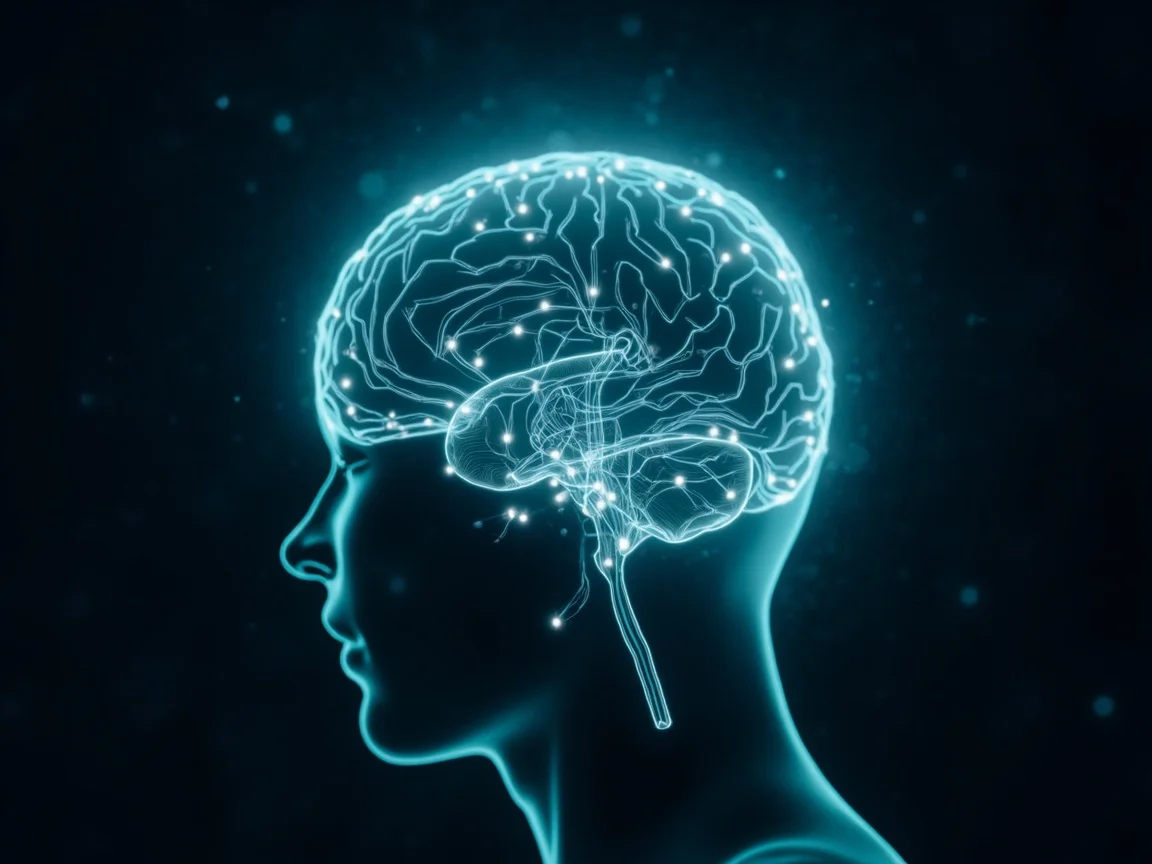
Picture the brain as a computer. In FND, the “hardware” is intact. There’s no lesion, no tumour, no damage to the structures. The problem is in the “software”: it’s the way the brain sends and receives signals that fails.
The command exists. The muscle exists. But the message between the two arrives scrambled, delayed, or not at all.
That’s why a person with FND can have a leg that won’t respond, a tremor that appears out of nowhere, or an episode that looks like a seizure, even with every scan normal. As neurologist Jon Stone explains on neurosymptoms.org, FND is a problem of function, not structure. The system is built; it’s the running of it that slips.
Why the tests are “normal” but the symptoms are real
Here’s the point that confuses families most.
Normal MRI. Normal bloodwork. Everything normal. To an outsider, that sounds like “there’s nothing wrong.” But it’s the exact opposite.
Tests look for damage in the hardware. FND is a software fault. And software doesn’t show up on an MRI. The diagnosis, according to the NHS guidance on FND, is made by what the doctor observes, not by what’s missing from the tests. It’s a positive diagnosis, not a “we couldn’t find anything.”
A line to keep handy: “The tests are normal because the problem isn’t in the structure. It’s in how the brain functions.”

Why is FND so hard to explain?
If you feel like nobody understands, it’s not because you’re bad at explaining. FND carries obstacles few conditions have.
The stigma of “it’s all in your head”
When family hears the tests are normal, their brain finishes the sentence: “So it’s psychological. So it’s in their head. So it’s controllable.”
That leap is false, but it’s natural. Culture taught people to split the world into “real illness” (the kind that shows on a test) and “head stuff” (the kind you should just “get over”). FND fits neither.
The answer isn’t to argue. It’s to reframe: “It’s not in my head in the sense that I’m making it up. It’s in the brain, which is an organ, like the heart or the liver. The difference is that the function failed, not the structure.”
When family thinks it’s drama or exaggeration
There’s a cruel detail to FND: the symptoms vary. One day you walk, the next you don’t. In the morning the tremor is gone, in the afternoon it’s back. To an observer, that variation looks like proof that “it’s a choice.”
It isn’t. The variation is a feature of FND, not a flaw of character. Functional symptoms fluctuate with fatigue, stress, attention, and emotion, and that instability is part of the clinical picture.
If someone in your family insists it’s exaggeration, it’s worth showing a neutral source. FND Hope, the international patient organisation, has materials written specifically for family members. Taking the explanation off your shoulders and placing it on an institution lowers the temperature of the argument.

How to explain FND to each person in your life
There’s no single explanation. What works with your partner won’t work with a colleague. Match the depth to the relationship.
For your partner
This is the person who sees the good days and the bad ones. They need two things: to understand the condition and to know what to do.
Be concrete. Say what changes day to day (“there are days I’ll need help with X”) and what doesn’t change (“I’m still me, I still want to be part of things”). The quiet fear in many partners is losing the person they knew. Naming that defuses the tension.
If the relationship has felt heavy since the diagnosis, the problem is rarely a lack of love. It’s a lack of information. Working on it together, sometimes with therapeutic support, usually brings people back closer.
For parents and children
With parents, the challenge is generational: many grew up with the idea that “real illness” shows on a test. Use the software analogy and be patient with the repetition. They’ll ask several times. That’s fine.
With children, simplify radically. For a child: “Mum’s/Dad’s brain sometimes sends the wrong message to the body. It’s nobody’s fault and you can’t catch it.” Children accept this better than adults do, as long as you take the guilt and the fear out of the equation.
For friends and colleagues
Here, less is more. Nobody at work needs the full diagnosis. They need to know the practical impact: what you can do, what might need adjusting, and that the condition is medically recognised.
A short line for work: “I have a neurological condition called FND. The symptoms vary. On some days I need [adjustment]. It’s followed by professionals.” Direct, professional, without exposing what you’d rather not.
Ready-to-use scripts
When emotions run high, the right word doesn’t come. Have these ready.
The 30-second explanation
“I have Functional Neurological Disorder, or FND. It’s like the brain has a software problem: the hardware is intact, but the signals between brain and body fail. The symptoms are real, even with normal tests. It’s not in my head and it’s not drama. It’s a recognised neurological condition, and it’s treatable.”
Memorise that one. It’s your foundation.
Answers to hard questions
“But you don’t look ill.” “I know. FND is invisible and it varies a lot. Looking fine in one moment doesn’t mean I’m fine all the time.”
“Have you tried just relaxing / thinking positive?” “Stress makes it worse, so looking after that helps. But relaxing doesn’t cure it, just like positive thinking doesn’t fix a leg that won’t respond. I need specific treatment, not just calm.”
“Isn’t this just depression / anxiety?” “Anxiety can come alongside it and sometimes makes the symptoms worse, but FND is a condition in its own right. Treating the anxiety helps. It just doesn’t replace treating the FND.”
“When will this go away?” “Many people improve with the right treatment. It’s not overnight, but there’s a path. I’m not condemned to this.”

What to ask of your family: support that actually helps
Family almost always wants to help. They just don’t know how. Tell them.
What helps:
- Believing you. The most powerful sentence you can hear is “I believe you.” Validation isn’t coddling. It’s half the treatment.
- Treating you as capable. Helping on the bad days without assuming you’re helpless on the good ones.
- Learning alongside you. Reading a reliable source takes the weight off you having to teach everything single-handed.
- Being patient with the variation. Understanding that “yesterday you could” doesn’t cancel out “today I can’t.”
What to avoid saying:
- “It’s just willpower.”
- “But the tests came back normal.”
- “I knew someone who had that and they were just anxious.”
- “You need to try harder.”
These lines don’t come from malice. They come from misinformation. That’s why the best strategy isn’t to fight. It’s to educate, calmly and with sources.
If you’re still digesting your own diagnosis, two pieces can give you solid ground before you teach others: how to come to terms with recovery from FND and what the link between FND and trauma involves.
Frequently asked questions (FAQ)
Is FND a mental illness?
Not exactly. FND is a neurological condition. It lives in how the brain functions. Emotional factors and trauma can contribute, and anxiety can come alongside it, but that doesn’t make it a “mental illness” in the everyday sense. It’s better described as a condition that sits on the border between the neurological and the psychological, and that needs care on both sides.
Could the family have caused FND?
No. FND is nobody’s fault, not yours and not your family’s. It usually arises from a combination of factors (stress, trauma, overload, predisposition), never from a single person or attitude. Looking for someone to blame only delays recovery. The useful focus is support from here on.
How do I explain FND to a child?
Use simple words and remove the guilt: “Sometimes the brain sends the wrong message to the body, and that makes the leg/hand not work properly. It’s nobody’s fault, you can’t catch it, and the doctors are helping.” Children handle the simple truth well. What frightens them is silence and a tense atmosphere, not the explanation.
What if my family still doesn’t believe me?
It happens. When a direct conversation isn’t enough, outsource the explanation: bring a family member to an appointment, show materials from FND Hope or neurosymptoms.org. And protect your energy. You don’t have to convince everyone in order to look after yourself.
Conclusion
Explaining FND to your family isn’t about winning a debate. It’s about turning confused people into allies.
Three things to take from here: keep the 30-second explanation always ready, use the software analogy to dismantle the “it’s all in your head,” and clearly state what helps and what doesn’t. You don’t need every answer. You need a foundation and sources to back you up.
And you don’t have to do this alone. If the diagnosis is weighing on you, or if communication at home has stalled, talking to someone who understands the condition changes the game. For close, human support, get in touch with Fabio Morus.