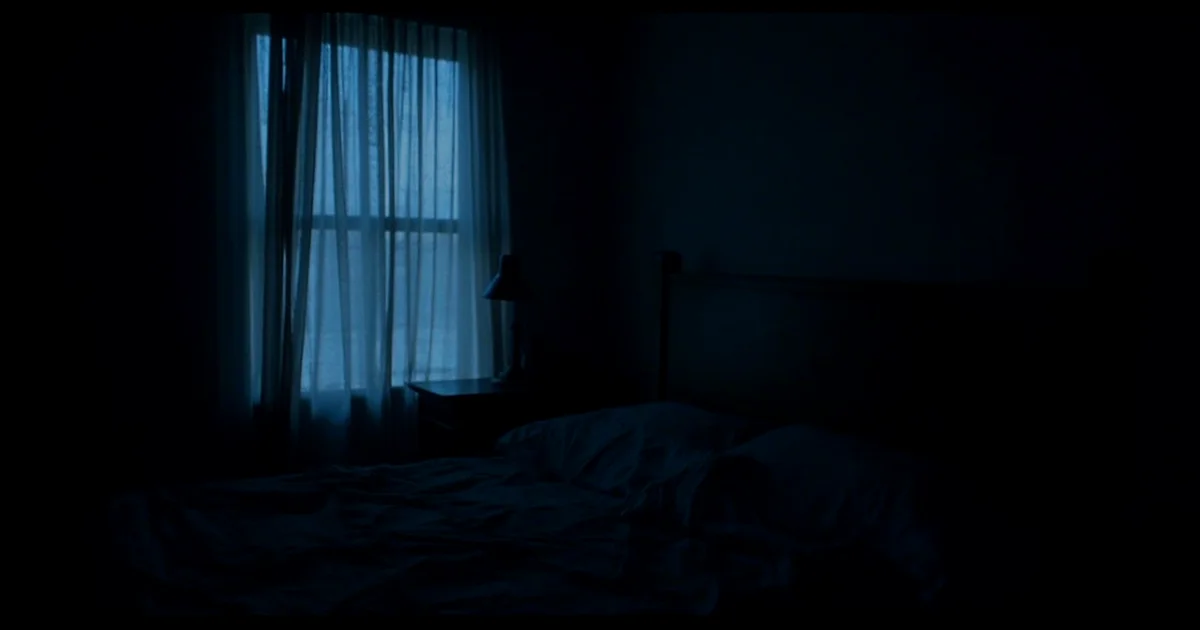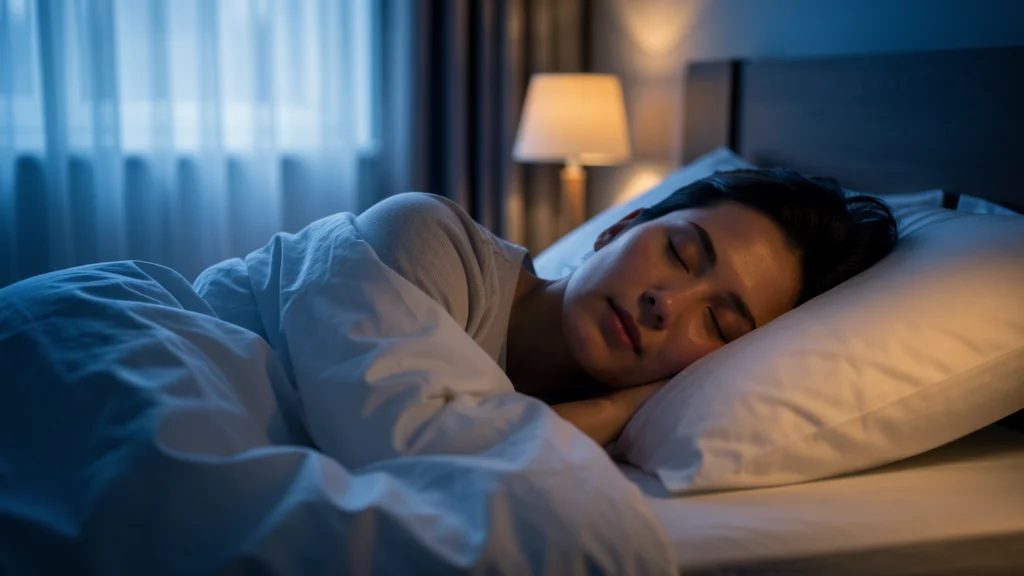

Sleep anxiety is the strange turn a night can take: the body should begin to wind down, but it switches into alert. Your mind counts the hours left, reviews conversations, rehearses tomorrow and turns the bed into a place of effort. The harder you try to sleep, the more awake you feel.
Cleveland Clinic describes sleep anxiety as stress or fear linked to going to sleep, not only difficulty staying asleep (Cleveland Clinic). Everyday use of the term covers a range: worry about not sleeping, fear of waking exhausted, racing thoughts, physical anxiety symptoms and, in some cases, intense fear of the act of falling asleep.
This guide separates those layers. Sleep anxiety is not automatically fear of sleep, or somniphobia. It is also not the same as paradoxical insomnia, night terrors or simply having a bad night. Which support fits depends on the mechanism.
Key points
- Sleep anxiety is the alert state that appears when someone tries to wind down for the night.
- It can feed insomnia, but it is not the same thing as insomnia: roughly 1 in 3 adults worldwide report insomnia symptoms and about 10% have the chronic form (Cleveland Clinic).
- When the fear is focused on the act of falling asleep, the pattern is closer to somniphobia.
- CBT-I is first-line for chronic insomnia, with 70% to 80% of people improving on the multicomponent form (Sleep Foundation); hypnotherapy can support relaxation, body safety and new associations with bed.
- Seek help if the pattern lasts weeks, causes panic, impairs daily life or brings thoughts of self-harm.
On this page
- What sleep anxiety is
- Why it gets worse at night
- How it differs from insomnia and fear of sleep
- Common symptoms
- How to cope tonight
- How hypnotherapy can help
- When to seek professional help
- Frequently asked questions
- Conclusion
What sleep anxiety is
Sleep anxiety is anxious anticipation around the night. Someone in that state is not just awake. They are monitoring whether they will sleep, how much time they have already lost, how they will cope tomorrow and what another bad night means. That monitoring becomes fuel for the problem. Cleveland Clinic separates this state from ordinary worry because it involves persistent fear or stress around bedtime, with physical and mental anxiety symptoms, and sets out the backdrop: anxiety is the most common mental health disorder in the US, affecting around 40 million adults, and most people with disorders of that kind report some form of disrupted sleep (Cleveland Clinic). A body can respond as if the bed were a demand, not a place of rest. A figure that size takes the personal blame out of the complaint: night-time alertness is common and it has a route of treatment.
When I work with anxiety before sleep, I usually start with the moment when the person is still awake, not with trying to force sleep. The common version rarely arrives as “I cannot fall asleep”. It arrives as waking at three in the morning with the hours already counted and tomorrow fully assembled. One question does the work here: what does the body need to notice so it can leave vigilance mode?
That shift matters. Set the goal as “I must sleep now” and the night turns into a test, with every waking minute scored as a failure. Move the target to lowering the alert state so sleep has room, and the body usually does better with conditions than with orders.
Why it gets worse at night
At night there is less outside noise. Day ends, and the mind finds space for what was pushed aside: a difficult conversation, deadlines, health, money, family, fear of failing. Worry, stress and anxiety make sleep harder, and the NHS recommends writing down worries or a to-do list before bed (NHS). There is also a learned cycle. After a few bad nights, the bed stops signalling rest and starts signalling frustration. Your brain learns it quickly: “this is where I stay awake”. From then on, simply entering the bedroom can raise arousal. That outcome is common enough to carry figures: roughly 1 in 3 adults worldwide report insomnia symptoms, and about 10% have chronic insomnia, which lasts at least three months and occurs at least three nights a week (Cleveland Clinic).
Cleveland Clinic describes insomnia as a condition in which someone has the time and environment for sleep but cannot start or maintain it; for chronic cases, CBT-I is often the first treatment option (Cleveland Clinic). With sleep anxiety, that pattern often starts earlier: in the expectation that the night will go badly.

How it differs from insomnia and fear of sleep
Separating the names prevents generic treatment. Sleep anxiety, insomnia, fear of sleep, paradoxical insomnia and night terrors circulate as synonyms in everyday conversation, and they call for different responses. Cleveland Clinic defines insomnia as difficulty starting or maintaining sleep despite adequate time and environment, and records that about half of people with chronic insomnia also have at least one other mental health disorder (Cleveland Clinic). That figure explains why the label on its own helps so little: the emotional layer alongside insomnia usually decides the plan of care. When the central complaint is alertness before lying down, the target is arousal. If sleep will not hold despite the opportunity, CBT-I becomes the main route, with medical review once the pattern drags on. Dread of falling asleep itself pulls the work into phobia territory instead.
| Pattern | Central marker | Common route of support |
|---|---|---|
| Sleep anxiety | worry, alertness and fear of not sleeping | routine, lower stimulation, regulation, CBT-I if insomnia is present |
| Insomnia | difficulty starting or maintaining sleep despite opportunity | CBT-I, medical review when persistent |
| Fear of sleep | dread of the act of falling asleep, with avoidance | gradual exposure, CBT, trauma work when relevant |
| Paradoxical insomnia | feeling you barely slept despite near-normal objective sleep | CBT-I and review through diary, actigraphy or sleep study |
| Night terrors | episodes of agitation in deep sleep, usually with no memory | assessment if frequent, unsafe or linked to another condition |
Those five routes come from the same sources cited across this guide. Cleveland Clinic calls graded exposure the most effective treatment for sleep-related phobia and pairs it with CBT to work through the fears around falling asleep (Cleveland Clinic); it defines paradoxical insomnia as feeling insomnia symptoms despite getting a healthy amount of sleep, assessed with a sleep diary, an actigraph and an EEG (Cleveland Clinic); and it places night terrors in non-REM sleep in the first part of the night, with no memory of the episode by morning and assessment advised when they recur a few times a week (Cleveland Clinic).
Fear of closing your eyes, of losing control, of not waking up or of falling into nightmares points to a different guide: fear of sleep. A third route exists too. “I am sure I did not sleep”, with trackers or sleep studies showing otherwise, raises the possibility of paradoxical insomnia.
Common symptoms
Symptoms vary, but they usually cluster in three areas. In the body, you may notice a raised heart rate, jaw tension, shallow breathing, heat, sweating, trembling, chest tightness, restless legs or a feeling of trapped energy. Mentally, the same script runs: hour-counting, replaying the day, and the verdict that “tomorrow is ruined”. Behaviour shows it as clock-checking, picking up the phone, looking for reassurance, changing beds, getting up repeatedly, trying to control every detail of the room and, the next day, rearranging commitments around the sleep that did not happen. Phones earn their own line on that list: the NHS recommends avoiding phones, tablets and computers for an hour before bed, because light and mental stimulation keep the brain engaged (NHS). Track which of the three areas dominates over a few days before you change anything, since each one answers to a different adjustment.
For many people, the device also becomes emotional anaesthetic: it distracts for ten minutes and charges interest afterwards, and the bill arrives the next morning as fatigue and short temper. No single sign settles the picture. Repetition does, night after night.
How to cope tonight
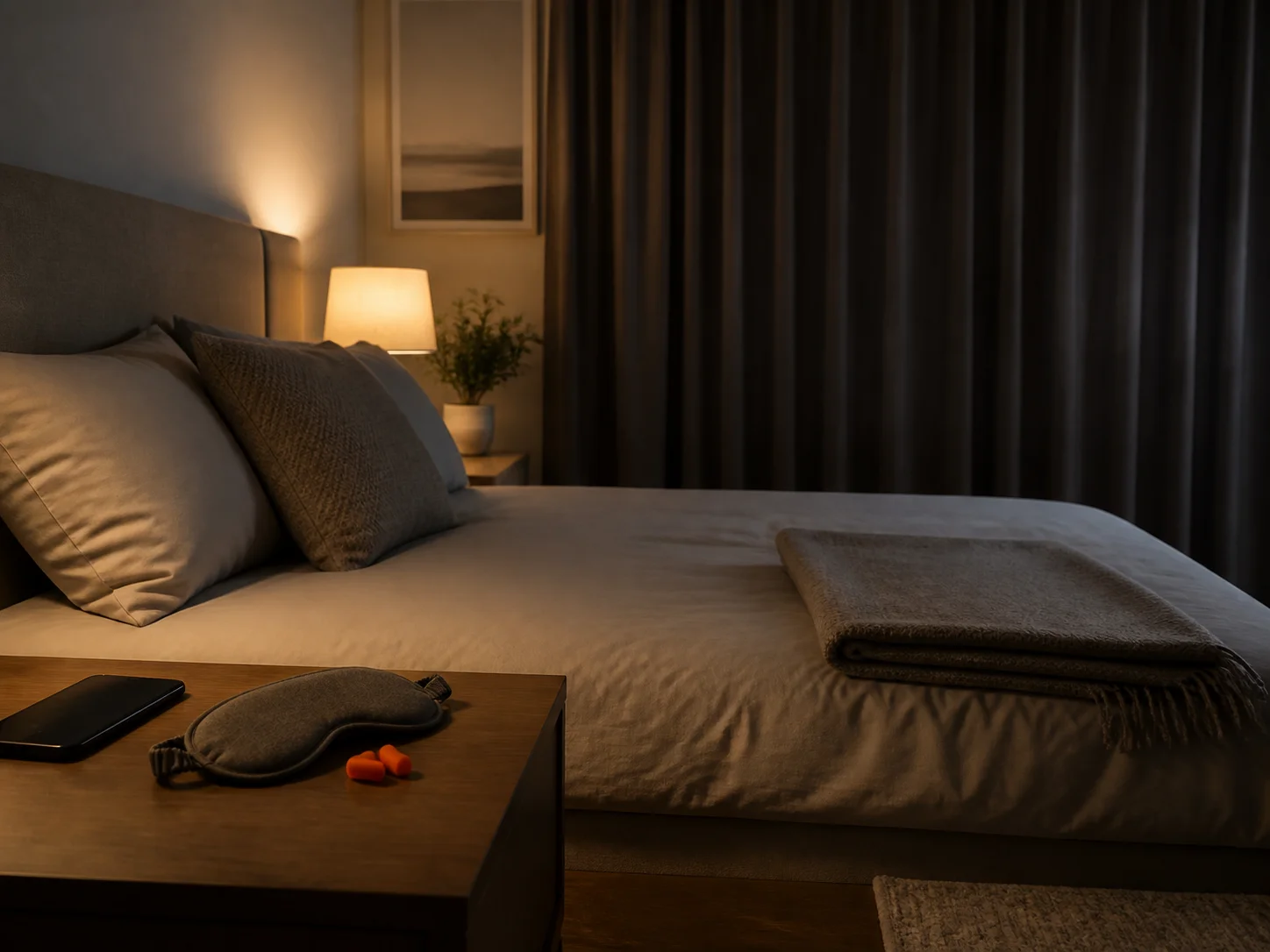
Start before bed. Ten or fifteen minutes earlier, write down worries and a small list of what will wait until tomorrow. None of that is meant to solve your life. It is to tell the brain that the material has been recorded and does not need to be repeated in the dark. Then prepare the room simply: low light, comfortable temperature, clock out of sight, phone out of reach. The NHS recommends a quiet, dark and cool room, and keeping clocks out of view to reduce checking (NHS). Two changes tend to shift a night more than any elaborate technique: less clock-checking, and less screen time in the final hour. Everything else in the plan fits afterwards, once those two are standing.
Notice that you have lain down and entered a battle with sleep, and change the target: instead of “I need to sleep”, use “I will lower alertness”, and treat that as the only job for the next half hour. Soften the jaw, lengthen the exhale, relax shoulders and hands. Sleep does not respond well to command, but it responds to conditions.
Stay awake for a long stretch and the move is to get up. Cleveland Clinic puts a practical threshold on it: leave the bed when sleep has not come within 20 minutes, so the body is not trained to pair the mattress with wakefulness (Cleveland Clinic). Do something quiet, monotonous and in low light. Return when sleepiness comes back. This stimulus-control logic is part of CBT-I, which Sleep Foundation describes as a first-line treatment for chronic insomnia, usually without medication (Sleep Foundation).
In hypnotherapy sessions for sleep, I find that the routine has to be simple enough to survive a difficult night. Make it depend on ten perfect steps and it becomes another pressure. Cheapest of all the adjustments is still the clock: when I ask for it to go out of sight, the report a week later is usually the same one, “I woke up not knowing the time and went back to sleep”.
How hypnotherapy can help
Hypnotherapy does not replace CBT-I, medical assessment or psychiatric treatment when they are indicated. Its place is complementary: training attention, reducing bodily arousal, building safety anchors and weakening the association “bed equals alert”. CBT-I remains the efficacy benchmark in this field: on the multicomponent form, 70% to 80% of people with primary insomnia improve, usually across six to eight sessions (Sleep Foundation). A figure that size sets the role of everything sitting alongside it. Hypnotherapy earns its place where bodily arousal and the expectation of the night weigh more than the routine itself, and it pays off most once the main plan is already standing. Session work usually means training cues of safety in the body, rather than chasing sleep head-on.
A body anchor only helps when the person can repeat it outside the session: turning the phone face down, slowing the breath, softening the jaw, imagining a safe place for a few minutes. Small, repeatable and without performance.
Sessions usually move through three stages: teaching the body to recognise cues of safety, reducing the mental fight against sleep, and rehearsing a different response to the first signs of night-time alertness. That third one takes the longest. It is worth naming what fails, too: the technique that most often misfires in my sessions is counted breathing after an hour awake in bed, because by then it lands as one more task to complete.
Where the main difficulty is chronic insomnia, the plan has to fit alongside CBT-I, which the American College of Physicians guideline recommends as initial treatment for adults in exactly that situation (PubMed). Hypnotherapy sits underneath as a support layer. Never as a stand-alone promise.
For the wider picture, see anxiety: symptoms, causes and treatment and hypnotherapy for insomnia.

When to seek professional help
Seek help if sleep anxiety lasts for weeks, if you start avoiding bed, if sleep affects work or relationships, or if there are night-time panic attacks. It is also worth assessment when there are trauma-linked nightmares, fear of dying in sleep, or frequent use of alcohol or medication to switch off. Breathing that stops and starts, gasping or choking noises, loud snoring and heavy daytime tiredness point to sleep apnoea, and the NHS advises taking those signs to a GP (NHS). NHS guidance also notes that sleep problems and mental health feed each other in both directions: poor sleep can worsen distress, and distress can worsen sleep (NHS). Where to draw the line has little to do with the size of one bad night. What counts is how long the pattern has run, how much of the day it has taken, and whether the nights are still getting worse.
If distress comes with thoughts of self-harm, suicide risk or a feeling that you cannot keep yourself safe, seek urgent support immediately. In the UK and ROI, Samaritans can be reached on 116 123, free, 24 hours a day. In Jersey, contact your GP, emergency services or the local crisis line.
This care does not have to wait until things are extreme. A conversation with your GP or a mental health professional fits well before that point, and it shortens the time to the right treatment.
Frequently asked questions
Is sleep anxiety the same as insomnia?
No. Insomnia is difficulty sleeping despite having enough time and suitable conditions for sleep. Sleep anxiety is the alertness, worry and anticipatory fear that appear when someone tries to wind down for the night. The two can coexist.
Is sleep anxiety the same as fear of sleep?
Not always. Fear of sleep, or somniphobia, is an intense fear of the act of falling asleep. Sleep anxiety is often broader: worry about not sleeping, racing thoughts, body alertness and fear of how the next day will feel.
What should I do when anxiety appears at bedtime?
Move clocks out of sight, write worries down before bed, reduce screens and stimulation, keep the room dark and cool, and avoid trying to force sleep. Do not fight it. Stay awake for a long stretch and the move is to get up, do something quiet in low light, and return to bed once sleepiness comes back.
Does CBT-I help sleep anxiety?
Yes. Cognitive behavioural therapy for insomnia, or CBT-I, is recommended as initial treatment for chronic insomnia and works with habits, thoughts, the bed-wakefulness association, sleep restriction and stimulus control.
When should I seek professional help?
Seek help if sleep anxiety lasts for weeks, affects work or relationships, comes with panic, trauma-linked nightmares, loud snoring with breathing pauses, or thoughts of self-harm. In immediate danger, contact emergency services or a crisis line.
Conclusion
Sleep anxiety improves when the night stops being a performance test. Step one is to identify the mechanism: worry about not sleeping, persistent insomnia, fear of the act of falling asleep or another sleep condition. Then the work becomes more practical: reducing checking, lowering stimulation, moving the clock out of sight, recording worries before bed and rebuilding the association between bedroom and safety.
Where the pattern has already taken weeks or months, do not treat it as a lack of willpower. Sleep is a body function. Professional support can shorten the cycle and give back one basic feeling, that of lying down without turning the whole night into surveillance.
About the author
Fabio Morus is a behavioural therapist and clinical hypnotherapist in Jersey, Channel Islands, focused on anxiety, phobias, sleep and trauma. His training covers Neuro-Systemic Hypnotherapy, CBT (Beck Institute) and EMDR (EMDR Association UK). He works online in Portuguese and English. Clients in Jersey are also seen in person.
This article is for information only. It does not replace a professional assessment, and if you are struggling to cope you can contact Samaritans on 116 123 (UK and ROI, free, 24/7). In Jersey, contact your GP, emergency services or the local crisis line.