
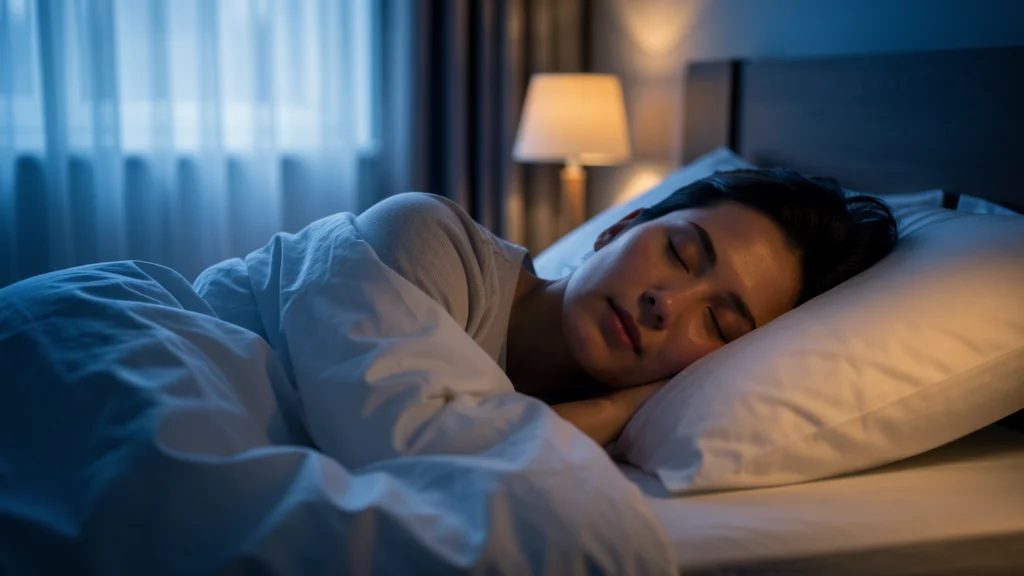
You’re exhausted. You lie down in bed, close your eyes—and your mind kicks into high gear.
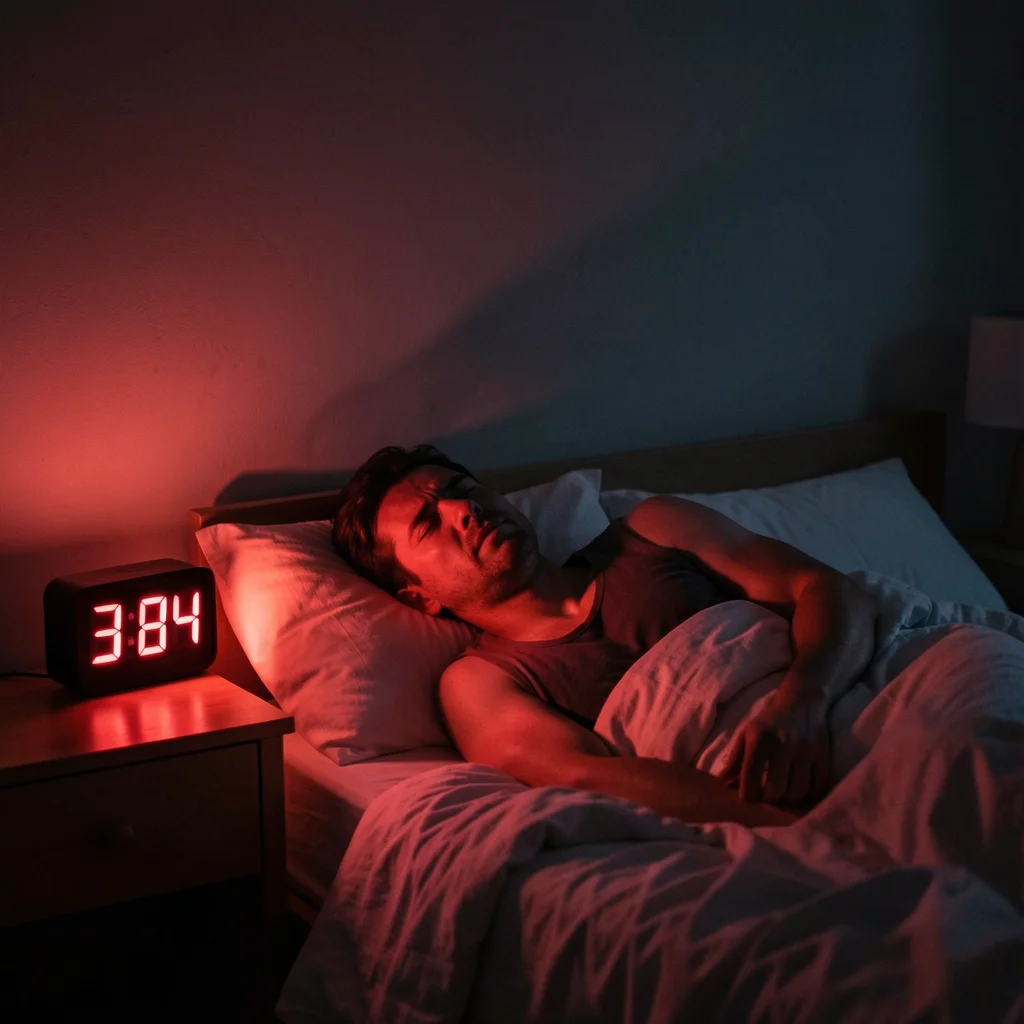
Racing thoughts. The clock strikes 2 a.m., then 3 a.m. The frustration of knowing that tomorrow will be yet another dragging day.
If this sounds familiar, you’re not alone. But the real question is this: what if the problem isn’t fatigue—it’s mental programming?
This is where hypnosis for insomnia comes in.
Why You Can’t Sleep (Even When You’re Tired)
Your body craves rest. But your brain disagrees.
And this conflict is rarely physical. In most cases, insomnia is a mental pattern—a conditioned response that the brain has learned and repeats, night after night. If you’ve already tried everything to sleep, you’ve probably noticed this.
The cycle works like this:
- A stressful phase activates the alert system
- The brain associates the bed with wakefulness (instead of sleep)
- Every poor night’s sleep reinforces anxiety about sleeping
- Anxiety about sleeping prevents sleep
It’s a self-perpetuating loop. And the more you try to force sleep, the more it eludes you.
When the pattern is less about dread of falling asleep and more about worry, pressure to sleep and racing thoughts in bed, see also sleep anxiety.
The good news: if the brain has learned this pattern, it can also unlearn it. And hypnotherapy works precisely on this mechanism.
What is Hypnotherapy for Insomnia?
Hypnotherapy is not a stage show. It is not mind control. It is not sleeping on a couch while someone messes with your head.
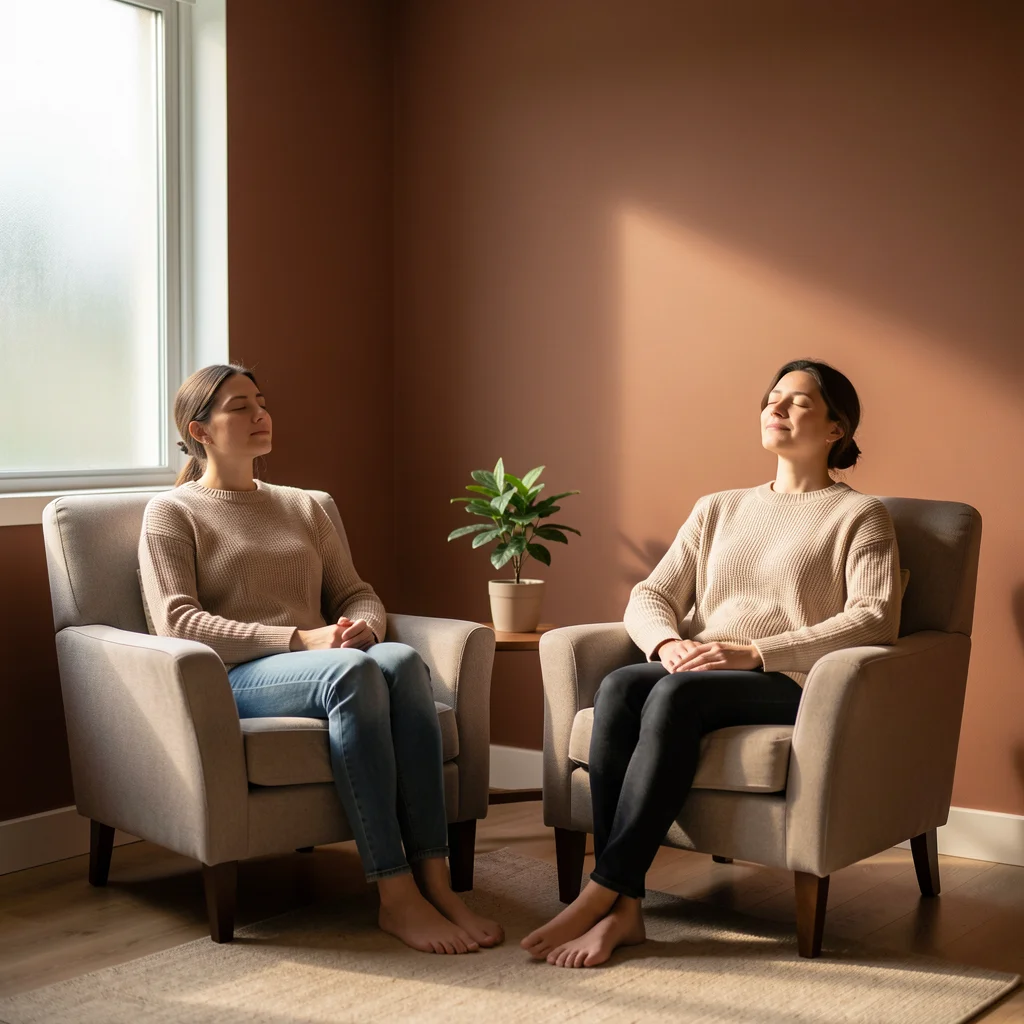
It is a state of focused concentration—a natural state you already experience when you’re so absorbed in a movie that you lose track of time, or when you drive on autopilot and arrive at your destination without remembering the route.
The difference is that, in hypnotherapy, this state is directed toward a specific goal. Unlike traditional meditation, clinical hypnosis works with direct therapeutic suggestions.
In the case of insomnia, the work is done in three layers:
First layer — the physical. The body enters a state of deep relaxation. Breathing slows down. Muscle tension dissolves. It’s the opposite of the alert state that keeps you awake at 3 a.m.
Second layer — the mental. The racing thoughts, which are the real sleep thief, begin to subside. Not because you force them to stop, but because the brain shifts to a different frequency—slower, more stable.
Third layer—reprogramming. This is where hypnotherapy differs from a calming app or guided meditation. The brain in a hypnotic state is more receptive to new associations. Instead of “bed = worry,” it begins to build “bed = rest.”
How a sleep hypnosis session works
If you’ve never tried hypnotherapy, it’s natural to have questions about what to expect. In practice, here’s how it works:
You’re sitting or lying down comfortably. You won’t lose control, you won’t reveal secrets, and you won’t do anything against your will. You remain conscious the entire time.
The therapist guides you into a state of progressive relaxation. Their voice is the guiding thread. You follow the rhythm, but it’s your brain doing the work.
When the hypnotic state is reached—and it is gentler than most people imagine—the therapist introduces therapeutic suggestions. These are not commands. They are invitations that your brain accepts because it is in a state where self-criticism has let its guard down.
Examples of suggestions for insomnia:
- “Your body knows how to sleep. It just needs permission.”
- “Each breath takes you deeper into rest.”
- “Your bed is your safe place. Here, you switch off.”
The session ends with you returning to your normal state of consciousness—relaxed but alert. Many people report sleeping better as early as the first night after the session.

What science says about hypnosis and sleep
Hypnosis is not a belief. It is neuroscience.
EEG studies show that the brain in a hypnotic state exhibits an increase in theta waves—the same waves that dominate the brain when you are falling asleep naturally.
A meta-analysis published in the Journal of Clinical Sleep Medicine analyzed data from 18 studies and concluded that hypnotherapy significantly improves sleep quality, with particularly strong effects on:
- Reduced time to fall asleep
- Increased total sleep time
- Decreased nighttime awakenings
- Improved subjective perception of rest
Another study, from the University of Zurich, compared hypnosis with conventional sleep hygiene. The group that received hypnotherapy showed an 80% increase in deep sleep (slow-wave sleep)—the most restorative phase of sleep, where the brain literally clears itself of toxins accumulated during the day.
The point here isn’t that hypnosis is magic. It’s that it activates the right mechanisms—physiological relaxation, reduced cognitive hyperarousal, and reconditioning of the response to the sleep environment.
Self-hypnosis techniques to use at home
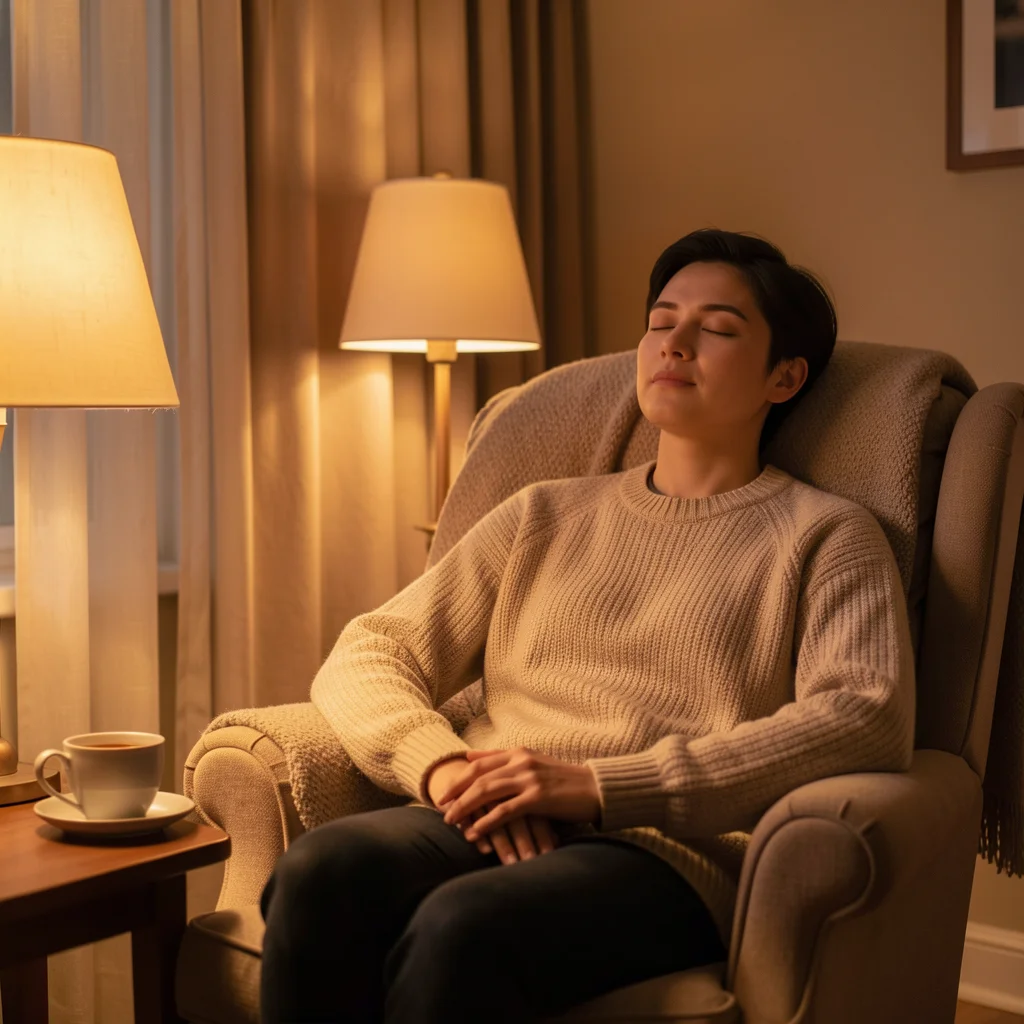
Professional hypnotherapy produces the most consistent results. But there are techniques you can apply on your own to reinforce the process between sessions—especially if you’re also working on how to manage anxiety during the day.
Here are three practical exercises:
1. Progressive relaxation with an anchor
Lie down on the bed. Close your eyes. Start with your feet: tense your muscles for 5 seconds, then relax. Feel the weight and warmth that come after releasing. Move slowly upward—calves, thighs, abdomen, chest, arms, shoulders, neck, face.
When you reach the top, create an “anchor”: gently press your thumb against your index finger and mentally say “I’m relaxed.” Repeat this over the next few nights. Over time, the anchor gesture alone will trigger the relaxation response.
2. Visualizing a Safe Place
With your eyes closed, imagine a place where you feel completely at peace. It can be real or imaginary. Build in the details: the air temperature, the background sounds, the texture of what you’re touching.
The brain doesn’t distinguish well between a real experience and a vividly imagined one. When you visualize the safe place with sensory details, your nervous system responds as if you were actually there.
3. Counting Down with Suggestion
Take three deep breaths. Then, start a mental countdown from 100 to 0. With each number, say a word internally that represents rest: “calm,” “peace,” “let go,” “sleep.”
Between 50 and 40, most people already feel a light hypnotic state. If you reach 0, simply start over—without frustration. The goal isn’t to reach zero. It’s to give your brain a simple task that replaces racing thoughts.
How Long Does It Take to See Results?
This is the most common question. And the honest answer: it depends on your pattern of insomnia.
In my clinical practice, I see three scenarios:
Situational insomnia (one-time stress, change in routine): 1 to 3 sessions are usually enough to restore your sleep pattern. Your brain hasn’t formed a deep habit—it just needs a reset.
Mild to moderate chronic insomnia (months, without other disorders): 3 to 6 sessions produce consistent results. The focus is on breaking the bed-wake association and establishing new patterns.
Severe chronic insomnia (years, comorbidities such as anxiety or depression): 6 to 12 sessions, often combined with other therapeutic approaches. The work is more in-depth because it involves accumulated layers of conditioning.
What matters is this: hypnotherapy does not treat the symptom. It treats the mechanism. And when the mechanism changes, the result is sustained.
Is hypnosis for insomnia right for you?
If you’ve already tried herbal teas, meditation apps, melatonin, and still wake up tired, perhaps the problem isn’t the intensity of your effort—but the direction of it.
Hypnosis for insomnia works where insomnia truly resides: in the brain’s automatic patterns. It doesn’t force sleep. It creates the conditions for it to happen naturally.
If you’d like to explore this path, [contact Fabio Morus for an initial consultation. No obligation, no miracle promises—just an honest assessment of your situation and what hypnotherapy can do for you.
If you prefer to start with simple techniques you can apply today, that’s also a great first step. The important thing is to take that step.