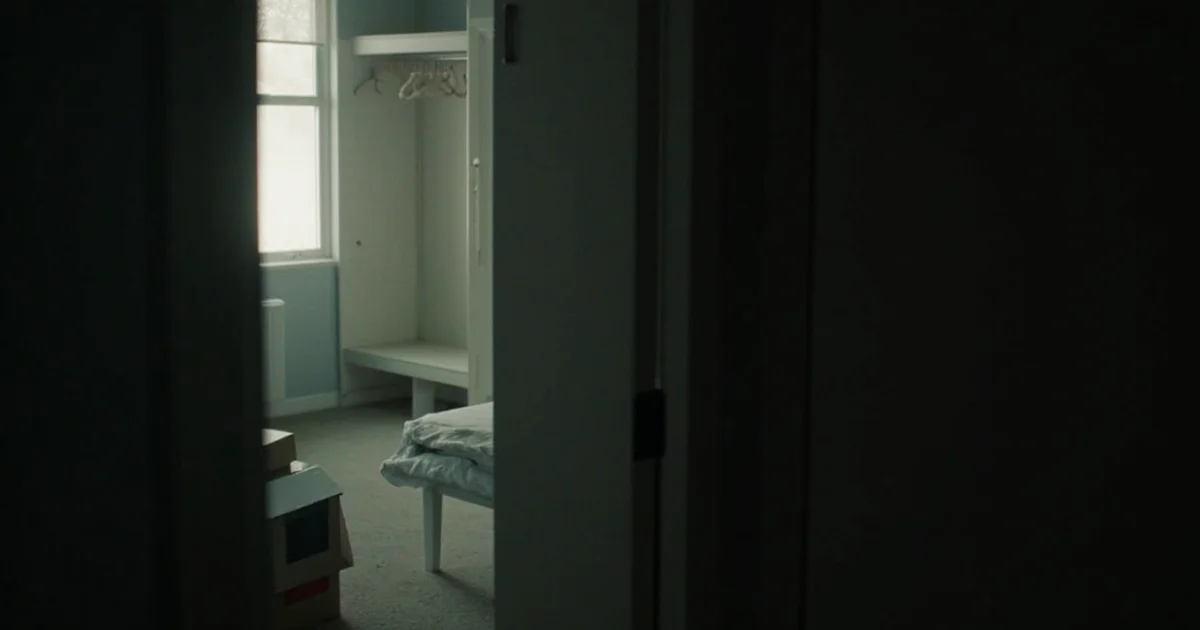

The house is quieter than you expected. The bedroom is still there, tidy, and no one is going to mess it up today. You catch yourself cooking too much, or checking your phone for a message that does not need to come.
That set of feelings has a common name: empty nest syndrome. It is not a diagnosis, and feeling it does not mean you did something wrong or that you should not be happy for your children. It is a transition, and like any transition it asks for a period of adjustment.
Key points
- Empty nest syndrome is the emotional discomfort many parents feel when their children leave home; it is not a diagnosable mental health condition, but the impact is real (Cleveland Clinic)
- Signs include sadness, loss of purpose, loneliness, and conflict in the couple, sometimes with poor sleep, fatigue, and appetite changes (Cleveland Clinic)
- It weighs more when identity is closely tied to the caregiving role, or when other roles and a support network are missing (Sartori & Zilberman, 2009)
- There is evidence that therapy helps, particularly acceptance and commitment therapy (Mayo Clinic)
- Contrary to what many fear, most couples grow closer after the children leave (Cleveland Clinic)
On this page
- What empty nest syndrome is
- Emotional and physical signs
- Why it hits some people harder
- What helps with empty nest syndrome
- When to seek professional help
- Frequently asked questions
- About the author
What empty nest syndrome is
The Cleveland Clinic describes empty nest syndrome as the tangle of feelings parents have when their children move out of the family home and begin their adult lives. It is explicit on one point: this is not a diagnosable mental health condition, even though the emotional impact is real (Cleveland Clinic). The Mayo Clinic takes the same line. It treats the term as a label for the long-term, maladaptive responses some parents have to their children moving out, rather than a clinical diagnosis (Mayo Clinic).
It is worth separating two things. A Brazilian review of the concept distinguishes the “empty nest”, an emotionally neutral period of role change, from “empty nest syndrome”, which is when that passage comes with distress. Some authors find both terms unhelpful and prefer to speak only of “post-parenthood”, which does not assume pain or a need for treatment (Sartori & Zilberman, 2009). In practice, the label matters less than whether the phase is affecting you in a way that needs attention.
Study results are contradictory. Some people notice an improvement in quality of life once the children leave, and most couples reconnect and do well. Others describe depression and a drop in self-esteem in this phase (Sartori & Zilberman, 2009). Both are true at the same time, for different people.
Emotional and physical signs
The most common emotional signs are fear, grief, sadness, guilt, stress, loneliness, irritability, a sense of emptiness, powerlessness or rejection, and at times apathy and hopelessness (Cleveland Clinic). Mayo adds loss of purpose and conflict in the couple. It also flags risky responses, such as increased use of alcohol or other substances (Mayo Clinic).
| Emotional signs | Physical signs |
|---|---|
| sadness, grief, guilt, loneliness | disturbed sleep, fatigue |
| loss of purpose, sense of emptiness | appetite and weight changes |
| irritability, apathy | lower libido, gastrointestinal complaints |
| conflict or distance in the couple | frequent headaches |
Sources: Cleveland Clinic; Mayo Clinic (loss of purpose and conflict in the couple).

Why it hits some people harder
Children leaving rarely happens on its own. It usually arrives alongside several transitions at once, and the Cleveland Clinic names menopause as one that can coincide (Cleveland Clinic). The same source lists as more prone the people with an only child, those who were the primary caregiver, those with little support network, those already living with a mental health condition or a trauma history, and those in a strained couple relationship (Cleveland Clinic). For a couple who reach this stage with the relationship already worn down, the guide to signs your relationship can be saved helps separate the strain of the transition from a problem in the couple itself.
The Brazilian review adds the identity piece. Someone who devoted their life almost exclusively to raising children can reach this phase with a sense of “I am no use for anything”. Having work and activities that give pleasure helps rebuild self-esteem, but it is not a vaccine: mothers who work outside the home feel it too (Sartori & Zilberman, 2009). Cultural factors matter as well. In Brazil, according to the same review, a child moving out is not always read as a natural step, which can raise the intensity of the experience.
What helps with empty nest syndrome
In practice, the people who come to me in this phase rarely open with “it is the empty nest”. They open by saying they do not know what to do with a Sunday, that they argue with their partner more over small things, or that they feel an odd guilt about having free time. A lot of the early work is simply naming what is happening and stopping the treatment of transition sadness as a fault.
The first sessions usually focus on two concrete things: building a week that does not revolve around caring for someone, and looking at the couple’s mismatch when it shows up (one wanting to take on new projects while the other pulls back). From there, what the literature suggests is practical:
- Prepare before the move, while there is still time, rather than waiting for the house to empty and then reacting.
- Rebuild roles and a routine that stand on their own, without depending on having someone to look after.
- Reinvest in the couple relationship and in friendships, which have often been on the back burner for years.
- Choose a project or activity to look forward to, using the time and energy that have freed up.
- Keep in touch with the children without turning it into surveillance, which is usually hardest in the first month.
These steps come from Cleveland Clinic and Mayo Clinic guidance (Cleveland Clinic, Mayo Clinic).
When outside support is warranted, there is evidence that therapy helps, in particular acceptance and commitment therapy (Mayo Clinic). The Brazilian review argues for preventive and psychoeducational approaches, tailored to the person, ideally in the period before the move (Sartori & Zilberman, 2009).
If you want to understand how this kind of support works in practice, before deciding anything, see how the process works. For related topics, see solitude vs loneliness, what is self-knowledge, low self-esteem, and online couples therapy.
When to seek professional help
The transition usually eases as the adjustment happens. The sign that it is worth speaking to a professional is when it does not: the sadness lasts weeks or months, turns into hopelessness, or starts getting in the way of routine, work, and relationships.
The Cleveland Clinic suggests seeking help if symptoms worsen, interfere with day-to-day functioning, come with mood swings and isolation, or with changes in concentration alongside physical symptoms (Cleveland Clinic). Mayo is more direct: if you feel lonely or isolated often, speak with a healthcare professional about how you are doing, both physically and emotionally (Mayo Clinic).
One pattern I see often: people wait until they have “a good enough reason” to seek help. You do not need one. Feeling lost for a few weeks after a big change is reason enough for a conversation.
Frequently asked questions
Is empty nest syndrome a form of depression?
No. Neither the Cleveland Clinic nor Mayo treats it as a diagnosis; it is a transition (Cleveland Clinic). The two can overlap, though. If the sadness is intense, persistent, or comes with hopelessness and a loss of functioning, that deserves professional assessment, whatever the name.
How long does it last?
There is no fixed timeframe. For most people the feelings ease as routine and roles reorganise. If after weeks or months there is no improvement at all, treat that as a sign to seek support, not as something to wait out.
Do only mothers feel it?
No. Fathers, primary caregivers, and any family configuration can feel it. The Brazilian review is explicit that having a job outside the home does not protect against the syndrome, and that the couple’s movement can be asymmetric, with one wanting to take on new projects while the other pulls back (Sartori & Zilberman, 2009).
Does the couple relationship get worse?
It can strain in the short term, with more friction and a sense of distance. Across the whole picture, though, a 2022 study found that marital relationships frequently improve when children leave home (Cleveland Clinic). The Brazilian review describes the same: most couples reconnect after this passage (Sartori & Zilberman, 2009).
About the author
Fabio Morus is a behavioural therapist and hypnotherapist in Jersey, Channel Islands, focusing on anxiety, phobias, and panic disorder. He trained in Neuro-Systemic Hypnotherapy (Brazilian Institute of Hypnosis), CBT (Beck Institute), and EMDR (EMDR Association UK), and holds a Master’s in Addiction Studies. He sees clients online in Portuguese and English, and in person in Jersey. See the full training on the About page.
This content is informational and does not substitute clinical assessment, diagnosis, or professional treatment. If you are in intense distress or having thoughts of harming yourself, contact an emergency service or, in the UK, call Samaritans on 116 123 (free, 24 hours). In Jersey, the crisis line is +44 (0)1534 445290. If you are elsewhere, contact your local emergency services.