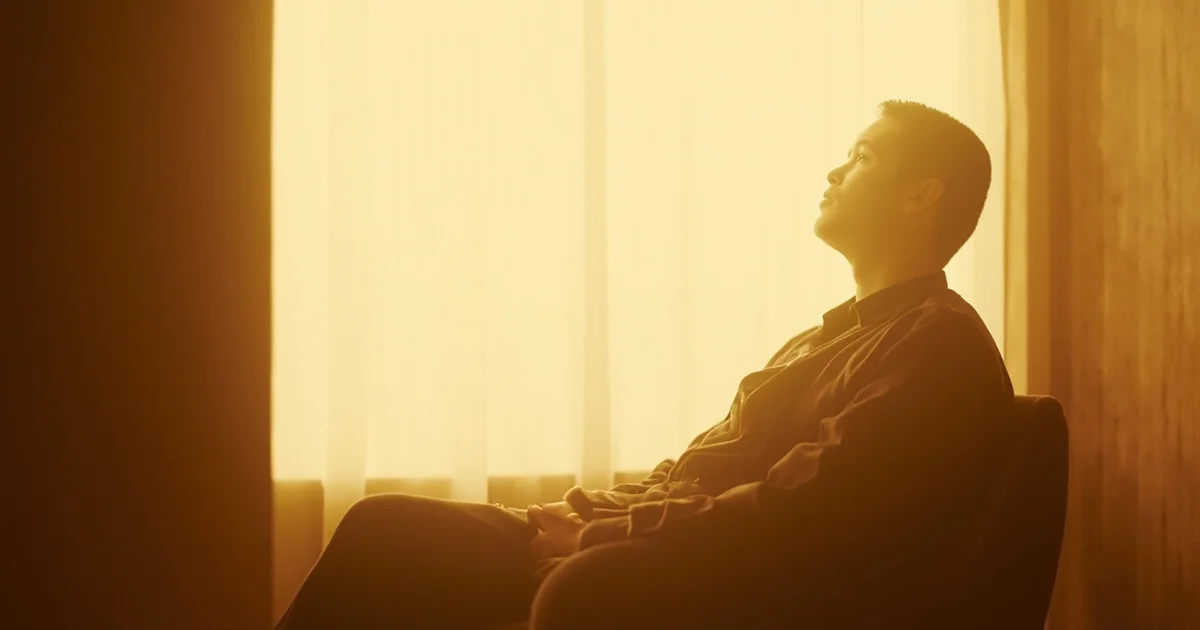
You can be surrounded by people and feel a deep loneliness. You can also spend an entire afternoon alone and feel completely fine. The difference is not how many people are in the room. It is something else.
This article separates two experiences that often get tangled under similar language: the solitude you choose and that recharges you, and the loneliness that shows up uninvited and weighs on you.
Key Takeaways
- Loneliness is the gap between the connection you have and the connection you wish you had — it is not the same as being physically alone
- Solitude is being alone by choice, and it can be restorative
- Someone surrounded by people can feel lonely; someone alone may feel nothing of the sort (Cleveland Clinic)
- Rebuilding connection works better with concrete steps than with the generic advice to “socialize more”
In this article
- What solitude is
- When loneliness becomes suffering
- Emotional signs
- How to rebuild connection
- Frequently asked questions
- About the author
What Solitude Is
Solitude is being alone by choice, not for lack of an option. It is the time you set aside to think, to step back from constant stimulation, or simply to exist without having to manage another person’s presence.
When it is lived well, solitude recharges you. It creates room for a kind of reflection that constant company does not allow. It is not a problem to be solved — for many people, it is a need as real as social contact, just less talked about.
The point worth holding onto: solitude is not the opposite of connection. It is a different way of relating to yourself, for a period in which connection with others remains available but is simply not being used in that moment.
When Loneliness Becomes Suffering
Loneliness, unlike solitude, is felt as a kind of lack — a gap between the connection you have and the connection you wish you had. It does not depend on how many people are physically nearby. A Cleveland Clinic physician describes this with precision: someone who is socially isolated, with few contacts, may not feel lonely at all; another person can feel lonely even surrounded by people (Cleveland Clinic).
That explains a familiar and confusing pattern: you can be at a party, surrounded of acquaintances, and leave feeling lonelier than when you arrived. The number of people in the room is not the metric that matters. The quality of real connection is.
The distinction between social isolation (objectively few contacts) and loneliness (the subjective sense of disconnection) is what separates this article from generic advice to “get out more.” You may need help with both, but they are different things, and the solution to one does not always resolve the other.

Emotional Signs
These are patterns worth noticing in yourself, not traits that classify someone as “a lonely type of person” — that framing stigmatizes more than it helps.
Persistent sadness linked to disconnection. Not a single bad day, but a recurring sense that something is missing in your relationships.
Heightened sensitivity to rejection. Small signs of distance weigh more than they should, and that can lead you to avoid contact out of fear of being rejected again — which, without intending it, deepens isolation.
Feeling misunderstood even in company. The sense that, even while talking with someone, no one really gets what you are going through.
Lack of a trusted person to share what matters. It is not about the quantity of contacts — it is about having at least one person with whom you can be honest about what you are feeling.
A single sign does not mean much. The pattern, repeated over time, is what is worth noticing.
How to Rebuild Connection
Concrete steps work better than vague advice to “socialize more”:
- Choose presence over messages. An in-person meeting or a video call builds more connection than a text exchange.
- Walk over to the person, not the screen. Walking up to a colleague’s desk instead of sending an internal message feels small, but it changes the quality of the contact.
- Prioritize quality over reach. A few authentic relationships matter more than many surface-level contacts, including on social media (Cleveland Clinic).
- Small gestures count. A handwritten note, a coffee offered for no special reason — it does not need to be a grand gesture to rebuild closeness.
- Cut back on social media deliberately. People who pull back a little from social platforms tend to become more intentional about seeking real relationships, instead of replacing the need for connection with feed scrolling (Cleveland Clinic).
If you notice that loneliness persists more days than not, that is already a signal that professional support is worth seeking, instead of waiting for it to improve on its own.
If you want to understand how that kind of support works in practice, before deciding anything, see how the process works.
Frequently Asked Questions
Is being alone always a bad thing?
No. Chosen solitude can be restorative, not a problem to correct. What matters is not being alone — it is whether that moment alone recharges you or weighs on you like a lack you did not choose.
How do I know if I am isolated or just enjoying a moment alone?
Ask yourself whether the time alone feels restorative or forced. If you come out of it rested and clearer, it is probably solitude. If you come out sadder, more anxious, or feeling that something is missing, it is probably loneliness asking for attention.
Does chronic loneliness affect health?
Yes, broadly — persistent loneliness tends to affect mood, sleep, and overall well-being over time. We will not quote a specific number here without a verifiable primary source; what matters in practice is that persistent loneliness deserves attention, not that it produces an exact risk.
When should I seek help?
When loneliness persists more days than not, or when it begins to affect your sleep, your mood, or your desire to maintain the relationships you already have. Seeking support does not mean that ordinary loneliness has become a disorder — it just means it is worth having support to handle it.
About the Author
Fábio Morus is a behavioral therapist and hypnotherapist based in Jersey, Channel Islands, focused on anxiety, phobias, and panic disorder. He trained in Neuro-Systemic Hypnotherapy (Brazilian Institute of Hypnosis), CBT (Beck Institute), and EMDR (EMDR Association UK), and holds a Master’s degree in Addiction Studies. He sees clients online in Portuguese and English, and in person in Jersey. See his full training on the About page.
This content is informational and does not replace clinical evaluation, diagnosis, or professional treatment. If you are in intense distress or having thoughts of self-harm, reach out to an emergency service or call the 988 Suicide & Crisis Lifeline (free, available 24 hours a day in the US).