
You know someone - or maybe it’s you - who has real neurological symptoms: tremors, numbness, difficulty speaking, seizures that look like epilepsy but aren’t. All normal tests. All tests are normal. Diagnosis: conversion disorder, also called functional neurological disorder (FND).
What many people hear from their doctor is: “There’s nothing wrong.” But there is. The problem doesn’t show up in imaging tests - it shows up in the way the brain processes certain experiences.
EMDR (Eye Movement Desensitization and Reprocessing) therapy is one of the approaches with the best scientific evidence for working on this mechanism. It’s not hypnosis. It’s not suggestion. It’s a structured process that activates the brain itself to process memories that have become “stuck”.
In this article, I explain how it works, what the research says, and what a session is like.
What is conversion disorder and what happens in the brain
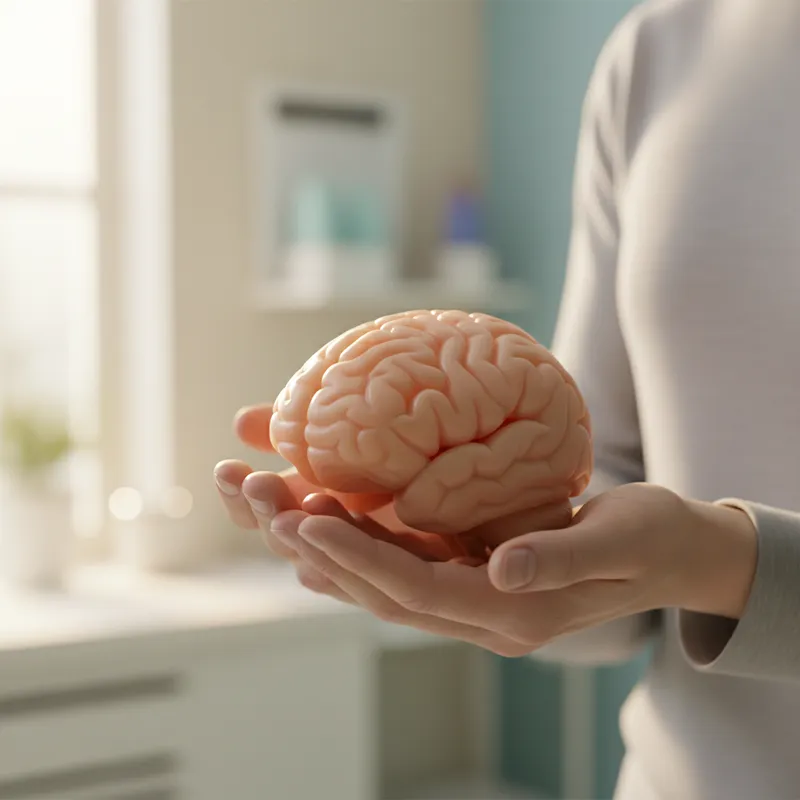
Conversive disorder belongs to the group of neurological functional disorders. The brain, faced with an intense stressful or traumatic experience, activates defense mechanisms that manifest themselves as physical symptoms - tremors, tingling, loss of sensation, speech difficulties, muscle weakness.
These symptoms are not made up. They are real. What distinguishes them from other neurological conditions is that there is no structural damage visible on tests. The problem lies in the way the brain processes and stores certain memories.
The simplest way to explain it: the nervous system goes into overprotection mode. It’s as if the brain “switches off” certain functions to manage something it can’t process. This happens involuntarily. The person has no control over when the symptoms appear, nor can they simply decide to get better.
How EMDR works for conversion disorder

EMDR is based on a central idea: certain traumatic memories get “stuck” in the nervous system, stored in a disorganized way. When they are activated, the brain reacts as if the trauma were happening now - and symptoms appear.
During an EMDR session, the person performs bilateral eye movements (or other forms of alternating stimulation). The brain is led to reprocess these memories, connecting them in a more adaptive way. The memory continues to exist, but loses its negative emotional charge. The symptoms diminish or disappear because the brain’s response has changed.
This is not hypnosis. The person remains conscious and in control. There is no external suggestion. The brain does the work - it just needs a trained guide to do it safely.
What research says about EMDR and FND

The evidence for EMDR in conversion disorder is limited but growing. We know that many patients with FND have a history of previous trauma - sometimes unidentified, sometimes considered “irrelevant” to the symptoms. When these traumas are treated, functional symptoms decrease.
The NICE (National Institute for Health and Care Excellence) guidelines recognize trauma processing as a key component in the treatment of functional symptoms. EMDR is among the most experimentally grounded approaches to this pathway.
The website neurosymptoms.org, maintained by Dr. Jon Stone, an international reference in FND, states that trauma-focused treatments are essential in cases with a history of adverse experiences.
In my clinical experience with conversion disorder and anxiety, the pattern is consistent: the more directly the underlying traumatic material is addressed, the better the results. It’s not universal - there are cases where trauma isn’t the main driver - but it’s the most documented path.
What differentiates EMDR from other approaches

Some therapies talk about the problem. EMDR goes directly to the memory that feeds it.
Speed. Other models may require months of generic sessions to achieve comparable results. With EMDR, significant changes often appear in just a few sessions.
Accuracy. The protocol identifies specific traumatic memories and works on them directly. There’s no fuzzy talk about problems - there’s a structured process with defined targets.
Neurological mechanism. Bilateral stimulation activates different brain areas, facilitating the reprocessing of memories stored in a maladaptive way. It’s not faith - it’s neuroscience.
Compatibility. EMDR combines well with other approaches - cognitive-behavioral psychotherapy, clinical hypnosis, physiotherapy. It doesn’t exclude, it complements.
For those who have tried other avenues without success, EMDR offers a different angle. It’s not a guarantee of complete recovery - but it has clear mechanisms and growing evidence.
When EMDR is indicated for conversion disorder
EMDR is most indicated when there is a history of traumatic experiences associated with the onset or worsening of symptoms. This includes:
- History of abuse, accidents, violence
- Sudden loss or abandonment experiences
- Situations of imminent danger
- Prolonged stressful events that coincided with the onset of symptoms
- Intrusive memories related to the period when the symptoms began
Not every case of conversion disorder has direct trauma as the main factor. There are situations in which chronic stress, separation anxiety or maladaptive coping mechanisms are more relevant. In these scenarios, EMDR can still help, but an initial assessment is essential.
Signs that EMDR may be an option:
- Symptoms have arisen after a difficult event
- You have intrusive memories related to the period when the symptoms appeared
- Situations that evoke the original event make the symptoms worse
- You avoid places, people or situations without understanding why
- Disturbed sleep with nightmares or repetitive thoughts about the event
Assessment with a professional with EMDR certification and experience in FND is the first step. Not all therapists have this combination - it’s a rare specificity.
FAQ: frequently asked questions about EMDR and conversion disorder
Does EMDR work for all cases of conversion disorder?
No. The response varies according to the time of evolution, the nature of the trauma, social support and the way the process takes place. But there is documentation of cases in which EMDR has produced significant improvements where other approaches have failed. Individualized assessment is what determines whether it is the right tool.
How many sessions does it take to see results?
More straightforward cases can show changes in 3 to 5 sessions. Complex cases, with multiple traumas, require more time. The complete protocol for simple trauma is around 12 sessions - but each case sets its own pace.
Is it possible to do EMDR online for conversion disorder?
Yes. Research shows that remote EMDR is effective. Bilateral stimulation can be done with specific devices, alternating hand touch, or other formats that allow for adequate reprocessing.
Are EMDR and hypnosis the same thing?
No. Both work with the unconscious, but in different ways. Hypnosis uses suggestion to modify responses. EMDR uses bilateral stimulation to activate the brain’s natural processing. For conversion disorder, both can be useful, but they have different mechanisms.
Can I do EMDR together with medication?
In most cases, yes. EMDR does not interfere with most psychiatric medication. It can complement medication for anxiety or associated depression - it doesn’t replace it.
What if symptoms worsen during EMDR?
It can happen temporarily. The brain is processing active memories - it is common for symptoms to intensify before improving. The therapist adapts the protocol as necessary.
What an EMDR session looks like step by step
Phase 1 - History and planning
Tell the therapist your story. Together they identify the target memories and build the treatment plan.
Phase 2 - Preparation
You learn emotional regulation techniques to keep yourself safe during processing. Without this, you can’t move on to traumatic memories.
Phase 3 - Evaluation
The therapist activates the target memory. You access the image, emotions and associated physical sensations.
Phase 4 - Desensitization
You follow eye movements (or another form of bilateral stimulation) while your brain works on the memory. Natural connections take place.
Phase 5 - Installation
A positive belief is “installed” - you consciously accept a more adaptive view of the experience.
Phase 6 - Body scanning
The body is checked for residual stresses. If there are any, they are processed.
Phase 7 - Closing
The session ends. You are not emotionally “open” after the session.
Phase 8 - Re-evaluation
In the next session, progress is checked and the next targets set.
Each session lasts between 60 and 90 minutes. The usual frequency is weekly or fortnightly.
Choosing a therapist: why training matters
Not just any psychologist or psychiatrist is prepared to apply EMDR in cases of conversion disorder. EMDR certification requires specific training - hours of practical training and supervision.
But there is a second requirement: knowledge of FND. Conversive disorder has its own characteristics. The therapist needs to understand how the symptoms manifest, what triggers them, and how to differentiate them from other neurological conditions.
This combination is rare. Look for professionals with EMDR certification (verifiable at emdria.org) and clinical experience with functional disorders. Ask directly about previous cases before you start.
Is EMDR worth trying for conversion disorder?
If you live with conversion disorder, you know the weight of the symptoms on a daily basis. The isolation, the frustration of not being understood, the feeling that nobody understands what’s going on.
EMDR offers a therapeutic path based on evidence, with known mechanisms of action. It’s not a miracle - it’s a tool with a real capacity to help, provided it’s applied to the right case.
Three things to take away:
- Conversive disorder often has its basis in experiences that the brain has been unable to process. EMDR acts directly on this mechanism.
- Science recognizes trauma processing as a therapeutic route for functional symptoms. International guidelines point in this direction.
- The choice of therapist matters as much as the technique. EMDR certification + FND experience is the combination to look for.
If you want to explore whether EMDR is right for you, get in touch. I’ll assess your situation and tell you if it makes sense to go down this path.
Sources cited in this post:
- neurosymptoms.org - Dr. Jon Stone
- NICE Guidelines - Functional neurological disorder
- PubMed - EMDR and functional neurological disorder
- EMDRIA - EMDR Association
Related posts: