
You’re in bed. Your body feels heavy. Your eyes burn. But your mind won’t shut off.
You know you need to sleep—tomorrow brings another day of symptoms, doctor’s appointments, and trying to function. But sleep just won’t come. Or maybe you even fall asleep, but you wake up several times during the night, without any real rest.
If you live with a functional neurological disorder (FND), this scenario is no exception. It’s routine.
Insomnia in FND isn’t “just anxiety” or a “lack of discipline” when it comes to sleep. It has its own mechanisms—and that’s why it requires approaches that take this into account.
The problem isn’t that you aren’t trying. It’s that your nervous system is stuck in a state that doesn’t allow for rest.
Good news: there’s a way out of this. You just need to understand how FND affects sleep—and what to do to get your nights back.
How FND Affects Your Brain?
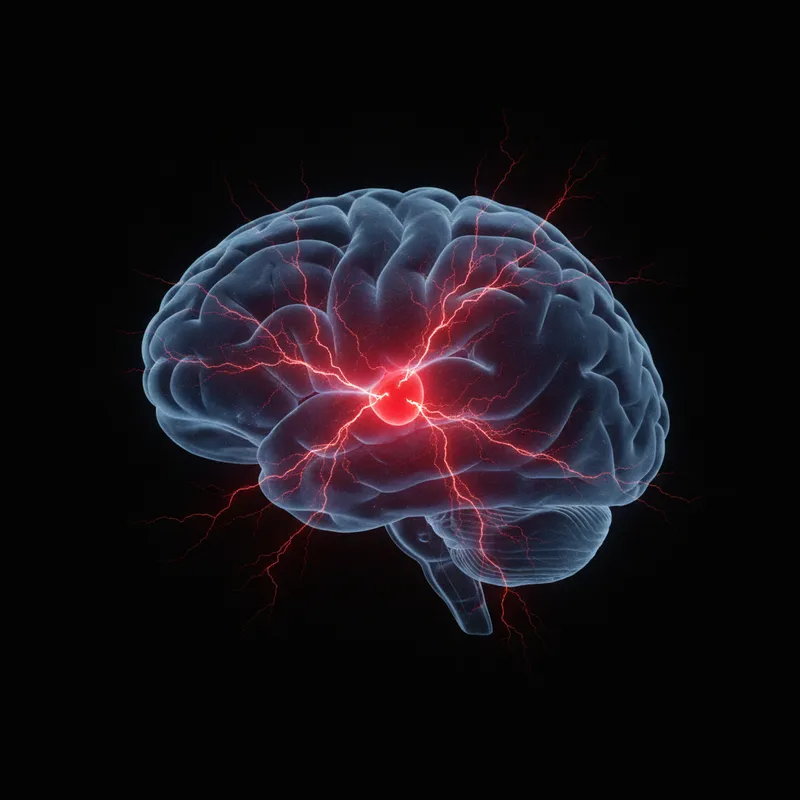
Imagine that the brain is an operating system. With FND, it malfunctions—not due to structural damage or disease, but because the right signals aren’t reaching the right places. It’s like a glitch.
This happens because of a misalignment in sensory-motor processing and emotional regulation. The amygdala (the alarm center) becomes overactive. The prefrontal cortex (which is supposed to control it) becomes underactive.
The result: the brain interprets normal stimuli as threats. The body remains on high alert even when there’s no real danger.
Sleep requires the opposite: safety, relaxation, and turning off the alarm. When the brain is in this hypervigilant state, falling asleep becomes a challenge—and staying asleep, another.
Why Insomnia in FND Is Different?

Not all insomnia is the same. Common insomnia usually has clear triggers: worry about work, financial stress, or a specific event.
Insomnia in FND has its own characteristics:
Light, fragmented sleep. You may even fall asleep, but you wake up multiple times. The brain never reaches the deep (delta) sleep stage for long enough. It’s like sleeping with one foot out the door—always ready to react. This pattern has a name: low sleep efficiency. You spend hours in bed, but very little time actually sleeping.
The physical symptoms of FND also get in the way. A tremor that worsens when you relax. A tingling sensation that bothers you when you lie down. The need to move to relieve tension. All of this silently fragments your sleep.
Feeling like you’ve had a bad night’s sleep even after hours in bed. Eight hours in bed, but you wake up feeling like you’ve run a marathon. You’re missing that truly restorative sleep.
Symptoms worsen the next day. Poor sleep amplifies tremors, weakness, fatigue, and so-called “functional attacks” (seizures without abnormal electrical activity on the EEG). Insomnia isn’t just discomfort—it feeds back into FND.
Vicious cycle. The worse your sleep, the worse your symptoms. The worse your symptoms, the harder it is to sleep. Without intervention, this cycle perpetuates itself.
If you’ve recognized any of these patterns, know this: it’s not your fault. Your brain is trying to protect itself—but in the process, it’s disrupting your rest.
Between 30% and 50% of people with functional neurological disorders report significant sleep problems. That number is far too high to be a coincidence. Insomnia isn’t a secondary symptom of FND—it’s part of the condition.
What Happens in the Brain of People with FND and Insomnia?
It’s important to understand the mechanisms, because that’s what determines the treatment.
The Amygdala on Constant Alert
The amygdala is the brain’s threat detector. In people with FND, it fires much more frequently than normal. At night, any slight stimulus—a noise, a movement, a thought—triggers the alert.
The problem: the amygdala doesn’t distinguish between real danger and a false alarm. To it, everything is a threat.
Cortisol at the Wrong Time
The HPA (hypothalamic-pituitary-adrenal) axis regulates the stress response. In FND, it tends to become dysregulated—elevated cortisol at night (when it should be dropping), and difficulty activating the parasympathetic nervous system (which promotes relaxation).
In other words: your body is chemically primed for action, not rest.
The Understimulated Vagus Nerve
The vagus nerve is the nervous system’s main “brake.” When it functions well, you relax, digest, and rest. In FND, vagal tone is usually reduced—which makes it difficult to trigger the relaxation needed for sleep.
These three mechanisms—an overactive amygdala, elevated nighttime cortisol, and an under-stimulated vagus nerve—form the basis of insomnia in FND.
This matters because it changes the treatment approach. It’s no use “trying to relax” when the brain is programmed not to relax. You have to teach it to break out of this state—and that requires specific, not generic, methods.
Is there a vicious cycle between FND and sleep deprivation?
The relationship goes both ways. It’s not just that FND causes insomnia—insomnia worsens FND.
Poor sleep increases neural inflammation. Insufficient sleep raises inflammatory markers in the brain, which can intensify functional symptoms.
It reduces emotional regulation. Without sleep, the prefrontal cortex functions less effectively. You become less able to cope with stress, frustration, and symptoms. A difficult day becomes even harder when you’ve slept poorly.
It increases the perception of pain and discomfort. Sleep deprivation amplifies the perception of physical symptoms—weakness, tremors, and unusual sensations typical of FND.
Mental fatigue worsens the brain “glitch.” The brain affected by FND already has difficulty processing information. Without rest, this difficulty increases.
This cycle is frustrating, but not impossible to break. The key lies in interventions that address both FND and sleep at the same time.
Treating Insomnia in FND

Treatment is not the same as treating common insomnia. Generic “sleep hygiene” rarely works on its own.
Hypnotherapy for functional insomnia
Hypnotherapy is one of the most effective approaches for insomnia in FND for one straightforward reason: it works with the brain’s state of alertness.
During hypnosis, the brain reduces amygdala activity and activates the parasympathetic nervous system. It’s like teaching the brain to switch out of “alert” mode and into “rest” mode.
In practice, hypnosis works on three levels:
- Reduction of nighttime arousal — the brain learns not to set off false alarms at bedtime
- Regulation of the sleep-wake cycle — helps restore a disrupted circadian rhythm
- Breaking the anxiety-insomnia cycle — the anticipation of “I won’t be able to sleep” ceases to be an automatic trigger
See how it works in practice in the article on hypnosis for insomnia.
Adapted Cognitive-Behavioral Therapy
Classic CBT for insomnia (CBT-I) can help, but it needs to be adapted for FND. The focus isn’t just on “changing thoughts about sleep,” but on:
- Regulating nighttime hypervigilance
- Reducing catastrophizing about nighttime symptoms
- Creating positive associations with bed (rather than associating it with sleepless nights)
For the principles of CBT applied to FND, see the article on CBT for conversion disorder.
Regulation of the nervous system (vagus nerve)
The vagus nerve plays a central role in both FND and sleep. Vagal stimulation exercises make a real difference.
Some helpful techniques:
- Slow diaphragmatic breathing (inhale for 4 seconds, exhale for 6)
- Exposure to cold water on the face or hands before bed
- Slow eye movements (following a horizontal object for 30 seconds)
- Low-frequency music or deep sounds
You can find more examples in the guide to vagus nerve exercises to calm anxiety.
Nighttime Routine for the Brain with FND
It’s no use just turning off the lights and waiting for sleep to come.
Progressive sensory reduction. An hour before bed, gradually reduce stimuli: dimmer lights, quieter sounds, screens turned off. The brain with FND needs a transition, not an abrupt change.
Safety anchor. A short, predictable ritual—warm tea, slow breathing, a specific sound—that the brain learns to associate with “it’s okay to shut down.” With repetition, the ritual becomes a trigger for relaxation.
No expectation of “falling asleep.” Instead of trying to fall asleep, the goal is simply to rest. Removing the pressure of “I need to fall asleep now” reduces amygdala activation. Sleep comes as a consequence, not as a goal.
Integrated Approach
On their own, each technique helps. Together, they address all three mechanisms at once: they reduce amygdala hyperarousal, regulate cortisol, and activate the vagus nerve.
Treatment doesn’t have to be complicated. But it needs to be tailored to FND—not to ordinary insomnia. Understanding this difference is the first step toward regaining sleep.
What to Avoid (and Why)

Some common approaches to insomnia can actually make the condition worse in FND.
Be careful with sedatives without medical guidance. Benzodiazepines and Z-drugs (zolpidem, zopiclone) can make you sleepy, but they often worsen sleep fragmentation and increase fatigue the next day. In people with FND, the side effect of daytime drowsiness can further complicate the condition.
Don’t force yourself to sleep. “Trying to sleep” activates the amygdala and worsens insomnia. If you can’t fall asleep, get out of bed for a few minutes and do something monotonous (light reading, for example). It’s better than pushing yourself.
Don’t ignore anxiety. Anxiety and FND go hand in hand. Often, nighttime insomnia is a reflection of unprocessed daytime anxiety. The article on 100 symptoms of anxiety helps identify these signs.
When to Seek Professional Help
If insomnia has been affecting your quality of life for more than a month in a row—and especially if you notice that your FND symptoms worsen after a poor night’s sleep—it’s worth considering professional help.
It’s not normal to wake up every day feeling more tired than when you went to sleep. It’s not normal to spend your whole life fighting against sleep.
Treatment for insomnia in FND exists. And it works.
You don’t have to accept this as part of your routine. Insomnia associated with functional neurological disorder can be treated, and the right approach can restore not only rest—but also your quality of life.
The path is there. You already know that insomnia won’t go away on its own. But you also know that there are concrete ways to deal with it. The question now is: what will be your first step?
If you’d like to start with something simple, download the free ebook ZERO ANXIETY. It was created for people living with chronic anxiety and sleep difficulties, featuring practical strategies you can apply today.
And if you feel you need more direct support—from someone who understands the connection between FND and sleep—get in touch with Fabio Morus. Treatment is available. You just need to get started.