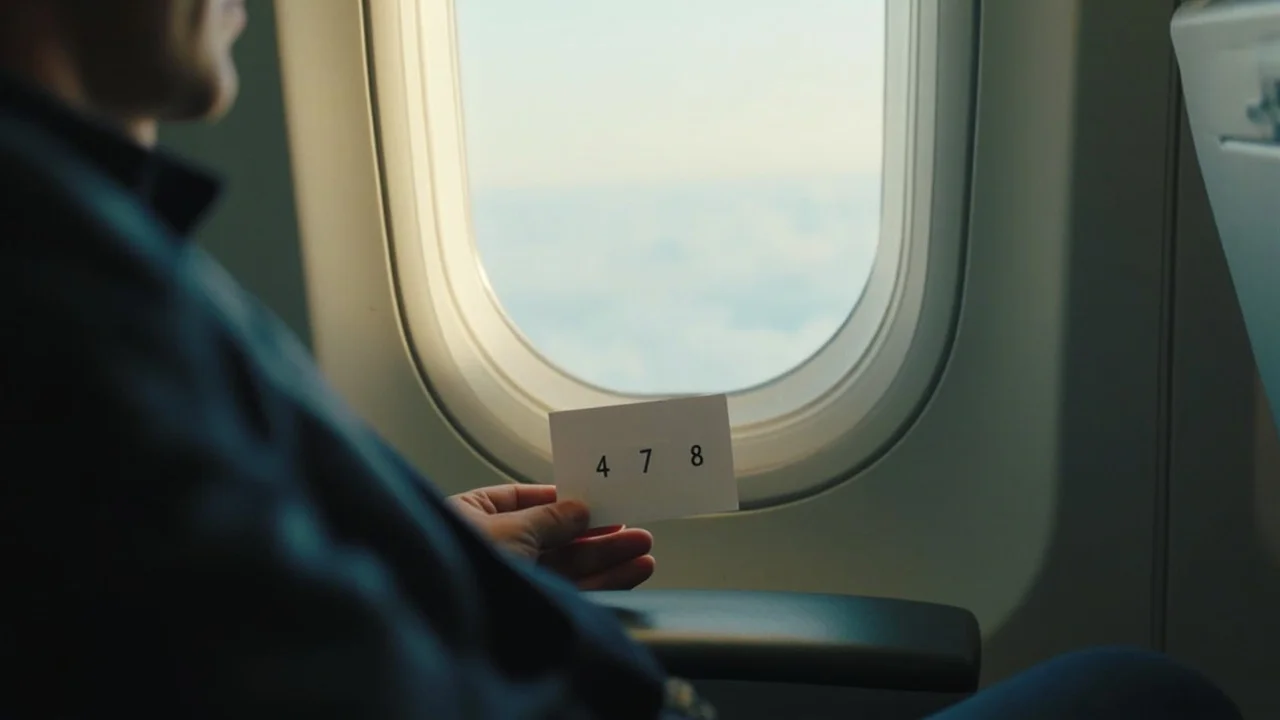

Before a trip, the body can react before the mind has decided anything. Fear of flying, or aerophobia, affects more than 25 million adults in the US and is most common between the ages of 17 and 34, according to Cleveland Clinic. It belongs to the specific phobia family, according to the American Psychiatric Association, a group found in 9.1% of US adults in the past year in 2001-2003 NIMH data. This guide explains how to tell aerophobia apart from ordinary travel nerves, why the body sounds the alarm on the form of transport with the lowest death rates, and which steps help people get back on a plane. Readers weighing up hypnotherapy can also see how a hypnotherapy session works.
Key Takeaways
- More than 25 million US adults have a fear of flying, most often between the ages of 17 and 34, a stage of graduations, marriages and childbirth, according to Cleveland Clinic.
- Most aren’t actually afraid of a crash; what they may fear is the anxiety on board (Cleveland Clinic).
- Under DSM-5-TR, a specific phobia involves disproportionate fear, avoidance or enduring the situation with intense fear or anxiety, and a typical duration of six months or more (StatPearls).
- CBT: the optimal strategy (StatPearls); exposure therapy sits among the treatments that help (Cleveland Clinic).
- Seek professional help when the fear leads you to avoid important trips, costs you sleep in the week of the flight, or comes with panic attacks.
On this page
- What is fear of flying
- Why so many people are afraid of flying
- Physical symptoms of flight anxiety
- How to overcome fear of flying step by step
- Techniques for the day of the flight
- When to see a professional
- Frequently asked questions
- Conclusion
- Sources
- About the author
What is fear of flying
Fear of flying, also called aerophobia, is an intense fear of travelling by plane, and it can develop in someone who flew calmly for years, according to Cleveland Clinic. The American Psychiatric Association lists flying among its examples of specific phobia, alongside public speaking, heights, injections and spiders. What separates a phobia from ordinary nerves is proportion: under the DSM-5-TR criteria described in StatPearls, the fear, anxiety or avoidance has to be out of proportion to the actual danger and typically last six months or more. Feeling tense at take-off and carrying on with the trip is, in practice, something else, because the discomfort is there without running the person’s diary. In practice, once it becomes a phobia, the fear can start choosing destinations, pushing back meetings and cancelling family visits. Some people become obsessed with learning about security measures at airports and on planes, a sign Cleveland Clinic describes.
Worldwide, 470 million people were living with an anxiety disorder in 2023, according to the WHO. In the US, 12.5% of adults have a specific phobia at some point in their lives and 9.1% in the past year, with a higher rate in women (12.2%) than in men (5.8%), based on National Comorbidity Survey Replication data (2001-2003) published by the NIMH. Those figures cover every specific phobia combined, so they describe the whole family rather than fear of flying on its own.
For where aerophobia sits among other fears, the guide to phobia types, causes and treatments maps the categories and treatment routes.
Why so many people are afraid of flying
Aerophobia usually has no specific cause, according to Cleveland Clinic. On the same page, Cleveland Clinic explains that most people with it are not actually afraid of the plane crashing: what they may fear instead is the overwhelming anxiety of being on board, and the anticipation, or simply thinking about the flight, is often as troubling as flying itself. News stories about terrorism, crashes or violence on planes, take-off and landing, turbulence, and thoughts about fire or illness spreading through the cabin are among the triggers Cleveland Clinic lists, and acrophobia, agoraphobia and claustrophobia can make it worse. For specific phobias in general, the learning routes described in StatPearls include classical conditioning, when something neutral becomes tied to a bad experience, and modelling, when a person watches someone else react with fear and takes that fear on. Looking at phobias in general, the NHS adds frightening childhood experiences, a family history of phobias or anxiety, and negative reactions from other people.
In session, many clients recall a concrete episode tied to the start of the fear, such as a rough landing in childhood or a crash report watched late at night. Working through that memory calmly, in my practice, tends to take some of the charge out of the scene. Not every case has a clear origin, and that does not stand in the way of treatment.
Safety statistics help little here. Cleveland Clinic points out that air travel has the lowest death rates of any form of transport, and yet nobody reasons their way out of the anxiety. The latest IATA figures show the industry getting safer still, with one fatal accident for every 5.6 million flights between 2021 and 2025, against one for every 3.5 million between 2012 and 2016. Anyone who also fears heights or places that are hard to leave will find more on those conditions in the acrophobia guide and in these treatments for agoraphobia.
Physical symptoms of flight anxiety
The physical signs of aerophobia can be those of an anxiety attack. Cleveland Clinic notes that panic attacks can happen before or during a flight. Chills, dizziness and lightheadedness, excessive sweating, heart palpitations, nausea, shortness of breath, trembling and an upset stomach are on Cleveland Clinic’s symptom list. For phobias in general, the NHS describes a similar picture: severe anxiety, feeling dizzy, a more noticeable or unusual heartbeat, chest tightness, feeling or being sick, diarrhoea and trembling. As a CBT-trained therapist, I read these symptoms as a cycle that can feed itself: when the heart races, the person reads that as a sign that something serious is about to happen, and the reading produces more anxiety. In the same NIMH survey, 21.9% of adults with a past-year specific phobia had serious impairment and 30.0% moderate impairment, which in my reading points to a problem bigger than passing discomfort.
If panic attacks also happen away from planes, a professional can check for panic disorder.
How to overcome fear of flying step by step
StatPearls names cognitive behavioural therapy as the optimal treatment strategy for specific phobias. The same review describes systematic desensitisation as a type of exposure therapy. For aerophobia, Cleveland Clinic lists CBT, exposure therapy and virtual reality tools, such as computer flight simulations, and says most people with aerophobia respond well to psychotherapy. Cleveland Clinic describes exposure therapy as gradually exposing you to places, thoughts or situations that relate to air travel. Some US cities even run group therapy programmes at airports that include a “graduation flight”, Cleveland Clinic adds. Among the treatments for phobias, the NHS includes talking therapies such as CBT, hypnotherapy, and medicines including antidepressants, beta blockers and sedatives. Exposure serves the goal StatPearls sets for every form of therapy: helping the person recognise that the feared stimulus is not dangerous, here step by step and with support.
An exposure ladder for fear of flying might use these rungs, always adjusted with a therapist:
- Read about how a plane works and what turbulence is, ideally from technical sources, for a set time and without letting it turn into reassurance-seeking.
- Watch take-off and landing videos.
- Go to an airport just to watch planes arrive and depart, as Cleveland Clinic suggests.
- Try VR, if available.
- Take a short flight at a quiet time, using the techniques already practised.
Each person sets the pace, and stepping back a rung is part of the process.
In the days before a flight, one technique I often use is guided visualisation of the whole journey: boarding, take-off, cruising altitude and landing, repeated three or four times. The client practises at home with eyes closed, together with the anchor described below. Many tell me they reach the gate breathing more slowly than they expected.

StatPearls names hypnosis among other treatment modalities, alongside supportive therapy and family therapy. When the fear seems far bigger than the actual danger, in my practice there is often a layer underneath: fear of losing control, of being trapped, or of being unwell far from home. Under hypnosis, that layer tends to surface clearly. So the work rarely involves arguing the client into believing the plane is safe. It involves giving room to what the fear stands for.
Techniques for the day of the flight
On the day of the flight, the aim is a few well-practised tools instead of a whole new arsenal of tricks. Deep breathing or meditation during take-off, landing or turbulence, techniques a therapist can teach, can reduce anxiety symptoms, according to Cleveland Clinic, which also describes learning to talk back to negative thoughts about flying when they arise. Breathing exercises are also among the NHS self-help steps for phobias. Three resources fit that toolkit well: breathing with a longer out-breath, a body anchor set up with a therapist before the trip, and a supportive phrase prepared in advance. None of them replaces treatment; they are there to get through the peaks of anxiety while exposure does the deeper work. Practising each one calmly at home makes it easier to reach under pressure.
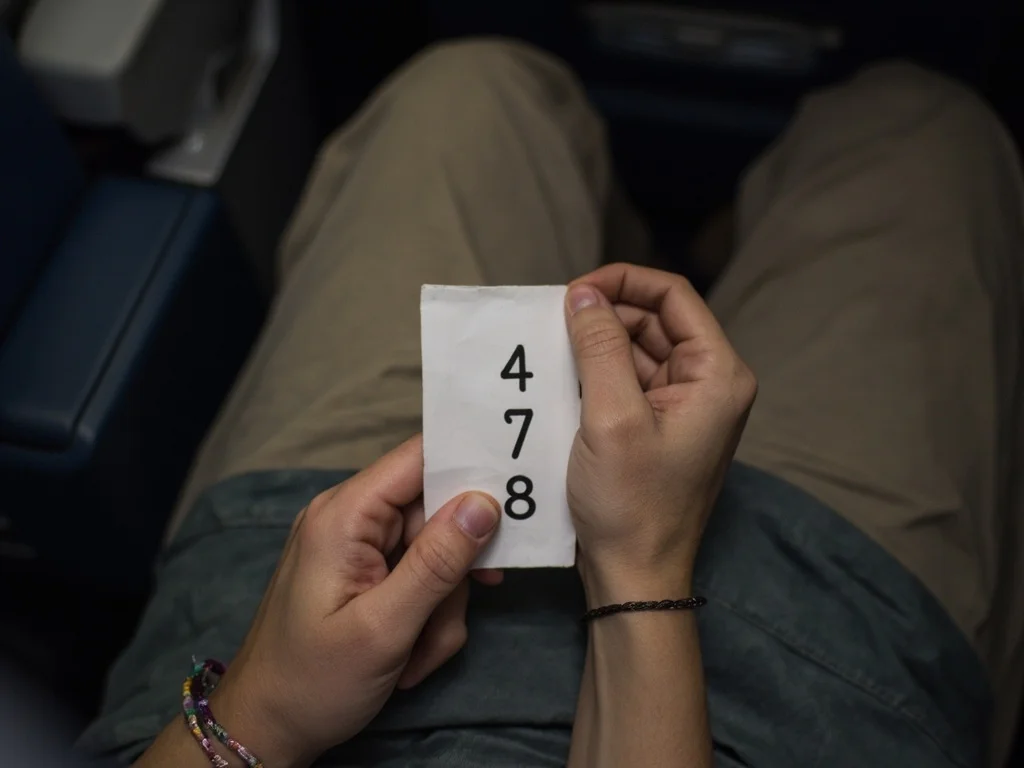
One pattern that is easy to remember is 4-7-8. Breathe in for a count of four, hold for seven, then breathe out slowly for eight. Does holding for seven feel distressing? Shorten the pause and keep only the out-breath longer than the in-breath. This and other techniques are set out step by step in the guide to stopping a panic attack fast.
Before a client travels, we set up an anchor together. It is a small gesture, such as pressing the thumb against the index finger, linked to a calm state rehearsed in session. When turbulence arrives or catastrophic thinking starts, that gesture works as a shortcut back to the state, without anyone in the next seat noticing.
The supportive phrase is a short reply, written before the flight, to the thought that frightens you most. Something like “this is anxiety, not danger, and it passes” works. It puts into practice what Cleveland Clinic describes within CBT: learning to talk back to negative thoughts about flying when they arise.
If one of the three doesn’t fit, alternatives for the day:
- Senses check: name five things you can see, four you can hear, three you can touch, two you can smell and one you can feel in your body, slowly, one at a time.
- Guided audio through headphones, from boarding until the plane levels off.
- Light movement: wiggle your toes.
Organising Cleveland Clinic advice by situation:
| Situation (author’s grouping) | Cleveland Clinic advice | Section of the page |
|---|---|---|
| Take-off, landing or turbulence | deep breathing or meditation, techniques a therapist teaches | Treatment |
| Day to day | avoid caffeine, drugs and alcohol, which can make anxiety worse | Prevention |
| Support network | share your fears with family, friends or peers | Prevention |
| Avoiding flights | exposure therapy, with airport visits or flight simulations | Treatment |
When to see a professional
The NHS advises seeing a GP if you think you have a phobia and the symptoms are affecting your life. With fear of flying, that point can show up in concrete ways: turning down a promotion that involves travel, missing family visits abroad, or sleeping badly through the whole week before a flight. Under the DSM-5-TR criteria described in StatPearls, a diagnosis of specific phobia requires clinically significant distress or impairment in social, occupational or other important areas of life, but nobody needs to reach that point to ask for an assessment. In England, the NHS also notes that you can refer yourself directly to an NHS talking therapies service without a GP referral. A professional can tell aerophobia apart from panic disorder, agoraphobia or generalised anxiety, and choose the right route for each case.
Signs that it is worth seeking an assessment:
- Turning down trips that matter because of the fear, such as a family wedding abroad, a work conference or a holiday already paid for.
- Losing sleep in the week of each flight.
- Needing alcohol or unprescribed medication to get on board.
- Panic attacks away from planes too.
- Feeling the fear grow with each trip instead of easing.
None of this is a diagnosis. These are signs that the fear has moved from nuisance to limitation. Where travel anxiety comes with a fear of driving too, the guide to overcoming fear of driving uses the same logic of gradual exposure.
Frequently asked questions
Can fear of flying be cured?
In most cases it can be overcome: psychotherapy can usually help people move past the fear and fly without extreme anxiety, according to Cleveland Clinic, and StatPearls names CBT as the optimal treatment strategy for specific phobias. StatPearls adds that the outlook improves when there is maintenance therapy. In practice, the goal is to fly with discomfort you can tolerate.
Is fear of flying the same as travel anxiety?
Not always. Nerves before a trip are common and usually pass. Aerophobia is a specific phobia: the fear is out of proportion to the actual danger, typically lasts six months or more, leads to avoiding flights or enduring them with intense fear or anxiety, and causes significant distress or impairment, under the DSM-5-TR criteria described in StatPearls.
Does anti-anxiety medication help with flying?
It has a limited role. StatPearls says beta blockers and benzodiazepines can be used when the phobia comes with panic attacks, although gains from benzodiazepines do not persist once the medication is stopped. Cleveland Clinic says medication isn’t very effective for managing aerophobia over the long term. Your doctor makes that decision, ideally alongside therapy.
Can I overcome fear of flying on my own?
It depends on the intensity. In my assessment, milder cases can start with breathing exercises, talking to someone you trust and joining a self-help group, steps the NHS suggests trying as self-help. When avoidance is long-standing, or panic attacks and intense distress are present, professional support is the safer route.
Conclusion
Fear of flying is treatable, and overcoming it starts with recognising the pattern: a racing heart at the airport, obsessive research into flight safety, poor sleep before the trip, and relief when the flight is cancelled. My reading is that each escape brings relief today and keeps the alarm set for next time. StatPearls names CBT as the optimal strategy, while Cleveland Clinic lists exposure therapy among the treatments and deep breathing as a tool for take-off, landing and turbulence. The NHS lists hypnotherapy among phobia treatments; in this work it sits alongside CBT as a complement. The exposure ladder is climbed in stages, at each person’s pace. Panic, avoidance or sleep loss that persists calls for an assessment. To see how this work happens in practice, read what to expect from a first hypnotherapy session.
Sources
- Cleveland Clinic. Aerophobia (Fear of Flying). Last updated 24 February 2022.
- National Institute of Mental Health (NIMH). Specific Phobia.
- American Psychiatric Association. What are Anxiety Disorders?
- Samra CK, Torrico TJ, Abdijadid S. Specific Phobia. StatPearls, updated 12 August 2024.
- NHS. Phobias: overview and treatment. Last reviewed 11 March 2026.
- World Health Organization. Mental disorders.
- IATA. IATA Releases 2025 Safety Report, 9 March 2026.
About the author
Fabio Morus is a behavioural therapist and clinical hypnotherapist in Jersey, Channel Islands, focused on anxiety, phobias, sleep and trauma. He trained in Neuro-Systemic Hypnotherapy, CBT (Beck Institute) and EMDR (EMDR Association UK), and works online in Portuguese and English as well as in person in Jersey.
This article is for information and does not replace a professional assessment. If you are struggling to cope, contact Samaritans on 116 123 (UK and ROI, free, 24/7). In Jersey, contact your GP, the emergency services, or the local crisis line.