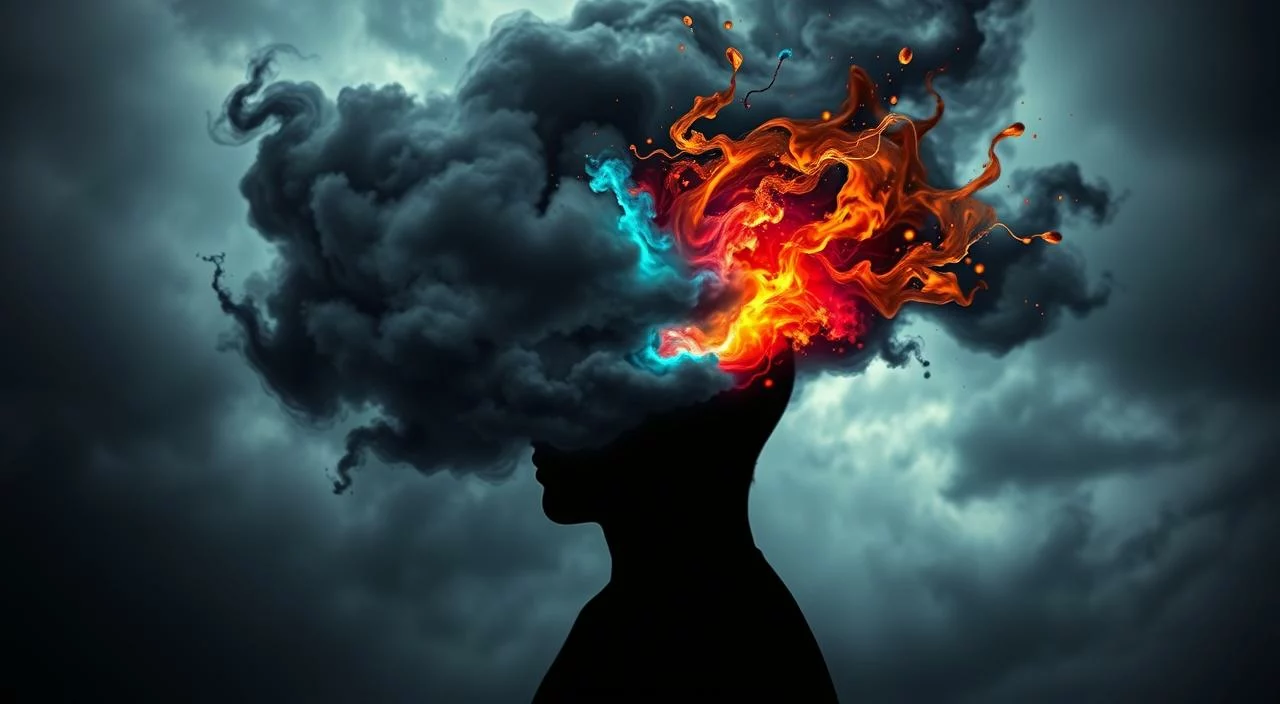

Did you know that distress and anxiety have important differences? These conditions greatly affect our mental health and well-being. But what is distress and how is it related to anxiety ?
Anguish is a feeling of emotional disturbance that brings psychological and physical symptoms 2. Those who are distressed may feel lost, blind to solutions, and with a constant unease 1. It can be caused by past experiences, fear of the future, or existential worries 3. Anxiety , in turn, is a natural response to danger or stress 3 .
Anxiety and distress are becoming more common nowadays, being called the "illness of the century" 1. But anxiety can also motivate us to change and make us reflect 1. Understanding this relationship and finding ways to deal with these feelings is crucial.
What is anguish?
Anxiety is a feeling that can cause physical and mental harm. It can be linked to emotional problems such as depression . It is characterized by mood swings, loss of peace, pain, insecurity , and guilt .
Symptoms include shortness of breath, dizziness, chest tightness, and a racing heart. It can also cause negative thoughts, crying, fear , and anxiety. <sup>4</sup>
Symptoms of distress
Symptoms of distress include negative thoughts and anxiety attacks . It can also cause rapid heartbeat and chest pain. Other symptoms include shortness of breath, restlessness , and insomnia .
These symptoms affect daily life, leading to lack of productivity and irritability. It can lead to loss of motivation and neglect of basic needs. <sup>5</sup>
What causes distress?
Anxiety can be caused by past experiences, such as divorce or the loss of a loved one 5. It can also be motivated by fear of the future, such as an important presentation 5 .
Furthermore, distress can arise from internal conflicts. This includes lack of self-acceptance, fear of the future, and low self-esteem. <sup>5 </sup>
| Triggers of Anxiety | Examples |
|---|---|
| Past Experiences | Divorce, heartbreak, loss of a loved one, job loss, end of a friendship. |
| Concerns about the Future | Important presentation at work, death of a loved one. |
| Internal Conflicts | Lack of self-acceptance, fear of the future, difficulty coping with failure, low self-esteem. |
When people are distressed, they have difficulty enjoying good experiences.
https://www.youtube.com/watch?v=7uwuUN1LdVo
Anguish and anxiety: what is the relationship?
Anguish and anxiety are negative feelings, but they are not the same thing. Anguish is a state of emotional disturbance. It brings the feeling that everything is lost and difficulty in finding solutions . Anxiety, on the other hand, is a reaction of the body to a threat, even if it is not real .
Anguish can arise without apparent cause, while anxiety stems from the anticipation of future situations. Anguish is linked to concerns about the human condition and the world. Anxiety, on the other hand, is about lack of control and uncertainty .
Although they are different, distress and anxiety can mix and appear together 7. Understanding these differences helps in seeking the right treatment and regaining emotional balance.
| Feature | Anguish | Anxiety |
|---|---|---|
| Origin | It arises without apparent cause. | Related to a future situation |
| Focus | The human condition and the world in general. | Lack of control and uncertainty |
| Prevalence | 8 Less than 50% of the population | 7 9.3% of the Brazilian population |
Understanding the relationship between distress and anxiety helps to identify the symptoms of each. This makes it possible to seek the right treatment to recover emotionally. 6 8 7 .
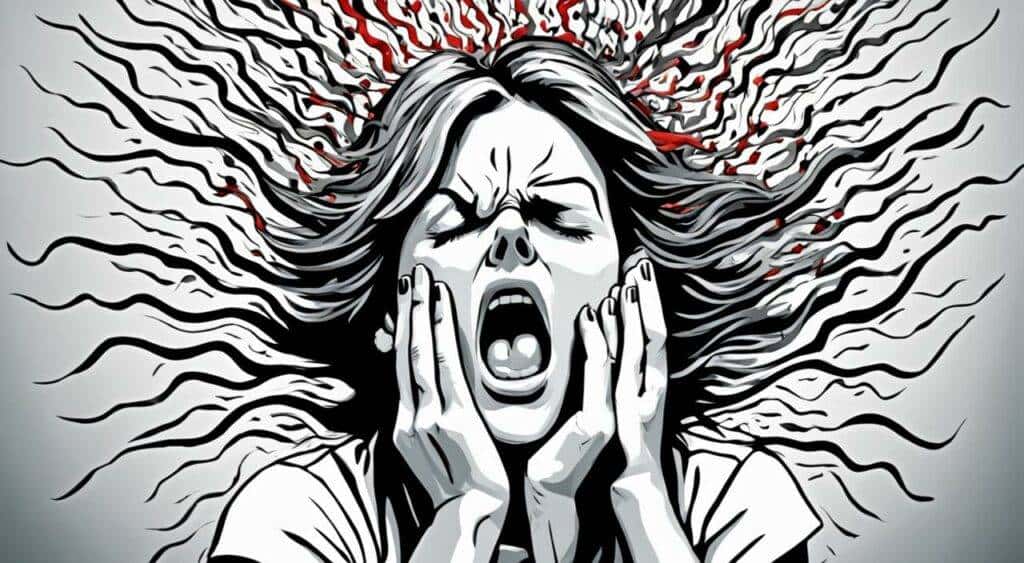
distress: the warning signs
Anxiety is an emotional state that brings feelings of worry, tension, and fear. It is natural in challenging situations, but it can be harmful if it is too intense and lasts too long. Recognizing the warning signs is crucial for dealing with it in a healthy way.
Excessive Negative Thoughts
A sign of distress is thinking very negatively. Distressed people dwell on bad scenarios and believe that all is lost. They don't see possible solutions. These negative thoughts affect emotional well-being and the ability to see opportunities.
Anxiety Attacks
Anxiety attacks are another symptom of distress. They bring physical symptoms such as tachycardia, shortness of breath, cold sweats, and tremors. They can also bring negative thoughts about the future . These attacks arise from fear and uncertainty and can increase feelings of distress .
Physical Symptoms
Anxiety also causes physical symptoms, such as tightness in the chest, a lump in the throat, headaches, insomnia, and muscle tension. 11 These reactions show the person's emotional imbalance and affect their well-being.
https://www.youtube.com/watch?v=vHNcXdnvl5k
"According to the DSM-5, anxiety disorders include characteristics of excessive fear and anxiety and associated behavioral disturbances." 9
Treating distress
Anxiety is a common problem that affects many people around the world . It is important to seek help from a psychologist to deal with it.
Seek Professional Help
An expert can help in many ways. They can improve self-awareness and help resolve personal conflicts. Furthermore, they can teach you how to cope better with stress . Seeking professional help is key to overcoming anxiety and improving mental health.
Adopt Healthy Habits
It is crucial to adopt healthy habits to prevent distress . This includes exercise, a balanced diet, and positive thinking. Expressing feelings and getting enough sleep are also important for well -being.
Foods like whole grains and fish help improve mood 12. Light exercise is also beneficial for mental health 12. Getting enough sleep is essential to combat anxiety 12 .
Changing habits can be difficult, but it's essential for a better life without anxiety.
"Feelings such as fear, distress, and anxiety are common to individuals of all ages and genders." 12

With healthy habits and the support of specialized professionals , it is possible to overcome anxiety. This brings emotional balance and improves life. <sup>12</sup>
| Symptoms of Distress | Symptoms that can be confused with depression. |
|---|---|
| Pain and tightness in the chest and throat, increased heart rate and shortness of breath, constant restlessness , persistent headache, sudden mood swings, negative thoughts, and insomnia, among others 13 . | Apathy, lack of appetite, insomnia, difficulty concentrating, muscle spasms, body aches, and constant fatigue 13 . |
Anxiety is a common problem that should not be ignored 12. With the right support and healthy habits , it is possible to overcome it and improve emotional well-being 12 14 13 .
Reflecting on life to overcome anguish.
Reflecting on our lives is a powerful strategy for dealing with anxiety. Sometimes we forget the important aspects of our existence. This leaves us trapped in thoughts and worries that distance us from our purpose and personal satisfaction. <sup>15</sup>
Analyzing aspects of our lives honestly and deeply, such as career, relationships, and dreams, helps us identify what needs attention. This self-reflection shows us the origin of our anxiety and how to resolve it .
When we are satisfied with our lives, we don't feel anguish. Introspective analysis helps us rediscover our values and the path we want to follow. This strengthens our connection to the purpose of our existence. <sup>15</sup>
This journey of self-discovery is crucial for dealing with anxiety . It helps us find meaning, balance, and satisfaction, even in the face of challenges .
"Wisdom lies in using suffering as the foundation of maturity." - Augusto Cury
Allowing this sincere reflection on our lives helps us understand the origin of our anguish. Thus, we can develop effective strategies to overcome it, moving towards a fuller and more meaningful life.
https://www.youtube.com/watch?v=ZVNGWxm66bY
Setting goals to cope with distress.
A lack of life goals can cause a lot of distress. Without clear plans, we lack motivation and purpose.17 A study shows that not achieving goals causes more pain than disappointment after achieving them.17 The distress of not achieving goals greatly affects millennials and Generation Z, impacting their emotional well-being.17
Revisiting and setting new goals can increase motivation and reduce anxiety. This is very important.
Short-term goals are a good place to start. They give us a positive mindset. By setting realistic goals, we build a life purpose that motivates us and makes us feel fulfilled.
" Setting goals is the first step in making the invisible visible." - Tony Robbins
To set effective goals, follow these tips:
- Reflect on your dreams, passions, and what motivates you.
- Establish specific, measurable, achievable, relevant goals with defined deadlines.
- Break down larger goals into smaller, manageable steps.
- Review and adjust your goals periodically, as you progress.
- Share your goals with close people to stay accountable.
- Celebrate every small achievement along the way.
By setting clear goals and working towards achieving them, we regain motivation and a sense of purpose in life . This helps us overcome anxiety. It's a gradual process, but very important for our emotional well-being.

Don't run away from problems.
Facing life's challenges can be daunting, but it's crucial for our personal growth. It helps us find lasting solutions. Approximately 20% of the world's population will experience depression at some point in their lives. This includes an increase in psychological illnesses such as mood disorders and anxiety . In these difficult situations, it's important to learn how to cope with problems.
Techniques for dealing with problems
To deal with problems, techniques such as controlled breathing and physical exercise are useful. It is also good to replace negative thoughts with positive ones and talk to people who make us feel good. Many people run away from problems thinking they can't solve them . Fear of confronting others is also a common reason .
Fear of the outcome can paralyze a person, leading to the postponement of decisions. Avoiding problems can cause anxiety and make the problem worse . It is important to learn how to deal with difficult situations in order to develop skills.
Escapism can be a problem, as can excessive alcohol use. It is suggested to use Emotional Intelligence and solve problems in small steps. It is important to transform thoughts into actions to resolve pending issues.
To solve the problem, it's a good idea to seek help from a specialist 19 .
https://www.youtube.com/watch?v=-YHCDQuAqgI
"Every problem is an opportunity for growth. The more we confront our difficulties, the stronger we become."
Overcoming anguish step by step
Overcoming distress is a process that requires time and effort. First, it is crucial to recognize and accept that you are going through a difficult time. About 90% of people experience distress at some point in their lives. Distress can greatly affect quality of life .
Seeking professional help and adopting healthy habits are important steps for your well- being . Treatment for anxiety may include therapy and, in severe cases, medication, under the guidance of a psychiatrist .
Reflecting on your life, setting goals, and facing problems are effective strategies. Distinguishing between what you can control and what you cannot helps reduce anxiety . Finding positive things in difficult situations also helps with personal growth.
Having patience and perseverance is fundamental, as overcoming anxiety is a gradual process. Anxiety is a normal experience and, with the right strategies, you can overcome it .

| Steps to Overcome Anxiety | Benefits |
|---|---|
| 1. Acknowledge and accept distress. | Understanding that distress is a common experience and accepting it is the first step. |
| 2. Seek professional help. | Therapy and psychiatric follow-up can provide effective management strategies. |
| 3. Adopt healthy habits | Taking care of physical and mental well-being helps to cope better with anxiety. |
| 4. Reflecting on life | Understanding yourself and setting goals can give you more meaning and purpose. |
| 5. Addressing the problems | Facing challenges head-on, instead of avoiding them, is essential for overcoming them. |
| 6. Have patience and perseverance. | Overcoming anxiety is a gradual process, but with the right strategies, it's possible to achieve it. |
"Anxiety is a normal psychological experience in human life. With the right strategies, it is possible to face and overcome it step by step." 20
Each person experiences distress in a unique way. It's important to find the strategies that work best for you. With perseverance and support, you can overcome this challenge and achieve a more balanced and fulfilling life.
Anxiety and other related conditions
Anxiety and depression
Anxiety and depression are negative feelings, but they are not the same . Depression is a mood problem that lasts a long time. Anxiety, on the other hand, is a feeling that may last less time . Depression brings a very strong and constant sadness . Anxiety, however, causes a feeling of emotional confusion, with physical and mental symptoms.
Depression is a specific mental health problem. Anxiety can be part of depression or appear on its own in various situations. Understanding the relationship between anxiety and depression helps to find the best treatment for each person.
Studies show that distress and anxiety affect people with multiple myeloma 24. This can cause pain, sleep problems, and nausea 24. It is important that doctors take good care of these patients emotionally and psychologically.

In conclusion, anxiety and depression are different, but they can be linked. Knowing the difference helps to treat each of them correctly 23. Anxiety can also be a problem in other diseases, such as multiple myeloma. This shows the importance of treating these patients comprehensively and with multiple professionals 23 24 .
Conclusion
Anguish is a complex feeling that affects both the body and the mind. It can arise for various reasons, such as past experiences or worries about the future . The novel "Anguish" by Graciliano Ramos shows how difficult this condition can be to deal with .
To cope with anxiety, it is crucial to seek professional help and adopt healthy habits . It is also important to reflect on life, set goals, and confront problems directly . With patience and the right strategies, it is possible to overcome anxiety and improve well -being.
Understanding the difference between distress, anxiety, and depression is crucial for choosing the right treatment.
We hope this article has helped you better understand distress and offered strategies to overcome it. With the right support, it's possible to achieve a state of greater emotional balance. Together, we can overcome challenges and live a fuller, happier life.
FAQ
What is anguish?
Anxiety is a mental state that mixes emotions and physical symptoms. It makes people feel lost and without solutions to their problems.
What are the symptoms of anxiety?
Symptoms of distress include lack of motivation and anxiety attacks . Other symptoms include chest tightness, negative thoughts, and insomnia. They also include irritability, sadness , migraines, restlessness , tachycardia, shortness of breath, and muscle tension.
What can cause distress?
Anxiety can stem from past experiences or fear of the future. It can also be caused by internal conflicts, such as lack of self-acceptance and low self-esteem.
What is the difference between anguish and anxiety?
Anguish is a mental state of emotional disturbance. Anxiety, on the other hand, is a bodily reaction to danger. Anguish can arise without apparent cause, while anxiety is related to future situations.
What are the main warning signs of distress?
Warning signs of distress include negative thoughts and anxiety attacks. They also include physical symptoms such as chest tightness, insomnia, and muscle tension.
How to deal with anxiety?
To cope with anxiety, seek professional help and practice healthy habits. Reflect on your life, set goals, and face problems head-on.
How can setting goals help overcome anxiety?
Without plans for the future, one can feel purposeless and unmotivated. Revisiting and setting new goals can boost motivation and help overcome anxiety.
How can facing problems help in dealing with anxiety?
Useful techniques for dealing with problems include controlled breathing and physical exercise. It's also good to replace negative thoughts with positive ones and talk to people who make you feel good.
What is the relationship between anxiety and depression?
Anxiety is a more transient psychic state, while depression is a chronic disorder. Anxiety can occur in depressed people, but it is not the same thing.
🌟 Have you considered seeking a therapist to support your well-being journey?
If this article sparked reflections about positive changes in your life, perhaps now is the ideal time to take the next step. Do you know hypnosis as a therapeutic tool? This approach can be surprisingly effective for various personal challenges.
Special offer: Book a free 20-minute consultation with therapist Fabio Morus and discover how therapy can transform your life.
✨ No commitment — Completely free — 20 minutes that can make a difference
👉 Click here to book your free consultation
Don't postpone your well-being any longer. The first step to change is just one click away.