

Imagine being trapped in a cycle of constant fear. Public spaces seem like menacing traps. Agoraphobia is an anxiety disorder that affects many people.
It paralyzes thousands daily. It affects about 1.3% of the population. It limits experiences and stifles dreams. But there is hope.
Recognizing the signs early can be the first step. This can help you regain control of your life.
Key Points
- Agoraphobia is an anxiety disorder that affects 1.3% of the population.
- Women are more likely to develop the disorder.
- Symptoms usually begin in adolescence or early adulthood.
- Treatments such as cognitive behavioral therapy are highly effective.
- Recognizing the signs is crucial for seeking help.
Agoraphobia: What is it?
Agoraphobia is an anxiety disorder that affects many Brazilians. It causes people to have a great fear of open spaces. This happens when they feel vulnerable and unable to escape.
Medical Definition of the Disorder
This anxiety isn't just a fear of public spaces. It's a deep-seated fear of panicking in places where it's not easy to ask for help.
- Intense fear of outdoor environments
- Persistent anxiety in crowded places
- Constant need to be in a safe place.
Impact on Daily Life
Agoraphobia can drastically change someone's life. Simple things, like going to the supermarket, can be very stressful.
Prevalence in the Brazilian Population
According to the Albert Einstein Israelite Hospital, 150,000 Brazilians suffer from agoraphobia. This problem appears more frequently in late adolescence or after the age of 40.
| Feature | Details |
|---|---|
| Number of People Affected | 150,000 Brazilians |
| Age of Manifestation | Late teens or after age 40 |
| Most affected gender | Women |
Understanding and treating agoraphobia can greatly improve people's lives. They can regain their freedom and autonomy.
Origin and Meaning of the Term Agoraphobia

Agoraphobia comes from the Greek language. It has an interesting history. The name comes from two important Greek words.
- Agora : Public square in Athens where citizens gathered.
- Phobia : Intense and persistent fear.
In ancient times, agoraphobia was the fear of open spaces . It was the fear of being in crowded places, such as squares.
Today, agoraphobia is an anxiety disorder. It's the fear of places that might cause panic or make you feel trapped.
| Element | Original Meaning | Contemporary Meaning |
|---|---|---|
| Now | Greek public square | Open spaces or clusters |
| Phobia | Intense fear | Anxiety disorder |
Agoraphobia is not just a fear. It's a complex condition that can significantly change people's lives.
Main Signs and Symptoms of Agoraphobia

Agoraphobia affects many Brazilians. It causes great anxiety and fear in public places. Recognizing these signs is essential to seeking help and improving one's life.
Characteristic Physical Symptoms
The physical symptoms of agoraphobia are very unpleasant. They include:
- Intense tremors
- Persistent dizziness
- Sudden shortness of breath
- Rapid palpitations
- Excessive sweating
Deep Emotional Symptoms
Fear in public places causes strong emotions. This includes:
- Intense fear of losing control.
- Extreme anxiety in social settings
- Constant feeling of vulnerability
- Excessive worry about potential panic situations.
Behavioral Manifestations
Agoraphobia causes people to avoid crowds. This can be seen in:
- Refusal to frequent public places
- Need to be accompanied in outdoor environments
- Excessive planning to avoid anxiety-inducing situations
- Progressive social isolation
Identifying these symptoms early helps a lot. This can be crucial for starting effective treatment and regaining control of your life.
5 Signs to Recognize Agoraphobia

Agoraphobia is a complex disorder that can greatly affect someone's life. It is crucial to recognize its signs early in order to seek help and begin treatment.
Intense Fear of Public Spaces
The fear of open spaces causes great anxiety. People with social phobia experience panic in crowded places, such as shopping malls and events.
Feeling trapped or without a way out.
- Constant awareness of vulnerability
- Need to be close to escape routes
- Difficulty remaining in enclosed spaces
Avoidance of Social Situations
People with agoraphobia avoid situations that cause anxiety. This can include:
- Refusing invitations to social events
- Limit outings from home.
- Relying on family members for external tasks
Physical Symptoms of Anxiety
| Physical Symptom | Description |
|---|---|
| Tachycardia | Rapid heartbeat |
| Tremors | Involuntary muscle instability |
| Sweating | Excessive sweating |
Approximately 2% of women and 1% of men may have agoraphobia without panic attacks. Recognizing these signs is the first step in seeking professional help and beginning treatment.
Causes and Risk Factors

Agoraphobia has several causes. They stem from psychological, genetic, and environmental factors. Experts say there is no single cause for this disorder.
The main risk factors for agoraphobia include:
- Family history of anxiety disorders
- Past traumatic experiences
- Previous panic disorder
- Genetic predisposition
In Brazil, approximately 150,000 people are affected by this disorder. It can appear suddenly or be triggered by stressful situations.
| Risk Category | Description |
|---|---|
| Psychological | Emotional trauma, depression |
| Environmental | Substance abuse, stressful situations |
| Genetics | Family history of anxiety |
Agoraphobia typically begins after two or three panic attacks. This leads to a cycle of fear and isolation. Symptoms include avoiding public spaces and situations that cause anxiety.
It's important to know that having risk factors doesn't mean you will develop the disorder. Each case is unique and requires a professional evaluation.
Difference Between Agoraphobia and Panic Disorder
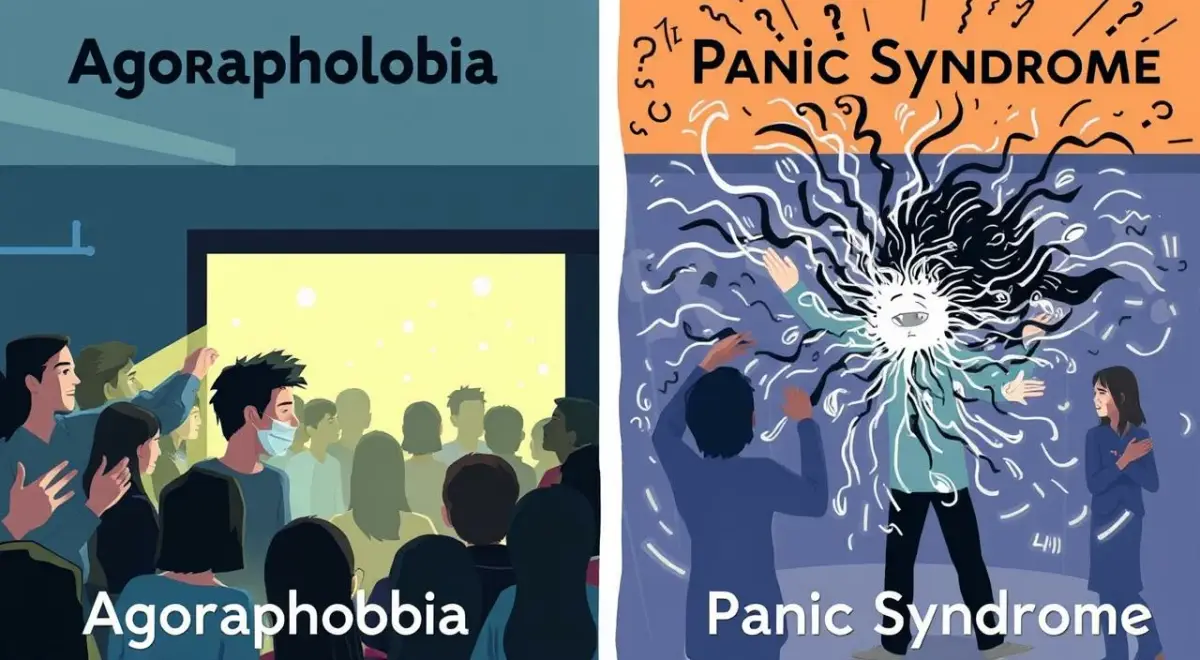
It's important to know the differences between agoraphobia and panic disorder. These two anxiety conditions have unique characteristics. They differ in many aspects.
Specific Characteristics of Each Condition
In agoraphobia, what matters is understanding the behavior. People with this condition are afraid of places or situations where they feel vulnerable.
- Agoraphobia: Fear of public places or specific situations.
- Panic Disorder: Sudden and unpredictable panic attacks
How to Identify Each Condition
Symptoms of agoraphobia include:
- Avoiding crowded places
- Anxiety when leaving home
- Need to be accompanied
In panic disorder, episodes are characterized by:
- Sudden attacks of fear
- Physical symptoms such as tachycardia
- Feeling of loss of control
Seeking professional help is essential. Each condition requires specific treatment.
Diagnosis of Agoraphobia
Agoraphobia is diagnosed by mental health professionals. Psychiatrists and psychologists use specific criteria to identify the disorder.
- Detailed history of symptoms
- Duration of fears and anxieties
- Impact on daily life
- Presence of physical and emotional symptoms.
The criteria for diagnosing agoraphobia include:
- Intense fear in at least two specific situations.
- Symptoms present for at least 6 months
- Significant impairment of daily activities
The diagnostic process involves a thorough evaluation. Considering important statistics :
| Statistical Data | Information |
|---|---|
| Prevalence | 1.7% of adolescents and adults |
| Most affected gender | Women (twice as likely) |
| Comorbidity | 49-64% with other anxiety disorders |
Agoraphobia treatment is personalized. It takes into account the individual characteristics of each patient. Seeking professional help early greatly improves the chances of recovery.
Available Treatments
Agoraphobia requires personalized treatment. Each person reacts differently. Therefore, it is essential to have strategies tailored to each individual.
Cognitive-Behavioral Therapy
Cognitive Behavioral Therapy (CBT) is widely used to treat agoraphobia. It helps to:
- Identifying negative thoughts
- Modifying anxiety behaviors
- Developing ways to cope with anxiety
Recommended Medications
To control anxiety, medication is prescribed:
| Type of Medication | Function |
|---|---|
| Antidepressants | They reduce anxiety. |
| Anxiolytics | They control anxiety during peak moments. |
Complementary Approaches
There are techniques that can help in the treatment of agoraphobia:
- Mindfulness
- Relaxation techniques
- Breathing exercises
- Meditation practices
Using these strategies together can greatly improve the lives of people with agoraphobia. They can regain their confidence and feel more independent.
How Hypnotherapy Can Help
Hypnosis for agoraphobia is a new form of treatment. It helps those who are afraid of open spaces and social situations. This therapy helps manage fear and regain emotional control.
In hypnotherapy, techniques are used to change the mind. The patient becomes relaxed and accesses the subconscious. This allows them to change thoughts and behaviors.
- Reducing anxiety patterns
- Reinterpreting traumatic memories
- Building new emotional responses
- Strengthening self-confidence
The technique uses several methods, such as:
- Guided visualization to create positive experiences.
- Anchoring safe emotional states
- Desensitization of fear triggers
Studies show that hypnotherapy can be very helpful. In as little as 3 sessions, symptoms can decrease significantly. This brings hope to those who have agoraphobia.
Lifestyle Changes
Making lifestyle changes greatly helps with agoraphobia. Physical exercise reduces anxiety. This improves mental well-being.
Meditation and deep breathing are very helpful. They help control panic. This makes a person more emotionally strong.
Eating well and getting enough sleep are essential. Avoiding caffeine and alcohol helps a lot. A healthy diet and regular sleep improve emotional stability.
Psychological support is important. Along with lifestyle changes, it helps a lot. This improves life with hypnotherapy and other therapies.
Source Links
| Link Description | Link |
|---|
| Agoraphobia: symptoms, causes, and how to overcome it. | https://nav.dasa.com.br/blog/agorafobia |
| Agoraphobia: what it is, symptoms, causes, and treatment. | https://www.tuasaude.com/agorafobia/ |
| Agoraphobia: Symptoms, Causes, and Treatments | https://www.einstein.br/doencas-sintomas/agorafobia |
| Agoraphobia - Psychiatric disorders | https://www.msdmanuals.com/pt/profissional/transtornos-psiqui%C3%A1tricos/ansiedade-e-transtornos-relacionados-a-estressores/agorafobia |
| Agoraphobia: Learn about the disorder associated with panic attacks. | https://www.vittude.com/blog/agorafobia/ |
🌟 Have you considered seeking a therapist to support your well-being journey?
If this article sparked reflections about positive changes in your life, perhaps now is the ideal time to take the next step. Do you know hypnosis as a therapeutic tool? This approach can be surprisingly effective for various personal challenges.
Special offer: Book a free 20-minute consultation with therapist Fabio Morus and discover how therapy can transform your life.
✨ No commitment — Completely free — 20 minutes that can make a difference
👉 Click here to book your free consultation
Don't postpone your well-being any longer. The first step to change is just one click away.