

Do you find leaving the house a big challenge? Agoraphobia can make even simple things seem like huge battles. This anxiety disorder affects many people, creating barriers that limit freedom.
The symptoms of agoraphobia can seem very difficult to overcome. But it's crucial to know that there is hope. Experts can help build your confidence and find ways to cope with these challenges.
Agoraphobia is different from other disorders. It can greatly affect quality of life. The fear of open spaces or social situations can lead to a cycle of isolation and anxiety .
Treatment for agoraphobia is possible and highly recommended. Psychotherapists and psychiatrists create tailored plans, taking into account the causes of agoraphobia and the individual needs of each person.
Therapy for agoraphobia provides tools to regain freedom. It helps overcome fears that seem insurmountable. Every small step is important on the road to recovery.
What is Agoraphobia and How Does it Impact Daily Life?
Agoraphobia is an anxiety disorder that greatly affects people. It causes a very intense fear of situations that could lead to panic or discomfort. This goes beyond shyness, creating barriers in daily life.
Medical Definition of the Disorder
For doctors, agoraphobia is an anxiety disorder . It involves anxiety and agoraphobia in open or closed spaces. The person has difficulty escaping these places.
- Intense fear of public places
- Constant worry about potential panic situations.
- Anxious anticipation of social events
Impacts on Daily Life
Social phobia and agoraphobia significantly affect daily life. People may have difficulty leaving their homes. They may also face limitations at work and school, and have problems with social relationships.
- Difficulties leaving home
- Professional and academic limitations
- Restrictions on social relationships
Prevalence in the Population
To learn how to overcome agoraphobia , it's important to know that it affects 2% of the Brazilian population. It is more common in women.
| Group | Percentage Affected |
|---|---|
| Women | 1.5% |
| Men | 0.5% |
| Age range 20-40 years | 1.8% |
Understanding agoraphobia is the first step in seeking treatment. This can help improve quality of life.
Main Signs and Symptoms of Agoraphobia

Agoraphobia is an anxiety disorder that can paralyze those who suffer from it. It is characterized by an excessive fear of open spaces. This includes situations where escape seems difficult.
The main physical symptoms include:
- Rapid heartbeat
- Involuntary tremors
- Excessive sweating
- Difficulty breathing
- Nausea and dizziness
Panic attacks are common in agoraphobia. They cause sudden and intense fear. Sufferers experience significant anxiety in situations they perceive as dangerous.
| Symptom Type | Description |
|---|---|
| Psychological | Extreme fear of public places, feeling of loss of control. |
| Physicists | Tremors, sweating, palpitations, shortness of breath |
| Behavioral | Avoiding social situations, needing constant company. |
Each person experiences the symptoms of agoraphobia differently. The intensity may vary, but the impact on daily life is significant.
Causes and Risk Factors of the Disorder
Agoraphobia is complex and has many contributing factors. Understanding these factors helps patients and their families in treatment.
Genetic Factors and Heredity
Agoraphobia has a strong genetic link, with a 61% heritability rate. Those with a family history of panic disorder are more likely to develop agoraphobia.
- Genetic predisposition influences the brain's reaction to stress.
- Specific personality types increase the risk.
- Family history of anxiety disorders
Environmental Factors
Social and family contexts are very important in agoraphobia. Environments with overprotective parents or a history of anxiety increase the risk.
| Environmental Factor | Impact |
|---|---|
| Overprotective parents | It increases the risk of developing |
| Night terrors in childhood | Potential trigger for anxiety |
| Experiences of grief | It contributes to emotional sensitivity. |
Traumatic Experiences
Traumatic events can cause or worsen agoraphobia. In Brazil, approximately 150,000 people have this disorder. It is linked to intense fear and anxiety.
Panic disorder is a major risk. Symptoms such as rapid heartbeat, sweating, and rapid breathing can lead to agoraphobia.
The Relationship Between Agoraphobia and Panic Disorder
Agoraphobia and panic disorder significantly affect people's lives. Approximately 1.5% to 2% of individuals experience both disorders simultaneously. This occurs more frequently in women.
The main aspects of this relationship include:
- Close connection between anxiety symptoms
- Frequent development of agoraphobia following episodes of panic disorder.
- Shared psychological mechanisms of fear and avoidance
Panic attacks have strong symptoms such as palpitations and shortness of breath. These symptoms can create a cycle of fear that fuels agoraphobia . This leads to avoiding places that cause anxiety.
| Features | Panic Disorder | Agoraphobia |
|---|---|---|
| Prevalence | 2-3% of the population | 4.5% of the population |
| Average age of onset | 20-25 years old | 20 years |
| Proportion by gender | 2 women for every 1 man | 2 women for every 1 man |
Genetics plays a significant role in this relationship. People with a family history of anxiety disorders are more likely to experience these problems. An accurate diagnosis requires careful evaluation.
Understanding this connection helps in creating effective treatments. These treatments usually include therapy and sometimes medication to manage anxiety.
How Agoraphobia Affects Social Behavior

Agoraphobia and social phobia significantly alter people's lives. They create invisible barriers that limit social and emotional experiences. Approximately 1.3% of Brazilian adults have this condition, which is not just a fear of open spaces.
Deep Social Isolation
Those who suffer from agoraphobia experience significant social isolation. The symptoms cause people to withdraw, affecting:
- Personal relationships
- Career opportunities
- Overall quality of life
Dependence on Companions
Overcoming agoraphobia is difficult when one is heavily dependent on caregivers. Many need constant help to do simple things, such as:
- Shopping
- Go to the doctor
- Using public transportation
Limitations in Routine
Seeking professional help is essential when agoraphobia severely limits daily life. Approximately 30% to 50% of those affected experience significant restrictions in their daily activities.
These limitations can lead to:
- Difficulty keeping a job
- Reduction of social interactions
- Compromised independence
Professional Diagnosis of Agoraphobia
To diagnose agoraphobia, a thorough evaluation by a mental health specialist is necessary. Psychologists and psychiatrists use specific criteria to identify this anxiety disorder.
Diagnosing agoraphobia involves several important steps:
- Detailed clinical interview regarding symptoms and personal history.
- Assessing the intensity of fear in different situations.
- Analysis of the impact on social and professional life.
- Exclusion of other similar medical conditions.
Seeking professional help for agoraphobia is crucial for an accurate diagnosis. Specialists will assess:
| Diagnostic Criteria | Description |
|---|---|
| Intense Fear | Presence of anxiety in two or more different environments. |
| Duration of Symptoms | Persistence for six months or more |
| Avoidance Behavior | Systematic avoidance of anxiety-provoking situations. |
Proper psychological treatment begins with an accurate diagnosis. Professionals use specialized techniques to assess the disorder, ensuring a personalized and effective approach.
Important: Never self-diagnose. Always seek a qualified professional for an accurate assessment.
Available Treatments and Their Effectiveness
Agoraphobia can be treated with various strategies. They use different therapies to help people overcome their fears. This improves their quality of life.
Cognitive-Behavioral Therapy and Hypnotherapy
Cognitive Behavioral Therapy (CBT) is very important in the treatment of agoraphobia. It helps patients understand and change thoughts that cause anxiety.
- Identify irrational beliefs about feared situations.
- Develops coping strategies
- Promotes cognitive restructuring.
Hypnosis for agoraphobia is a helpful technique. It facilitates relaxation and helps overcome fears.
Recommended Medications
Therapy for agoraphobia can be improved with certain medications:
| Type of Medication | Function |
|---|---|
| Selective Serotonin Reuptake Inhibitors (SSRIs) | Reduce anxiety symptoms |
| Anxiolytics | Controlling acute anxiety symptoms |
Gradual Exposure Techniques
Gradual exposure helps the patient to face situations that cause anxiety. This reduces fear and avoidance.
Therapy, medication, and behavioral techniques together offer a comprehensive treatment. They help to restore confidence and autonomy.
Differences Between Agoraphobia and Other Anxiety Disorders
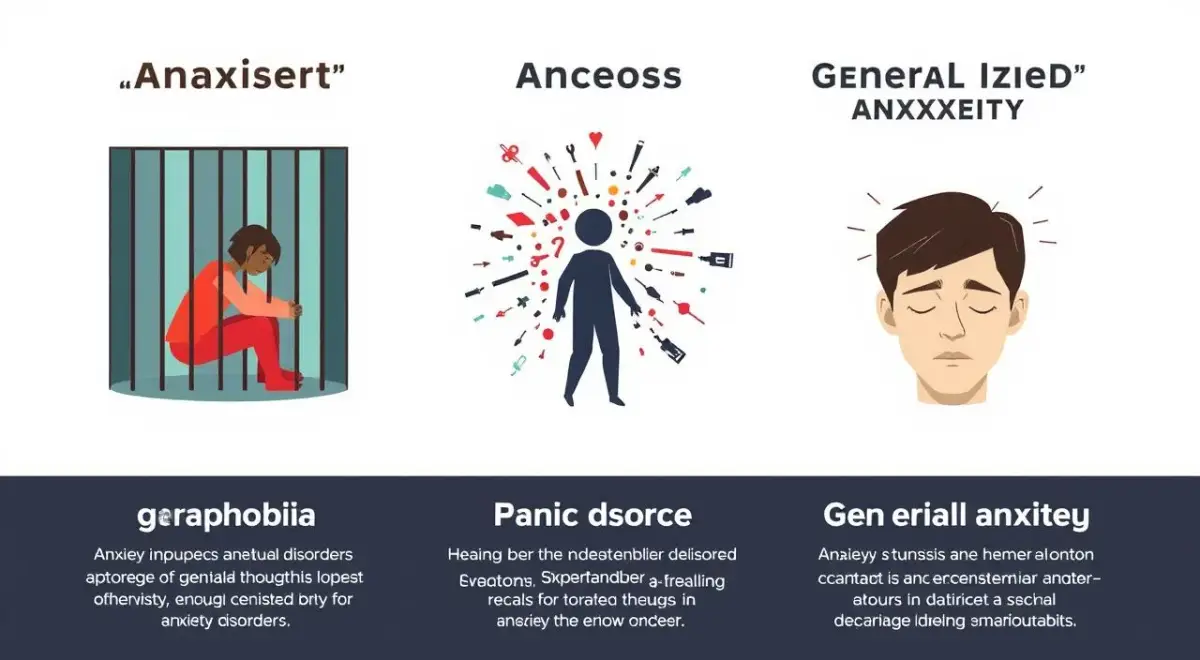
Anxiety disorders have unique characteristics. Agoraphobia is an anxiety disorder that stands out. It has particularities that make it different from other psychological disorders.
In agoraphobia, a person has a great fear of open spaces. They also fear feeling trapped or without an escape route. This is different from social phobia , which refers to the fear of interacting with other people and being judged.
- Key characteristics of agoraphobia:
- Fear of public places or situations with no easy way out.
- Anxiety related to the possibility of panic attacks.
- Systematic avoidance of environments that generate discomfort.
Agoraphobia causes a person to have a strong dependence on companions. This is a sign of security for them. This differentiates it from other anxiety disorders, where the need for support is not as great.
Studies show that women are more likely to have agoraphobia. They have a ratio of 2:1 compared to men. Agoraphobia may be linked to panic disorder, but they are not the same thing.
- Key differences between agoraphobia and other disorders:
- Social phobia : Fear of social interactions.
- Panic disorder: Sudden attacks of fear.
- Agoraphobia: Fear of inescapable environments.
For an accurate diagnosis, a professional evaluation is necessary. This takes into account the specific characteristics of each psychological condition.
Coping Strategies and Self-Help

Overcoming agoraphobia requires a conscious and gradual effort. Recovery involves using relaxation techniques and practical tools. These help to control anxiety.
Some important techniques for therapy include:
- Diaphragmatic breathing for emotional control
- Guided meditation
- Practice of positive visualization
- Log of triggers in a personal journal.
Conscious breathing is very helpful in reducing panic. Breathing deeply for 5-6 seconds calms the nervous system. This helps reduce anxiety.
The essential relaxation techniques are:
- Mindfulness exercises
- Adaptive Yoga
- Guided meditation apps
- Progressive muscle relaxation training
It is crucial to remember that these strategies should be used in conjunction with professional treatment. They do not replace specialized therapeutic support. Seeking help from a professional is the safest way to deal with agoraphobia.
The Importance of Family Support in Treatment
Agoraphobia affects not only the individual but also their family. Family support is essential in treatment. It creates a support network to aid in recovery.
The Transformative Role of Family Members
Family members play a crucial role in treatment. They are very helpful in therapy for agoraphobia . Their tasks include:
- Offer constant emotional support.
- Understanding the symptoms and limitations of the family member
- Encourage participation in treatment.
- Assisting in coping strategies
Building a Solid Support Network
Having a good support network greatly improves treatment. This network should include:
| Type of Support | Impact |
|---|---|
| Direct Family Support | 40% reduction in anxiety |
| Support Groups | Improved socialization |
| Family Therapy | Shared understanding |
Family involvement in agoraphobia treatment changes the recovery process. It creates an environment of understanding, patience, and hope.
When to Seek Professional Help
Agoraphobia can be a major challenge. Knowing when to seek help is crucial to starting the right treatment.
There are clear signs that it's time to seek therapy:
- Persistent fear of public spaces
- Constant avoidance of social situations
- Excessive dependence on other people to do everyday things.
- Quality of life negatively affected
- Physical symptoms of anxiety that return
Seeking help early can prevent symptoms from worsening and greatly improve the future.
When seeking help, it's best to speak with a psychiatrist or psychologist specializing in this area. They can make an accurate diagnosis and create a tailored treatment plan.
The main points to consider when seeking psychological treatment are:
- Carefully assess the symptoms.
- Identify what triggers the fear.
- Developing strategies to cope with fear.
- Medications may be prescribed.
- Ongoing therapy for follow-up.
Don't ignore the signs. Every step towards treatment is an important victory in regaining control of your life and improving your emotional well-being.
Conclusion
Agoraphobia is not a life-ending condition. With the right treatment, it's possible to manage symptoms and regain confidence. Cognitive behavioral therapy is very effective in treating agoraphobia.
Overcoming agoraphobia requires dedication and patience. Treatment involves therapy and sometimes medication. Each person can find the method that works best for them. The essential thing is not to give up and to seek specialized help.
Many people improve significantly with proper treatment. Each year, 1.7% of adults receive a diagnosis and begin treatment. This shows that it is possible to live with greater emotional freedom. The support of family and professionals is crucial on this recovery journey.
How about scheduling a free 20-minute session with Therapist Fabio Morus? He can help you take the first step towards a lighter and more balanced life. Click here to schedule!
Source Links
| Link Description | Link |
|---|
| Agoraphobia: symptoms, causes, and how to overcome it. | https://nav.dasa.com.br/blog/agorafobia |
| Agoraphobia: what it is, symptoms, causes, and treatment. | https://www.tuasaude.com/agorafobia/ |
| Agoraphobia: Symptoms, Causes, and Treatments | https://www.einstein.br/doencas-sintomas/agorafobia |
| Agoraphobia - Psychiatric disorders | https://www.msdmanuals.com/pt/profissional/transtornos-psiqui%C3%A1tricos/ansiedade-e-transtornos-relacionados-a-estressores/agorafobia |
| Agoraphobia: Learn about the disorder associated with panic attacks. | https://www.vittude.com/blog/agorafobia/ |
🌟 Have you considered seeking a therapist to support your well-being journey?
If this article sparked reflections about positive changes in your life, perhaps now is the ideal time to take the next step. Do you know hypnosis as a therapeutic tool? This approach can be surprisingly effective for various personal challenges.
Special offer: Book a free 20-minute consultation with therapist Fabio Morus and discover how therapy can transform your life.
✨ No commitment — Completely free — 20 minutes that can make a difference
👉 Click here to book your free consultation
Don't postpone your well-being any longer. The first step to change is just one click away.