Key Takeaways
- The 4-7-8 breathing technique activates the parasympathetic nervous system and lowers heart rate in under 60 seconds (CNN Brasil)
- Guided visualisation for 1 minute creates cognitive distance from anxious thoughts — without needing to close your eyes in public
- Simple physical movements like shoulder rolls release accumulated muscle tension immediately
Anxiety can strike at any moment — during a meeting, in a queue, in the middle of the night. But techniques that work in under 60 seconds exist, with no app, no silence, and no special space needed. In this article, we cover three of the most effective: controlled breathing, guided visualisation, and immediate physical movement.
What happens in the body during an anxiety spike?
The World Health Organisation estimates that one in every eight people worldwide lives with an anxiety disorder. When a crisis hits, the body releases cortisol and adrenaline — the sympathetic nervous system goes into fight-or-flight mode. Heart rate accelerates, breathing becomes shallow, muscles tense. It is not weakness. It is biology.
The good news is that the same nervous system can be intentionally reversed. The three techniques below activate the parasympathetic nervous system — the body’s natural brake — and do so in under one minute.
Technique 1: Which breathing techniques reduce anxiety in 1 minute?
Breathing is the fastest tool we have. According to the Evangelical University Hospital Mackenzie, controlled breathing techniques reduce cortisol levels and activate the vagus nerve, responsible for the relaxation response. Two minutes of daily practice are enough for the body to learn to use this reflex during a crisis.
Diaphragmatic Breathing
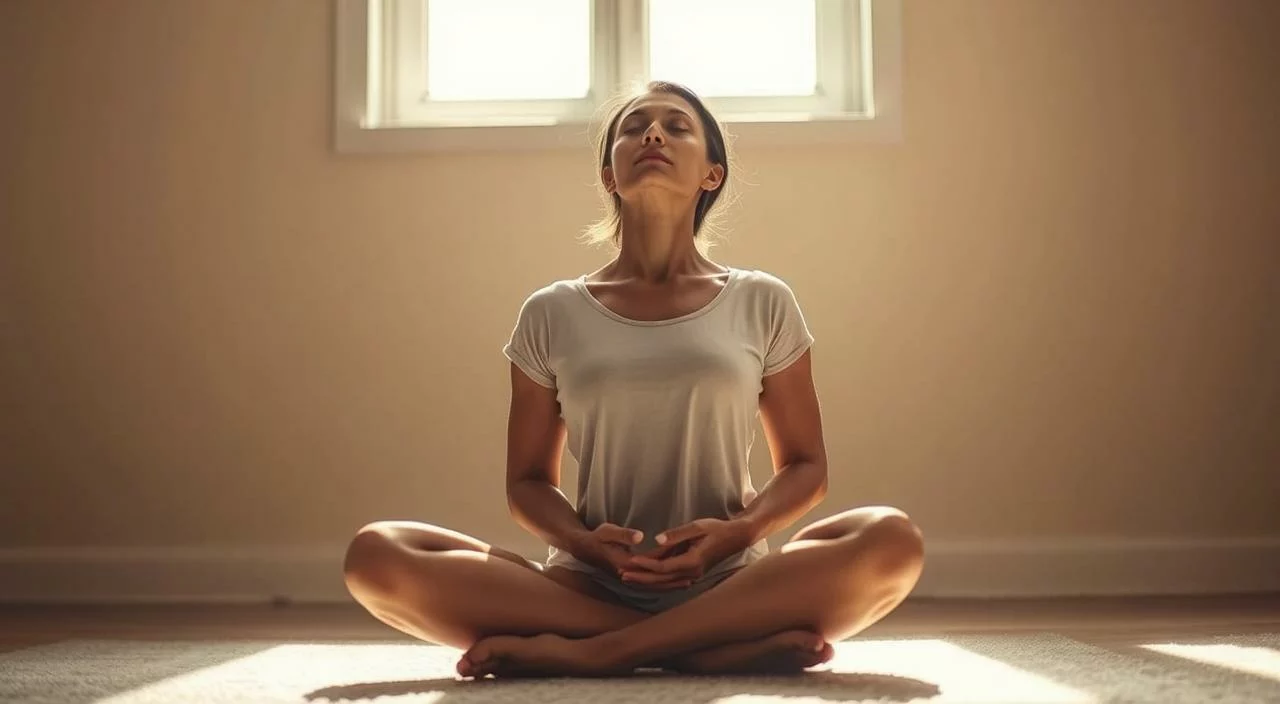
Inhale through your nose counting to 4, feeling your abdomen expand (not your chest). Hold for 1 second. Exhale through your mouth counting to 6. Repeat 4 times. This pattern forces heart rate to lower because the long exhale stimulates the parasympathetic nervous system directly (UOL Vivabem).
4-7-8 Breathing
Created by Dr. Andrew Weil, this is the most studied technique for immediate relief. Inhale for 4 seconds, hold for 7, exhale for 8. The long hold increases carbon dioxide in the blood, signalling to the brain that there is no danger — and cortisol begins to lower. According to CNN Brasil, this technique improves heart rate variability in just a few cycles. Repeat a maximum of 4 times.
Alternate Nostril Breathing (Nadi Shodhana)
Close the right nostril with your thumb, inhale through the left. Then close the left with your ring finger, open the right, and exhale. Alternate for 1 minute. This yogic technique balances the cerebral hemispheres and reduces mental agitation. Useful when thoughts race and you cannot focus (UOL Vivabem).
Clinical Note: In 7 years of hypnotherapy practice, I observe that patients who practise 4-7-8 breathing daily for just two weeks report significantly faster anxiety recovery during real-world stressful situations. The body learns the parasympathetic reflex through repetition — it is a physiological conditioning process, not just a mental one.
Technique 2: How does visualisation calm anxiety immediately?
Guided visualisation works because the brain does not clearly distinguish between an imagined experience and a real one. When you imagine a safe place in sufficient detail, the nervous system responds as if you were actually there. According to Maxima, 1 minute of conscious visualisation is sufficient to interrupt the cycle of anxious thoughts.
How to create a mental refuge in 60 seconds
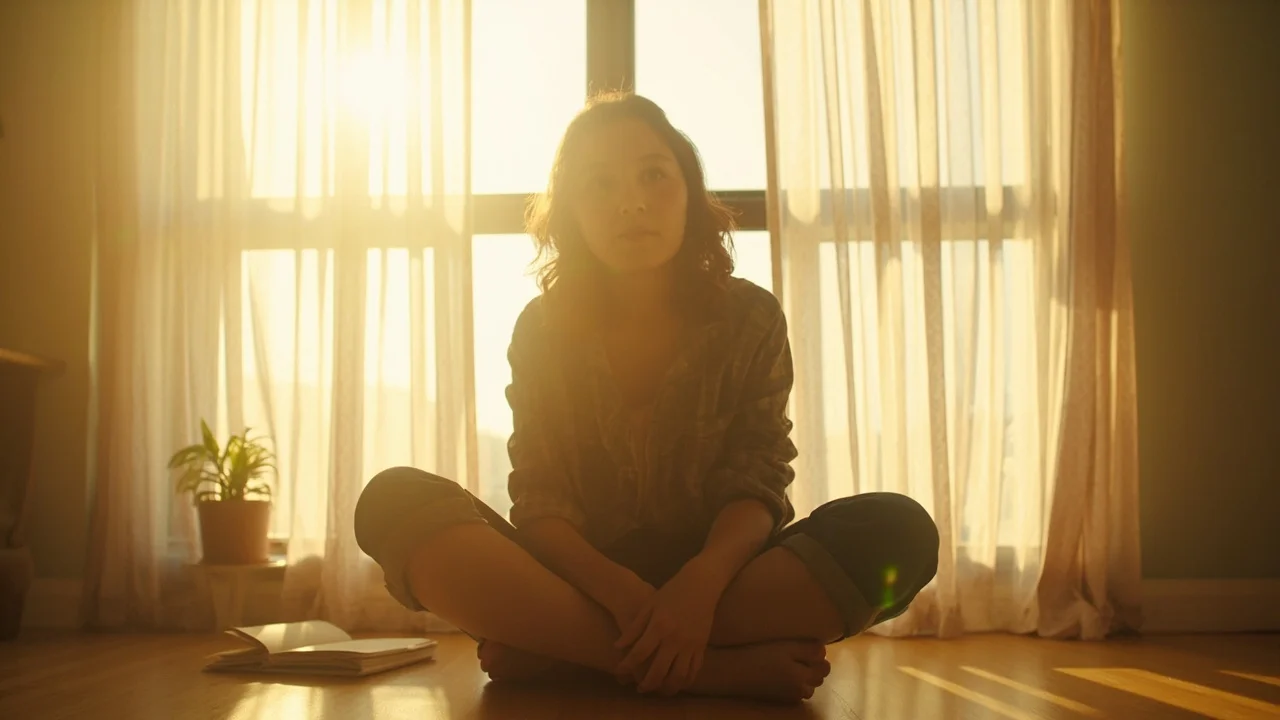
Close your eyes (or fix your gaze on a neutral point if in public). Choose a place where you feel completely safe: a beach, a forest, a familiar room. Walk through it with all 5 senses: what you see, hear, feel on your skin, smell, and taste. The more detail, the more effective. 60 seconds in this mental space reduces respiratory rate and muscle tension.
Quick visualisations for any situation
- Warm sun: imagine a sun ray warming the top of your head and descending through the body, dissolving tension as it passes
- Calming wave: visualise a ocean wave that, as it recedes, carries anxious thoughts away with it
- Safe place: 3 breaths in a mental space you already know by heart — without building anything new
Mindfulness supports this approach: observe anxious thoughts like clouds passing, without following them. Paying attention to breathing for 60 seconds — without trying to stop the thoughts, just observing — is enough to reduce emotional reactivity (Na Prática)
Technique 3: Which physical movements calm the mind in 1 minute?
Muscle tension builds up in the body before we consciously notice anxiety. Simple physical movements break that cycle. According to Unimed Campinas, progressive muscle relaxation exercises in just 10 minutes reduce cortisol levels and improve mood. In 1 minute, you can already interrupt the peak of tension.
- Shoulders: shrug up toward your ears, hold for 5 seconds, release forcefully. Repeat 3 times. Releases accumulated neck tension
- Hands: clench your fists tightly for 7 seconds, release. Feel the contrast between tension and relaxation — that is what the nervous system needs to register
- Brief walk: 60 seconds of brisk walking, even in a corridor, increases serotonin and interrupts the thought loop
- Gentle shaking: shake your hands as if drying them, for 30 seconds. Looks strange — works. Dissolves peripheral tension quickly
These movements can be combined with the diaphragmatic breathing of Technique 1 for a faster effect. The ideal is to practise all three in sequence: 1 minute of breathing, 1 of visualisation, 1 of movement. Three minutes total — but each technique works alone if time is short (Tua Saúde)
Evidence summary: The American Institute of Stress reports that 77% of adults experience physical symptoms caused by stress, and 33% report feeling “extremely stressed.” Regular practice of breathing and movement techniques for as little as 5 minutes daily significantly reduces cortisol within 8 weeks (American Institute of Stress, 2024)
Frequently Asked Questions
Do these techniques work during a panic attack?
Yes, but with a caveat: during a severe panic attack, hyperventilation can make 4-7-8 breathing difficult to apply. Start with the physical technique (clenching and releasing fists) to interrupt the physical cycle first, then move to breathing once your heart rate starts to lower.
How often should I practise the 4-7-8 breathing technique?
CNN Brasil recommends not exceeding 4 cycles per session, especially when starting out. With daily practice of 1-2 sessions, the relaxation effect becomes faster and deeper over weeks. The goal is for the body to learn the parasympathetic reflex through conditioning.
Can I use these techniques at work without drawing attention?
Diaphragmatic breathing and the 4-7-8 technique are invisible — they can be done while sitting in a meeting. Guided visualisation also works with eyes open, fixing on a neutral point. The hand-shaking technique may draw attention; substitute it by pressing your feet firmly into the floor for 10 seconds.
When does anxiety require professional treatment?
If anxiety regularly disrupts sleep, work, or relationships — and self-management techniques are not enough to restore normal functioning — it is a sign that professional evaluation is warranted. Cognitive Behavioural Therapy (CBT) and hypnotherapy have proven efficacy for anxiety disorders. Book a free 20-minute consultation with Fabio Morus to find out which approach makes most sense for you.
🌟 Have you considered seeking a therapist to support your well-being journey?
If this article sparked reflections about positive changes in your life, perhaps now is the ideal time to take the next step. Do you know hypnotherapy as a therapeutic tool? This approach can be surprisingly effective for various personal challenges.
Special offer: Book a free 20-minute consultation with therapist Fabio Morus and discover how therapy can transform your life.
✨ No commitment — Completely free — 20 minutes that can make a difference
Don’t postpone your well-being any longer. The first step to change is just one click away.
If anxiety always shows up tied to one specific moment, like an exam or a presentation, it can be worth understanding performance anxiety as its own condition.
Sources
- 4-7-8 breathing: how to use the technique for sleep or anxiety reduction - CNN Brasil
- Controlled breathing techniques and cortisol reduction - Evangelical University Hospital Mackenzie
- Breathing exercises for anxiety reduction - UOL Vivabem
- One-minute guided visualisation for anxiety - Maxima
- Mindfulness practices for emotional regulation - Na Prática
- Physical exercises to calm the mind - Unimed Campinas
- Relaxation techniques to calm the mind - Tua Saúde
This content is for informational purposes only and does not replace professional clinical diagnosis or medical treatment. Please consult a qualified health professional before making any decisions based on this information.
Schema BlogPosting (Person + Organization) and FAQPage are generated automatically by the template from frontmatter (author, date/lastmod, image, faqs) — see src/components/pages/BlogPostPage.astro and src/components/seo/BlogPostSchema.astro. No manual JSON-LD is needed in this file.