
Have you ever wondered how some people get back up after great challenges? While others remain stagnant? Resilience is a topic that makes us think about how to deal with adversity. It's more than an innate skill; it's something we can learn and improve.
Studies show that having resilience brings benefits such as a richer life and stronger relationships. Let's better understand what resilience is , where it comes from, and how it can improve our lives.
What is resilience?
Resilience is the ability to cope with challenges and return to one's former self or even better. In psychology, it is seen as a mechanism that protects against mental illness. This helps reduce stress and anxiety .
It's important to understand that resilience doesn't mean being invulnerable. It means facing problems and emerging stronger. Characteristics such as flexibility and persistence are essential for being resilient .
To be resilient, one must face challenges and find ways to overcome them. Continuous learning and self-esteem are also fundamental. Resilience is a skill that can be developed.
https://www.youtube.com/watch?v=uBg3oI301Z8
What does resilience mean?
When we talk about the meaning of resilience , it's important to understand that it goes beyond simply enduring. It's a vital skill for recovering from challenges. Research shows that resilience includes behaviors, thoughts, and actions. This helps people better cope with life 's problems.
The definition of resilience shows its positive impact. Resilient people live more meaningful and optimistic lives. They have a high focus on their goals. Resilience includes adaptability, learning from difficulties, and an optimism that increases productivity and happiness .
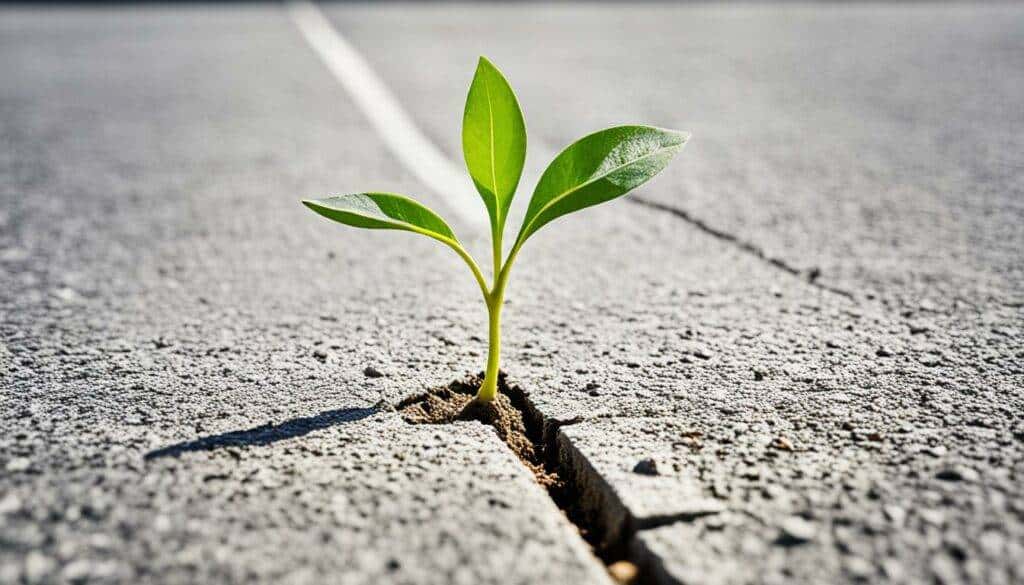
In professional life, resilience is very important. It helps to cope with pressure, stress, and daily demands. This maintains mental health and prevents burnout. The skill is crucial for a harmonious and productive work environment. <sup>4</sup>
Resilience allows you to transform negative situations into learning opportunities. This happens with a flexible and adaptable mindset. Furthermore, it's important to engage in activities that reduce stress and promote mental health. Thus, cultivating resilience is good for both body and mind.<sup> 4 </sup>
Resilience: meaning and origin of the term
The term resilience comes from the Latin "resilire," which means "to bounce back." Initially, it was used in physics to describe the ability of a material to return to its original shape after being deformed. Over time, the meaning of resilience changed and was used in psychology. Now, it represents the ability to face difficulties and recover without collapsing.
Ideas about the origin of resilience change according to cultures. There are three main perspectives: the North American, which focuses on evaluating individuals and data; the European, which sees resilience as ethical and psychological; and the Latin American, which highlights the importance of collectivity and social responses 5 .
In Brazilian and Latin American literature, resilience is seen as the ability to overcome emotional challenges and stressors. It is synonymous with flexibility, elasticity, adaptation, and recovery . Since 1807, scientists have studied resilience in materials, such as Thomas Young, who discovered how materials absorb energy and return to their original state.
https://www.youtube.com/watch?v=OxYvBWVlv20
Characteristics of resilience
Resilience is very important for facing the challenges of everyday life. It includes characteristics of resilience such as flexibility . This ability helps us adapt quickly to changes, whether in our personal or professional lives.
Resilient people have self-confidence . This allows them to be the protagonists of their own stories. This confidence is crucial for expressing ideas and opinions safely 7. Furthermore, the ability to adapt is fundamental for overcoming challenges and achieving goals 8 .
Emotional intelligence is very important. It helps us control our emotions, preventing them from paralyzing us. This is essential in stressful times, where emotional control makes all the difference. Resilient people are also empathetic and supportive of others during difficult times .
Persistence and the ability to adjust strategies are crucial. These skills are very valuable in rapidly changing environments, such as the corporate world.7 Resilience is also linked to self-awareness . This helps us deal with challenges in a balanced way, promoting our personal and professional growth.8

| Characteristics of Resilience | Description |
|---|---|
| Flexibility | Ability to adapt quickly to changes. |
| Self-confidence | Ability to express ideas confidently. |
| Emotional intelligence | Recognizing and managing emotions effectively. |
| Empathy | Understanding and helping others through emotional crises. |
| Persistence | Maintain focus on objectives, adjusting strategies as needed. |
| Self-knowledge | Understanding yourself to deal with challenges. |
The importance of resilience in everyday life.
Resilience is very important for our mental health and well-being. It helps us to face challenges effectively. This prevents psychosomatic illnesses and keeps us healthy under stress. 9 10 .
This ability allows us to overcome crises and traumas. Thus, we can adapt to new challenges 9 10 .
https://www.youtube.com/watch?v=YmH7v_tpQkM
It 's important to cultivate resilience in our daily lives. Believing in ourselves is a fundamental step. This helps in many areas of life.
Practicing anti-stress activities, such as meditation, also helps a lot 9 .
"Being proactive and cultivating positive thoughts are essential attitudes for promoting resilience."
In professional life, resilience is equally important. It helps us thrive in challenging environments. This improves our relationships and brings us more meaning. <sup>11</sup>
To strengthen professional resilience, it is good to set realistic goals and maintain positive relationships 11 .
| Aspects of Resilience | Description |
|---|---|
| Emotional Resilience | Ability to cope with stress and adversity. |
| Psychological Resilience | Adapting to uncertainty and maintaining continuity without negative consequences. |
| Physical Resilience | Ability to recover quickly from illnesses and injuries. |
| Personal Development | Learning from negative experiences and facing fears. |
Integrating resilience into our daily lives helps us overcome challenges. It also gives us a sense of purpose and motivation. Therefore, it is essential to continuously strengthen this skill.
Resilience in psychology
Resilience in psychology is very important for understanding mental health. It helps people cope with problems, adapt to changes, and overcome obstacles. This is crucial for dealing with everyday stress.
Resilient individuals have more control over their lives. They are more likely to take risks. This helps develop emotional resilience and cope with difficult situations. <sup>12</sup>
Studies show that resilience reduces alcohol consumption and smoking 13. Resilient people take better care of their physical health. This leads to a lower mortality rate 13 and better academic performance 13. Therefore, resilience is an important skill.
To develop resilience, practices such as meditation, exercise, and positive relationships are essential. Expressing emotions and seeking meaning in life also help in facing challenges 12. Characteristics such as self-esteem, optimism, and adaptability are common in resilient people 14 .

| Characteristics of Resilience | Benefits |
|---|---|
| Emotional control | Lower rate of mental disorders |
| Adaptability | Improved physical health |
| Empathy | Better academic performance |
| Effective communication | Stress reduction |
| Optimism | Greater proactivity in life |
Understanding resilience is essential. It not only improves mental health, but also helps us live better and more meaningful lives.
How to develop resilience?
Developing resilience is a process that requires effort and attention. It's important to cultivate a positive mental state and an optimistic attitude. Adopting resilience strategies is essential for facing challenges.
Self-confidence helps us face challenges without fear. Managing emotions and establishing connections with others are also fundamental. Here you can learn more about how to do that.
Studies show that resilience improves quality of life. Resilient people perform better at work and school. They are also more productive and good at solving problems 15. In addition, they don't give up and adapt well to changes at work 16 .
https://www.youtube.com/watch?v=6MCZhFp9Yng
Self-care practices, such as eating well and exercising, are good for emotional well-being. Learning to evaluate oneself and learning from mistakes helps us face new challenges. This gives us a fresh perspective.
Resilience grows over time. It helps us face challenges calmly and flexibly. This increases our self-confidence and self-esteem, which are important for overcoming obstacles.
Therapy can be a great option for improving resilience. It creates a safe space to explore and develop important skills. <sup>15</sup>
Examples of resilience in everyday life
Resilience emerges in situations that demand overcoming challenges and adapting. It can be seen in how we deal with obstacles, such as the end of a relationship or the loss of a job. After a crisis, many seek new opportunities, demonstrating emotional self-control and optimism.
Nelson Mandela is a striking example. After 50 years of struggle, he was elected the first black president of South Africa.17 This shows the importance of resilience for transformation and social justice. Stephen Hawking, with amyotrophic lateral sclerosis, contributed to science for over 50 years.17
It's crucial to know the difference between anxiety and depression and to seek help. Practices such as keeping an emotional journal, reading about overcoming challenges, and meditating help strengthen resilience and face challenges .

In the business world, resilience demonstrates how entrepreneurs deal with economic crises. Love for the work and persistence are essential. This can increase profitability and allow the business to specialize. Constantly practicing resilience not only helps overcome crises but also enriches our lives and learning.
| Example of Resilience | Description |
|---|---|
| Nelson Mandela | After 50 years of struggle, he became the first black president of South Africa. |
| Stephen Hawking | He contributed significantly to science for over 50 years after being diagnosed with amyotrophic lateral sclerosis. |
| Viktor Frankl | He survived four Nazi concentration camps and became a renowned psychologist. |
Everyday examples of resilience demonstrate human strength and motivate us to cultivate it in our lives 18 .
Resilience in the workplace
Resilience at work is a skill that helps us deal with difficult situations. It is essential for adapting to changes in the corporate environment. Characteristics such as flexibility, confidence, and persistence are fundamental to facing challenges at work. <sup>19</sup>
Today, we live in a VUCA world, full of volatility and uncertainty. This reality demands that we be more resilient 19 .
Having resilience at work brings many benefits. It helps reduce turnover and increases employee engagement. Resilient teams are more productive even in difficult times. 19 20
To be more resilient, it's important to have a positive attitude and maintain emotional balance. Seeking challenges and understanding our vulnerabilities is also crucial. Resilience helps us cope better with stress .
Resilient professionals are more successful in their careers. They handle pressure better and maintain productivity. Employers look for these characteristics in candidates, such as calmness and self - esteem.
https://www.youtube.com/watch?v=4tdlLwgYOm0
Conclusion
Analyzing the summary about resilience , we see that it is crucial to our lives. It affects our emotional well-being and how we face challenges. In work and personal life, it is essential to have resilience to overcome obstacles and innovate.
Professionals who are resilient tend to be more successful. They excel in competitions and deal with emotions effectively. <sup>21 22 </sup>
Practices such as self-awareness and seeking support are key to coping with modern life. Understanding what resilience is can make us more optimistic and adaptable. Resilience is a skill that we can always improve, positively affecting our relationships 22 23 .
Cultivating resilience improves our lives and the environment around us. Investing in it is one of the best things we can do for ourselves. 21 23 .
FAQ
What does resilience mean?
Resilience is the ability to face challenges and overcome them, returning to a better state. This happens after adversity.
How can we develop resilience?
Developing resilience involves having a positive mindset and being optimistic. It's important to take care of yourself and build strong relationships. Furthermore, managing emotions effectively is crucial.
What are the characteristics of a resilient person?
Resilient people are flexible and adaptable. They have self-confidence and a positive self-image. They see challenges as learning opportunities.
How important is resilience in our daily lives?
Resilience is essential for our mental health and well-being. It helps prevent psychosomatic illnesses and respond to stress in a healthy way.
Can resilience be developed from childhood?
Yes, resilience can be developed from childhood. Factors such as family support and life experiences influence this.
What does psychology say about resilience?
Psychology considers resilience a crucial factor for mental health. It helps people cope with daily stresses and frustrations.
How does resilience manifest itself in the workplace?
In the workplace, resilience is demonstrated in adapting to change and managing stress. It also improves collaboration among team members, increasing productivity.
Are there examples of resilience that we can observe in everyday life?
Yes, we see examples of resilience in how people overcome loss, failure, or illness. They transform these moments into opportunities for personal growth.
What differentiates resilience from resistance?
Resistance is the ability to withstand challenges without changing. Resilience, however, goes further, allowing for recovery and growth after adversity.
What are some strategies for becoming more resilient?
To be more resilient, it's important to take care of yourself and develop emotional intelligence. Facing challenges directly and learning from past experiences are also effective strategies.
🌟 Have you considered seeking a therapist to support your well-being journey?
If this article sparked reflections about positive changes in your life, perhaps now is the ideal time to take the next step. Do you know hypnosis as a therapeutic tool? This approach can be surprisingly effective for various personal challenges.
Special offer: Book a free 20-minute consultation with therapist Fabio Morus and discover how therapy can transform your life.
✨ No commitment — Completely free — 20 minutes that can make a difference
👉 Click here to book your free consultation
Don't postpone your well-being any longer. The first step to change is just one click away.