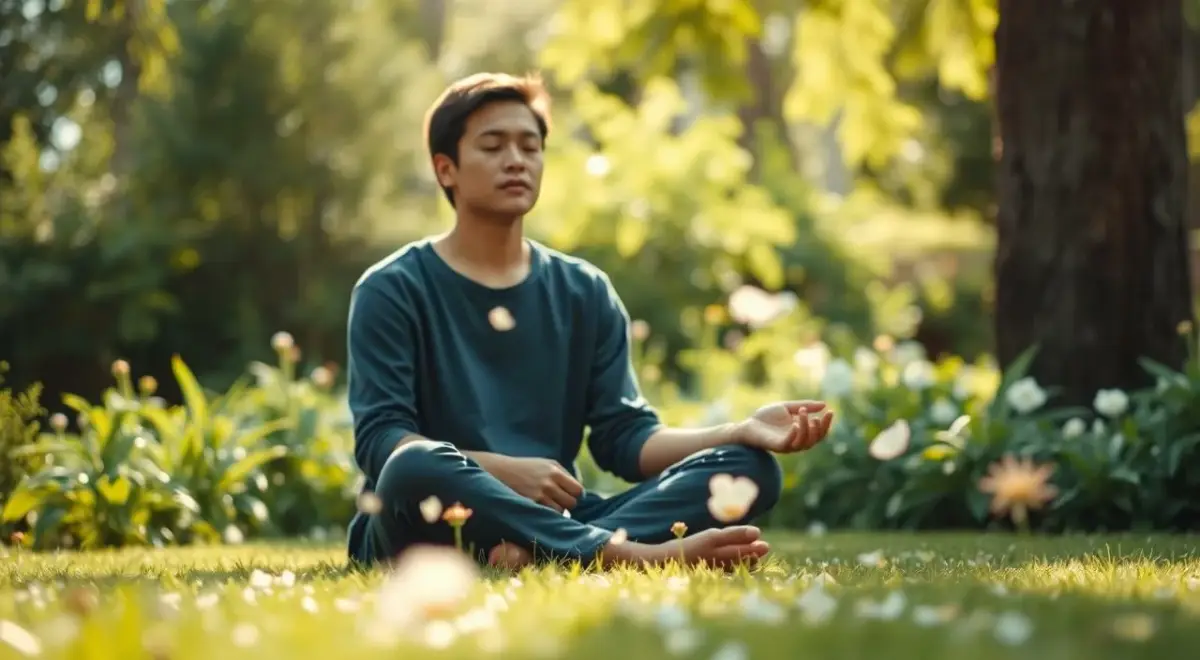

57% of Brazilians want to improve their quality of life. This shows that taking care of emotional well-being is very important. Emotional health helps to cope with stress and adversity, improving our lives.
Stress can cause mental health problems, such as anxiety and depression. Understanding emotional care is crucial. Knowing how to take care of ourselves emotionally is essential.
Key Conclusions
- 57% of Brazilians prioritize quality of life, indicating a growing concern for mental health .
- Emotional health is fundamental for coping with stress and adversity.
- Stress is one of the main causes of psychological disorders, such as anxiety and depression.
- It's essential to understand what emotional well-being is and how we can begin to care for our emotional well-being.
- Strategies for taking care of emotional well-being include relaxation practices, such as mindfulness, and regular self-care.
- The importance of emotional care is growing, and it is fundamental for a full and healthy life.
What does it mean to take care of your emotional well-being?

Taking care of our emotional well-being is very important for a happy life. This means understanding and managing our emotions. It is essential for our emotional well-being .
Emotional health helps us cope with life and maintain good relationships. This depends on how well we manage our emotions.
Studies show that exercise, a good diet, and healthy friends are key. It's also important to have time to have fun and relax. This helps create and feel good.
To achieve emotional balance , it's good to seek help from a professional. Practicing self-compassion and maintaining strong relationships are also important. They help prevent emotional problems.
Principle 1: Self-knowledge

Self-awareness is essential for a happy and healthy life. Research by Robert Half showed that 86% of leaders want to make better decisions. They believe this would happen if they had more self-knowledge.
To improve emotional awareness , it's important to use self-awareness techniques . Practicing reflection and self-analysis helps a lot. You can do this through meditation, journaling, or talking to friends and family.
The benefits of self-knowledge are many:
- Better decision making
- Reducing stress and anxiety
- Developing fundamental skills for leadership.
Self-awareness also greatly aids leadership. It's crucial for making good decisions and communicating effectively. Therefore, working on self-awareness is important for achieving success in both personal and professional life.
Principle 2: Stress Management

Managing stress is essential for a happy and healthy life. Stress can be temporary or long-lasting. It's vital to know how to deal with it so it doesn't affect our health.
There are several stress management strategies we can use. Meditation and relaxation are good options. They help reduce stress and improve our lives.
Furthermore, eating well is very important. We should consume foods rich in nutrients, such as B vitamins, vitamin C, magnesium, and manganese. This helps maintain our health, even when we are stressed.
- Practice physical activity regularly.
- Maintaining a balanced diet
- Practice meditation and relaxation daily.
Adopting these strategies improves our stress management . This reduces the negative effects on our lives. Remember, managing stress is a process that requires practice and patience.
Principle 3: Development of Social Skills

Social skills are essential for a happy life. Studies show that relationships are crucial to our well-being. Knowing how to communicate well helps create strong bonds.
Effective communication is the foundation of any relationship. It helps to better understand people, solve problems, and strengthen bonds. Furthermore, these skills can be improved with practice.
To communicate better, it's important to listen attentively and be clear. Respecting others' opinions is also crucial. By following these tips, you can strengthen your relationships.
Some strategies for improving your social skills include:
- Practice active listening.
- Be empathetic and clear in your messages.
- Respecting the differences and opinions of others.
With practice and dedication, you can become more social. Remember, the key to good relationships is effective communication .
Principle 4: Empathy and Compassion

Empathy and compassion are essential for a happy life. Studies show that empathy greatly contributes to health. It makes us kind and compassionate .
Understanding the emotions of others improves our emotional health . To have more empathy and compassion , it's good to listen carefully and imagine how the other person feels. This comes from the practice of taking care of oneself and relating well to others.
- Practice meditation and mindfulness.
- Developing active listening and empathy.
- Cultivate healthy and meaningful relationships.
Adopting these practices improves our emotional health . As a result, we can be more empathetic and compassionate towards others.
Principle 5: Self-Acceptance

Self-acceptance is essential for mental well-being. Carl Rogers, a psychologist, says that accepting who we are helps us change. This allows us to make real and lasting changes.
One example is Ana Paula Arósio. She left fame behind to live simply. This shows that accepting who we are helps us grow.
What is self-acceptance?
Self-acceptance is about loving and accepting yourself. It's different from self-esteem , which changes with compliments. Accepting who we are helps us truly change, not resign ourselves to our fate.
Tips for practicing self-acceptance
- Practice compassion for yourself.
- Avoid negative comparisons with others.
- Cultivate positive relationships.
- Seek professional help if necessary.
Building self-acceptance and self-esteem takes time. This means being patient and understanding the importance of loving yourself. Practicing self-acceptance helps to develop healthy self-esteem . This improves our motivation and success in life.
Principle 6: Seeking Help

Asking for help is an important step for mental health . Many people are afraid to ask for help because of the stigma. But asking for help shows that you are strong, not weak.
A mental health professional can be of great help. They can provide support and guidance. If you are experiencing stress, anxiety, or depression, it's time to seek help.
Several types of help are available. For example:
- Individual or group therapy
- Support from self-help groups
- Medication, when necessary.
Seeking help isn't something you do alone. Friends, family, and colleagues can also help. Everyone's support is crucial for mental health .
In conclusion, seeking help is essential for mental health. Don't be afraid to ask for help when you need it. Remember, asking for help shows that you are strong, not weak.
The impact of emotional health on daily life.

Emotional health is very important in our lives. It affects personal and professional relationships . Studies show that it is linked to quality of life and well-being.
This influences how we relate to people. It also changes how we deal with stress.
Physical health is also affected by emotional health. Chronic stress and emotional problems can cause illnesses. This includes heart disease, diabetes, and obesity.
On the other hand, doing activities that we enjoy helps a lot. Maintaining a healthy routine is also important. This improves both emotional and physical health .
To maintain emotional health, it's essential to do things that make us feel good. Exercise, meditation, and therapy are good options. It's also important to have healthy personal relationships .
Maintaining an organized routine helps reduce stress and anxiety. This is very important for well-being.
Daily practices for taking care of your emotional well-being.
To take care of your emotional health, it's essential to practice daily habits . This includes gratitude exercises . They help you see the bright side of things.
Adding healthy routines is also very important. This could include:
- Engage in regular physical activity.
- Meditate or practice yoga
- Maintain a balanced diet.
- Get enough sleep
These actions help reduce stress. They make you feel calmer and happier. Gratitude is a practice that can change your life.
Therefore, prioritizing healthy daily practices and routines is crucial. With these tips, you can add good habits to your life. This will improve your quality of life.
How to cultivate emotional resilience
Emotional resilience is essential for a happy and healthy life. It helps us face challenges effectively, thus maintaining our emotional health and well-being.
To develop this resilience, it is crucial to understand what it means. It is also important to know how to cultivate it.
An important strategy is knowing how to manage stress and anxiety. Practices like meditation and mindfulness are very helpful. They help regulate our emotions and reduce stress.
It's also vital to have strong support. Friends and family are essential in providing help and support when we need it.
Some tips for improving emotional resilience include:
- Connect with someone you trust.
- Renewing the spirit through practices such as prayer and meditation.
- Focus on the things that are going well.
Remember, emotional resilience doesn't develop overnight. It requires practice and patience. But the benefits are enormous.
With emotional resilience, we face challenges more effectively. We maintain our emotional health and well-being. And we live a fuller, healthier life.
Conclusion: A Path to Emotional Fulfillment
We have reached the end of this journey on essential principles for emotional well-being . Emotional fulfillment is a path of self-discovery and care. The six principles – self-awareness , stress management , development of social skills , empathy and compassion , self-acceptance , and seeking help – are essential for achieving emotional balance .
Studies show that improving emotional balance is possible. This happens with small daily changes. Practices such as meditation , physical exercise , and healthy routines help a lot. Recognizing and dealing with emotional triggers is also crucial.
We invite you to take care of your emotional well-being . This is essential for a balanced, productive, and fulfilling life. May this be your next step towards fulfillment !
How about scheduling a free 20-minute session with Therapist Fabio Morus? He can help you take the first step towards a lighter and more balanced life. Click here to schedule!
Source Links
- Have you taken care of your mind today? Learn about its importance for your mental health. - https://www.unicep.edu.br/post/ja-cuidou-de-sua-mente-hoje-aprenda-a-importancia-para-sua-saude-mental
- 6 Pillars to Build a Healthy and Fulfilling Life - https://vivabem.blog.br/6-pilares-para-construir-uma-vida-saudavel-e-plena/
- How to take care of your mental and emotional health? - Clinifemina - https://clinifemina.com.br/como-cuidar-da-saude-mental-e-emocional/
- 8 tips on how to take care of your emotional health - https://www.unimedcampinas.com.br/blog/saude-emocional/8-dicas-de-como-cuidar-da-saude-emocional
- Prevention: Learn how to take care of your emotional health! - Santa Mônica Hospital - https://hospitalsantamonica.com.br/prevencao-saiba-como-cuidar-da-saude-emocional/
- Self-knowledge: what it is, its importance, and how to practice it - https://www.serasaexperian.com.br/carreiras/blog-carreiras/autoconhecimento/
- Basic: How to Develop Self-Awareness - https://novaescola.org.br/bncc/conteudo/12/competencia-8-autoconhecimento-e-autocuidado
- Virtual Health Library of Mato Grosso do Sul - https://bvsms.saude.gov.br/estresse/
- Stress and well-being at work: a literature review - https://www.scielo.br/j/csc/a/7rhP4hgWgcspPms5BxRVjfs/
- Psychology of social skills - https://www.scielo.br/j/paideia/a/N7jNQnHrvf6snXkYrZctTfq/
- Social skills in childhood: what are they, how to assess and stimulate them? | Ninhos do Brasil - https://www.ninhosdobrasil.com.br/habilidades-sociais-na-infancia
- Emotional Intelligence: What it is, its Importance, and How to Develop it - FIA - https://fia.com.br/blog/inteligencia-emocional/
- What are the five pillars of Emotional Intelligence? - https://online.pucrs.br/blog/pilares-inteligencia-emocional
- Empathic Care: Contributions to Ethics and its Interface with Moral Education in Health Training - https://www.scielo.br/j/rbem/a/mPNNtfNrHkvn64VrrQ7jKgR/
- Self-acceptance is the first step towards change - Vida Simples - https://vidasimples.co/colunista/a-autoaceitacao-eo-primeiro-passo-para-a-mudanca/
- Self-acceptance and self-esteem: understand the difference - https://www.psicologo.com.br/blog/autoaceitacao-e-autoestima-entenda-a-diferenca/
- Mental Health - https://www.gov.br/saude/pt-br/assuntos/saude-de-aaz/s/saude-mental
- The importance of knowing how to ask for help - https://www.psicologo.com.br/blog/a-importancia-de-saber-pedir-ajuda/
- What is emotional health and how does it affect your daily life? - https://escoladainteligencia.com.br/blog/saude-emocional/
- Emotional health: well-being for body and mind - Telavita -https://www.telavita.com.br/blog/saude-emocional/
- Emotional health: how to improve and have a better quality of life - Ticket Blog - https://www.ticket.com.br/blog/saude-e-bem-estar/saude-emocional/
- 5 tips for taking care of your mental and emotional health all year round - https://portal.pucrs.br/noticias/saude/5-dicas-para-cuidar-da-saude-mental-e-emocional-o-ano-todo/
- How to take care of your mental and emotional health in 7 tips - https://www.clinicaceu.com.br/blog/como-cuidar-da-saude-mental-e-emocional/
- 8 tips to maintain good mental and emotional health! - Maxi Popular - https://www.maxipopular.com.br/8-dicas-para-manter-a-saude-mental-e-emocional-em-dia/
- Emotional resilience at work: how to develop it - https://viverbem.unimedbh.com.br/saude-no-trabalho/resiliencia-emocional/
- 5 ways to find strength in difficult times and how to help someone struggling with mental health - https://pt.thechurchnews.com/fe-viva/2024/05/10/formas-construir-resiliencia-emocional-encontrar-forcas-ajudar-outros-saude-mental/
- The importance of emotional balance throughout life - https://blog.samisaude.com.br/equilibrio-emocional/
- The Importance of Taking Care of Your Mental Health Even When Everything Seems Fine - https://www.clinicadamente.com/a-importancia-de-cuidar-da-sua-saude-mental-mesmo-quando-parece-tudo-bem/
🌟 Have you considered seeking a therapist to support your well-being journey?
If this article sparked reflections about positive changes in your life, perhaps now is the ideal time to take the next step. Do you know hypnosis as a therapeutic tool? This approach can be surprisingly effective for various personal challenges.
Special offer: Book a free 20-minute consultation with therapist Fabio Morus and discover how therapy can transform your life.
✨ No commitment — Completely free — 20 minutes that can make a difference
👉 Click here to book your free consultation
Don't postpone your well-being any longer. The first step to change is just one click away.