
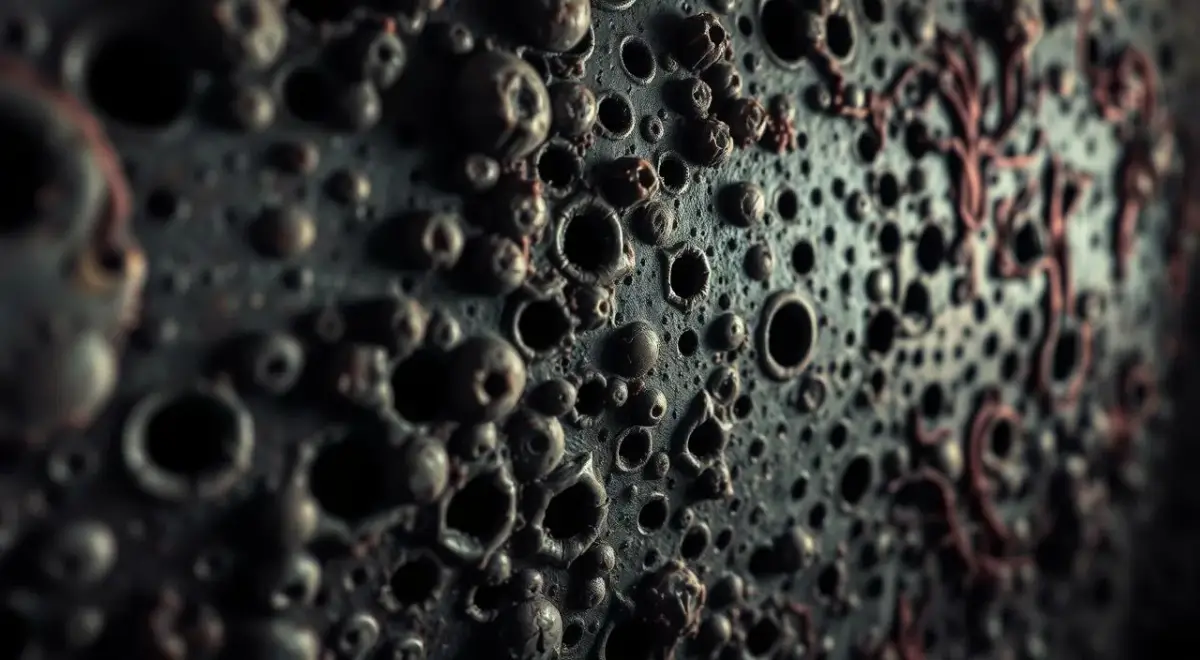

Have you ever felt uncomfortable seeing images with small holes? If so, it could be trypophobia (feeling unease or phobia). This condition affects people worldwide . It began to gain more recognition in 2009 and can significantly impact your life.
Want to know the symptoms of trypophobia ? Let's look at the six main signs. This will help you recognize it and seek help. Knowing about trypophobia is the first step to overcoming it.
Ready to learn how trypophobia manifests? Let's explore it together. Let's understand the symptoms that can help us understand this disorder.
What is trypophobia?
Trypophobia is an uncommon phobia that causes an intense fear of patterns with small holes. It is different from a simple aversion. It can greatly affect the lives of trypophobics, who seek help .
Definition and Characteristics
Trypophobia is a psychological disorder that causes people to fear images or objects with holes. This fear is very intense and is not based on any real risk. The images that are most frightening have high visual contrast.
Difference Between Phobia and Aversion
It is crucial to know the difference between phobia and aversion. Aversion is a natural reaction, but phobia is a very strong fear that can greatly affect life 3. Furthermore, trypophobia does not fit into any known psychiatric diagnosis, which makes its treatment difficult 2 .
https://www.youtube.com/watch?v=QY3FtU7EyrQ"Trypophobia is an example of how different individuals perceive and process the world in distinct ways." - Dr. Trisha Pasricha 2
Common Symptoms of Trypophobia
Trypophobia (feelings of heavy images) is an intense fear of patterns of small holes or bumps. It can cause various physical, emotional, and behavioral symptoms. It affects many people.
Physical Symptoms
Physical symptoms include nausea, itching, tremors, and revulsion 5. It can also cause discomfort, distress, and sweating. In severe cases, it can lead to fainting and panic attacks 5 .
Emotional Symptoms
Emotionally, trypophobia causes excessive fear and anxiety. It can lead to panic attacks. In extreme cases, it can cause depression and insomnia .
Behavioral Reactions
People with trypophobia avoid situations that trigger the phobia . This can lead to social isolation. The aversion affects their quality of life .
Treatment for trypophobia involves medication for anxiety and psychotherapy 5. Cognitive-behavioral therapy and gradual exposure therapy are effective 4 .
"Nine out of ten people with trypophobia benefit from exposure therapy, a type of psychotherapy, to overcome this specific phobia." 6
Relaxation techniques, such as meditation, help manage phobias . In severe cases, it is important to seek professional help .
Causes of Trypophobia
The causes of trypophobia are complex. They involve genetic factors, personal experiences, and cultural influences. Understanding these causes helps to overcome the fear of holes and disturbing textures.
Genetic Aspects
Studies show that trypophobia may have a genetic basis. People with a family history of phobias are more likely to develop it . This suggests that some may react more intensely to certain visual stimuli.
Personal Experiences
Childhood and adolescent traumas can also cause trypophobia . Traumatic events involving patterns of holes can create this irrational fear. This fear becomes difficult to overcome over time.
Cultural Influences
Trypophobia also has a cultural aspect. Some societies have a greater aversion to certain patterns. Exposure to disturbing images can increase this susceptibility.
Understanding the causes of trypophobia is crucial to overcoming this fear . A comprehensive approach helps to deal with the fear. This improves the relationship with patterns and textures that were previously uncomfortable.

"The repulsion reaction caused by trypophobia doesn't fit neatly into any traditional psychiatric diagnosis." 7
Trypophobia challenges experts to find a precise classification 7. This shows the need to better understand this condition. Innovative therapeutic approaches are essential to help those who suffer from this fear.
| Aspect | Description |
|---|---|
| Genetic Aspects | Studies indicate a higher probability of developing trypophobia in people with a family history of phobias 7 . |
| Personal Experiences | Trauma or negative events involving hole patterns in childhood and adolescence can contribute to the emergence of trypophobia 7 . |
| Cultural Influences | Some societies and cultures seem to be more prone to developing an aversion to certain patterns, due to exposure to disturbing images 7 . |
Understanding the causes of trypophobia (fear of heavy images) helps to find effective ways to overcome this fear. This improves the relationship with textures and images that were previously uncomfortable.
Strategies for Dealing with Trypophobia
For those who have trypophobia, there are several ways to deal with the problem. One of the best is...
cognitive behavioral therapy
This therapy helps to understand and change negative thoughts. This helps to respond in a more positive way.
Another useful strategy is...
relaxation techniques
Meditation and breathing exercises are very effective. They help control anxiety and palpitations . These practices bring calm to the mind and body.
For those with severe trypophobia,
support groups and online resources
These spaces are very important. They allow you to share experiences and tips, and also to get help from experts . In some cases, medication is also necessary for treatment.
Simple Practices to Reduce Anxiety
- Conscious breathing: Inhale counting to 4, hold for 4, and exhale for 4. It's magic!
- Physical exercise: Get moving! Walking or yoga can help relieve tension.
- Digital disconnection: How about taking a break from social media and focusing on the present?
- Establish a routine: Organizing your day reduces that feeling of chaos.
- Seeking help: Therapy is a compass to finding balance.
Why is Seeking a Therapist Important?
It's like having a guide on an unfamiliar trail. A therapist can help you better understand your feelings, find practical solutions, and develop a more balanced life. Asking for help is not a sign of weakness; on the contrary, it's an act of courage and self-care. Sometimes, dealing with anxiety alone feels like a labyrinth with no way out. A therapist can be the guide you need to transform burden into learning and reclaim the lightness of living. It's not a sign of weakness, it's an act of courage and self-care.A Path to Inner Peace
Dealing with anxiety isn't easy, but it's possible. You're not alone on this journey. How about taking the first step? Learning to control your anxiety is possible, and you deserve this peace. Start taking care of your mental health now and discover a new way of living. Click here Fabio Morus Therapist to schedule a free 20-minute session.🌟 Have you considered seeking a therapist to support your well-being journey?
If this article sparked reflections about positive changes in your life, perhaps now is the ideal time to take the next step. Do you know hypnosis as a therapeutic tool? This approach can be surprisingly effective for various personal challenges.
Special offer: Book a free 20-minute consultation with therapist Fabio Morus and discover how therapy can transform your life.
✨ No commitment — Completely free — 20 minutes that can make a difference
👉 Click here to book your free consultation
Don't postpone your well-being any longer. The first step to change is just one click away.