

Is it true that anxiety is a "disease"? Or can it be a tool for our well-being? Let's see how anxiety arose as a response to threats. And how we can use it to our advantage .
Anxiety is a common emotion that helps us prepare for challenges. But often, we see it as an enemy. This can create a cycle of fear and avoidance. But what if a cure for anxiety is within our reach?
Together, we will better understand anxiety. And learn how to overcome it once and for all.
What is anxiety and why has it evolved?
Anxiety is a natural and universal emotion, present in all human beings. It evolved as an essential tool for the survival of the species. It alerts us to possible future threats and prepares us to act in order to avoid harm and seize opportunities .
The origin and function of anxiety
Anxiety is not just an "electrical circuit of fear." It drives us to be creative , innovative , and to form social connections . It is a powerful tool for the progress of humanity . By activating neurological processes of concentration, efficiency, and social connection, anxiety prepares us to face challenges and seize opportunities .
Anxiety as a survival tool
Anxiety evolved as an adaptive response to environmental dangers . It alerts us to uncertain threats and prepares us to persevere , remain vigilant , and act in ways that prevent disaster . This ability to anticipate and respond to potential threats has been fundamental to the survival of the human species throughout evolution .
Far from being just a negative emotion, anxiety embodies the logic of survival . It can be channeled in a positive way , motivating us to work for what matters to us, connect with others, and be more productive .
https://www.youtube.com/watch?v=dKhOUChDTVI
"Anxiety is our companion on this journey, an emotion that alerts us to future threats and prepares us to persevere, innovate, and connect with others. Far from being merely a negative thing, it is an essential tool for the survival and progress of humanity."
The harmful effects of viewing anxiety as an illness.
Anxiety disorders are recognized mental health conditions. However, viewing anxiety as a "disease" to be eradicated is a mistake . This view leads us to see normal anxiety as a problem to be solved. In reality, it is a healthy and even beneficial emotion.
The flawed metaphor of "illness"
When we fear, avoid, and suppress anxiety, it becomes even greater . This distorted view prevents us from seeing the important role anxiety plays in our lives.
The vicious cycle of anxiety
Viewing anxiety as an illness leads us into a vicious cycle. We fear anxiety, try to avoid and suppress it, which only increases it further . This pattern prevents us from using anxiety in a positive way.
To break this cycle, we must view anxiety as a natural and beneficial emotion. In this way, we can learn to use anxiety to our advantage, developing skills to cope with it.
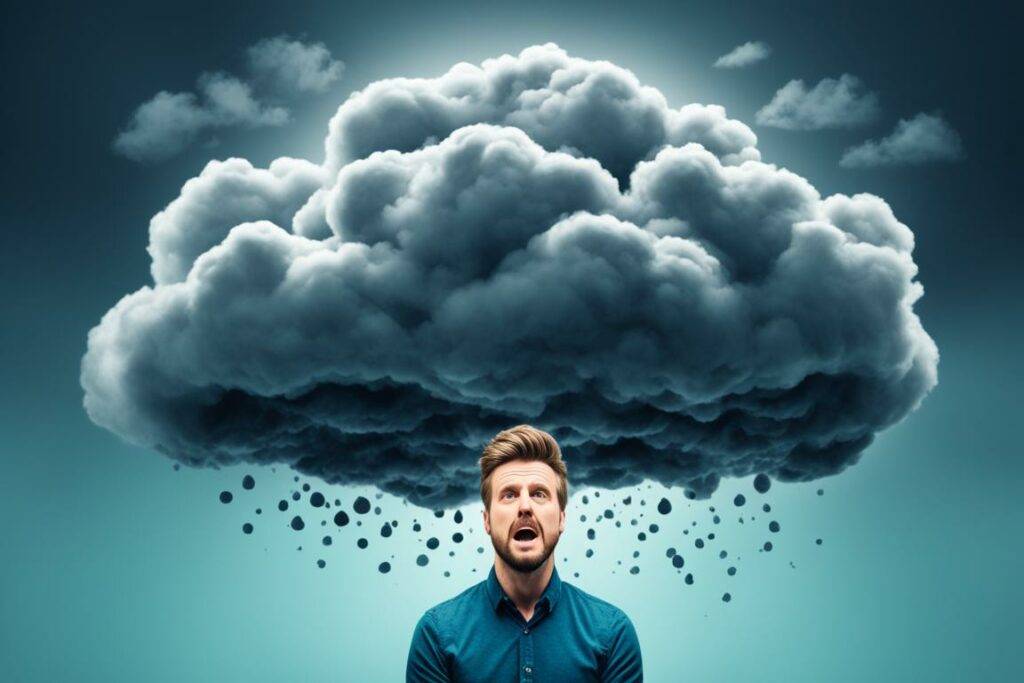
"Anxiety is not a disease, but an important emotion for our survival. The challenge is learning to deal with it in a healthy and productive way."
Why does anxiety bother us so much?
Anxiety being bothersome is inherently purposeful and evolutionary. The unpleasant sensation of anxiety helps us survive and be happy. It makes us stop and pay attention to avoid dangers, which leads us to make better decisions.<sup> 4</sup>
The word "anxiety" comes from Latin and Greek, meaning "choked" and "restricted." This shows how important the unpleasant and painful sensation is to our survival instincts. Thus, the discomfort of anxiety is significant, despite being inconvenient.<sup> 4 </sup>
Anxiety isn't just a bad reaction. It's a tool that alerts us to dangers and motivates us to act. The unpleasant feeling of anxiety shows that our brain is functioning well, preparing us to face challenges.
Therefore, the reason why anxiety is bothersome is crucial for our survival and adaptation. Understanding the purpose of the unpleasant feeling of anxiety helps us to cope with it better and use it to our advantage.
https://www.youtube.com/watch?v=77SuP1TdGkU
Anxiety disorders: when anxiety gets out of control
Anxiety is a natural and positive emotion, but it can become overwhelming and disrupt people's lives. This happens in anxiety disorders , such as Generalized Anxiety Disorder (GAD ), Panic Disorder, and Social Anxiety Disorder. These disorders cause excessive anxiety, without reason, that can paralyze people.
The different types of anxiety disorders
Anxiety disorders have different symptoms and causes. They affect the lives of many people. Some examples are:
- Generalized Anxiety Disorder (GAD): characterized by excessive and persistent worries and fears .
- Panic Disorder: characterized by recurrent and unpredictable panic attacks.
- Social Anxiety Disorder: involves intense fear and avoidance of social situations.
- Obsessive-Compulsive Disorder (OCD): characterized by repetitive thoughts and behaviors.
- Post-traumatic stress disorder (PTSD): resulting from a traumatic event experienced.
Worrying statistics on anxiety disorders.
Anxiety disorders are very common and are becoming more frequent. Data shows that:
| Statistic | Given |
|---|---|
| Prevalence of anxiety | It has increased significantly in recent years . |
| Diagnosis of GAD | It is done when a person has three or more specific symptoms for more than six months . |
| Symptoms of GAD (Generalized Anxiety Disorder) | These include restlessness, lack of energy, difficulty remembering, digestive problems, among others. 5 |
| Risk of developing disorders | Women have a better chance than men, due to hormonal differences and other factors . 5 |
| The role of genetics | It plays a large role in the development of anxiety disorders, with a higher chance if there is a family history . 5 |
These data show the importance of treating anxiety disorders . They affect many people and can cause them to avoid simple activities because of anxiety. <sup>6</sup>

Anxiety has a cure: Learning to use anxiety to your advantage.
Anxiety disorders are serious and require treatment. But anxiety itself is not bad. It can be a useful tool if we use it productively 7. Instead of trying to eliminate it, we can use it to improve our concentration, creativity, and connection with others 8 .
Viewing anxiety in a positive light can change our lives . If we manage it well, it can help us overcome challenges and achieve our dreams. In this way, we learn to use this emotion to our advantage.
- Anxiety can improve our concentration and focus, making us more efficient 8 .
- They can also increase our creativity, helping us to find new solutions to problems 8 .
- Furthermore, anxiety can bring us closer to others, seeking support and connection 8 .
- Finally, it makes us stronger, enabling us to overcome obstacles and persevere .
When we learn to deal with anxiety in a healthy way, it becomes our ally. This perspective leads us on a path of self-knowledge and personal growth.
https://www.youtube.com/watch?v=Si8gXDZf6IU
"Anxiety can be an uncomfortable emotion, but it's also a powerful ally when we learn to channel it in a positive way." - Mental Health Specialist
Tips for dealing with anxiety in everyday life.
There are several techniques that help control anxiety in daily life . Conscious breathing and meditation are great for calming the mind and body. They reduce the physical symptoms of anxiety .
Studies show that meditating for just five minutes a day improves concentration and brings calm.9 These practices help us focus on the present and stop thinking about the future. Adding these techniques to your daily routine can strengthen your emotional resilience.
Physical exercise and relaxation activities
In addition to breathing and meditation , physical exercise and relaxing activities are also important for dealing with anxiety . Doing physical activity three times a week can decrease anxiety and increase happiness .
Aerobic exercises, such as walking, running, or cycling, release tension and produce feel-good hormones. More relaxing activities, such as yoga or walks in nature, also help to relax and control emotions. Adding these healthy habits to your daily routine is an effective way to deal with anxiety .

"Conscious breathing and regular physical exercise can be true allies in combating anxiety."
In addition , a nightly ritual can improve sleep and ward off emotional exhaustion. Things like drinking tea , reading a book , or listening to relaxing music before bed are good ideas .
The importance of self-knowledge and self-compassion.
Understanding yourself better is key to dealing with anxiety. Identifying which situations, thoughts, or emotions trigger anxiety helps in finding solutions. Understanding your anxiety patterns is the first step to overcoming it.<sup> 12</sup>
Recognizing your anxiety triggers
Having self-compassion is vital for dealing with anxiety. Instead of judging yourself, it's important to be kind and understanding towards yourself . This attitude of acceptance helps you face challenges with more strength. <sup>13</sup>
Being kind to yourself
Self-compassion is acceptance and care for oneself . Setting boundaries is crucial for emotional balance . Avoiding other people's problems helps maintain emotional health.
https://www.youtube.com/watch?v=To5iFH7g2ZU
"Self-compassion refers to treating oneself with compassion and kindness in times of difficulty, failure, or suffering." 13
Not constantly seeking approval from others is an important step in cultivating self-compassion; valuing one's own opinion is fundamental. Avoiding excessive self-criticism promotes a healthier relationship with oneself and fosters personal growth .
When should you seek professional help?
If you have anxiety and it significantly affects your life, seek help. Signs that it's time to seek help include very strong anxiety that you can't control on your own.14 A mental health professional can help, offering therapy or medication if needed .
Signs that you may need therapy.
- Sleep disturbance is one of the main symptoms of generalized anxiety disorder (GAD) 14 .
- If you are unable to fall asleep for several nights in a row due to worries, it may indicate anxiety 14 .
- Constant anxiety can lead to mental and physical exhaustion 14 .
- Excessive and dominant worry in thoughts throughout the day is a sign of anxiety disorder 14 .
- Difficulty concentrating can be a reflection of anxiety 14 .
- Frequent irritation over minor problems may indicate anxiety 14 .
- In addition to the symptoms mentioned, others may occur such as shortness of breath, palpitations, excessive sweating, among others 14 .
Seek professional help if you identify the symptoms, as only a specialist doctor can diagnose and treat anxiety 14 .
The benefits of treatment for anxiety.
Professional treatment for anxiety can bring several benefits. In addition to helping reduce anxiety symptoms, therapy can teach effective coping strategies, strengthen emotional self-regulation skills, and improve overall quality of life.15 The guidance of a specialist also allows for a better understanding of the roots of anxiety and the development of a personalized approach to managing it. With proper treatment, it is possible to learn to use anxiety in a beneficial way, instead of letting it overwhelm you.

"For individuals facing chronic anxiety and stress, seeking professional help is crucial to improve their quality of life." 15
Persistent physical symptoms, such as frequent headaches, muscle tension, digestive problems, and sleep disturbances, are indicative of chronic anxiety and stress. Difficulties concentrating and remembering can be manifestations of high levels of stress and anxiety . Mood swings, irritability, mood swings, and feelings of hopelessness or discouragement are potential signs of chronic anxiety and stress. Avoiding previously enjoyed social activities may indicate that anxiety or stress is impacting an individual's social life .
Mental health professionals, such as psychologists and psychiatrists, can offer effective management, treatment , and support strategies for those facing chronic anxiety and stress.15 Cognitive behavioral therapy, medication , or a combination of both may be part of the treatment recommended by mental health professionals.15 Virtual consultations and support groups are resources available for those seeking mental health assistance.15 Recognizing the signs of chronic anxiety and stress and seeking professional help are crucial steps toward improving well-being and quality of life.15
Anxiety disorders affect 6.2% of the population in São Paulo 16. 72.4% of professionals face anxiety problems in the workplace in São Paulo 16. Physical symptoms of anxiety affect professional performance in 85% of reported cases 16. Anxiety at work can lead to the development of panic disorder in 10% of cases 16. 50% of anxious professionals experience symptoms of burnout related to anxiety 16. Excessive demands from superiors are responsible for 43% of cases of anxiety in the workplace 16. 65% of cases of anxiety at work are triggered by stress 16. 30% of anxious professionals suffer from low self-esteem 16. Lack of resources to perform the work causes anxiety in 20% of cases 16 .
Facing the future with hope
Anxiety is a challenge, but we can face it with hope and optimism 17. Understanding its origin and how to deal with it positively helps us overcome stigmas 17 .
With care and the right strategies, anxiety can be a powerful ally in facing challenges. It makes us more resilient, creative, and connected . We see anxiety as a chance to grow, not as a threat.
Understanding anxiety as a complex emotion gives us renewed hope for the future 17. This motivates us to achieve goals and find creative solutions 17 .
"Anxiety is a specific emotion, and not just a synonym for stress or fear. When we approach it as a disorder, it reflects a state in which the person feels debilitated by this emotion." 17
When we accept anxiety as part of our mental health , it can bring about positive changes. We reject the idea that anxiety is just a limitation . This allows us to face the future with hope and overcome challenges .
https://www.youtube.com/watch?v=88gLpm28rps
With an optimistic view of anxiety , we face the future with resilience and confidence . This helps us build a journey of overcoming challenges and achieving personal fulfillment .
Conclusion
In this article, we saw that anxiety is not a disease. It is a natural and useful emotion that helps us survive . Understanding its origin and function allows us to use it to improve our lives.
Anxiety disorders are serious and require attention.19 But anxiety itself can be positive. It helps us to be more creative, productive, and to connect with people. With this perspective, we can face the future with optimism and confidence.18
We hope you now see anxiety differently. It's not something to be eradicated, but a tool that can help us. Our message is one of hope and empowerment. You can overcome anxiety and make it an ally in your life.
FAQ
What is anxiety and why has it evolved?
Anxiety is a natural emotion that helps us survive. It alerts us to threats and prepares us to act. Furthermore, anxiety motivates us to be creative and to form social bonds.
Why is anxiety seen as a "disease" to be eradicated?
Viewing anxiety as an "illness" is a mistake. This leads us to see normal anxiety as a problem. In fact, it is a healthy and useful emotion.
Avoiding anxiety can actually make it worse. It prevents us from learning to deal with it in a healthy way.
Why does anxiety bother us so much?
Anxiety bothers us in order to protect us. It makes us stop and act to avoid danger. Thus, it is important for our evolution and well-being.
What are anxiety disorders?
Anxiety disorders are serious conditions that cause excessive anxiety. They include generalized anxiety disorder and social anxiety disorder. Up to 31% of the U.S. population may have one of these disorders.
How can we learn to use anxiety in a positive way?
It's possible to use anxiety in a positive way. Techniques like mindful breathing and meditation can help. They improve concentration and creativity.
When is it necessary to seek professional help for anxiety?
You may need professional help if anxiety significantly impacts your life. If the symptoms are intense and you cannot control them, seek help. A professional can recommend the best treatment, such as therapy or medication.
🌟 Have you considered seeking a therapist to support your well-being journey?
If this article sparked reflections about positive changes in your life, perhaps now is the ideal time to take the next step. Do you know hypnosis as a therapeutic tool? This approach can be surprisingly effective for various personal challenges.
Special offer: Book a free 20-minute consultation with therapist Fabio Morus and discover how therapy can transform your life.
✨ No commitment — Completely free — 20 minutes that can make a difference
👉 Click here to book your free consultation
Don't postpone your well-being any longer. The first step to change is just one click away.