


When we think about a systemic approach , we think about changing how we view relationships and families. This article will show how this perspective is used in family therapy , systemic psychotherapy , and other forms of help. The systemic view shows that each person influences others in surprising ways, improving communication and problem-solving.
This approach can bring improvements to everyone's lives, creating an environment that supports individual growth. Let's see how this can improve everyone's lives.
Understanding the systemic approach means understanding how it works in practice. It not only helps with self-knowledge but also with mental health . Let's explore how systemic psychotherapy can bring about significant changes. Get ready to discover how this approach can transform relationships and understandings.
Learn more about the benefits of systemic psychotherapy .
Using this approach in work groups improves decision-making. It goes beyond resolving conflicts, creating stronger relationships. Discover with us how family therapy can improve the lives of you and your loved ones.
What is the systems approach?
The systems approach helps to understand an organization as a system . It considers many important factors. This is useful in areas such as management, psychology, and family therapy . With it, we see patterns and trends that are difficult to notice in other methods.
One major advantage is how it handles complexity. It allows for a better understanding of how systems connect² . This helps in making better decisions within organizations.
https://www.youtube.com/watch?v=TFBC3CxZf_g
However, we face challenges with this approach. Complex systems are uncertain and unpredictable. We need multiple disciplines and teamwork to deal with this .
How does the systemic approach apply in family therapy?
Family therapy uses a systemic approach to understand how people interact within families. It seeks to change bad interaction patterns, improving effective communication . Each person is seen as part of a system, which helps to understand and change the interactions that affect everyone 's mental health .
This therapy is very effective in resolving problems in families and couples, bringing harmony to the home . It helps patients become more independent, improving communication and resolving conflicts. This improves everyone 's lives.

In family therapy , we view relationships between people as a complex system. Changes in one member affect all the others . With this perspective, we work to improve how people interact. This helps members take responsibility and change negative behaviors.
Systemic psychotherapy: an integrative view of mental health.
Systemic psychotherapy is a new and comprehensive way of treating mental health . It looks at the patient's well-being within the context of their relationships and surrounding environment. The therapy views family and social relationships as essential to mental health.
Brazil, through the SUS ( Unified Health System), considers health a right for all and a duty of the State. This means that everyone should have equal access to health services. Law No. 8080 highlights the importance of treating health in a comprehensive and fair way, which is also fundamental in systemic psychotherapy .
CAPS (Psychosocial Care Centers) are very important in this system, focusing on psychosocial health. Patients can reach them through various places, such as schools and hospitals . This approach not only takes the family into account, but also combines therapy with other practices, such as CBT (Cognitive Behavioral Therapy) and mindfulness .
https://www.youtube.com/watch?v=OwfhTvR-aW4
This integrated approach greatly improves the treatment of mental health problems. It helps people grow and strengthen their resources. Using humanistic approaches and art techniques can make therapy even more effective. <sup>7</sup>
Systemic intervention: understanding its strategies and applications
Systemic intervention is widely used in various fields. It employs strategies to analyze problems within a broad context. This considers the complex relationships and interactions within systems, such as families, organizations, or societies.
This approach is effective because it can understand and adapt quickly to these dynamics. This shows the importance of analyzing the system as a whole.
A recent study showed that systemic therapy can reorganize families. It used seven sessions of one and a half hours each, with qualitative research methods 8 .
The most effective interventions focus on family dynamics, not just individuals. Since the 1950s, systemic therapy has shown that changes in one family member can change the entire system. There are several schools of systemic therapy, each with its own approaches .
Therapists need to have a variety of tools for effective intervention. This reflects the complexity of family relationships and their interactions.

Understanding the interconnections and patterns within systems helps to make more creative interventions. Systems thinking has been important since the 20th century, influencing fields such as biology and quantum physics. This shows that relationships are more important than isolated elements.
| Elements | Description |
|---|---|
| Intervention Strategies | Adaptable to the needs of the system involved. |
| Effectiveness | Implicit in the observable changes in family interactions |
| Sessions | Structured to promote reflection and learning. |
| Systemic Concepts | Focus on relationships and group dynamics. |
Systems approach: the importance of a holistic view
The systems approach highlights the importance of viewing things holistically. This means not just looking at isolated parts. It's crucial to understand how each part connects to the whole.
In fields such as health, administration, and psychology, this perspective helps to better understand situations. It allows for a deeper and more effective analysis.
In medicine, for example, we see that the approach goes beyond physical symptoms. It also considers the emotional and social aspects of the patient.10 This shows that each person is connected to a larger context, affecting their health and well-being.
In business management, a holistic view helps to understand the complexities of organizations. With a systemic approach , we can identify flaws and improve collaboration between departments. This improves efficiency and innovation. <sup>11</sup>
https://www.youtube.com/watch?v=oyXkz18Vy1k
Benefits of the systemic approach
A systems approach brings important benefits to communication and efficiency. It analyzes challenges holistically, allowing for strategic adjustments. This helps organizations better understand the connections between their elements.
Improved communication between those involved.
Effective communication is essential in the systemic approach. It integrates departments and encourages dialogue. This improves understanding of roles and reduces misunderstandings, creating a collaborative environment. For more information, see this link 12 .
Developing more effective solutions
A systems approach helps teams create effective solutions. It considers multiple perspectives and information. This reduces errors and unforeseen events, improving organizational performance 13. In addition, it increases operational effectiveness 14 .
Increased overall participant satisfaction.
A systemic approach increases satisfaction with interventions . When employees feel heard, it improves commitment and motivation. Strategies that value inclusion create a positive environment, benefiting everyone. <sup>12</sup>

Family and couple therapy: an example of the systemic approach.
Family and couple therapy is very important. It uses a systemic approach to help. This shows how spouses can improve their relationships and create an environment for change. <sup>15</sup>
This practice helps reduce behavioral problems in children. This happens because it resolves conflicts between the couple 16 .
In the 1960s and 1970s, family therapy began to grow in the USA. This brought several approaches that help to better understand the subject 17. In Brazil, authors such as Julia Bucher-Maluschke and Terezinha Féres-Carneiro helped to develop the practice. This led to a large growth from the 90s onwards 17 .
In our services, the intervention lasts for eight meetings 15. The sessions last one hour. The goal is to create a safe space for the couple to talk and better understand their experiences 15 .
Furthermore, we record the sessions to learn more about family dynamics. This helps to understand how family interactions affect everyone's well-being.16 Thus , family therapy shows how dialogue and the construction of new life narratives are important.
https://www.youtube.com/watch?v=KlqzcgO974s
Brief systemic therapy: effectiveness in just a few sessions.
Brief systemic therapy seeks quick solutions in a few sessions. Therapists focus on rapid interventions to bring about significant changes in a short time. Research shows that this therapy can last from 10 to 20 sessions, and in some cases, even a single session may be sufficient. <sup>18</sup>
Despite its effectiveness, brief therapy is not for everyone. More complex or chronic cases may require more time and effort to resolve.18 The quality of the therapist-patient relationship is very important for success.18
Since the 1980s, group therapy has become an effective method in the US. It is used in various groups, such as support groups for drug users and adolescents with school problems.19 This therapy creates an environment where rapid interventions are very useful.
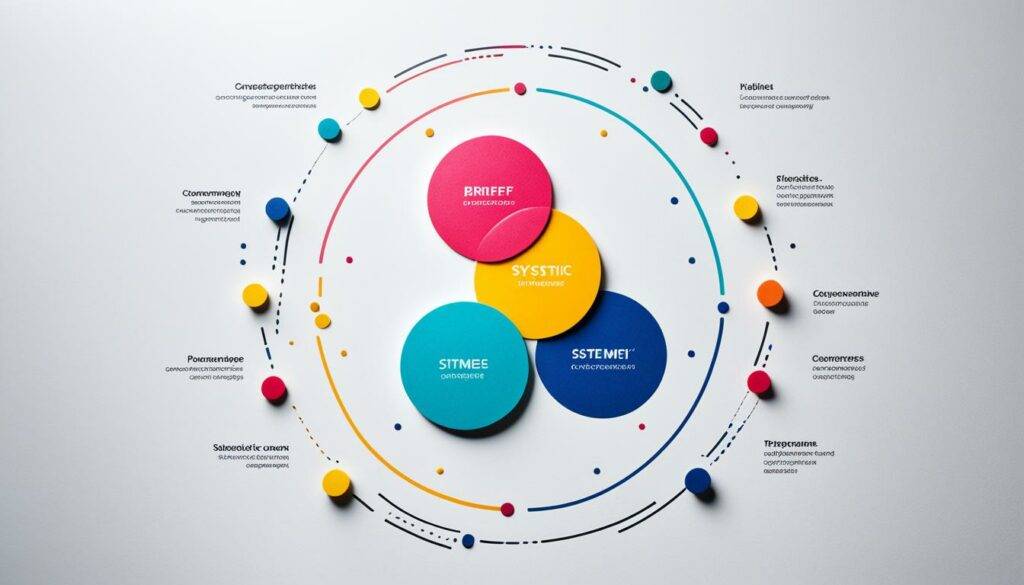
The importance of an integrative approach in psychotherapy.
The integrative approach in psychotherapy blends various therapy models . This helps to tailor the treatment to each client. Therapists use techniques from cognitive-behavioral, psychodynamic, and humanistic psychology. This creates a more comprehensive care environment.
This approach is essential for treating complex mental health problems. It considers various facets of the person.
Studies show that this form of therapy improves the relationship between therapist and patient. It also creates a safe and supportive environment. This is crucial for effective treatment.
Personalizing treatment is very important. Research shows that this makes therapy more effective 20 21 22 .

The benefits include overcoming crises quickly, gaining more self-confidence, and understanding better who you are. This helps you live in accordance with your personal values 21 22 .
In our practice, we see that mixing different techniques brings benefits. This makes the patients' experience richer and more transformative. This shows the importance of integrative approaches in mental health.
A systemic approach in individual systemic therapy.
Individual systemic therapy uses the systemic approach to help the client. It focuses on the client's relationships and environment. This helps the client understand how their interactions affect their emotional well-being. This therapy began with families and has adapted to serve individuals 23 .
This therapy seeks to promote client autonomy. It encourages awareness of choices and responsibilities. The therapeutic relationship and personalized interventions are key to success. They help the client improve their relationships with themselves and with others . The focus is on learning new patterns of behavior and relationships, not just treating symptoms .

Studies show that this therapy is useful in complex situations. It helps prevent conflicts and strengthen family ties.24 The therapy considers the impact of past events and the importance of understanding relational dynamics.
After therapy, many clients greatly improve their understanding of emotions and relationships. This results in effective and lasting treatment. <sup>25</sup>
Cultivating a systemic vision in the organizational environment
It is crucial to have a systemic view in organizations to improve collaboration and efficiency. This approach helps to understand how actions and decisions affect the system as a whole. This facilitates the search for effective solutions to problems . Companies that adopt this perspective become more innovative and adapt better to the market .
For effective management , it is important to cultivate this vision continuously. This can be done through observation, questioning , and experimentation with new approaches.26 A culture that values diversity, open communication, and collaboration is fundamental. This requires commitment from leadership and participation from everyone.26
Empowering employees about the importance of a systemic view can bring about significant positive changes. An environment that values inclusion and autonomy fosters the development of skills and innovation. This benefits not only the employees, but the organization as a whole. <sup>26</sup>

- Promoting innovation
- Stimulating organizational learning
- Valuing diversity in the workplace.
| Aspects | Benefits of a Systems View |
|---|---|
| Collaboration Between Departments | Optimizing processes and reducing conflicts. |
| Continuous Innovation | Ability to adapt to market changes. |
| Open Communication | Strengthening the culture of feedback and continuous improvement. |
Conclusion
The systemic approach is very useful in various settings, such as family therapy and mental health. The benefits of the systemic approach are numerous. It helps to see the problem holistically and to improve processes.
Using a systems approach is important for anyone who wants to do a good job. It helps us see how everything is connected and improve relationships between people.
When we use the systems approach, we improve how people relate to each other. This makes organizations work better. It is very important to use this approach for a better future 27 .
FAQ
What is the systems approach?
The systems approach views phenomena in an integrated way. It considers the connections between elements, whether in organizations or mental health.
How does the systemic approach apply to family therapy?
In family therapy, it helps to understand the relationships between family members. This improves communication and resolves conflicts.
What characterizes systemic psychotherapy?
Systemic psychotherapy analyzes the patient within the context of their relationships and environment. It considers social support and family interactions.
What strategies are used in systemic intervention?
Strategies analyze how the parts of a system interact. This helps to find solutions that take mutual influences into account.
Why is a holistic view important in a systems approach?
A holistic view helps to understand all the factors involved. This identifies shortcomings and promotes collaboration between departments.
What are the benefits of the systems approach?
It improves communication and develops effective solutions. This increases satisfaction and creates a collaborative environment.
How does family and couples therapy work within the systemic approach?
The therapy works with all family members. It focuses on interactions that affect well-being, resolving conflicts and strengthening bonds.
What is brief systemic therapy?
Brief systemic therapy aims to resolve problems quickly. It focuses on specific issues and promotes change in just a few sessions.
How is the integrative approach applied in psychotherapy?
The integrative approach uses various therapeutic models. This allows for a holistic and flexible analysis of the client's issues.
What is individual systemic therapy?
Individual therapy applies the principles of the systemic approach. It helps the client understand how their relationships and environment affect their emotional well-being.
Why is cultivating a systems perspective in organizations essential?
Cultivating a systemic view improves the work environment. This leads to better communication and understanding of the interconnections between departments and employees.
🌟 Have you considered seeking a therapist to support your well-being journey?
If this article sparked reflections about positive changes in your life, perhaps now is the ideal time to take the next step. Do you know hypnosis as a therapeutic tool? This approach can be surprisingly effective for various personal challenges.
Special offer: Book a free 20-minute consultation with therapist Fabio Morus and discover how therapy can transform your life.
✨ No commitment — Completely free — 20 minutes that can make a difference
👉 Click here to book your free consultation
Don't postpone your well-being any longer. The first step to change is just one click away.