

Have you ever felt paralyzed by the fear of thunder and lightning ? This phobia, called astraphobia, can be very painful. It can make rain seem like emotional torture.
Anxiety can be so strong that it prevents you from doing the things you enjoy. But don't worry, there are ways to overcome this fear. Let's see together how you can feel safe again.
Understanding the Fear of Thunder and Lightning
https://www.youtube.com/watch?v=ShAoL5Boj0Q
Astraphobia is an anxiety disorder. It causes people to have an intense fear of thunder and lightning. This fear can change the lives of those who suffer from it and affect their emotional well-being.
It's important to know the symptoms of astraphobia. Understanding how this fear arises also helps in overcoming it.
What is astrophobia?
Astraphobia is an excessive fear of thunder and lightning. People with this phobia experience great distress when they hear about storms. This fear is not fleeting; it can severely limit daily life.
Common symptoms
The symptoms of astraphobia can vary from person to person. But some common symptoms are:
- Tremors or tremors in the presence of thunder.
- Heart palpitations and rapid breathing.
- A feeling of oppression or impending fear.
- Avoid leaving home during thunderstorms.
Understanding these symptoms helps to see the fear of thunder and lightning as a problem that needs to be addressed.
How fear develops
The fear of astraphobia can stem from traumatic childhood experiences. Storms may have triggered this fear. Cultural influences can also contribute to this fear.
These experiences cause fear to grow and become stronger. This affects adult life.
Causes of Fear of Thunder and Lightning
The fear of thunder and lightning is common. But why does this happen? Understanding the causes of the fear of thunder helps to overcome thunder phobia .
Traumatic experiences
An intense storm can leave emotional scars. Traumatic events create memories that influence fear. A panic disorder can arise when someone has a negative experience with thunder.
Cultural and social influence
Cultural factors can increase fear. Myths linking thunder to destructive events are common. These stories can create a negative association. Family and friends can also have an influence, making the fear worse.
Genetic factors
Genetic inheritance is also important. Some studies show that anxiety can be inherited. Therefore, people with a history of panic disorder may be more likely to have a fear of thunder.
Warning Signs and Reactions

The fear of thunder and lightning causes strong physical and emotional reactions. The physical reactions to fear appear in various ways. The emotions generate a cycle of storm avoidance behavior and other symptoms of anxiety .
Physical reactions to fear
As a storm approaches, we experience various physical reactions to fear . We may have palpitations, sweat profusely, and even have difficulty breathing. The body is preparing for a threat, showing warning signs.
This state can be very frightening. And it can cause us to experience more symptoms of anxiety .
Emotional responses
Beyond the physical reactions, we feel a great sense of helplessness. This feeling can increase fear, making us feel panic and anguish. The fear of thunder and anxiety are closely linked, as we feel unprotected and vulnerable during storms.
Avoidance behaviors
Because of fear and anxiety, many avoid storms. They avoid going outdoors or constantly check the weather forecast. This avoidance can create a vicious cycle.
Anticipating a storm increases anxiety. This leads us to avoid situations that might make us feel afraid. While it may seem safe, this strategy can worsen anxiety symptoms over time.
The Effects of Fear in Daily Life

The fear of thunder and lightning greatly affects those who have this fear. This fear doesn't only occur during storms; it also affects mental health in ways that can be surprising.
Anxiety during storms causes many people to avoid normal situations. This impairs their interactions and daily routines.
Impact on mental health
Mental health is greatly affected by the fear of thunder and lightning. Many people develop anxiety disorders. This happens because the persistent fear is very strong.
The feeling of helplessness in the face of nature's force can intensify depression. This creates a vicious cycle where anxiety increases.
Effects on social relations
This fear can create barriers in social relationships. Family and friends may not understand the seriousness of the situation. This causes the individual to isolate themselves during storms.
A lack of social support can intensify fear. This makes it difficult to create meaningful and lasting connections.
How does it affect the routine?
The fear of thunder and lightning also affects daily routines. Simple activities, such as leaving the house, may be put aside. This causes daily discomfort.
These limitations interfere with daily obligations. They also affect the overall quality of life.
Coping Methods

To overcome the fear of lightning, it's essential to use effective strategies. They help control anxiety. Let's look at some useful techniques to feel calmer during thunderstorms.
Breathing techniques
Breathing techniques are very important. They help calm the nervous system, so you feel less afraid.
A common technique is diaphragmatic breathing. Inhale through your nose, count to four. Then, hold your breath for four seconds. Finally, exhale through your mouth, counting to six. Do this whenever you feel anxious.
Mindfulness and meditation
Mindfulness and meditation keep the mind in the present moment. They help to cope with fear. Practicing these activities can strengthen your emotional resilience.
Investing a few minutes of your day in meditation or practicing mindfulness is beneficial. It makes facing storms easier.
Gradual desensitization
Overcoming a phobia involves confronting your fear gradually. Start by watching videos about thunderstorms in a safe place. Then, listen to recordings of thunder at low volumes.
The more comfortable you feel, the higher the volume can be. This process reduces the intensity of your fear, and you begin to feel safer.
Effective Therapies and Treatments
Overcoming the fear of thunder and lightning requires several approaches. Treatment for lightning phobia focuses on changing thoughts and reactions. It is essential to know the options available for recovery.
Cognitive-behavioral therapy
Cognitive behavioral therapy (CBT) is very effective. It helps to change thoughts that fuel fear. With a professional, it's possible to learn how to cope with the fear of thunder .
Alternative therapies
There are other therapies besides CBT. Hypnosis and acupuncture can help. These techniques support the overcoming process, making facing fear easier.
Use of medication
In severe cases, medication for anxiety may be used. Anxiolytic medications control anxiety. It is important that a healthcare professional guides the use of medication.
| Type of Treatment | Description | Effectiveness |
|---|---|---|
| Cognitive-Behavioral Therapy | It changes negative thoughts about thunder and lightning. | High |
| Alternative Therapies | Includes hypnosis and acupuncture for anxiety relief. | Moderate |
| Use of Medication | Use of anxiolytics to control anxiety. | Variable |
Storm Preparedness
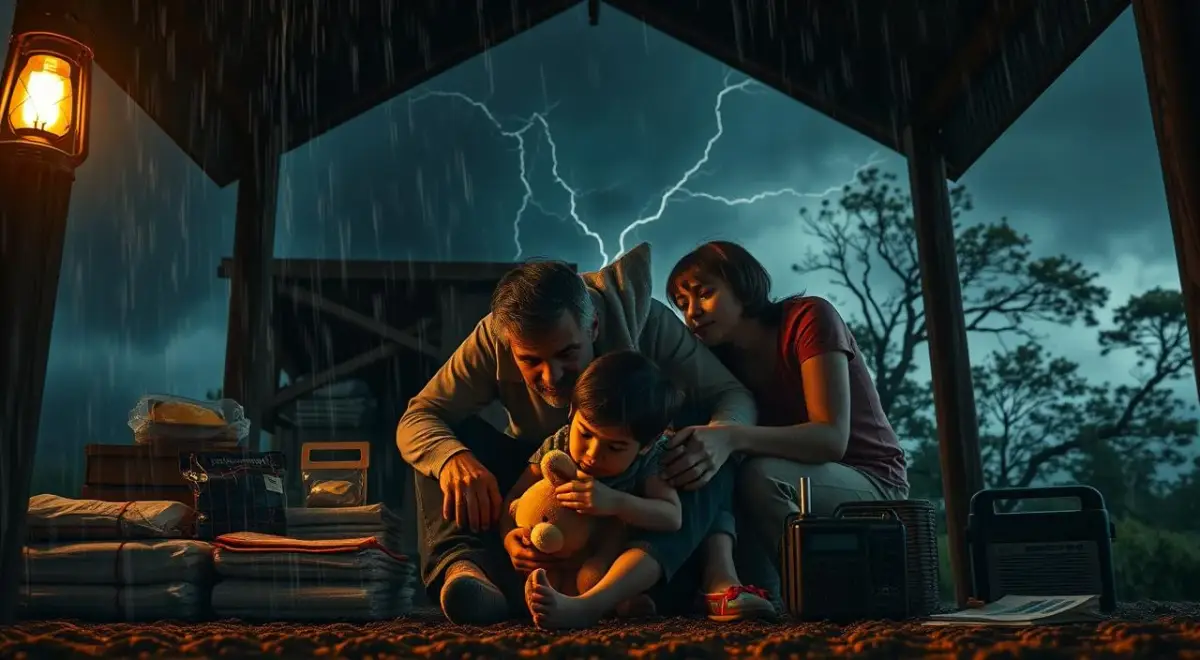
During a storm, protecting your family is crucial. Being prepared is simple and makes all the difference. Creating a safe space at home helps to calm everyone down.
Having plans for activities during the storm also helps. It makes the time more pleasant and productive.
How to protect yourself at home
Before a storm, it's important to take safety precautions. Closing windows and doors helps a lot. Using curtains or blinds prevents glass shards from shattering.
Having flashlights and a charged cell phone is essential. This ensures communication if the power goes out. Checking the weather helps you know when to take shelter.
Creating a safe space
Choosing an indoor room is a good idea. This place should be away from windows and have water and food. A welcoming space helps to feel safe.
Blankets, games, or books can make the time more relaxing. This makes facing the storm easier.
Planning activities during storms.
Having things to do changes your perspective on a storm. Board games, movies, or books are great options. They make the time pass in an enjoyable way.
Making lists of activities, like art or storytelling, is also a good idea. It brings togetherness and fun to the home, even during a storm.
Support Tools

Having the right tools goes a long way in combating the fear of thunder and lightning. There are several options that can help you feel calmer. Here are some important resources for this journey.
Mental health apps
Mental health apps are great to use anytime. Calm and Headspace have meditations and breathing exercises. They help reduce anxiety during storms. These mental health apps are easy to use and very helpful.
Online resources
There are also many online platforms that can help. Mental health websites have useful articles and tips. Online forums and communities are places to connect and share experiences. These anxiety support tools provide valuable information and emotional support.
Support groups
Support groups for phobias are safe and welcoming places. There, people share experiences and support each other. This helps to feel less alone and creates a sense of community.
| Type of Support | Description | Benefits |
|---|---|---|
| Mental Health Apps | Tools for meditation and breathing. | It helps reduce stress and anxiety. |
| Online Resources | Articles and forums about mental health | Access to information and emotional support. |
| Support Groups | Meetings to share experiences | Promoting community and empathy |
Children and the Fear of Thunder
Many parents struggle with children's fear of thunder . It's essential to be understanding and caring. Create a safe space for the child to talk about their feelings.
It's important to talk openly. Explaining the storms clearly can reduce anxiety.
How to deal with childhood fears
Observing the child's behavior is very helpful. Then, talk to them empathetically. Educational activities, such as imaginative games, can help demystify fear.
Books and entertaining videos on the topic are also helpful. They create a safe and understanding environment.
The importance of communication.
Communication is crucial. Talking about the fear of thunder creates a welcoming environment. Open-ended questions help to discuss concerns.
Open and honest conversation strengthens emotional resilience. This allows the child to face situations that were previously terrifying.
Speeches and educational activities
Educational speeches and activities make a difference. Creating stories about storms or conducting simple experiments helps. This shows how sound and light work.
Using crafts, such as making cotton clouds and paper lightning bolts, engages the child. This facilitates learning and understanding.
When to Seek Professional Help
It's crucial to know when to seek help for a fear of thunder and lightning. If the fear significantly impacts your daily life, therapy may be the solution. Knowing the difference between fear and phobia helps you decide if you need specialized help.
Signs that it's time to seek therapy.
- Feeling intense anxiety before storms.
- Difficulty performing daily activities due to fear.
- Feelings of despair or panic in specific situations.
- Avoid leaving home when storms are forecast.
Difference between fear and phobia
Normal fear is an understandable reaction. However, a phobia is a very strong reaction to risk. This greatly affects the life of the sufferer. Understanding this difference helps in seeking the right professional help .
How to find a specialist
It's important to find a psychologist specializing in phobias or cognitive behavioral therapy. Ask for recommendations from friends or family. Also, check the therapist's training and experience for effective treatment.
Myths and Truths About Thunder and Lightning
Understanding natural phenomena helps overcome the fear of thunder and lightning. Many people are afraid because of myths. Education is key to demystifying these beliefs.
By learning about them, we can better understand lightning. This helps to lessen the fear of these natural phenomena.
Debunking popular beliefs
Many people believe in myths about thunder and lightning. For example, the idea that lightning can strike someone holding an umbrella is a myth. These myths, as signs of bad luck, need to be clarified.
With accurate information, we can see these events more clearly. This reduces fear.
The role of education in the perception of fear.
Education is very important for understanding fear. By learning about thunder and lightning, we can transform fear into respect. Knowing how storms form is very helpful.
Understanding the consequences of lightning strikes reduces the impact of myths. Therefore, it is essential to promote education to deal with fear.

The Importance of Self-Knowledge
Self-awareness greatly helps in dealing with the fear of thunder and lightning. Knowing what makes us afraid helps us better understand our reactions. This gives us the strength to face our fear more consciously.
Recognizing personal triggers
Identifying what triggers our fear is crucial. These triggers can stem from past experiences or memories. Knowing this helps in creating strategies to better cope with fear.
Reflecting on past experiences
Thinking about past experiences helps us understand the fear of thunder. This reflection reveals the origin of the phobia and helps to transform it. Self-knowledge is the foundation for facing fear in a healthy way.
Stories of Overcoming Adversity
Sharing stories of overcoming fear helps many. People who have overcome their fear of thunder and lightning inspire us to overcome phobias . They also teach valuable lessons to everyone.
Inspiring stories of people who overcame fear.
A woman overcame her fear after a traumatic experience. She didn't let fear dominate her life. She sought therapy and confronted her phobias.
This process helped her find new strategies. Now, she even enjoys the sounds of the storm. It reminds her of her strength and resilience.
Another example is a man who joined a support group. There, he discovered he wasn't alone. They shared techniques that improved their reactions during storms.
Lessons learned from others' experiences.
Stories teach several lessons. First, it's crucial to seek professional help when fear paralyzes you. Second, facing your fears with support helps you overcome them faster.
Ultimately, the resilience of these individuals shows that the path to emotional freedom is long. But the results are valuable. Each story of overcoming fear reminds us that we can transform phobias into a testament to courage.
Additional Resources for Coping with Fear
To overcome the fear of thunder and lightning, there are many resources available. It's important to seek help and information. Books like "Fear in Our Lives" by Ana Maria P. Oliveira are very helpful.
Documentaries are also great for understanding fear. They show how to deal with these feelings.
Courses and workshops are very effective. They teach coping techniques. And they also provide support and an exchange of experiences.
Support groups are essential. They allow you to share stories and learn from others. This way, you feel less alone on your journey.
🌟 Have you considered seeking a therapist to support your well-being journey?
If this article sparked reflections about positive changes in your life, perhaps now is the ideal time to take the next step. Do you know hypnosis as a therapeutic tool? This approach can be surprisingly effective for various personal challenges.
Special offer: Book a free 20-minute consultation with therapist Fabio Morus and discover how therapy can transform your life.
✨ No commitment — Completely free — 20 minutes that can make a difference
👉 Click here to book your free consultation
Don't postpone your well-being any longer. The first step to change is just one click away.