


Nomophobia is a growing problem. Many people are afraid of being without their cell phones. This has become more common since the pandemic, when we used our mobile devices more.
Key Points
- Understanding the 10 main symptoms of nomophobia
- Discover strategies to overcome cell phone addiction.
- Learning about the relationship between nomophobia and mental health.
- Understanding the consequences of nomophobia in everyday life.
- Finding professional help to overcome nomophobia
What is Nomophobia and Why Does it Affect So Many People?
Nomophobia is a disorder that causes people to experience fear or anxiety without their cell phone. It's essential to understand the origin of the term and how it affects our society.
In 2021, Brazilians spent 5 hours and 25 minutes a day on their cell phones. This placed them second in the world, behind only the Philippines and Thailand. This data shows the prevalence of nomophobia in Brazil and its link to the excessive use of cell phones.
Origin of the Term Nomophobia
The term nomophobia comes from the words "no," "mo" (mobile), and "phobia" (fear). It describes the fear or anxiety people feel without their cell phones or without being able to use them.
Prevalence in Brazil
In Brazil, 39% of the population cannot go more than an hour without their cell phone. And 20% cannot stand being without their phone for 30 minutes.
Impact on Modern Society
Nomophobia greatly affects people's mental and physical health . It can cause anxiety, depression, and even emotional dependence.
Understanding nomophobia and its impact on society is crucial. This allows us to take steps to prevent it and treat its effects.
Clear Signs of Nomophobia in Everyday Life
https://www.youtube.com/watch?v=BfHYiWq2qMUIt's essential to know the symptoms of nomophobia in everyday life. They can significantly change people's lives. Studies show that excessive cell phone use can cause anxiety, depression, and difficulty focusing.
The main symptoms of nomophobia are:
- Using your cell phone all the time, even during social gatherings or meals.
- Having difficulty stopping using your cell phone, even when it's not necessary.
- Feeling anxious or stressed when your cell phone is out of battery or far away.
These signs of nomophobia greatly affect mental health and well-being. Therefore, it is important to recognize these signs and seek help if necessary.
Impacts of Nomophobia on Mental Health
Nomophobia greatly affects mental health. It can change people's lives in many ways. 71% of the population has moderate nomophobia and 21% have severe nomophobia.
Psychological Effects
The psychological effects include anxiety, depression, and irritability. Cell phone addiction makes people need digital validation all the time. This affects self-esteem and confidence.
Social Consequences
The social consequences are significant. They include difficulty concentrating, problems at school, and isolation. Nomophobia also affects personal and professional relationships, causing conflicts.
It is very important to understand the effects of nomophobia on mental health. We need to take steps to prevent and treat it. This includes using cell phones in moderation, interacting in person, and seeking help when necessary.
| Age | Cell phone use | Nomophobia |
|---|---|---|
| 9-17 years old | 95% | 25% |
| 18-24 years old | 90% | 20% |
| 25-34 years old | 85% | 15% |
In summary, the effects of nomophobia on mental health are serious. We must take care to prevent and treat it. This helps maintain healthy cell phone use and a balanced life.
Triggers and Causes of Digital Addiction
Digital addiction is becoming a major problem. Understanding the triggers of digital addiction is essential to overcoming it. According to studies, anxiety and depression are common factors.
The main causes of digital addiction are:
- Anxiety or panic when without a cell phone.
- Constantly checking my phone, even without notifications.
- Excessive worry about the consequences of being without the device.
Social pressure to always be available increases digital dependence. People with a history of anxiety, low self-esteem, or difficulties with stress are also more prone to it.
- Establish specific times for using your cell phone.
- Disable unnecessary notifications.
- Create technology-free moments for other activities.
| Causes of Digital Addiction | Percentage |
|---|---|
| Anxiety | 70% |
| Depression | 60% |
| Social Pressure | 50% |
How Nomophobia Affects Different Age Groups
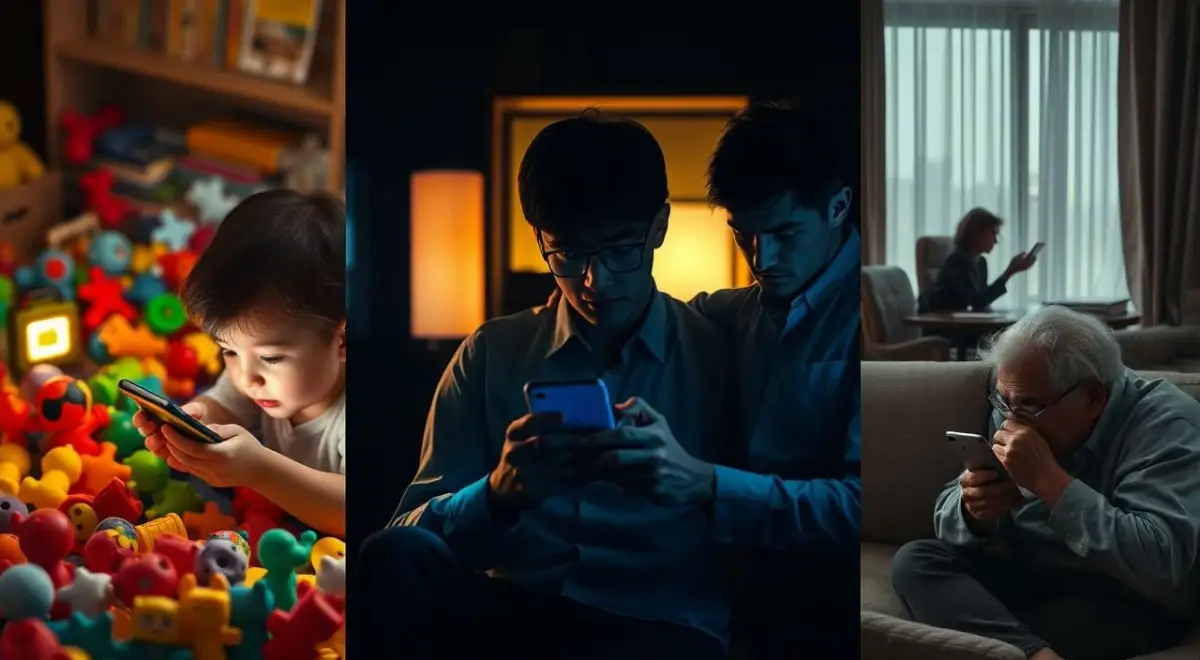
Nomophobia affects people of all ages. However, its impact changes with age. Studies show that 66% of young people between 18 and 25 years old feel anxious without their smartphones.
Teenagers and Young People
Among teenagers, the addiction is alarming. 75% feel uncomfortable without their cell phone. And 77% of young adults can't go without their cell phone for more than a few minutes.
Some important statistics include:
- 68% of adults aged 25 to 34 find it difficult to be separated from their cell phones.
- 65% of people sleep with or next to their smartphones.
- 34% admitted to answering their cell phones during intimate moments with their partners.
Understanding how nomophobia affects different age groups is crucial. We need to develop prevention and treatment strategies. It is also essential to raise awareness about the risks of cell phone addiction and encourage the healthy use of technology.
Practical Strategies to Reduce Cell Phone Dependence

To reduce cell phone dependence, it's essential to know practical strategies. Studies show that excessive use harms physical and mental health. An important step is setting usage limits, such as limiting screen time.
To combat addiction, using monitoring apps helps a lot. It's also good to do a 24-hour digital detox. Another tip is to set goals, such as not using your cell phone after 9 pm.
It's crucial to find alternative activities, such as exercise and reading. This helps to balance digital life with social interaction. Here are some strategies to reduce cell phone dependence:
- Set limits on cell phone use.
- Use monitoring apps
- Perform a digital detox.
- Set goals for your smartphone usage.
- Find alternative activities to replace cell phone use.
With these strategies, it's possible to reduce cell phone use. This improves quality of life. The key is to use technology in moderation.
| Strategy | Description |
|---|---|
| Set limits on cell phone use. | Limit screen time. |
| Use monitoring apps | Monitor cell phone usage and set goals. |
| Perform a digital detox. | Detox from excessive technology use. |
The Role of Hypnotherapy in the Treatment of Nomophobia
Hypnotherapy helps people reduce their screen time. Approximately 66% of people experience anxiety without their phones. This can lead to problems such as depression and insomnia.
Hypnotherapy can change behavior and reduce anxiety related to cell phones. The Brazilian Society of Hypnosis trains professionals to use hypnosis correctly.
Benefits of Treatment
- Reducing anxiety and stress related to cell phone addiction.
- Improved mental health and well-being
- Increased self-esteem and confidence.
Hypnotherapy can also help control stress, irritation, and anxiety related to cell phones. The treatment can bring quick results. However, there is no specific data on the success rate for nomophobia.
Expectations and Results
Hypnotherapy for nomophobia is not a magic cure. It's a tool that helps overcome cell phone addiction. With a qualified professional, it's possible to improve your life.
| Benefit | Description |
|---|---|
| Reducing anxiety | Hypnotherapy can help reduce anxiety and stress related to cell phone addiction. |
| Improved mental health | Hypnotherapy can help improve mental health and well-being. |
When to Seek Professional Help
Nomophobia can greatly affect people's lives. It can harm relationships, performance at school or work, and mental health. It's crucial to know when to seek professional help for nomophobia.
According to studies, it is essential to seek professional help for nomophobia if it is causing serious problems in someone's life.
Some signs that indicate it's time to seek professional help include:
- Anxiety or stress when you can't use your cell phone.
- Constant worry about the phone battery.
- Excessive use of cell phones, even in socially inappropriate situations.
If you are experiencing these symptoms, it may be time to seek professional help . A specialist can help you find ways to cope with nomophobia and improve your mental health.
Remember that professional help for nomophobia is crucial to overcoming this condition and improving your life. Don't be afraid to seek help if you are struggling with nomophobia.
Conclusion
Overcoming nomophobia is essential for a healthy life. Studies show that it greatly affects mental and physical health. This impacts not only individuals but also their relationships.
Excessive cell phone use can lead to problems like anxiety and fear. It can also affect work and health. If you experience these issues, seek help.
To overcome nomophobia, it's necessary to limit cell phone use. Exercising and asking friends and family for help is very beneficial. It's important to be aware of the risks of excessive technology use.
In short, nomophobia is a serious problem. It's crucial to understand its importance and use strategies for a better life.
Source Links
- Nomophobia: 10 reasons to treat cell phone addiction
- Nomophobia, cell phone addiction, what to know and how to avoid it - Rádio Câmara
- Nomophobia: How to treat cell phone addiction?
- Nomophobia: what is it and why does it harm so many children and young people?
- What is nomophobia, a new disorder linked to excessive cell phone use?
- Nomophobia: 10 signs that you are "addicted" to the internet.
- 'Addicted' to your cell phone? 8 warning signs to identify the dependency.
- Too Connected? Nomophobia and the Mental Health of Young People - GRPCOM Institute
- Nomophobia, the fear of being without your cell phone: do you suffer from this new modern anxiety?
- The impact of nomophobia on studies – Prígule School
- Factors related to smartphone addiction in adolescents from a region of Northeast Brazil.
- Nomophobia: Learn about the irrational fear of being without a cell phone | CNN Brazil
- Nomophobia: the irrational fear of being without your cell phone - Reconciliar SPA Terapêutico
- Nomophobia: Cell phone addiction can harm your health - Vittude Blog
- What is nomophobia? How to identify and avoid it? - Infinity Doctors
- How to fight cell phone addiction in 7 steps.
- Discover alternatives to combat excessive smartphone use.
- Nomophobia: Understanding the Fear of Being Without Your Cell Phone
- Is it possible to treat nomophobia with Ericksonian hypnosis?
🌟 Have you considered seeking a therapist to support your well-being journey?
If this article sparked reflections about positive changes in your life, perhaps now is the ideal time to take the next step. Do you know hypnosis as a therapeutic tool? This approach can be surprisingly effective for various personal challenges.
Special offer: Book a free 20-minute consultation with therapist Fabio Morus and discover how therapy can transform your life.
✨ No commitment — Completely free — 20 minutes that can make a difference
👉 Click here to book your free consultation
Don't postpone your well-being any longer. The first step to change is just one click away.