


Mental health in Brazil is a very important issue. Many people face mental health disorders. The pressures of daily life and lack of care can cause serious problems.
It's crucial to recognize the warning signs and seek help. That way, we can change this situation. Let's talk about the importance of taking care of mental health and how we can help.
The Importance of Mental Health
https://www.youtube.com/watch?v=hfDlMD_6PM4
Mental health is very important for everyone's well-being. It helps to cope with the challenges of daily life. When the mind is well, dealing with emotions and relationships becomes easier.
What is mental health?
Mental health is essential for a quality life. It's not just the absence of mental illness. It's about knowing how to manage our emotions and stress. This brings harmony to our daily lives.
How mental health affects daily life
Mental health greatly affects everyone's life. If it's not good, work can suffer. It can also affect relationships and physical health. On the other hand, a healthy mind brings productivity and happiness.
The relationship between mental and physical health.
Mental and physical health are closely linked. Mental health problems can cause physical illnesses. It's important to take care of both to live well.
| Aspect | Mental health | Physical Health |
|---|---|---|
| Definition | State of psychological and emotional well-being | State of physical well-being and absence of disease. |
| Impact on daily life | Increased productivity and improved relationships. | Lower risk of disease and more energy. |
| Interconnection | Mental illnesses can cause physical problems. | Physical problems can influence mental health. |
Mental Health Challenges in Brazil
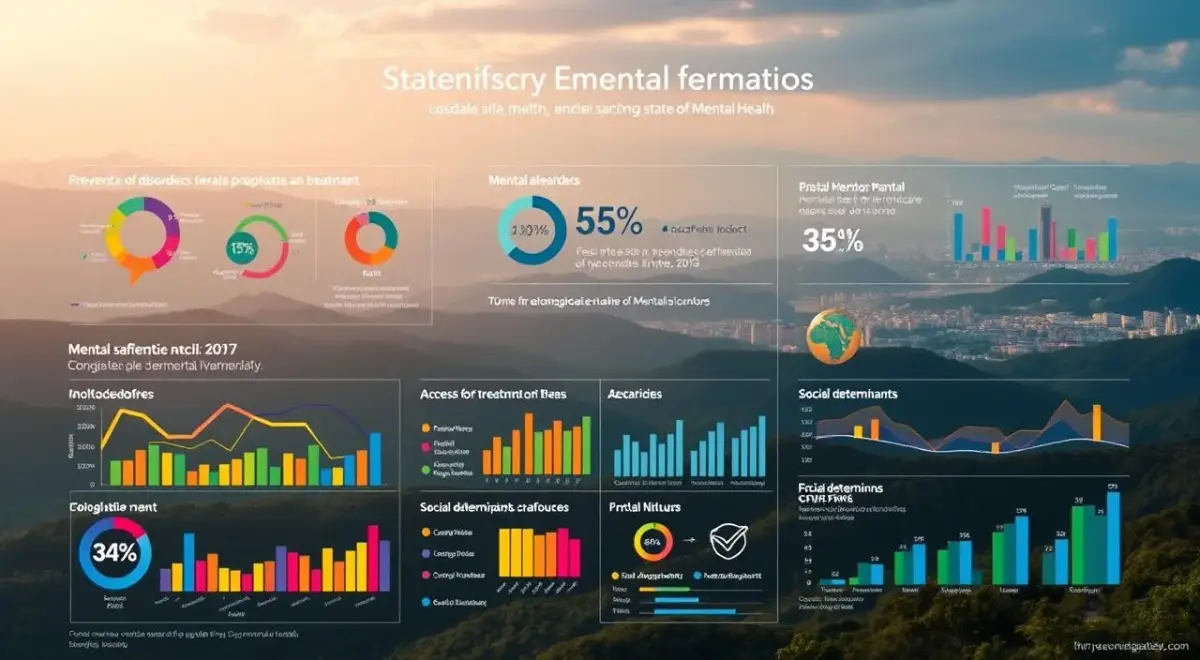
Mental health in Brazil faces many challenges. This reflects social, economic, and cultural problems. Statistics on mental health in Brazil paint an alarming picture: more than 9% of the population suffers from anxiety, and 86% have some type of mental health condition.
These numbers show the seriousness of the situation. And also the urgency of finding effective solutions.
Data and statistics on mental disorders
Recently, more people have been experiencing mental health disorders. Research shows that anxiety and depression are the most common. They affect people of all ages.
The lack of attention to these conditions is a serious problem. This requires action from everyone to change it.
Main obstacles faced
Obstacles in mental health include stigma. Many people don't seek help because of it. There's also a lack of healthcare resources and information on how to treat these disorders.
These problems are critical. They require a more inclusive and educational approach.
Regional differences in mental health
Mental health varies widely across regions. This reflects socioeconomic inequalities that affect access to healthcare. Poor regions lacking infrastructure experience higher rates of mental health disorders and reduced access to treatment.
This shows the importance of public policies that meet the needs of each place.
Common Mental Disorders in Brazil

Mental health in Brazil faces significant challenges. Anxiety affects millions, highlighting the importance of treatment. Depression, often called the disease of the century, is becoming more common, impacting the lives of many people.
Post-traumatic stress disorder is also a problem. It arises after trauma, mainly in vulnerable groups.
Anxiety
Anxiety is very common, affecting 18.6 million Brazilians. Symptoms include constant worry and difficulty concentrating. Without treatment, it can significantly impact people's lives.
Depression
Depression is a major cause of disability. It affects not only mood but also physical health. It is crucial that society supports and treats depression.
Post-Traumatic Stress Disorder
PTSD is more common after traumatic events. It can cause flashbacks and nightmares. Psychological support is essential for the recovery of victims.
Stigma Related to Mental Health

The stigma surrounding mental health is a major challenge. Many people feel ashamed or afraid to seek help. They fear being viewed negatively by family and friends.
This impact of stigma on treatment hinders access to care. It also causes many to abandon treatment, creating a cycle of suffering.
How stigma affects treatment.
Prejudices surrounding mental health are serious. Patients hesitate to talk about their difficulties, fearing negative labeling. The idea that mental disorders are weaknesses exacerbates the situation.
When society doesn't tolerate or accept treatment, seeking it becomes more difficult. This leads to a high rate of people not seeking help, even when experiencing symptoms.
Demystifying mental health
It's essential to demystify mental health to combat the stigma. We need to educate people about mental disorders. They are treatable conditions, just like any physical illness.
Open and honest conversations help to dispel preconceived ideas. By learning about mental health, we increase empathy and understanding. This makes the environment more welcoming for those who need help.
The importance of education and awareness.
Mental health education is crucial for a more informed and inclusive society. Awareness programs can break down stigmas. Investing in educational campaigns and training is essential.
These efforts result in a supportive community. It recognizes and supports people with mental health challenges.
| Stigma | Impact | Solutions |
|---|---|---|
| Social stigma | Inhibition of the search for treatment | Education and awareness campaigns |
| Family prejudice | Increased isolation | Open conversations and information |
| Misinformation | Difficulty in understanding the condition | Training for healthcare professionals |
Access to Treatments and Services

Access to the SUS ( Unified Health System) is essential for mental health care in Brazil. The Unified Health System offers various services. This includes the Psychosocial Care Centers (CAPs), which are important for treating depression and anxiety.
However, we face challenges such as a lack of beds and high demand for services. This shows that we need to improve healthcare.
Unified Health System (SUS) and mental health
In Brazil, the SUS (Unified Health System) is the entry point for various mental health treatments . It aims to provide comprehensive care. However, it often fails to meet the needs of everyone.
It is vital to have public policies for mental health. This would help improve access to and quality of care.
Treatments available in Brazil
Treatments for mental health include psychotherapy and psychiatric follow-up. Occupational therapy is also available. Each aims to help patients in a specific way.
Many people still have difficulty accessing these services. We need to work to overcome these barriers.
Telemedicine and mental health
Telemedicine in Brazil is an innovative solution, especially during the pandemic. It uses digital platforms for remote psychological care. This overcomes geographical and travel barriers.
This approach not only increases the reach of services, but also makes treatment more accessible to many.
Therapies and Approaches

Mental health is very important for our well-being. There are many forms of treatment. Psychotherapy is one of them, which is tailored to the needs of each person.
There are several approaches, such as cognitive-behavioral therapy and psychoanalysis. Each has its own particularities and ways of working.
Psychotherapy and its modalities
Psychotherapy is a dialogue between patient and therapist. The goal is to explore thoughts, emotions, and behaviors. Sessions may be more or less frequent, depending on the case.
They provide a safe space to share difficulties. Group therapy, for example, helps to connect with other people.
Alternative medicines and treatments
Medications such as antidepressants and anxiolytics are used in conjunction with psychotherapy. They help stabilize mood and reduce anxiety. This makes the therapy more effective.
It's crucial to have a healthcare professional supervise. They adjust the doses and manage any side effects.
The importance of professional guidance.
Psychological support is crucial in mental health treatments. Each person reacts differently. Therefore, ongoing support is essential.
This ensures that the treatment is the most appropriate. Personalizing the treatment is key to lasting results.
Mental Health at Work

The work environment is very important for people's mental health. Stress, pressure, and overload can cause anxiety and depression. This affects not only the individual but also the company as a whole.
How the work environment impacts mental health.
The quality of work can greatly affect people's emotions. A bad environment, too much work, and a lack of recognition increase stress. This stress can decrease productivity and job satisfaction.
Mental health policies in companies
Many companies are starting to pay more attention to the mental health of their employees. They know that a happy employee is more productive. Creating an environment that values mental health helps reduce stigma and encourages people to talk about these issues.
Employee support programs
Support programs are very effective in helping mental health at work . Therapies, wellness programs, and emotional training are very helpful. These programs improve satisfaction and productivity, benefiting everyone.
The Role of the Family in Mental Health

Family is very important for mental health. Strong family support helps a lot. This encourages seeking professional help.
How can the family help?
The presence of family creates a safe space. Listening to and understanding feelings helps a lot. This encourages seeking treatment.
Identifying signs of distress
It's essential to recognize signs of mental health problems . Mood swings and social isolation are signs. Paying attention to these signs helps a lot.
The importance of open dialogue
Open dialogue changes family dynamics. Conversations about feelings and challenges build trust. This greatly helps mental health.
Preventing Mental Health Problems
Prevention in mental health is very important. It helps maintain emotional well-being. Self-care practices and physical activity are essential.
Techniques like mindfulness and meditation are also very effective. They help maintain mental balance.
Self-care strategies
Taking care of your mental health is crucial. This includes dedicating time to yourself. Assessing your emotions and seeking relaxing activities are important steps.
- Establish a healthy routine with regular sleep and wake times.
- Pursue hobbies that bring pleasure and personal satisfaction.
- Take breaks during the day to breathe and reflect.
Physical activity and mental health
Physical activity is very important for mental health. Regular exercise helps reduce anxiety and depression. The body releases endorphins, improving well-being.
- Outdoor walks to connect with nature.
- Dance classes to have fun while exercising.
- Yoga practices to promote balance and calm.
Mindfulness and meditation
Mindfulness and meditation are simple practices. They help you focus on the present and reduce stress. Starting with just a few minutes a day already brings benefits.
The Importance of Community
Mental health is largely dependent on the community in which we live. Support groups and support networks create a welcoming environment. Here, people can share their experiences and find strength.
Support groups and support networks
Support groups are safe places to feel heard. There, people share stories, which reduces the feeling of being alone. Support networks unite the community, improving emotional well-being.
Community initiatives related to mental health
Many community initiatives focus on mental health. They organize lectures, workshops, and educational events. These actions help clarify doubts about mental health and encourage treatment.
The role of NGOs and associations
NGOs and associations are very important. They raise awareness and offer support. They work to create programs that provide emotional support and reduce the stigma surrounding mental health .
Mental Health Among Youth and Children
Children's mental health faces unique challenges. This is because the world today is very complex. Young people face social pressure, bullying, and the influence of social media.
These factors, along with academic expectations, affect emotional well-being. It is crucial to discuss these issues to understand their impact.
Specific challenges for young people
Young people face more than just emotional issues. They struggle with self-image and relationships. The pressure to achieve results is also immense.
These challenges can lead to mental health disorders such as anxiety and depression. It is important for family members and educators to pay attention and provide support from an early age.
How to provide a healthy environment
A healthy environment at home and at school is essential. Safe spaces for expressing and sharing emotions are crucial. This contributes to psychological well-being.
Emotional support, a balanced routine, and playful activities make children feel valued. They feel understood.
The importance of emotional education in schools.
Emotional education is vital in schools. It teaches children how to manage their emotions. This helps them face challenges.
Emotional education programs from early childhood promote empathy and self-awareness. They also improve children's mental health . This creates a positive and inclusive school environment.
Public Policies for Mental Health
Brazil is making a great effort in mental health. This includes changes to remove psychiatric treatment from hospitals. The Psychosocial Care Centers (CAPs) are a major step forward. They help those who need mental health care.
However, the implementation of these policies shows differences across the country. Many people still lack access to mental health services.
Advances and initiatives in Brazil
A major step forward was increasing access to treatments and educational campaigns. These actions aim to treat and prevent mental disorders. Mental health is now part of the Unified Health System (SUS).
But the challenge is to ensure that everyone has equal access. This applies to all parts of the country.
What else can be done?
To improve mental health, support from government and society is crucial. Training and awareness-raising for professionals are essential. Furthermore, strengthening primary care is very helpful.
Building community support networks is also important. This helps to unite efforts for mental well-being.
Examples of international best practices
In Europe and Australia, there are good practices that can inspire Brazil. They have community health programs focused on prevention and integrated care. These services are welcoming and offer emotional and psychological support.
These experiences may motivate the creation of similar programs in Brazil. They can help educate and raise awareness about mental health.
Mental Health in the Context of the Pandemic
The COVID-19 pandemic brought significant challenges to mental health. Many people experienced worsening emotional conditions. Stress, anxiety, and depression increased greatly.
This affected the lives of millions of people. They experienced a decline in their quality of life.
Impacts of COVID-19 on mental health
In 2020, 53% of the population experienced a decline in mental health. Social distancing and economic uncertainty exacerbated these problems. Many began to seek a better understanding of their emotions.
Mental health has become very important during the pandemic. It is essential for everyone's well-being.
Coping strategies
Adopting strategies to face these challenges was crucial. Maintaining social contact remotely helped many. Seeking professional help was also important.
Practices such as meditation and physical activity helped combat adversity. The support of family and friends was fundamental in relieving psychological pressure.
Lessons learned
Lessons on mental health highlight the importance of emotional resilience. Public policies must adapt to strengthen mental health. Investing in support, education, and awareness about mental health is essential.
This can prevent future crises and create a healthier social environment.
Culture and Mental Health
Culture is very important to how we view mental health. It gives us a social context that influences our understanding of symptoms. In Brazil, where cultural diversity is great, it is essential to take this into account in healthcare.
The influence of culture on mental health
Culture shapes our beliefs about mental health. Different communities have their own ways of dealing with emotions. This affects how we recognize mental health problems and how we seek treatment.
How art can aid in recovery.
Art is a powerful tool for expressing emotions. Art therapies help to voice feelings that are difficult to express. They improve recovery, help make friends, and increase self-esteem.
The importance of cultural diversity
Understanding cultural diversity improves mental health. Practices adapted to each culture make services more accessible. This shows the importance of including and valuing every person.
The Future of Mental Health in Brazil
We are experiencing a moment of great change in mental health in Brazil. The search for solutions to improve psychological well-being has increased significantly. This shows a response to the needs of society.
These developments aim to improve treatment and make it more accessible. They also seek to increase the effectiveness of public policies.
Trends and innovations
Innovations are changing mental health in several areas. They are driven by the need for faster and more interactive methods. Now, we see more emotion monitoring apps and online support platforms.
These changes demonstrate how technology can help make care more accessible. They promise a more inclusive and comprehensive future for mental health in Brazil.
The role of technology
Technology is changing the way professionals and patients connect. Telemedicine, for example, has made care more flexible and accessible. This shows how technology can facilitate the connection between them.
This interconnection not only expands the possibilities for assistance, but also promotes greater patient engagement. This is essential for the recovery and maintenance of mental health.
Expectations for public policies
As the needs of the population evolve, public policies must adapt. An increase in mental health initiatives is expected. These actions should focus on promoting emotional well-being and preventing disorders.
These changes reflect a deeper understanding of the impact of psychological conditions. They create an environment conducive to innovation in mental health .
Conclusion and Recommendations
Reflecting on mental health in Brazil highlights its importance. It is essential for well-being. To improve it, we need action from everyone.
It's crucial to talk openly about mental health. Knowing and understanding are important steps. That way, everyone can help.
We can do small things that make a big difference. Supporting and understanding those with mental health challenges helps a lot. Participating in support groups and listening are also important actions.
It's important to know where to seek help. Therapy, health services, and awareness programs are essential. They can change lives.
Adopting these practices benefits everyone. We not only take care of ourselves, but we also improve society.
🌟 Have you considered seeking a therapist to support your well-being journey?
If this article sparked reflections about positive changes in your life, perhaps now is the ideal time to take the next step. Do you know hypnosis as a therapeutic tool? This approach can be surprisingly effective for various personal challenges.
Special offer: Book a free 20-minute consultation with therapist Fabio Morus and discover how therapy can transform your life.
✨ No commitment — Completely free — 20 minutes that can make a difference
👉 Click here to book your free consultation
Don't postpone your well-being any longer. The first step to change is just one click away.