

Why do many people have difficulty sleeping well? Meditation for sleep can be more than just relaxing. It's an essential tool for restorative sleep. Sleeping between 6 and 8 hours is crucial for our well -being. However, many people use medication without considering the risks of dependence .
This article will show you meditation techniques to improve sleep. They not only improve sleep, but also physical and mental health. Sleeping well improves mood and the use of waking time.
Incorporating meditation into your nighttime routine can help resolve problems like fatigue and headaches . This article will discuss the theory and practices for improving sleep and health.
Introduction to Meditation for Sleep
Meditation for sleep is a great option for those who have difficulty sleeping. It helps to relax and improve sleep quality. A busy daily life can cause insomnia, affecting health .
According to the Sleep Institute, meditation improves stress, depression, and anxiety. This improves sleep . Meditation is easy to do and can be done every day. It helps train the mind, relax muscles, and control breathing .
This practice for sleep calms the mind and reduces stress. It also improves sleep, decreases anxiety and depression, and increases well-being 3. It's good to start with short sessions and gradually increase the time 2 .
https://www.youtube.com/watch?v=oOkqYAP1-qQ
The Impact of Meditation on Sleep Quality
Nighttime meditation is great for improving sleep. It helps both mental and physical health . Studies show that meditating reduces stress and improves sleep.
Benefits of nighttime meditation
The benefits of nighttime meditation include relaxing the mind. This helps you sleep better. Meditation also increases melatonin, which is important for sleep.
In addition, it relaxes the muscles and lowers the heart rate and blood pressure. This is good for sleeping well.
Many people have sleep problems. Around 32% of Portuguese people have poor sleep. And 40% have difficulty waking up during the day .
Furthermore, 46% of adults sleep less than six hours a day. This can cause serious problems, such as diabetes and depression.<sup> 4 </sup>
Improving mental and physical health
A nightly meditation routine improves sleep and health. Mindfulness meditation helps those with insomnia . It can be done anywhere and only takes a few minutes a day .

Choosing a Conducive Environment
A suitable environment is essential for effective meditation. It helps with focus and relaxation, bringing numerous benefits. To create a good environment for meditation, it's important to consider lighting, comfort, and organization.
Importance of the meditation space
Choosing the right place to meditate is very important. A quiet space helps to avoid distractions. It's good to meditate in a calm place, without noise or interruptions. In addition, it's good to darken the room an hour before bed for better rest .
Tips for creating a tranquil space
To create a peaceful environment, here are a few tips:
- Use blackout curtains to block out the light.
- Keeping the space clean and organized reduces anxiety.
- Add relaxing scents, such as lavender or chamomile.
- Choose a good mattress and replace old mattresses that may be causing discomfort .
- Keep the room temperature between 16 and 23 degrees to stay cool and comfortable.
- Use white noise or nature sounds to block out loud noises.
https://www.youtube.com/watch?v=6V_Y-kmoZSA
By following these tips, we can transform our space into a perfect place for meditation. This can greatly improve sleep 7 8 .
Breathing Techniques for Relaxation
Breathing techniques are essential for achieving a state of deep relaxation. Abdominal or diaphragmatic breathing allows us to breathe more efficiently. This promotes relaxation that affects not only the mind, but our entire body.
Abdominal or diaphragmatic breathing
Abdominal breathing focuses on expanding the diaphragm during inhalation. This helps us get more oxygen into the lungs. It results in a significant reduction in tension and anxiety, facilitating more restful sleep.
4-7-8 Breathing
The 4-7-8 breathing technique was introduced by Andrew Weil, based on ancient yoga methods. It consists of inhaling deeply for four seconds, holding the breath for seven seconds, and exhaling slowly for eight seconds. Research shows that this practice activates the parasympathetic nervous system, reducing the activity of the sympathetic nervous system and promoting calmness. Furthermore, the 4-7-8 technique has improved heart rate and blood pressure, showing benefits for cardiovascular health.
Countdown in breathing
Another effective technique is counting down the breath. We focus on each exhalation and numbering, allowing our mind to detach from scattered thoughts. This practice is useful for reducing anxiety symptoms and facilitates the transition to an ideal state of relaxation, preparing us for sleep .

| Technique | Duration | Benefits |
|---|---|---|
| Abdominal breathing | Continuous | Increased oxygenation and reduced tension. |
| 4-7-8 Breathing | 12-15 seconds per cycle | Improved cardiovascular health and reduced anxiety. |
| Countdown | Variable | Focus and mental tranquility |
Practicing these breathing techniques for relaxation is essential not only to ensure quality sleep, but also for overall well-being. Gradually , we can observe improvements in our mental and physical health , thus creating an environment conducive to rest.
Guided Meditation for Sleep
Guided meditation for sleep uses words to relax before bed. It's great for those who have difficulty relaxing. About 65% of people in Brazil have trouble sleeping, according to the Brazilian Sleep Association 12. This technique helps combat anxiety and improves sleep, bringing more connection with our emotions and thoughts 13 .
What is guided meditation?
In guided meditation, a narrator guides listeners through visualizations and relaxation exercises. This makes the process easier for beginners. Calm, winner of Apple's Best of 2018 award, offers meditation audios ranging from 3 to 25 minutes in length.14 They address topics such as stress and anxiety, catering to the needs of each individual.
How to choose meditation audios
Choosing meditation audios should consider the quality of the narration and the technique used. Calm is highly recommended by mental health professionals and has over 30 sounds and scenarios to help you relax. We look for audios that help us sleep better and reduce mental agitation, creating an ideal environment for relaxation and meditation.
https://www.youtube.com/watch?v=U7GqtGgEjDM
Relaxing Meditation Practices for Sleep
Practicing relaxing meditation helps prepare the body and mind for a good night's sleep. Techniques such as mindfulness and body scanning improve sleep. Insomnia affects many people, so these practices are good options for those seeking rest. 15 16
Mindfulness for peaceful sleep
Mindfulness for sleep helps us stay in the present moment and ignore distractions. By focusing on our breathing and bodily sensations, we relax. Taking 20 deep breaths before bed can calm the nervous system 15 16. This technique also helps prevent insomnia 17 .
Body scan
Body scanning reminds us to relax every part of the body. This helps release tension and identify stress points. Muscle relaxation is also good for sleeping well 16. With scanning, we relax more and create an ideal environment for sleep 17 .

Meditation in Comfortable Postures
Meditation can be done in various positions, including lying down. It helps to deeply relax, if done correctly. Posture during meditation is important for a good experience.
How to meditate lying down
To meditate lying down, it's important that your spine is aligned. Using a suitable mattress helps prevent back strain. It's good to keep your arms at your sides and your legs slightly apart to relax more.
The role of the mattress and respect for posture.
Choosing the right mattress is very important for meditation. It should be comfortable and suitable for your body. Wearing loose clothing helps maintain good posture during meditation.
https://www.youtube.com/watch?v=D0Y9jJc-3DQ
Establishing a Nightly Meditation Routine
To get the most out of meditation, it's crucial to create a nightly routine. This helps us train our minds for better sleep, preparing us for a peaceful and restorative night's sleep.
Tips for maintaining consistency
Maintaining consistency is key to meditation. Meditating at the same time every day helps establish a consistent nightly meditation routine . Before bed, we can relax with a warm bath or read a book. This helps us associate meditation with bedtime.
Importance of regular schedules
Having regular times for meditation and sleep is crucial. This improves sleep and rest quality. Following expert recommendations helps to get better sleep 18. Maintaining a routine also reduces stress and improves well-being 19 .

Combining Meditation with Sleep Hygiene
Combining meditation with good sleep hygiene practices is key to better sleep. Sleep hygiene means adopting habits that improve sleep and make it easier to fall asleep. Avoiding caffeinated drinks, such as tea, soda, and coffee, is very important for restful sleep.
Stress and anxiety, which meditation can reduce, affect sleep. Meditating regularly improves sleep depth and helps regulate the sleep cycle. This makes sleep better 20 21 .
Avoid stimulants before bed
To relax, the environment must be suitable. It is good to avoid screens with blue light, such as smartphones and computers, as they can affect melatonin, which is important for sleep 22. Reading a book or magazine before bed can help you relax and prepare your body for better sleep 21 .
Light meals for a good night's sleep.
Regarding food, it's important to choose light options before bed. Heavy meals or those with many spices can cause discomfort and digestive problems, affecting sleep 22. Eating light and healthy foods, and practicing regular exercise, helps to have a restful night's sleep 21 .
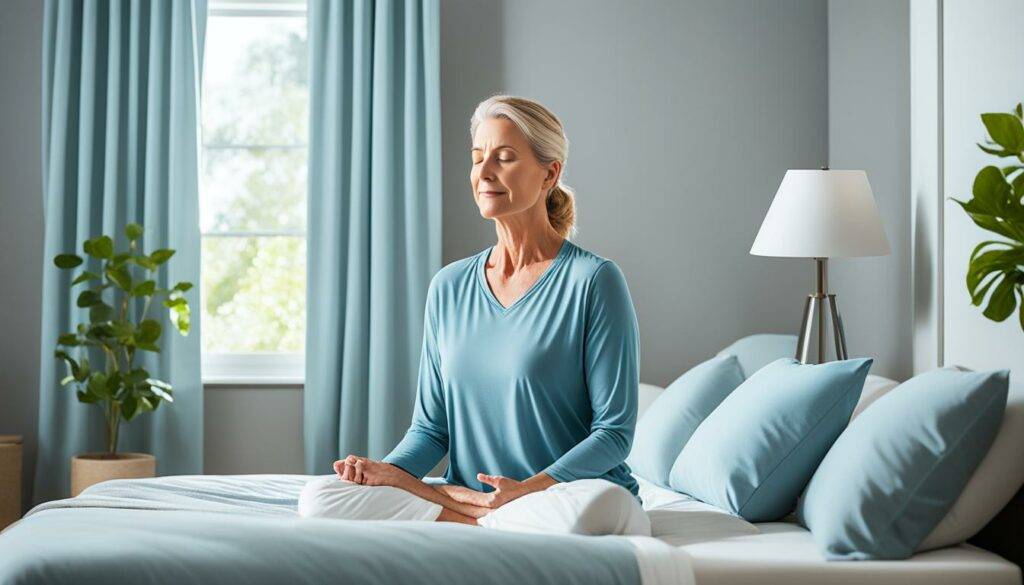
| Habit | Effect on Sleep |
|---|---|
| Avoid caffeine. | Improved sleepiness |
| Reduce exposure to blue light. | It increases melatonin production. |
| Light meal | Reduces digestive problems. |
| Regular meditation | Improves sleep quality. |
With these practices, we improve sleep and well-being.
Possible Obstacles in the Practice of Meditation for Sleep
When we practice meditation for sleep , we may encounter obstacles. A major challenge is the restless mind . It can prevent us from relaxing. It's important to learn how to overcome these obstacles.
How to deal with a restless mind
An anxious mind can be a great challenge. It can bring scattered thoughts or worries. To deal with this, it's good to use anchoring techniques.
Focusing on your breath or repeating mantras helps. It keeps us in the present and focused.
Strategies for insomnia and stress
It's important to understand the obstacles to meditation in order to improve sleep. Research shows that meditation helps with insomnia and stress. Having a nighttime routine helps prepare the mind and body for sleep.
Meditation can also reduce anxiety and normalize the heart after stress. This improves sleep and helps overcome insomnia 23. Regular practices improve mental health and rest 24 .

Conclusion
Meditation for sleep is essential for improving sleep and mental well-being. It uses techniques such as conscious breathing and creates an ideal environment for sleep. This transforms our nights into moments of deep rest.
Regular meditation practice improves sleep and brings benefits to mental and physical health . This improves our quality of life. Studies show that meditation reduces anxiety and stress (National Institute of Meditation) 25 .
Combining meditation with self-care practices like avoiding stimulants and establishing a routine can help improve sleep. Maintaining the practice is important, as results come with time. This highlights the importance of taking care of one's health and well-being.
Practicing regular meditation not only improves sleep but also helps you face the challenges of daily life. Being more aware of our sleep patterns and strategies improves our lives. For more information, see techniques for calming anxiety 26 .
FAQ
What is meditation for sleep?
Meditation for sleep helps to relax and switch off the mind. This facilitates sleep. It uses techniques such as guided meditation and mindfulness to improve sleep.
What are the benefits of nighttime meditation?
Nighttime meditation reduces stress and anxiety. It improves sleep and helps the immune system. It also brings mental balance and physical benefits.
How can I create an environment conducive to meditation?
Choose a quiet place free from distractions. Use blackout curtains and keep the space organized. Comfortable rugs and cushions are also good ideas.
What breathing techniques are recommended for relaxing before bed?
Abdominal breathing and the 4-7-8 technique are good. Counting backwards while breathing also helps to relax.
What is guided meditation and how can I use it to fall asleep?
Guided meditation uses audio for guidance. Choose relaxing audio files from platforms like YouTube or apps.
How can mindfulness help me get a good night's sleep?
Mindfulness teaches you to stay in the present moment. This helps to calm the mind before bed, preparing the body for sleep.
Is it possible to meditate lying down? How to do it correctly?
Yes, it's possible to meditate lying down. Make sure your spine is aligned and wear comfortable clothing. A good mattress also helps.
How can I establish a nightly meditation routine?
Meditate at the same time every night. Create a relaxing ritual, such as a warm bath or reading a book. This helps you relax and sleep better.
What sleep hygiene practices can improve my meditation practice?
Avoid coffee and soft drinks at night. Opt for light meals. A calm environment is also important.
How to deal with a restless mind during meditation for sleep?
Use anchoring techniques, such as focusing on your breathing. A nighttime routine and relaxation exercises help improve sleep.
🌟 Have you considered seeking a therapist to support your well-being journey?
If this article sparked reflections about positive changes in your life, perhaps now is the ideal time to take the next step. Do you know hypnosis as a therapeutic tool? This approach can be surprisingly effective for various personal challenges.
Special offer: Book a free 20-minute consultation with therapist Fabio Morus and discover how therapy can transform your life.
✨ No commitment — Completely free — 20 minutes that can make a difference
👉 Click here to book your free consultation
Don't postpone your well-being any longer. The first step to change is just one click away.