
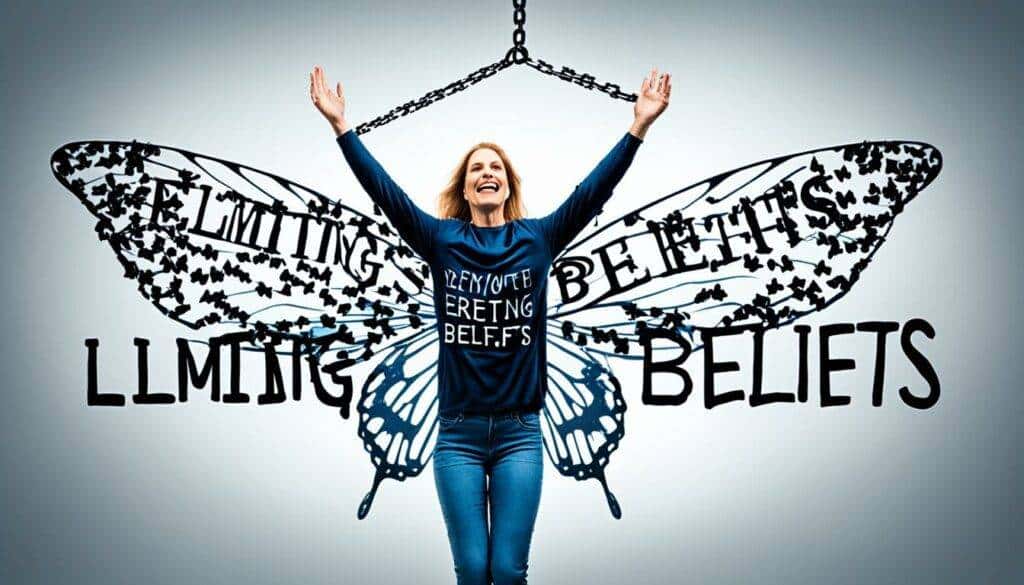
Taking time to reflect on limiting beliefs can help us realize how much we're missing out on. They prevent us from reaching our true potential. Often, these beliefs stem from negative mental patterns we've created over time.
Limiting beliefs stem from past experiences and what people tell us. They can be things like 'I don't have time/money' and 'I don't deserve it' 1 2. Knowing where they come from is the first step to growth.
This article will show you how to identify and overcome these barriers. We will use self-awareness and techniques such as cognitive restructuring and visualization. We will also discuss the importance of having support and a positive mindset to change these beliefs .
What are limiting beliefs?
Limiting beliefs are ideas that cause us to see the world and ourselves in a limited way. They arise from experiences and suggestions since childhood. Understanding what they are is key to seeing how they affect our lives.
Definition of limiting beliefs
Limiting beliefs are like lenses that distort what we see. They can be negative phrases, such as "I can't do this ." Experts say they are principles that shape how we see the world . They can prevent us from achieving our goals, affecting our personal growth.
How do limiting beliefs arise?
They arise from negative experiences and the repetition of bad events. They can come from heredity, environment , or family influences. For example, the idea of failing an exam can affect our learning. To overcome them, we need to analyze and confront these negative thoughts, changing them into positive beliefs.
https://www.youtube.com/watch?v=0Ay0tCKCFYw
Identifying your limiting beliefs
Discovering limiting beliefs is a crucial step in changing your life. Knowing about our thoughts and behaviors is key. This helps us see which beliefs are preventing us from growing .
These beliefs are opinions that we hold to be true. But they can hinder our growth.
The importance of self-awareness.
Self-awareness helps us question what is true. Limiting beliefs may seem natural and unquestionable. 6. By reflecting on our experiences and how we interact with the world, we see how our opinions shape our decisions. 7 .
Techniques for recognition
There are several ways to identify these beliefs. A journal is a great idea, as it helps to see negative patterns. Asking yourself "what prevents me from acting?" and "am I worthy of achieving my goals?" is also helpful .
Receiving feedback from friends and family can reveal limiting beliefs. Mindfulness is also good for increasing self-awareness. This helps us to better understand our reactions and emotions .

Examples of limiting beliefs
Limiting beliefs can arise in various forms and often stem from past experiences. They prevent us from seeing our true potential and affect our decisions in various aspects of life. This can include work and relationships.
These beliefs can stem from negative messages since childhood. For example, hearing "you never do anything right" or "you're stupid" can become a limiting belief 8. Also, experiences like job losses or relationship breakups can create negative thoughts about ourselves 9 .
Beliefs based on past experiences
Beliefs based on past experiences are very harmful. For example, someone who has been heavily criticized for their math skills may think they will never improve in that area. Thoughts like "I'm not good enough" and "I don't know how to solve this problem" can be very limiting .
These criticisms from childhood remain in our subconscious. They influence how we see the world .
Broad generalizations and negative self-image
Another example is generalizing about failures. Thinking "I always fail" can prevent us from seeking new opportunities.9 A negative self-image can limit our chances of success.
To overcome these beliefs, it's important to recognize that they are baseless ideas. We can challenge these beliefs 9 .
https://www.youtube.com/watch?v=O8MDFTCyxXo
| Type of Limiting Belief | Example |
|---|---|
| Beliefs based on past experiences | "I'm not good at math." |
| Broad generalizations | "I always fail at everything." |
| Negative self-image | "I'm not attractive enough." |
| Beliefs imposed by society | "The world is dangerous." |
The impact of limiting beliefs on our lives.
Limiting beliefs affect many aspects of our lives. They influence how we act and make decisions. These beliefs can lead us to procrastination or self-sabotage, resulting in choices based on fear and insecurity.
This creates a restriction on personal growth . Therefore, we don't explore new opportunities and experiences that could improve our lives.
Effects on behavior and decisions
Limiting beliefs can cause feelings of inadequacy and low self-esteem. This leads to a pessimistic outlook that affects our self- image . They shape our behavior, positively or negatively affecting our interactions and decisions.
Furthermore, these beliefs can create barriers in relationships. This can lead to unsatisfactory or abusive relationships. <sup>10</sup>
Restriction to personal growth
The impact of limiting beliefs is profound. They not only hinder our progress but also fuel mental health problems such as anxiety and depression. This can create a vicious cycle of negative thoughts and emotions.
It is crucial to distinguish these beliefs from realities. If left unaddressed, they can harm our personal performance, career decisions, and even mental health. <sup>11</sup>

How to overcome limiting beliefs
Overcoming limiting beliefs is a major challenge. Often, we use methods such as cognitive restructuring. This technique helps us to see negative thoughts in a different way, replacing them with more positive and realistic ideas. This can significantly change our lives, both personally and professionally. <sup>12 </sup>
Cognitive restructuring
To restructure our beliefs, it's important to start by recognizing which ones are limiting. Then, replace them with beliefs that empower us. This requires constant effort, as many people have limiting beliefs that affect their lives. The Wheel of Life can be a useful tool for this process.
Visualization and behavior modeling
Visualizing success is essential for overcoming limiting beliefs. This helps us imagine what it will be like to achieve our goals. Modeling the behaviors of people who have already achieved success is also important. This allows us to adopt new patterns that help us grow personally and professionally. <sup>13</sup>
https://www.youtube.com/watch?v=aqKb5qK_Rs4
| Step | Description |
|---|---|
| Identification | Recognizing the limiting beliefs that affect us. |
| Revaluation | Replace negative beliefs with positive ones. |
| Visualization | Imagine successful scenarios to create motivation. |
| Modeling | Observe and learn from those who have already achieved what we want. |
| Constant Practice | To reinforce new standards through deliberate actions. |
Building resilience to change your beliefs
To change our limiting beliefs, it's crucial to learn to be resilient. Resilience can be developed through specific practices. One of the most effective mindfulness techniques is focusing on the present moment. This helps us observe our thoughts without judging them, which reduces the need to react negatively.
Mindfulness techniques
A study shows that 75% of people expend much of their resilience energy at work.14 This highlights the importance of using mindfulness techniques every day. These practices increase our awareness and help us better understand limiting beliefs . Practicing meditation and mindful breathing can improve how we deal with challenges.
The practice of gratitude and support network.
Gratitude helps us focus on what we have, not just on the difficulties. This is crucial for building resilience , as it improves our self-image and perception of abilities. Having friends and family who support us emotionally is fundamental to facing challenges . Setting realistic goals and learning from mistakes helps us overcome limiting beliefs. This gives us the strength to overcome limitations and fears based on past experiences.

The role of professional support in transformation.
Professional support is essential to overcome limiting beliefs. With psychologists and coaches, we improve self-awareness and resilience. This helps us transform personally.
The importance of psychologists and coaches.
Psychologists and coaches help identify negative thoughts. They show how to overcome them. This helps us find and overcome obstacles in our lives.
These professionals are fundamental to our growth. They teach us to use self-knowledge, to always be learning, and to network. This helps us grow more .
https://www.youtube.com/watch?v=k9W4FvH5GFY
Furthermore, biases such as confirmation bias can limit us. With psychologists and coaches, we can question these beliefs. This helps us see new opportunities for change. <sup>17</sup>
Emotional support and evidence-based techniques improve how we deal with challenges. They help us grow more effectively and consciously. This prepares us for a better future. 16 17
Transforming limiting beliefs into empowering beliefs.
Transforming limiting beliefs into positive ones requires effort and specific steps. It begins with self-affirmation , which creates a mental environment conducive to growth. Setting realistic goals and facing new challenges helps us shift our mindset. These actions promote growth and overcome barriers.
Steps towards developing a new mindset
- Identify limiting beliefs through reflection and self-analysis.
- Replace negative thoughts with positive affirmations.
- Set small, achievable goals to build confidence.
- Seek coaching and workshops for career guidance.
- Practice gradually exposing yourself to situations that challenge limiting beliefs.
- Applying mindfulness techniques to improve self-awareness.
- Incorporate positive visualization into your daily life.
Inspiring success stories
Stories of overcoming challenges are motivating and show that change is possible. In a 10-session coaching program, one client changed significantly, demonstrating dreams and plans that grew by 18. These stories encourage us to see our limitations and the potential to transform limiting beliefs and develop a new mindset . They show us that we can achieve great personal accomplishments.
Conclusion
This article has shown how limiting beliefs affect our lives. They limit our potential and hinder personal growth. Knowing what they are, where they come from, and how they work is the first step to changing them.<sup> 19 </sup>
These beliefs are ideas that limit us and can hinder our success. To overcome them , we need self-knowledge and effective strategies. Recognizing the origin and questioning the validity of these beliefs opens up new possibilities.
Overcoming these barriers leads us to a fuller and more authentic life. By exploring our potential, we can grow and evolve. This journey of mindset change brings great rewards.
Adapting and evolving depends on our willingness to challenge our beliefs. This allows for continuous development.
FAQ
What are limiting beliefs?
Limiting beliefs are ideas that impose limits on us and affect how we see the world and ourselves. They stem from past experiences and negative criticism.
How can I identify my limiting beliefs?
To recognize it, it's important to be self-aware. Using a journal, asking yourself deep questions, and seeking opinions from loved ones can help.
What are some examples of limiting beliefs?
Beliefs such as "I always fail" or "I'm not attractive" are common. They can stem from social criticism or stereotypes.
What is the impact of limiting beliefs on our lives?
They influence our choices and behaviors. This can lead to procrastination and self-sabotage, limiting our chances of growth.
How can I overcome my limiting beliefs?
Techniques such as cognitive restructuring and visualization can help. They allow you to change negative thoughts into positive and realistic beliefs.
What is cognitive restructuring?
It's a method that helps identify and change negative thoughts. This allows you to replace them with more positive beliefs.
How can building resilience help in overcoming limiting beliefs?
Practices like mindfulness and gratitude improve our awareness. This helps us to better deal with negative thoughts.
Why is professional support important in transforming limiting beliefs?
Professionals such as psychologists and coaches offer emotional support and effective strategies. They can accelerate the change process.
How can I transform limiting beliefs into empowering beliefs?
To do this, practice self-affirmation, set realistic goals, and expose yourself to new situations. Success stories can also be an inspiration.
What is the importance of developing a new mindset?
A new mindset allows us to see the world differently. This frees us from limiting beliefs and opens paths to growth.
🌟 Have you considered seeking a therapist to support your well-being journey?
If this article sparked reflections about positive changes in your life, perhaps now is the ideal time to take the next step. Do you know hypnosis as a therapeutic tool? This approach can be surprisingly effective for various personal challenges.
Special offer: Book a free 20-minute consultation with therapist Fabio Morus and discover how therapy can transform your life.
✨ No commitment — Completely free — 20 minutes that can make a difference
👉 Click here to book your free consultation
Don't postpone your well-being any longer. The first step to change is just one click away.