


Have you ever felt like time is passing too quickly? This can cause anxiety. The fear of time passing can drain your mental energy.
This sense of urgency can stifle your ability to enjoy the present. Modern life makes time seem like a race against the clock.
But don't worry. This article will show you strategies to slow down your experience of time. It will help you regain control and reduce anxiety.
Key Points
- Understanding the origin of the fear of time passing
- Practical techniques for living in the present moment.
- Mindfulness strategies to reduce anxiety
- Simple breathing and relaxation exercises
- Therapeutic approaches to transform this fear.
Understanding Chronophobia and Its Psychological Impacts
https://www.youtube.com/watch?v=l9YsmRNOTqwChronophobia is an intense fear of time passing. It greatly affects mental health. It can make people feel like time is passing very quickly, which causes a lot of distress.
People with chronophobia have an intense fear of aging. This fear is greater than normal. This can significantly change people's lives.
Physical and Emotional Symptoms
Symptoms of chronophobia include:
- Rapid palpitations
- Excessive sweating
- Involuntary tremors
- Obsessive thoughts about time
- A constant feeling of urgency.
Causes of Accelerated Time Perception
The causes of chronophobia are varied. They involve psychological and social aspects:
- Chronic stress
- Rapid changes in modern society
- Professional and personal pressures
- Unresolved psychological traumas
Relationship with Anxiety and Depression
Chronophobia is linked to anxiety and depression. This creates a cycle of emotional suffering.
| Condition | Impact on Chronophobia |
|---|---|
| Anxiety | It intensifies the accelerated perception of time. |
| Depression | It increases feelings of temporary hopelessness. |
Understanding these aspects helps in finding ways to cope with chronophobia.
Fear of Time Passing Too Quickly: How to Identify This Problem

The feeling that time is passing quickly is common. Many people experience this. The first step is recognizing these signs.
There are signs that show if you have this fear:
- A constant feeling of urgency and haste.
- Difficulty relaxing and enjoying the present moment.
- Excessive worry about the future
- Anxiety related to aging
The way we experience time changes with age. Young people feel that time passes quickly, while older people find that time moves slowly.
To better understand your relationship with time, take this questionnaire:
| Question | Frequency |
|---|---|
| Do you constantly feel like you're racing against the clock? | Always / Sometimes / Never |
| Do you have difficulty living in the present moment? | Always / Sometimes / Never |
| Are you feeling anxious about the future? | Always / Sometimes / Never |
If the answer to many of these questions is yes, it might be time to seek help. 80% of participants in a study during lockdown reported distortions in their perception of time . This shows that you are not alone.
Recognizing the problem is the first step in changing your relationship with time. This can improve your emotional well-being.
The Impact of the Digital Age on the Perception of Time

The digital age has changed how we perceive time. Now, technology rapidly alters our perception. This creates a complex situation where we don't want to miss important moments.
Sociologist Rebecca Coleman speaks of three digital "nows": real time, stretched time, and eliminated time. These different forms of time make us question what we knew about time.
Social Networks and Time Distortion
Social media uses tricks to keep us engaged. They create endless feeds and content that doesn't reflect the times. This makes us value the present moment less.
- Endless feeds artificially prolong the digital experience.
- Algorithms encourage continuous content consumption.
- Rewards such as "likes" encourage continued online use.
Information overload and anxiety
Instant communication makes us feel constantly rushed. The FOMO (Fear of Missing Out) phenomenon increases our anxiety. This affects 30% to 40% of young adults.
To better deal with technology, we can:
- Establish limits on device usage.
- Practicing digital mindfulness
- Take mindful breaks.
It's important to understand how technology affects our perception of time. This way, we can use our time in a more balanced and conscious manner.
Mindfulness Practices to Slow Down

Life is better when we are in the present. Meditation helps combat the feeling that time is passing too quickly.
Practicing mindfulness can reduce stress by up to 30%. Simple techniques help us stay in the present moment.
- Mindful breathing: Dedicate 5 minutes daily to focusing on your breathing.
- Guided meditation: Use meditation apps or podcasts.
- Mindful observation: Practice mindfulness during everyday activities.
Regular practice brings great benefits:
- Improved concentration by up to 23%
- 38% reduction in negative emotional reactions
- Increased mental clarity
Try starting with just five minutes a day . Consistency is more important than the perfect duration. Your brain will thank you for the moment of tranquility amidst the daily rush.
Meditation for mental slowdown doesn't have to be complicated. Breathe, feel your body, and allow yourself to be present, even if only for a brief moment.
Breathing and Relaxation Techniques
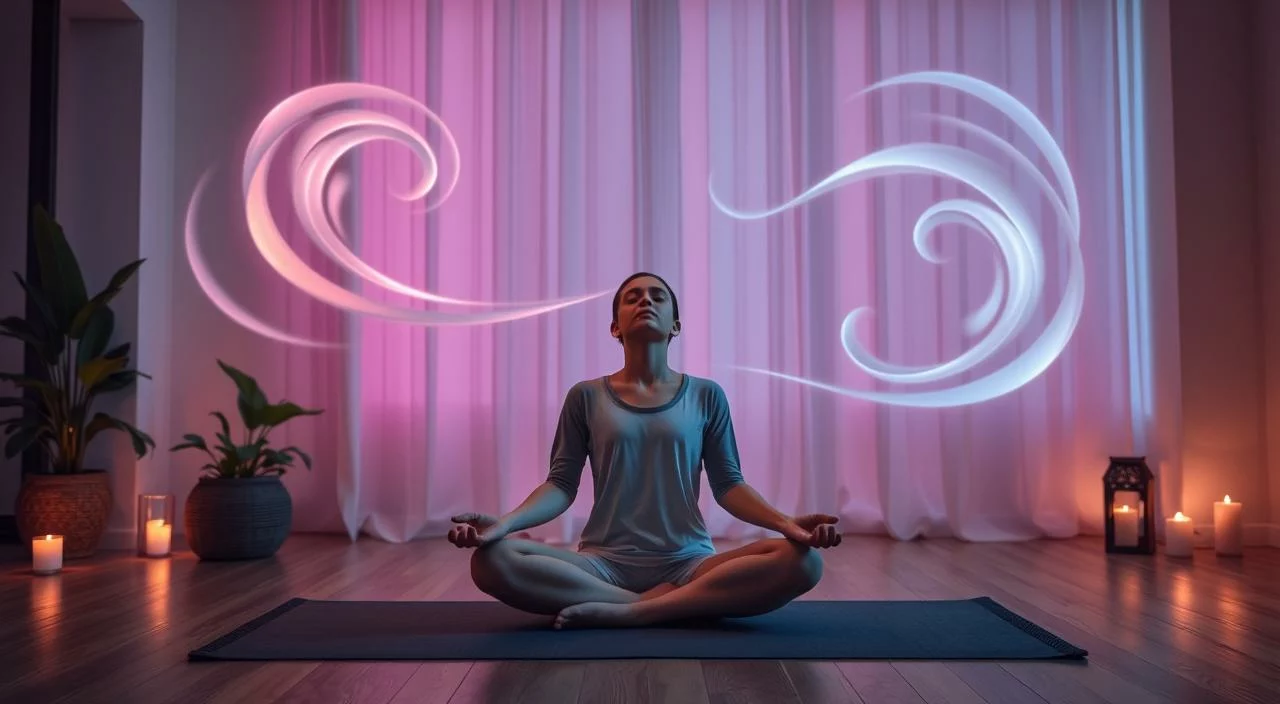
Time anxiety can be greatly reduced with breathing and relaxation techniques. These practices are very useful for managing time. They also greatly assist in psychotherapy for time anxiety .
Studies show that breathing can greatly improve our mental health. Around 20% of people may experience anxiety at some point in their lives. That's why these techniques are so important.
Daily Practical Exercises
There are several breathing techniques you can use every day:
- 4-7-8 Technique: Inhale for 4 counts, hold for 7, and exhale for 8.
- Alternate nostril breathing: Alternate inhalation between each nostril.
- Square breathing (Sama Vritti): Balances the intake and output of air.
Moments of Mindful Pause
Practicing these techniques regularly is very helpful in combating anxiety. Research shows that:
| Technique | Benefit | Symptom Reduction |
|---|---|---|
| 4-7-8 Breathing | Reducing anxiety | Up to 50% |
| Alternate Breathing | Increased concentration | 90% of practitioners |
| Parasympathetic Respiration | Relaxation response | Up to 70% |
Important tip : You don't need a special place to practice. You can do it anywhere - at work, on public transport, or at home.
Reorganizing Routines and Managing Time

Managing time is essential nowadays. Knowing how to organize your routine can change your productivity. It also helps you not feel like time is passing too quickly.
There are proven strategies for improving time management. The Eisenhower Matrix helps classify tasks into four important categories:
| Quadrant | Feature | Recommended Action |
|---|---|---|
| Urgent and Important | Critical problems | Do it immediately |
| Important but Not Urgent | Strategic planning | Prioritize |
| Urgent and Not Important | Interruptions | Delegate |
| Not Urgent and Not Important | Trivial activities | Eliminate |
The Pomodoro Technique is very useful. It uses intervals to improve focus:
- 25 minutes of intense focus
- 5-10 minute break
- Cycle repetition
Many people work under pressure. This highlights the importance of effective organizational methods. Tools like RescueTime can help you monitor your time.
To improve your management, follow these tips:
- Set clear daily goals.
- Learn to say "no" to non-essential things.
- Take regular 5-10 minute breaks.
- Use digital tools to be more productive.
Remember: managing your time isn't about doing more. It's about doing what truly matters, with quality.
Hypnotherapy and Other Therapeutic Approaches
Exploring therapeutic strategies to deal with the fear of time passing quickly can be transformative. Hypnosis emerges as a powerful technique for treating chronophobia and reducing anxiety related to the perception of time.
Hypnosis for fear of time offers an innovative approach to reprogramming negative mental patterns. During hypnotherapy for dealing with time anxiety , qualified professionals can access the subconscious and work directly with the emotional roots of the problem.
Benefits of Cognitive-Behavioral Therapy
Cognitive Behavioral Therapy (CBT) shows significant results in treating time-related anxieties. Some advantages include:
- Effectiveness rate exceeding 80% in cases of anxiety.
- Treatment duration between 6 and 16 weeks.
- Cognitive restructuring techniques
Self-Knowledge Techniques
Treatment of chronophobia with hypnosis combines different strategies to control the perception of time. Hypnosis techniques can help to:
- Reinterpreting negative emotions
- Reduce anxiety symptoms
- Develop coping mechanisms
| Therapeutic Approach | Benefits | Average Duration |
|---|---|---|
| Hypnotherapy | Subconscious reprogramming | Variable depending on the case. |
| Cognitive-Behavioral Therapy | Restructuring thoughts | 6 to 16 weeks |
The combination of hypnosis and CBT can offer a holistic approach to dealing with time anxiety, allowing for a profound transformation in perception and emotional management.
Activities that help you live in the present moment.
Appreciating the present means choosing experiences that connect us with the now. There are several activities that can help us enjoy life. They can also lessen the feeling that time is passing too quickly.
- Practicing gardening
- Explore artistic activities
- Hiking in nature
- Meditate regularly
- Cultivate enjoyable hobbies.
Appreciating the present moment isn't about doing everything at once. It's about being fully present in what you're doing. A good idea is to dedicate one day a week to something you truly enjoy.
| Activity | Benefits |
|---|---|
| Painting | Mental concentration, emotional expression |
| Dance | Body connection, stress release |
| Music | Sensory stimulation, relaxation |
To live life more consciously, choose activities that interest you. What matters is being completely immersed in the moment. Disconnect from the worries of everyday life.
How to Turn Fear into Motivation
The fear of time passing quickly can be a motivating force. In psychotherapy for time anxiety , we learn to see this as an incentive to live better.
To change this, we use important strategies:
- Recognizing fear as a sign of important values.
- Define clear and specific goals.
- Practice positive visualization.
- Cultivate a growth mindset.
Psychotherapy for time anxiety helps us see time as a chance to grow. Studies show that those who view fear as motivation achieve their goals 40% more often.
Kelly McGonigal, a renowned psychologist, says that we can change fear. By recognizing our deepest ambitions, fear propels us into action.
To convert fear into motivation, we use practical techniques:
- Establish specific and challenging goals.
- Practice gratitude daily.
- Celebrate small victories.
- Developing emotional resilience
A change in perspective is crucial. We see time as a resource for growth and achieving our dreams.
Conclusion
The journey of understanding and overcoming chronophobia shows that time is complex and personal. The fear of time passing quickly is not a sentence. It's a chance to think more deeply about how we live and value each moment.
By exploring mindfulness strategies and breathing techniques, we learn to value the present moment. Each person can change their relationship with time. This transforms anxiety into an opportunity to grow and connect more with life.
The key to dealing with chronophobia is to see time as a precious, but uncontrollable, resource. By being more mindful and kind to ourselves, we experience each moment more intensely. This helps to lessen the fear that paralyzes us.
Remember: your journey is unique. Every small step toward a better understanding of time is a victory. The goal isn't to eliminate fear completely. It's to learn to live with it in a more balanced and compassionate way.
Source Links
- Anxiety: How to control it? Check out 14 effective tips.
- 8 ways to relieve the symptoms of a panic attack
- Fear: Why we feel it and how to overcome it - Vittude Blog
- Understanding chronophobia: symptoms and care
- Chronophobia (fear of the passage of time): causes, symptoms and treatment - Maestrovirtuale.com
- Phobias: most common types, symptoms and forms of treatment - Drauzio Varella Portal
- My question is, I'm generally very afraid of time, the future, or death... yes, of realizing time is passing.
- Is time passing too quickly? New study reveals that the feeling is dictated by the heart (not the brain).
- How social media is changing our perception of time — Gama Magazine
- Digital Psychology: The Impact of the Digital Age on Human Behavior | L2K Internet
- Mindfulness: what it is, its origin, and 17 practices to learn.
- Discover a 5-minute meditation practice to calm down | CNN Brazil
- 5 breathing techniques to relieve anxiety - Ultra Popular
- 4-7-8 Breathing Technique: How to Use the Technique to Sleep or Reduce Anxiety | CNN Brazil
- How to improve time management and be more productive in your daily life - Trevisan
- SESI - Botucatu - Time management and organization of the work routine
- Hypnotherapy: what it is, benefits and how it works - Vittude Blog
- Is hypnotherapy the fastest treatment for social anxiety?
- 6 ways to train your brain to deal with anxiety, an ailment affecting 13 million Brazilians - BBC News Brazil
- 6 exercises to calm the mind
- Transform fear into motivation to achieve your goals.
- How to overcome fear? Check out 4 tips that can help you | Zenklub
- Overcoming fear and inertia: Discover how to transform your life.
- Why does time pass more slowly in some situations? Study answers | CNN Brazil
- Is time really flying by?: It's already 2020, and it feels like the 2000s were just yesterday, but many think we're the ones who are rushing.
- Is time passing faster? - IFSC Portal
🌟 Have you considered seeking a therapist to support your well-being journey?
If this article sparked reflections about positive changes in your life, perhaps now is the ideal time to take the next step. Do you know hypnosis as a therapeutic tool? This approach can be surprisingly effective for various personal challenges.
Special offer: Book a free 20-minute consultation with therapist Fabio Morus and discover how therapy can transform your life.
✨ No commitment — Completely free — 20 minutes that can make a difference
👉 Click here to book your free consultation
Don't postpone your well-being any longer. The first step to change is just one click away.