
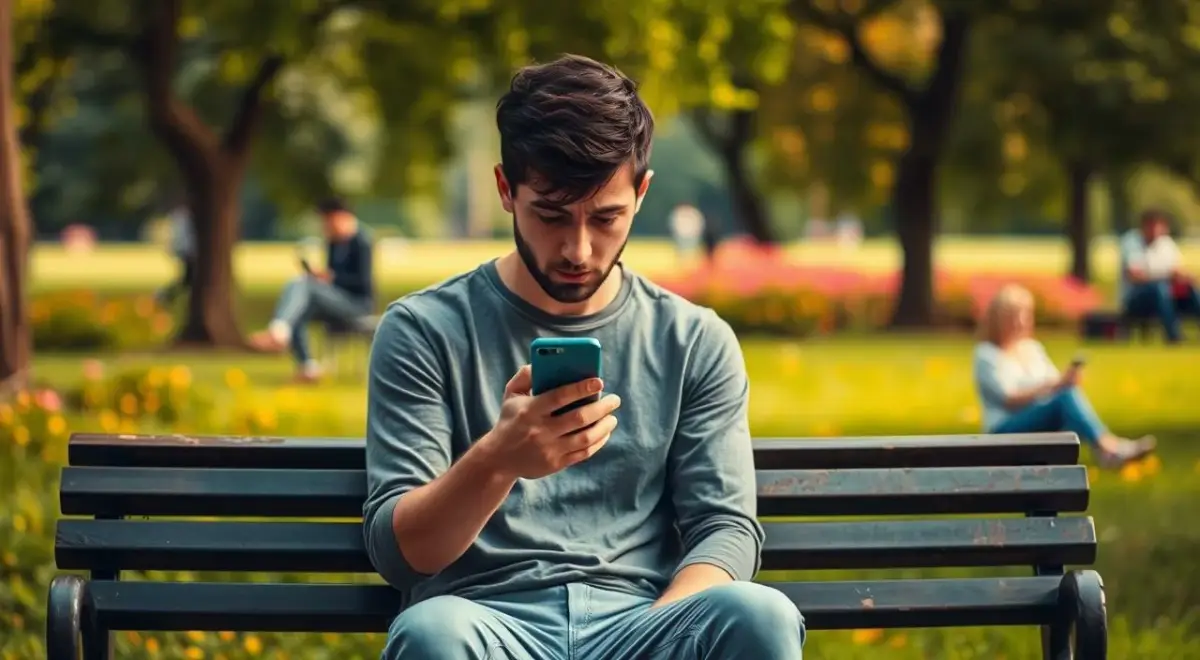

Have you ever felt really bad when you forgot your cell phone at home? Nomophobia is the fear of being without a cell phone. It's changing how we relate to technology.
Studies show that 66% of people feel anxious without their devices. This shows that the problem is very serious.
Smartphone addiction is more than a habit. It's a psychological problem that affects many people. Every time the phone vibrates, it creates a strong connection with it.
Key Points
- Nomophobia affects 66% of the global population.
- 50% of users experience anxiety when their battery is low.
- 20% check their cell phone every 10 minutes.
- 47% admit to feeling anxious without access to the device.
- 76% of young people consider a cell phone essential.
What is Nomophobia and How Does it Affect Our Lives?
Nomophobia is a modern phenomenon. It reflects our strong connection to digital devices. It originated in the United Kingdom and describes anxiety caused by being without a mobile phone .
The term comes from "no-mobile" and "phobia." This means the fear of being without a smartphone. This addiction has become a major social problem.
Meaning and Impact
Nomophobia is a digital phobia disorder. It greatly affects human behavior. The statistics are striking:
- 66% of the population may have nomophobia.
- 30% feel anxious without their cell phone.
- 54% check their devices more than 50 times a day.
Brazilian Statistics
| Indicator | Percentage |
|---|---|
| Average daily use of cell phones | 4 hours and 48 minutes |
| Devices per capita | More than 1 in 2018 |
| Teenagers with emotional dependency | 75% |
Digital addiction affects all ages. It impacts work, relationships, and mental health.
Chronic Fear of Being Without a Cell Phone: Understanding the Disorder
Separation anxiety from cell phones is a major challenge in the digital age. This disorder, called nomophobia, is a strong fear of being without a cell phone. It affects millions of people in Brazil.
Signs that you have excessive attachment to your cell phone include:
- Feeling uncomfortable when away from your smartphone.
- Constant need to check notifications.
- Nervousness when the device is not accessible.
- Emotional dependence on the device
Studies show that 51% of Brazilians are online all day. This demonstrates the significant impact of technology on our lives. Digital addiction can cause various emotional problems, such as:
- Anguish
- Irritability
- Stress
- Panic attacks
Research from Harvard University suggests that this addiction is similar to chemical dependencies. This is because it releases pleasure hormones, such as dopamine.
| Feature | Percentage |
|---|---|
| Brazilians online daily | 51% |
| Users on social networks | 58% |
| Activities related to communication | 85% |
It is very important to know that only mental health professionals, such as psychiatrists or psychologists, can diagnose nomophobia.
Main Physical and Emotional Symptoms of Nomophobia
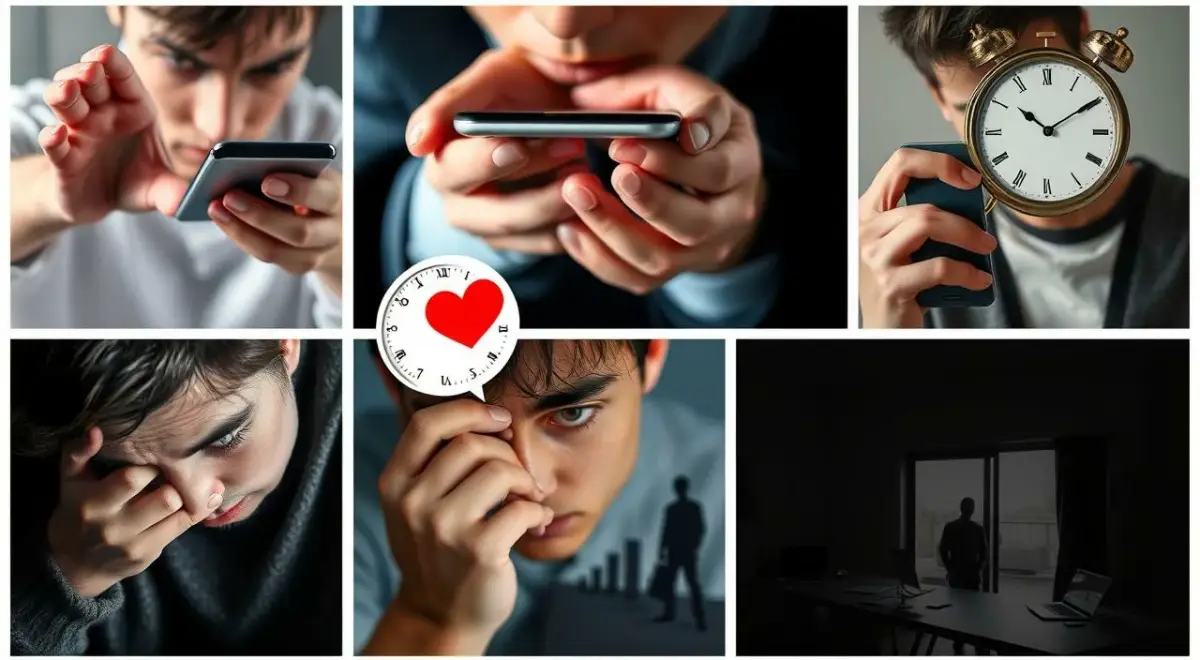
Nomophobia, or obsessive-compulsive disorder related to cell phones , greatly affects well-being. Understanding these signs is crucial in order to seek help.
Impactful Physical Manifestations
Symptoms of nomophobia include strong bodily reactions:
- Increased heart rate (50% of cases)
- Excessive sweating (40% of individuals)
- Rapid breathing and agitation (45% of those affected)
- Involuntary tremors
- Nausea and dizziness
Emotional and Behavioral Signs
Digital addiction causes significant emotional impacts:
- Intense anxiety when without a cell phone.
- Constant irritability
- Difficulty concentrating
- Feelings of loneliness
- Low self-esteem
Impacts on Sleep and Well-being
Nomophobia greatly affects quality of life:
| Behavior | Percentage |
|---|---|
| They wake up at night to check messages. | 60% |
| They never turn off their cell phones while sleeping. | 70% |
| They feel anxious in environments without internet. | 75% |
Important: Recognizing the symptoms of nomophobia is the first step in seeking professional help and regaining control over your digital life.
How Digital Addiction Affects Different Age Groups
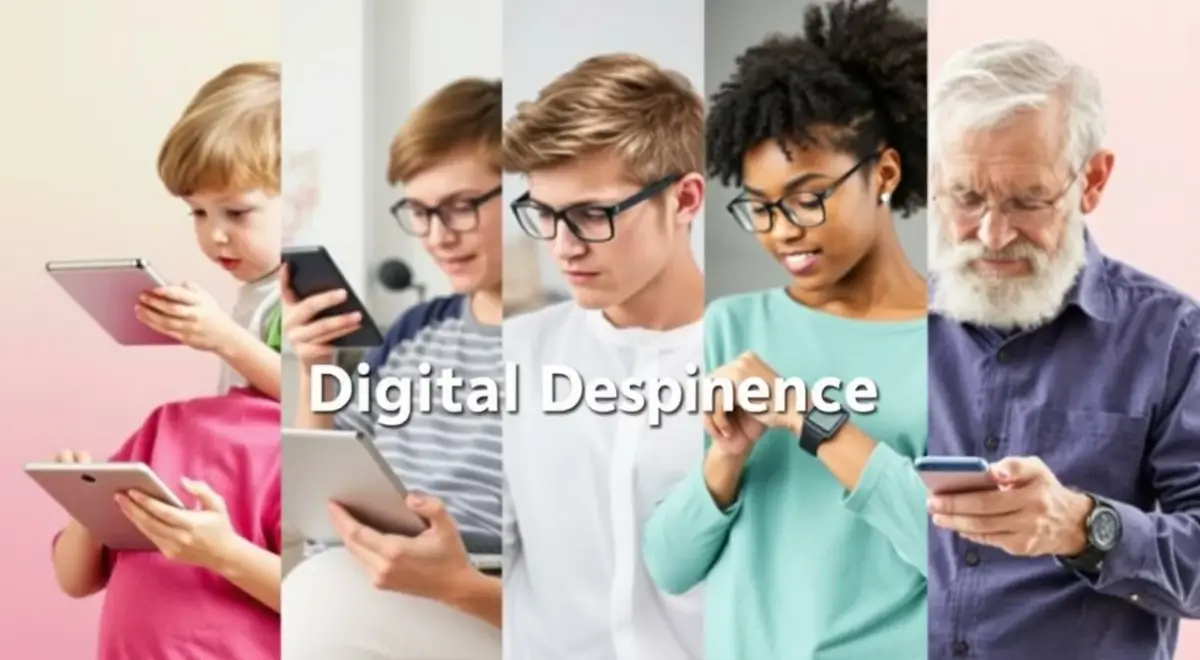
Cell phone addiction doesn't discriminate by age. From children to the elderly, compulsion for mobile devices manifests itself in different ways at each stage of life.
Young adults are the most vulnerable to nomophobia. Around 40% of young people between 18 and 30 years old cannot stand being away from their smartphones . This generation lives in a permanent state of connectivity, where every notification has become an almost Pavlovian stimulus.
Impacts by Age Group
| Age Range | Usage Features | Main Risks |
|---|---|---|
| Children and Adolescents | Intensive use of social media and games. | Impairments in social and emotional development. |
| Young Adults | Constant hyperconnectivity | Anxiety and digital addiction |
| Mature Adults | Professional and personal use | Stress and concentration problems |
| Elderly | Technological learning | Paradoxical social isolation |
Research reveals worrying impacts of digital addiction:
- 72% of studies on children have identified an increase in depression due to excessive screen use.
- Over 30% of American adults include mobile gaming in their daily routine.
- The pandemic has intensified the time spent using mobile devices.
The compulsion for mobile devices transcends generations. It shows that nomophobia is a complex social phenomenon. It requires attention and coping strategies adapted to each age group.
Behaviors that Indicate Smartphone Addiction
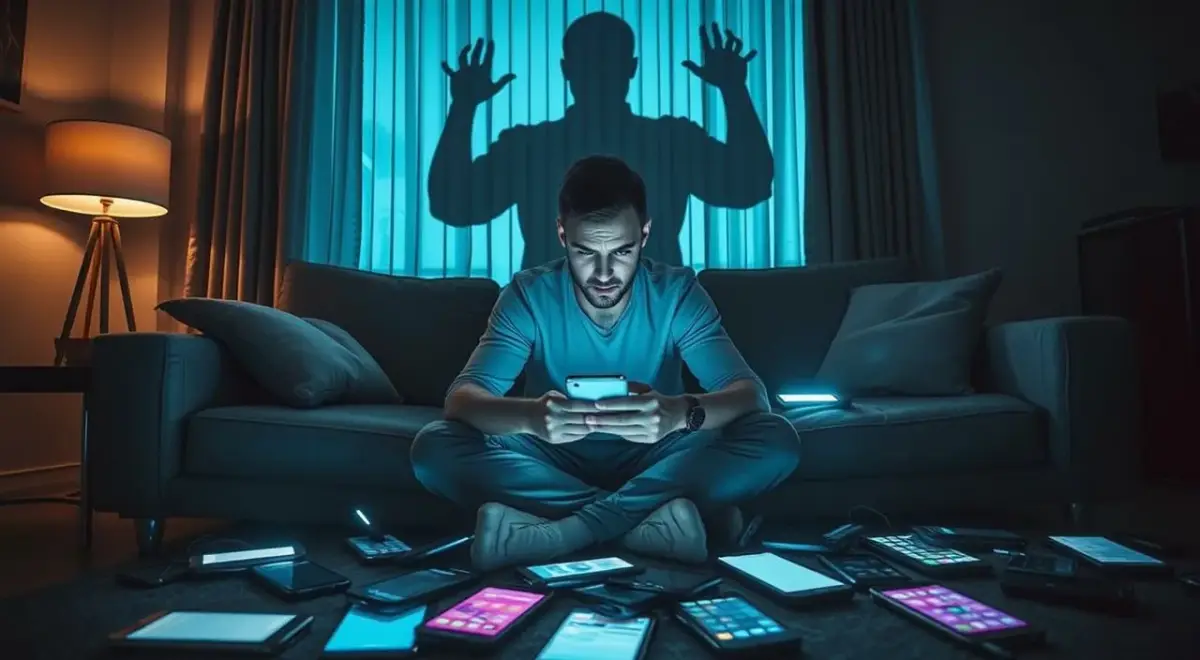
Cell phone addiction is a major problem today. It's important to recognize the signs early in order to seek help. This way, we can change our technology usage habits.
Warning Signs in Everyday Life
It's crucial to know when we're using our smartphones too much. Some signs that indicate this are:
- Check your phone right after waking up.
- Feeling anxious without the device
- Sleeping with your cell phone near or under your pillow.
- Forgetting to interact with real people because of cell phones.
Problematic Usage Patterns
Studies show concerning behaviors related to cell phone use:
| Behavior | Percentage |
|---|---|
| They check devices every 15 minutes. | 70% |
| They feel anxious when they are away from their cell phones. | 60% |
| Negative impact on personal relationships | 42% |
Hypnosis for cell phone addiction can be very helpful. It can break compulsive habits and give control over technology use.
Available Treatments and Therapeutic Approaches
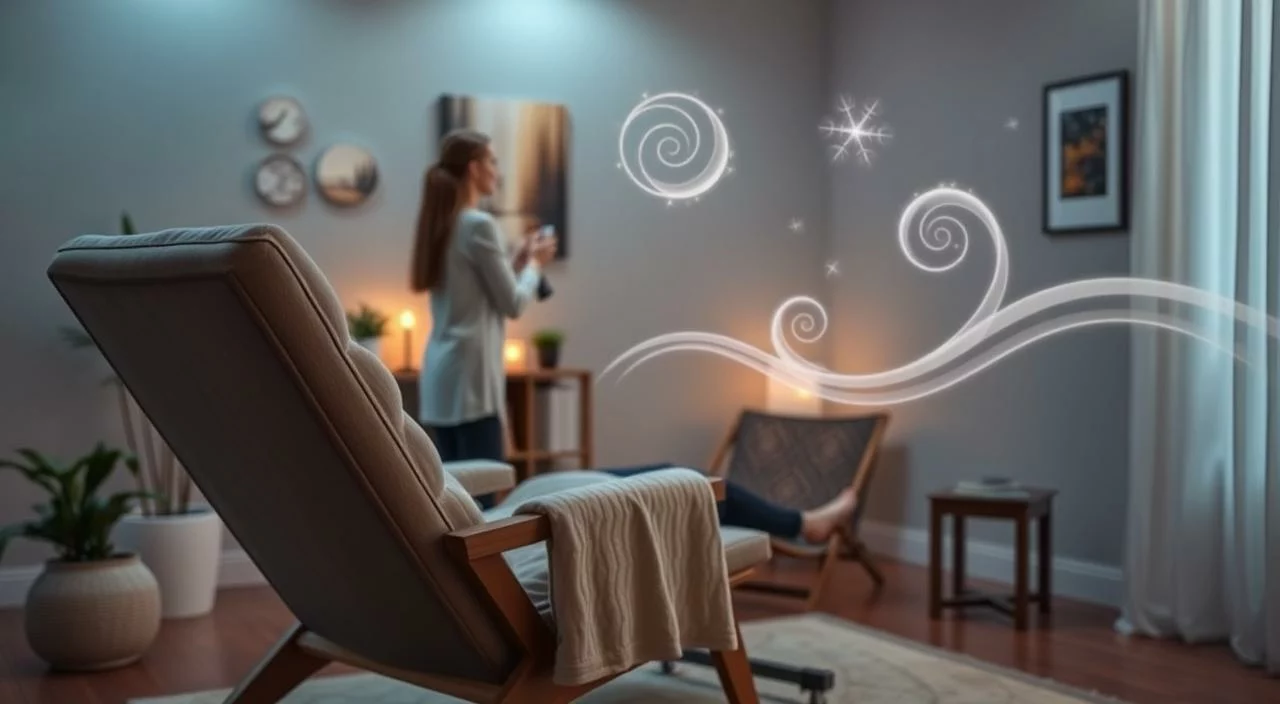
Digital addiction is a major challenge for many people. But there are effective treatments to help overcome nomophobia. They help regain control over the use of electronic devices.
Hypnotherapy: An Innovative Solution
Hypnotherapy for digital anxiety is a promising approach. It works directly with the subconscious. This helps to change behavioral patterns related to digital addiction.
- Non-invasive technique
- Focus on the root of the behavioral problem.
- It helps reduce anxiety associated with devices.
The treatment of nomophobia with hypnosis aims to:
- Identifying emotional triggers
- Reprogram automatic responses
- Developing healthy disconnection strategies
Specialized professionals use hypnosis techniques to:
| Objective | Method |
|---|---|
| Reduce digital anxiety | Therapeutic suggestions |
| Controlling impulses | Relaxation techniques |
| Redefining the relationship with devices | Subconscious reprogramming |
Hypnotherapy offers a personalized and in-depth approach to tackling digital addiction. It allows for a healthier reconnection with technology.
Practical Strategies to Reduce Digital Addiction

Digital addiction is a major challenge today. We need strategies to control our mobile devices. Hypnosis techniques can be very useful in this process.
Gradual Disconnection Techniques
To reduce smartphone dependence, it's important to disconnect gradually. Some effective strategies include:
- Create daily moments without your cell phone.
- Gradually reduce usage time.
- Establish periods of digital abstinence.
Establishing Healthy Boundaries
Hypnosis helps control cell phone addiction . It helps create new behavioral patterns and cope with the anxiety of being without a cell phone.
| Strategy | Benefit |
|---|---|
| Do not use your cell phone for 30 minutes after waking up. | Reducing morning anxiety |
| Charging your cell phone away from your bed | Improved sleep quality |
| Turn off your cell phone at night. | Reducing digital distractions and stimuli |
The key to overcoming digital addiction lies in awareness and establishing clear, realistic boundaries . Practice hypnosis and meditation techniques to strengthen your emotional resilience during the disconnection process.
Prevention and Development of Healthy Habits
The fear of being without a cell phone can be lessened with digital usage strategies. Smartphone dependence is a major challenge nowadays.
To have a healthy relationship with technology, follow these tips:
- Establish device-free zones at home.
- Practice digital mindfulness.
- Set specific times to use your cell phone.
- Prioritize offline activities.
Statistics paint a worrying picture: 77% of young adults can't go without their cell phones for even a few minutes . This highlights the need for proactive measures.
For parents and educators, there are practical strategies:
- To be a positive role model in the use of technology.
- Establish clear boundaries for the use of devices.
- Encourage recreational activities without technology.
- Promote moments of digital disconnection.
| Age Range | Average Usage Time | Level of Dependency |
|---|---|---|
| 18-24 years old | 5-6 hours/day | High |
| 25-34 years old | 4-5 hours/day | Average |
| 35-44 years old | 3-4 hours/day | Low |
To overcome the fear of being without a cell phone, it's essential to be mindful and develop balanced habits regarding technology use.
Conclusion
Nomophobia is a major challenge today. Studies show that 30% of people feel paranoid without their cell phones. This shows that it is a serious mental health problem.
Hypnosis treatment seems to be a good solution. It helps people to better control their cell phones. This reduces the anxiety that comes from excessive use.
We don't need to eliminate technology from our lives. Instead, we need to learn to use it in a balanced way. Limiting usage, practicing mindfulness, and seeking help are important steps.
To overcome nomophobia, we begin by acknowledging the problem. Each small step leads us to a more present and authentic life.
Source Links
| Title | Description | Link |
|---|---|---|
| Hypochondria: What are the warning signs of an obsession with health? | An approach to the signs of hypochondria, its causes, and treatment options. | Live Healthy |
| Hypochondria - Wikipedia | Definition and characteristics of hypochondria, including symptoms and its relationship to anxiety. | Wikipedia |
| Hypochondriac: what does it mean and how to deal with it? | Information on how to deal with hypochondriacs and recommended therapeutic approaches. | Sara |
| Treatments for hypochondria: A guide to psychological approaches. | Discussion of various therapeutic approaches to treat hypochondria, including CBT and psychodynamic psychotherapy. | Maria, Psychologist |
| Hypochondria, symptoms and treatment | This article describes the symptoms of hypochondria and available treatment options. | MAPFRE |
| Hypochondria: What it is, symptoms, treatments, and causes. | An explanation of hypochondria, its symptoms, and the importance of psychological treatment. | Rede D'or |
| Hypochondria: How to overcome the physical symptoms | Practical tips for dealing with hypochondria and suggestions for effective treatment. | Vittude |
| Therapy for Hypochondria: Understand and Overcome Your Fears | Explanation of the different therapeutic approaches that can be used in the treatment of hypochondria. | Joice Matos |
🌟 Have you considered seeking a therapist to support your well-being journey?
If this article sparked reflections about positive changes in your life, perhaps now is the ideal time to take the next step. Do you know hypnosis as a therapeutic tool? This approach can be surprisingly effective for various personal challenges.
Special offer: Book a free 20-minute consultation with therapist Fabio Morus and discover how therapy can transform your life.
✨ No commitment — Completely free — 20 minutes that can make a difference
👉 Click here to book your free consultation
Don't postpone your well-being any longer. The first step to change is just one click away.