


Do you get a chill down your spine when you see a spider? Arachnophobia is an intense fear of spiders that affects millions. This anxiety disorder can severely limit what you do every day. But there are effective ways to overcome this fear.
Specific phobias affect about 7.4% of people at some point in their lives, according to the World Health Organization's World Mental Health Surveys across 22 countries2. Arachnophobia is one of them. These reactions can cause strong physical symptoms, such as excessive sweating, rapid heartbeat, and tremors. Therefore, seeking psychological help is crucial.
This article will show six practical tips for facing and overcoming the fear of spiders . Each strategy has been carefully chosen to help those dealing with this difficult condition.
Ready to start overcoming that fear? Let's learn how to transform that fear into an opportunity for personal growth.
What is arachnophobia?
https://www.youtube.com/watch?v=JV3GRDwUIRgArachnophobia is a very strong and unfounded fear of spiders. It affects many people. It usually begins in childhood or adolescence4.
The fear of spiders is not just a discomfort. The symptoms can be very disturbing.
Definition and Main Symptoms
Common symptoms include:
- Excessive sweating
- Involuntary tremors
- Increased heart rate
- Difficulty breathing
- Feeling faint or paralyzed
The Impact of Phobia on Daily Life
Phobias greatly affect daily life. People with arachnophobia avoid:
- Outdoor environments such as gardens
- Places where you are most likely to find spiders.
- Outdoor activities
- Situations that trigger anxiety.
Scientific Perspective
The fear of spiders may have evolutionary origins: there is evidence of an alert response to spiders before any cultural learning3.
| Factor | Feature |
|---|---|
| Prevalence | One of the most common specific phobias |
| Start | Usually during childhood or adolescence. |
| Treatment | Behavioral therapy and, in severe cases, medication. |
Understanding arachnophobia helps in creating effective treatments.
Evolutionary Origins of the Fear of Spiders
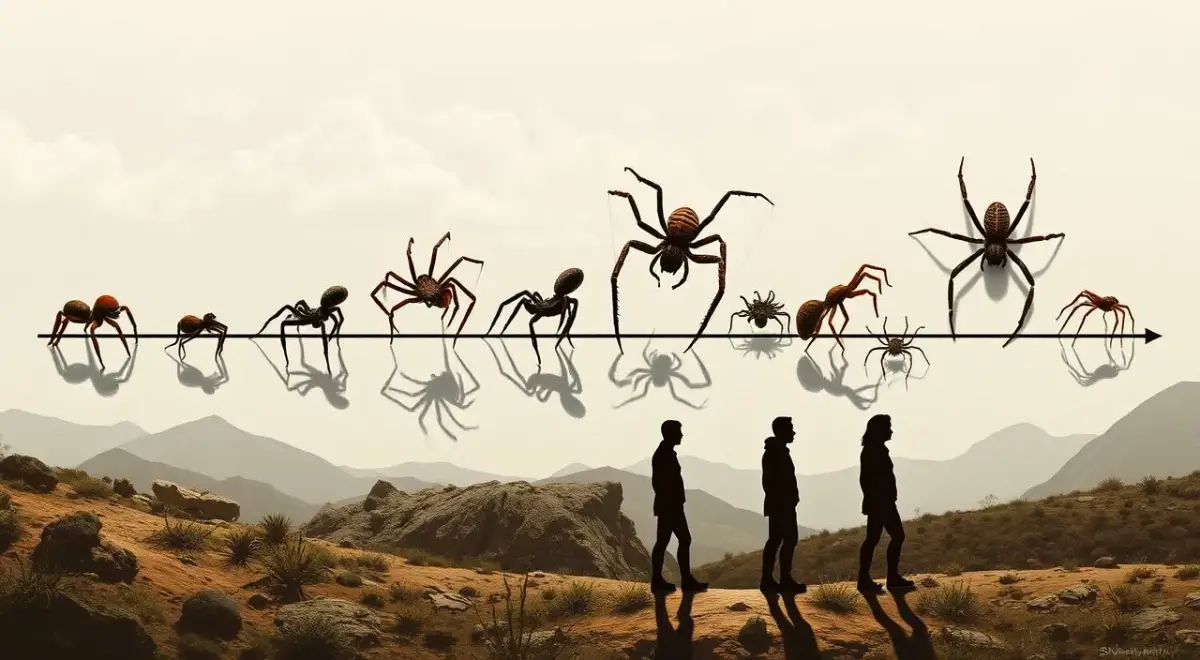
The fear of spiders stems from the survival instinct . Our evolutionary heritage has led us to react with protection against them. They were a major threat to our ancestors.
The fear of spiders does not appear to be purely cultural. In a study of six-month-old infants, pupils dilated by an average of 0.14 mm when shown images of spiders, against 0.03 mm for flowers — an alert reaction that appears before the child has had any experience of the animal3.
Interesting aspects of the evolution of fear :
- Coexistence with spiders and snakes across primate evolution
- A brain response developed over millions of years.
- A defense mechanism that increased the chances of survival.
This fear is passed down from generation to generation. This shows that it was advantageous to be cautious around spiders. In this way, our ancestors had a better chance of survival.
Physical and Emotional Symptoms
Arachnophobia brings symptoms that greatly affect the well-being of those who have it. Understanding these reactions is essential to developing coping strategies.
Intense Physical Manifestations
Symptoms of a phobia include physical reactions to fear that are very challenging. When someone sees spiders, they might feel:
- Rapid tachycardia
- Intense sweating
- Uncontrollable tremors
- Shortness of breath
- Nausea
Deep Emotional Reactions
The emotional impact of arachnophobia goes beyond the physical symptoms. People may experience:
- Intense panic
- Extreme anxiety
- Feeling of loss of control
- Paralyzing fear
Consequences in Daily Life
Arachnophobia severely limits personal experiences. People often avoid certain places and activities. This can lead to:
- Refusing to enter certain environments
- Avoid outdoor activities.
- Progressive social isolation
- Professional and personal limitations
Each person experiences these symptoms in a unique way. But the emotional impact can be very significant if left untreated.
Identifying Triggers and Risk Situations
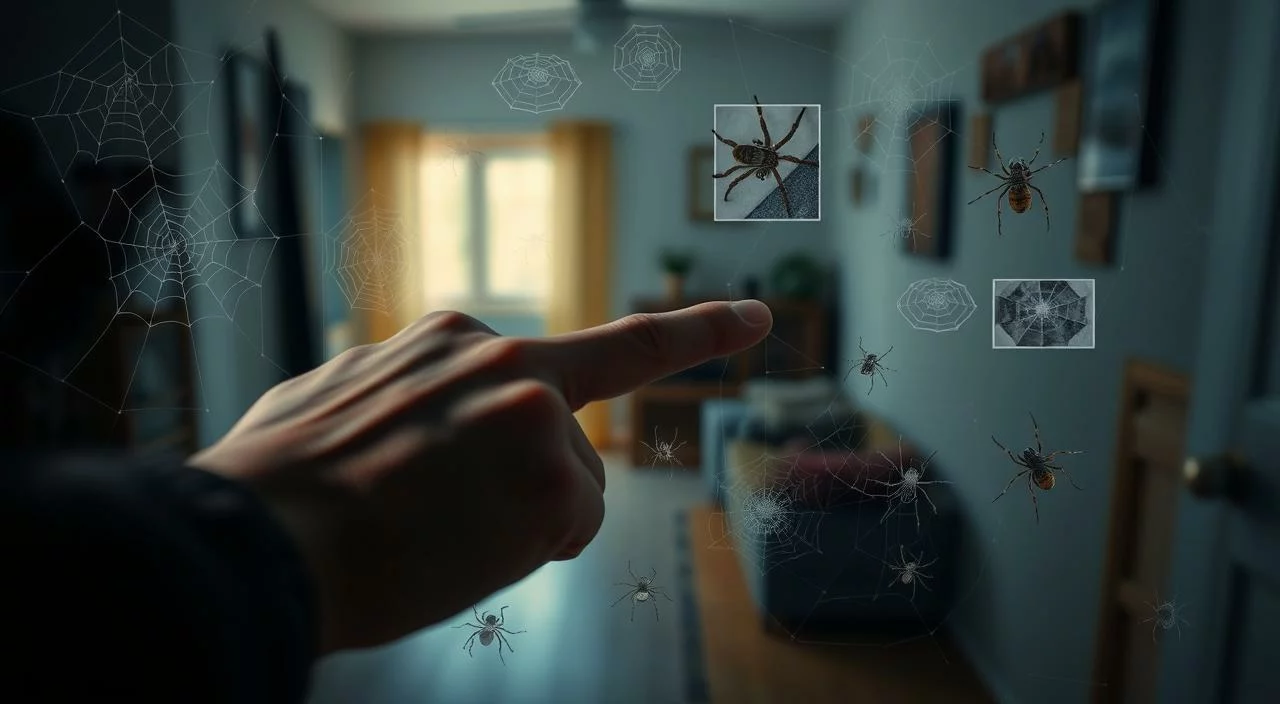
Understanding the triggers for arachnophobia helps in creating strategies to overcome the fear. In the United States, an estimated 9.1% of adults had a specific phobia in the past year1.
Phobia triggers can be numerous. They cause people to feel intense fear and anxiety. Some common situations that can trigger fear include:
- View images of spiders
- Finding spiders in enclosed or open spaces
- Listening to stories or talking about spiders
- Going to places where spiders might be
Confronting fear begins with knowing what those triggers are. Studies show that facing fear little by little helps. This can be done with relaxation techniques .
Knowing what triggers fear helps create psychological defenses. For example, if seeing images of spiders makes you feel anxious, you can begin to get used to them in a controlled way.
It's important to learn about phobias. Science shows that phobias stem from genes, environment, and personal experiences. Understanding this helps in coping better with fear.
Breathing and Relaxation Techniques

Managing arachnophobia requires effective strategies to control anxiety. Relaxation techniques are powerful for reducing fear and bringing emotional balance.
Practical Breathing Exercises
Breathing exercises are essential for calming the nervous system. Here are some simple techniques:
- Diaphragmatic breathing: inhale through your nose counting to 4, hold for 2 seconds, and exhale slowly through your mouth.
- Square breathing: inhale, hold, exhale, and pause, each step for 4 seconds.
- Alternate nostril breathing: alternate nostrils to balance energy.
Guided Meditation
Guided meditation diverts attention from fear, creating a calm and controlled mental state. Short practices of 5-10 minutes can greatly reduce anxiety.
Visualization Techniques
Visualize a safe and relaxing environment during stressful times. Imagine yourself in a calm place, like a beach or forest, breathing deeply and feeling secure.
These relaxation techniques are essential tools for developing emotional resilience. They help to gradually overcome the fear of spiders.
Gradual Exposure Therapy
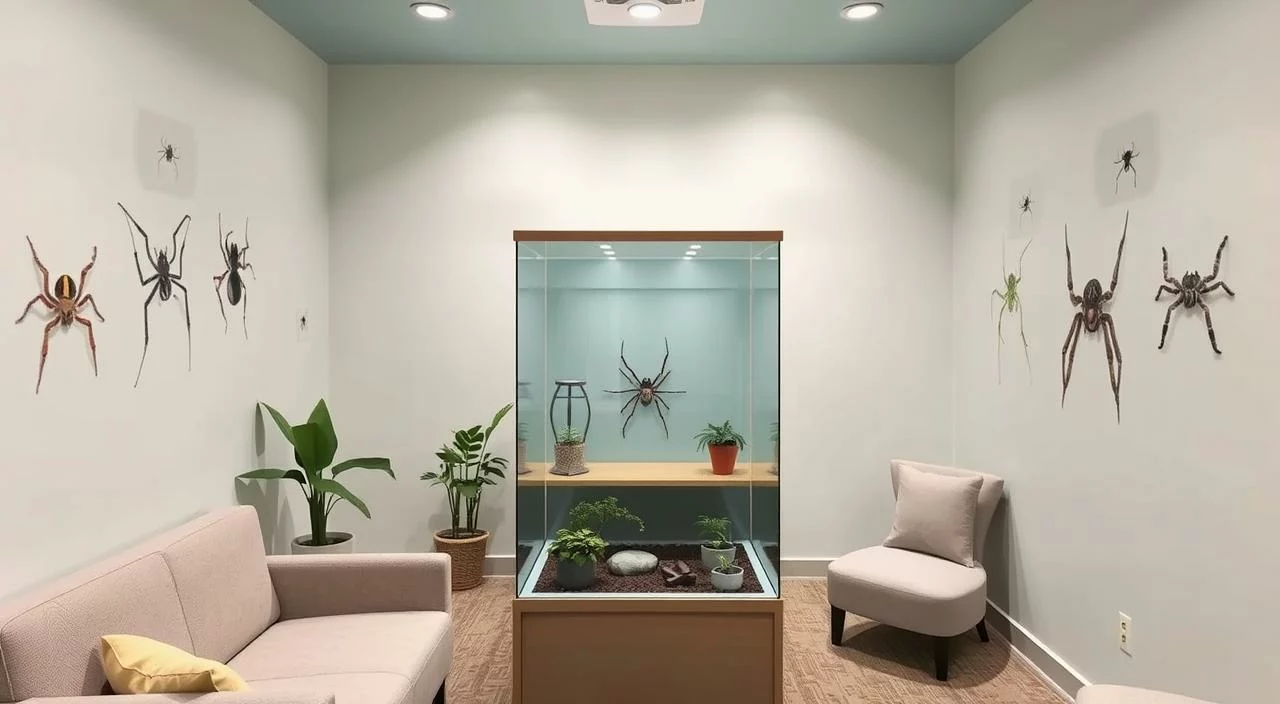
Gradual exposure, or desensitisation, means facing the fear step by step under controlled conditions. In a review of specific-phobia treatment studies from 1960 to 2005, in vivo exposure produced the most robust response, though with high dropout rates7. It helps people confront their fear of spiders safely, thus learning to manage their fear in a controlled manner.
The main objectives of this therapy are:
- Reducing anxiety about spiders
- Desensitizing the nervous system
- Creating new, less traumatic emotional associations.
- Regaining emotional control
The gradual exposure process involves several steps:
- Viewing images of spiders
- Watching videos about spiders
- Controlled discussion on the topic
- Simulated exposure in a safe environment
- Increasingly close encounters with spiders
This technique helps overcome phobias. It teaches strategies for confronting fear and reducing the fear response.
| Step | Description | Objective |
|---|---|---|
| Initial | Images and discussions | Familiarization |
| Intermediate | Controlled visual exposure | Reducing anxiety |
| Advanced | Monitored close contact | Overcoming fear |
Gradual exposure is a scientific and humane way to treat arachnophobia. It brings hope and practical results for those who have this fear.
Debunking Myths About Spiders

The fear of spiders stems from many myths. Knowing the truth about them can help overcome that fear. It also makes us see how important they are to the ecosystem.
Scientific Facts about Spiders
Contrary to popular belief, most beliefs about spiders are false. Scientists show that:
- The great majority of species pose no danger to humans.
- They help control insects.
- Many are very good for the environment.
The Ecological Role of Spiders
Spiders are essential as natural predators. They maintain environmental balance. This helps to prevent pests in crops.
Common Species in Brazil
Brazil has many species of spiders. Some of the best known are:
| Species | Habitat | Features |
|---|---|---|
| Tarantula | Forests and dry areas | Large and generally harmless |
| Garden Spider | Gardens and green areas | Assists in insect control. |
Understanding these creatures can transform fear into respect and admiration. This makes us see their importance in nature.
Hypnotherapy

Hypnotherapy is a powerful alternative therapy for treating phobias, such as arachnophobia. It uses hypnosis to access the subconscious and change emotions.
In a meta-analysis of 17 clinical trials, the average participant treated with hypnosis reduced anxiety more than about 79% of participants in control groups6. The effect was larger when hypnosis accompanied other psychological interventions than when it was used on its own.
Intervention Techniques in Hypnotherapy
- Deep mental relaxation
- Reprogramming unconscious responses
- Introduction of positive suggestions
- Reinterpreting traumatic experiences
Proven Advantages
| Benefit | Impact |
|---|---|
| Reducing Anxiety | Significant reduction in phobic symptoms. |
| Personalized Intervention | Treatment tailored to individual needs. |
| Reduced Medication Dependence | Natural treatment approach |
The technique helps to understand the roots of fear. It creates new neural connections and improves emotional response. This helps to better deal with situations that previously caused panic.
Benefits of Professional Therapy

Therapy for phobias is a life-changing path. It helps those who have a severe fear of spiders. With specialized treatment, people can regain their confidence and improve their lives.
Mental health professionals use modern techniques to help. Cognitive behavioural therapy (CBT) is one of the talking therapies the NHS sets out for phobias, alongside hypnotherapy5.
- Identifying the emotional roots of fear.
- Developing coping strategies
- Gradual and controlled exposure to the object of fear.
- Relaxation techniques and anxiety control.
New technologies, such as Augmented Reality , are changing treatment. They allow for the creation of safe environments to confront fear. This helps to reduce anxiety related to spiders.
Therapy not only controls fear in the moment, but it also helps change thoughts and behaviors. In this way, patients learn to manage emotions in a lasting way.
Self-Help and Support Strategies
Dealing with arachnophobia requires a comprehensive self-help approach. There are strategies that help overcome the fear of spiders, in addition to professional treatment.
Some important techniques include:
- Spider education to demystify fears.
- Regular practice of relaxation techniques
- Gradual and self-guided exposure
- Maintaining a progress journal
Support groups are essential in this process. They allow for the sharing of experiences and offer emotional support. This helps to manage fear.
Setting realistic goals and seeking emotional support is crucial. Friends and family are important in coping with arachnophobia.
Other self-help techniques include:
- Guided meditation
- Controlled breathing
- Positive visualisation
- Thought and trigger log
Persistence is the key to overcoming fear. Every small step is important on the road to recovery.
Conclusion
Overcoming arachnophobia is a journey of courage and self-discovery. Specific phobias are among the most common anxiety disorders2, and there are effective strategies for confronting this fear.
The NHS sets out talking therapies, such as CBT, and hypnotherapy for phobias5; in specific phobias, in vivo exposure is the component with the most robust response7. Understanding that fear does not define our ability to change is crucial.
Overcoming arachnophobia is a gradual process that requires patience. Every small step is an important victory. Seeking professional help, practicing relaxation techniques, and staying informed are essential strategies.
How about scheduling a free 20-minute session with Therapist Fabio Morus? He can help you take the first step towards a lighter and more balanced life. Click here to schedule!
References
- National Institute of Mental Health. Specific Phobia. US prevalence statistics.
- Wardenaar KJ, et al. The cross-national epidemiology of specific phobia in the World Mental Health Surveys. Psychological Medicine, 2017;47(10):1744-1760.
- Hoehl S, Hellmer K, Johansson M, Gredebäck G. Itsy Bitsy Spider…: Infants React with Increased Arousal to Spiders and Snakes. Frontiers in Psychology, 2017;8:1710.
- NHS. Phobias.
- NHS. Phobias — Treatment.
- Valentine KE, Milling LS, Clark LJ, Moriarty CL. The Efficacy of Hypnosis as a Treatment for Anxiety: A Meta-Analysis. International Journal of Clinical and Experimental Hypnosis, 2019;67(3):336-363.
- Choy Y, Fyer AJ, Lipsitz JD. Treatment of specific phobia in adults. Clinical Psychology Review, 2007;27(3):266-286.
🌟 Have you considered seeking a therapist to support your well-being journey?
If this article sparked reflections about positive changes in your life, perhaps now is the ideal time to take the next step. Do you know hypnosis as a therapeutic tool? This approach can be surprisingly effective for various personal challenges.
Special offer: Book a free 20-minute consultation with therapist Fabio Morus and discover how therapy can transform your life.
✨ No commitment — Completely free — 20 minutes that can make a difference
👉 Click here to book your free consultation
Don't postpone your well-being any longer. The first step to change is just one click away.