

Have you ever wondered if breathing could be the key to controlling anxiety attacks? These attacks are becoming more common in Brazil. Understanding how they arise and the breathing techniques we can use is very important for our well-being . In this article, we will show you how to control these attacks in a practical way. We will talk about the "5, 4, 3, 2, 1" technique, which helps to shift the focus away from the symptoms and regain emotional balance.
Furthermore, let's talk about the importance of seeking professional help . It's crucial to combine self-help practices with medical treatments. Not controlling an anxiety crisis can harm mental health and quality of life. <sup>1 2 </sup>
Understanding Anxiety Attacks
Anxiety attacks are moments of great fear and apprehension. They can come on suddenly and bring both physical and emotional symptoms. Understanding anxiety is crucial for better coping with these moments.
What are anxiety attacks?
These crises are moments of great fear, caused by stress or trauma. One study shows that they can reach their peak in minutes and last about 25 minutes 3 and 4 . During these moments, people may experience palpitations, excessive sweating, and shortness of breath 4 .
How anxiety attacks manifest themselves
Anxiety attacks affect each person uniquely. Common physical symptoms include tachycardia, tremors, and shortness of breath.3 Anxiety can manifest differently in children, adolescents, and adults, demonstrating the complexity of the symptoms.4
Factors that contribute to anxiety
Several factors can cause anxiety, such as stress, family history, and health. Approximately 25% of people worldwide will live with anxiety disorders. <sup>3</sup> Brazil is the most anxious country, with 18.6 million people affected. <sup>5 </sup> This highlights the importance of helping and treating those who experience anxiety attacks.
https://www.youtube.com/watch?v=8YG8HABY25w
Common Symptoms of Anxiety Attacks
When we face anxiety attacks, we see many physical and psychological symptoms. Knowing how to recognize these symptoms is crucial for dealing with the attack effectively.
Physical symptoms of anxiety
The physical symptoms of anxiety can be alarming. They include:
- Tachycardia
- Tremors
- Sweating
- Feeling short of breath
- Dizziness and nausea
- Muscle tension
- Chills or feeling of heat
These symptoms may be accompanied by constant fear and a feeling of depersonalization 6 .
Psychological symptoms of anxiety
In addition to physical symptoms, there are psychological manifestations. These include:
- Overwhelming fear
- Catastrophic thoughts
- Feeling of unreality
These experiences can worsen the crisis and affect daily life.
How to identify an anxiety attack
To identify an anxiety attack, observe the physical and psychological symptoms. Note their frequency and intensity. About 70% of anxiety attacks are linked to depression . This shows the importance of specialized support, especially if the symptoms affect daily life.

| Physical Symptoms | Psychological Symptoms |
|---|---|
| Tachycardia | Overwhelming fear |
| Feeling short of breath | Catastrophic thoughts |
| Tremors | Feeling of unreality |
Anxiety Attacks: How to Control Them: The Importance of Breathing
Breathing is very important for our emotional well-being . If we breathe poorly, anxiety can worsen. But, using anxiety control techniques and regulated breathing, we can calm the nervous system. This brings us a sense of peace.
How breathing affects our emotional state
How we breathe shows how we are feeling. If we are nervous, our breathing becomes rapid and shallow. This can worsen stress and anxiety. But by breathing deeply and consciously, we can calm ourselves. This greatly helps in stress management .
The role of breathing in stress management.
It is very important to practice breathing regularly. It helps to balance our stress response. Square breathing is an effective technique. It involves inhaling, holding your breath, exhaling, and holding your breath out. This shows how important breathing is in controlling anxiety .
https://www.youtube.com/watch?v=qsUjjgoPYoY
Breathing Techniques to Combat Anxiety Attacks
Several breathing techniques help combat anxiety attacks . They promote relaxation and improve emotional well-being .
Square breathing technique
Square breathing, or Sama Vritti, involves inhaling, holding your breath, and exhaling. This cycle helps stabilize breathing and calm the mind. It is great for stressful times, as it reduces symptoms of anxiety .
Deep abdominal breathing
Using deep abdominal breathing is essential to relieve anxiety. When inhaling, the abdomen should expand, and when exhaling, it should contract. Dedicating 15 minutes daily to this technique helps control anxiety . It also sends a signal to the brain that we are safe, bringing tranquility .
Prolonged exhalation and its benefits
Prolonged exhalation is a technique that prolongs the exhalation phase. This can have an immediate calming effect. By exhaling slowly, the heart rate decreases and we feel relief. Combining this technique with chamomile tea or calming herbs further enhances the results. They impact our emotional state and help maintain balance in stressful situations .
Strategies for Practicing Anxiety Control Techniques
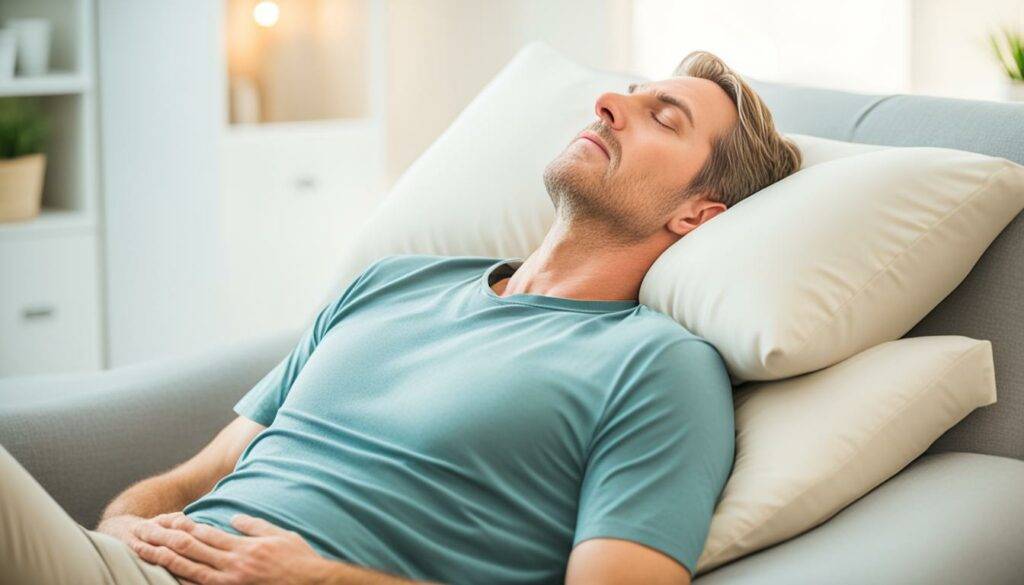
To improve anxiety control, it's important to create a conducive environment . A calm place helps to focus on daily breathing practices . An organized environment prepares us for practice.
Create an environment conducive to practice.
A conducive environment should be relaxing, with soft lighting and pleasant sounds. This greatly helps with techniques such as diaphragmatic breathing, one of the recommended daily breathing practices . It's good to choose the best time of day to practice.
Incorporate breathing into your daily routine.
Adding breathing to daily activities changes everything. Just a few minutes of diaphragmatic breathing each day helps manage stress and anxiety. These techniques can be done anywhere, improving emotional well-being . With them, we create a positive cycle of mental health.
https://www.youtube.com/watch?v=loyLCo7tJvc
The CALM DOWN technique shows that accepting anxiety changes how we see it and how we react to it. This creates a more favorable internal environment.
With patience and persistence, we can learn to manage our feelings. This allows us to live more fully and lightly. 11 12 .
Anxiety and Mental Health: The Connection
Anxiety and mental health are closely linked. If left untreated, anxiety can cause serious emotional problems. This affects the lives of those who suffer from it and can lead to worse conditions.
Anxiety disorders, such as generalized anxiety and panic disorder, bring many symptoms. They affect both body and mind. Symptoms such as tachycardia, muscle tension , and chest pains show the impact of anxiety on health.13 In addition, feeling depersonalized or derealized may indicate that it is time to seek help.13
The impact of anxiety on mental health.
Anxiety can lead to isolation and difficulty maintaining healthy habits. This increases the risk of serious illnesses such as depression and heart problems. It is important to manage anxiety to avoid these negative effects.
Healthy practices, such as breathing techniques and therapy , are essential. Controlled breathing can decrease the intensity of attacks. This helps maintain a more balanced emotional state. <sup>13</sup>
Relationship between breathing techniques and therapy
Breathing techniques and therapy work together to treat anxiety holistically. Using breathwork in therapy enhances the benefits of psychological intervention. This brings immediate relief and helps to better understand emotions, transforming challenges into opportunities for growth. <sup>13</sup>
Treatments for Anxiety Attacks
To deal with anxiety crises, it's good to use various methods. Knowing when to seek professional help is very important. Cognitive-behavioral therapy helps to change negative thoughts. The WHO says that more than 18 million Brazilians have anxiety, showing the importance of seeking help. <sup>14</sup>
If the crises are frequent and very affecting, it may be good to try psychotherapy and medication. Antidepressants are a common option for treating anxiety. <sup>15</sup>
When to seek professional help
It is very important to know when to seek professional help . Symptoms such as tremors and shortness of breath are warning signs. If lack of sleep and memory loss affect your life, it's time to seek help. Anxiolytics can help, but use them carefully because of the risk of dependence .
Alternative and complementary treatments
Physical activities, such as walking and swimming, are good for anxiety. They release hormones that make you feel happy, such as serotonin 14. Natural remedies, such as valerian and passionflower, also help control symptoms 15 .
Meditation practices and breathing techniques help to disconnect from stress. This contributes to greater well-being 14 .
https://www.youtube.com/watch?v=BVm4P6icaGI
Managing Anxiety Crises in Daily Life
Adopting daily wellness practices is essential for managing anxiety. Self-care and mental health improve with healthy habits. This helps us live better.
Daily practices for lasting well-being.
Relaxing activities are important for anxiety. Meditation, controlled breathing, and stretching keep us calm. They are key to preventing future crises.
The stress of modern life increases anxiety. It is crucial to know when to stop and breathe. Managing anxiety shows that crises can be overcome with self-awareness. <sup>17</sup>
The importance of nutrition and physical exercise.
Paying attention to diet and physical exercise is vital. Brazil has a high rate of anxiety, according to the WHO, with 9.3% of the population affected 18. A healthy diet and exercise help improve anxiety 18 .
Our food choices affect our emotions. It's important to choose nutrients that support mental health.
Conclusion
Controlling anxiety attacks is a major challenge for many. Approximately 9.3% of the Brazilian population suffers from it, making Brazil the country with the highest anxiety rate in the world. 19 Conscious breathing can be an effective tool to improve our lives and well-being during crises. 20
When we use conscious breathing in our daily lives, we can restore calm. This helps us to better cope with emotions that cause anxiety.
Breathing is very important. Changes in habits and knowing how to identify what stresses us are key to treating and preventing anxiety . Knowing our body and its reactions helps us make better decisions, promoting well-being.
In short, using breathing techniques , self-knowledge, and lifestyle changes are powerful ways to combat anxiety. This allows us to have a more balanced and worry-free daily life.
FAQ
What are anxiety attacks?
Anxiety attacks are moments of intense fear and apprehension. They come with physical and emotional symptoms, such as shortness of breath and rapid heartbeat.
What are the common symptoms of anxiety attacks?
Symptoms include physical symptoms, such as sweating, and psychological symptoms, such as intense fear and a feeling of depersonalization.
How can breathing help control anxiety?
Controlled breathing, such as abdominal breathing, helps to calm the nervous system. This reduces symptoms of anxiety.
What are some effective breathing techniques?
Techniques such as square breathing, abdominal breathing, and slow exhalation are effective. They help to relax and control anxiety.
How can I incorporate breathing practices into my daily life?
Create a calm environment and set aside time each day to breathe. It's good to do this in the morning and at night, to make it a habit.
When should I seek professional help for anxiety?
Seek professional help if anxiety attacks are frequent or severe. This is important for daily life.
Does exercise affect anxiety?
Yes, physical exercise and a healthy diet are essential for mental health. They help manage anxiety.
What is the relationship between anxiety and mental health?
Anxiety directly affects mental health. If left untreated, it can cause serious disorders. That's why breathing techniques and therapy are important.
🌟 Have you considered seeking a therapist to support your well-being journey?
If this article sparked reflections about positive changes in your life, perhaps now is the ideal time to take the next step. Do you know hypnosis as a therapeutic tool? This approach can be surprisingly effective for various personal challenges.
Special offer: Book a free 20-minute consultation with therapist Fabio Morus and discover how therapy can transform your life.
✨ No commitment — Completely free — 20 minutes that can make a difference
👉 Click here to book your free consultation
Don't postpone your well-being any longer. The first step to change is just one click away.