
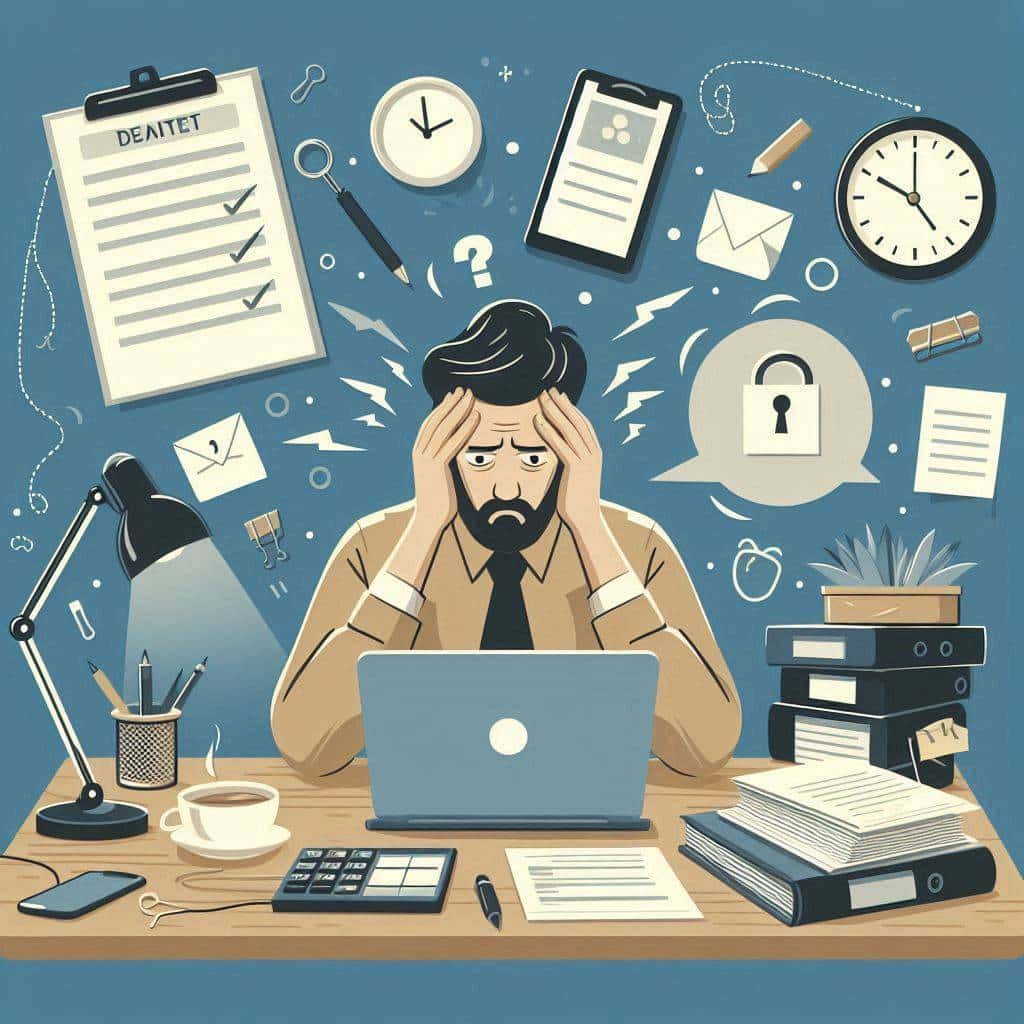

Workplace Anxiety: 10 Effective Strategies for Dealing with Professional Stress
Introduction:
Read more:
Have you ever found yourself breaking out in a cold sweat before an important presentation? Or perhaps feeling your heart race when you see your inbox overflowing with unread emails? If so, you're not alone! Believe it or not, about 41% of workers report high levels of anxiety in the workplace. It's as if stress were an unwanted coworker who insists on working overtime!
Hi everyone! I'm Ana, a career coach for over 15 years, and I've seen it all when it comes to anxiety at work. From panic attacks in the middle of meetings to burnouts that seemed endless. And you know what? I've been there myself. Yes, even as an "expert," I've found myself a victim of professional anxiety.
I remember one particular day, a few years ago, when I was about to give a presentation to the company's board of directors. Sweaty palms, racing heart, that feeling that something terrible was about to happen. It was at that moment that I realized: I needed to find ways to deal with this or I would end up harming my health and my career.
And that's exactly what we're going to talk about today! Anxiety at work is like that app that runs in the background on your phone: you don't see it, but it's there, consuming your energy. The problem is that, unlike a cell phone, we can't simply turn our minds off and on again, can we?
But don't worry! In this article, I'll share with you 10 strategies I've learned (many of them through practice, I confess) to deal with anxiety and professional stress. These are techniques I've tested, refined, and seen make a difference in the lives of dozens of clients over the years.
From learning how to establish clear boundaries between work and personal life (yes, it's possible!) to using breathing techniques that can calm that nervous presentation in seconds. We'll explore everything from organizing your workspace to cultivating positive relationships with colleagues. And don't worry if some of these seem challenging at first. Remember: Rome wasn't built in a day, and neither will your peace of mind be!
So, how about we take the first step together on this journey of self-care and productivity? Get ready to transform that paralyzing stress into productive energy. Let's go?
So, are you ready for this journey of self-discovery and professional growth? Fasten your seatbelts, takeoff to a more peaceful and productive work environment begins now!

Understanding Anxiety in the Workplace
Ah, anxiety at work. It's like that annoying colleague who always shows up at the wrong time, isn't it? But before we learn how to deal with it, we need to understand exactly what we're facing.
So, what exactly is anxiety in a professional context? Well, it's not just that nervous feeling before an important presentation (although that counts too!). Workplace anxiety is a persistent state of worry, fear, or apprehension related to your professional responsibilities. It's as if your brain is constantly in "red alert" mode, even when there's no real danger.
Now, let's talk about the symptoms. Have you ever caught yourself biting your nails while staring at a complicated spreadsheet? Or felt your heart race when you saw your boss's name on caller ID? These are just a few of the classic signs. Others include:
- Difficulty concentrating (as if your thoughts were a swarm of bees)
- Irritability (when even the noise of the printer seems unbearable)
- Muscle tension (shoulders so stiff they feel like they're made of stone)
- Sleep problems (counting sheep... or unanswered emails)
- Constant fatigue (even after that third extra-strong coffee)
But where does all this anxiety come from? Well, the causes are as varied as the items on a company buffet. Some common culprits include:
- Tight deadlines (because apparently, "yesterday" has become a realistic deadline)
- Excessive workload (when your to-do list looks more like a Tolstoy novel)
- Interpersonal conflicts (office drama, anyone?)
- Job insecurity (that feeling of always being on the edge)
- Lack of work-life balance (when your laptop becomes your bed companion)
And what is the impact of all this? Unfortunately, it's not pretty. Anxiety at work can affect your performance more than a virus affects a computer without antivirus software. It can lead to mistakes, procrastination, and even the dreaded burnout. And it doesn't stop there: this constant anxiety can spread to other areas of your life, affecting personal relationships and physical health.
But don't panic! (Ironic, I know). Recognizing these signs and understanding their causes is the first step in dealing with anxiety at work. It's like mapping the terrain before a major expedition. Now that we know what we're facing, we can begin to chart our battle strategy.
Remember: you're not alone in this. Anxiety at work is more common than coffee stains on important reports. But with the right tools (which we'll explore next), you can transform that anxiety from a scary monster into a more… cooperative coworker.
Ready to take the next step on this journey? Let's go, the next stop is learning how to set boundaries between work and personal life. Believe me, your brain (and your family) will thank you!
Strategy 1: Establish Clear Boundaries Between Work and Personal Life
Ah, the famous work-life balance! It sounds like an urban myth, doesn't it? As if finding a unicorn were easier than separating your professional and personal life. But believe me, it's possible and crucial for maintaining your sanity!
I'll tell you a secret: I used to be that person who answered work emails at 11:59 PM, lying in bed. The result? My anxiety was through the roof and my sleep… well, what sleep? That's when I realized I needed to change, and fast!
So, how do you create these much-needed boundaries? Here are some tips that transformed my life (and could transform yours too):
- Schedules are your friends: Set a time to start and, more importantly, to FINISH work. Treat that end time like it's the last train home – you don't want to miss it!
Create a "switch-off" ritual: Just as you (hopefully!) wouldn't go to work in your pajamas, create a ritual to mark the end of the workday. It can be something as simple as turning off your computer, tidying your desk, or taking a walk around the block. It's like telling your brain: "Time to change the channel!"
- Physical space matters: If possible, have a dedicated workspace at home. Even if it's just a corner of the kitchen table. The important thing is that when you leave that space, your work stays there!
- Technology: friend and foe: Configure your cell phone to not receive work notifications outside of business hours. It's like putting your boss on "do not disturb" mode - but in a professional way, of course!
- Learn to say "no": This includes saying no to yourself when the temptation to check "just one more email" hits. Remember: the world won't end if you reply to that message tomorrow morning.
But why is this so important? Well, imagine your brain as a battery. You need time to recharge, otherwise… poof! No power. When you maintain clear boundaries, you give yourself the chance to truly rest and recover from the stress of the day.
Furthermore, these limits help increase your productivity when you're actually working. It's like that diet: if you spend the whole day snacking, you never feel truly hungry or satisfied. The same applies to work: if you're always "half-working," you're never fully focused or fully relaxed.
I confess that it wasn't easy at first. I felt guilty, as if I were "abandoning my post." But you know what happened? My work improved, my personal relationships flourished, and, most importantly, my anxiety decreased considerably.
Remember: you were hired as an employee, not as a 21st-century slave. You have the right (and the duty!) to have a life beyond work. Your hobbies, your family, your friends, and even that series you've been putting off watching for months – all of that is important and deserves your time and attention.
So, ready to draw some lines in the sand? Start today! Choose one of these tips and put it into practice. It can be something small, like setting an alarm for "end of the workday." Over time, you'll see that these boundaries are not only possible, but liberating!
In the next section, we'll talk about how to calm that restless mind with breathing techniques and mindfulness. Get ready for some deep breaths and a little inner peace!

Strategy 2: Practice Breathing and Mindfulness Techniques
Take a deep breath. No, seriously, take a deep breath right now. Can you feel the difference? It's amazing how something as simple as breathing can have such a big impact on how we feel, isn't it?
I remember the first time I tried meditation at work. I was hiding in the bathroom, trying to take a 5-minute "zen break." Of course, I was interrupted by someone knocking on the door, asking if I was okay. Not my most graceful moment, I confess!
But I didn't get discouraged. Over time, I learned that we don't need a Buddhist retreat to practice mindfulness. We can incorporate these techniques into our daily work, even amidst the chaos of deadlines and endless meetings.
Let's start with breathing. Why is it so powerful? Well, breathing is like a remote control for your nervous system. When you're anxious, your breathing becomes rapid and shallow, signaling to your body that there's danger. But when you breathe deeply and slowly, you send a message of "it's okay, you can relax" to your brain.
Here's a simple technique you can use, even while sitting at your desk:
- Breathe deeply through your nose, counting to 4.
- Hold your breath for 4 seconds.
- Exhale slowly through your mouth, counting to 6.
- Repeat 3-5 times.
It seems simple, doesn't it? And it is! But it's incredibly effective. I usually do this before important meetings or when I feel my anxiety rising.
Now, let's talk about mindfulness. No, you don't need to become a monk or start levitating (although that might be helpful on some workdays, wouldn't it?). Mindfulness is simply the act of being fully present in the moment, without judgment.
Here are some ways to incorporate mindfulness into your workday:
- Start your day with a "body scan": Before turning on your computer, close your eyes and pay attention to each part of your body, from your feet to your head. It's like a quick check-up of your physical and mental state.
- Practice the "traffic light technique": When you feel overwhelmed, stop (red), breathe (yellow), and then move forward (green). It's a quick way to reconnect with the present moment.
- Eat mindfully: Instead of eating while staring at a screen, try to truly savor your food. Pay attention to the flavors, textures, and aromas. Your stomach (and your mind) will thank you!
- Take mindfulness breaks: Every hour, take 1 minute to breathe deeply and observe your thoughts without clinging to them. It's like giving your brain a mini-reset.
And what about resources? There are several great apps that can help you get started, such as Headspace, Calm, or Insight Timer. Many offer short meditations, perfect for a quick break at work.
Remember: practice makes perfect. At first, it may seem strange or even a little silly. But over time, you'll notice the difference. It's like training a muscle – the more you practice, the stronger your "mental resilience" becomes.
And the best part? These techniques not only help reduce anxiety in the moment, but also increase your ability to cope with stress in the long term. It's like building a mental shield against anxiety!
So, how about starting right now? Take a deep breath, feel your feet on the ground, and notice how you feel. Congratulations! You've just taken your first step in practicing mindfulness.
In the next section, we'll talk about how organizing your space and tasks can do wonders for your peace of mind. Get ready to boost your productivity and lower your stress levels!

Strategy 3: Organize your Space and your Tasks
You know that feeling of walking into a messy office, with papers everywhere, post-it notes stuck to every possible surface, and a to-do list that seems endless? Yeah, I've been there too. And let me tell you, it's not fun at all.
One day, after spending 20 minutes searching for an important document (which was under my coffee cup, of course), I realized something needed to change. The clutter around me was creating clutter in my head, and that was making me more anxious than a cat in a room full of rocking chairs!
So, why is organization so important for combating anxiety? Well, think about it: when your space is a mess, your mind expends extra energy trying to navigate through that chaos. It's like trying to find a specific file on a computer full of viruses – slow, frustrating, and totally unnecessary.
Let's start with the physical space. Here are some tips that transformed my office from a war zone into a productivity oasis:
- Do a thorough clean-up: Take some time to review everything on your desk. If you haven't used it in the last 3 months, it probably doesn't need to be there.
- Organize by zones: Create specific areas for different activities. For example, one zone for writing, another for reading, and another for online meetings.
- Keep only the essentials in sight: Store the rest in drawers or cabinets. Fewer visual distractions = more focus.
- Plant some greenery: A small plant on your desk can do wonders for your mood and even improve air quality.
Now, let's talk about task organization. I confess I used to be that person with 50 sticky notes on my monitor (and I still forgot to do important things). Here's what I learned:
- Use the Pomodoro Technique : Work in 25-minute blocks, followed by a 5-minute break. It's amazing how this can increase your productivity and reduce anxiety about large tasks.
- Create priority lists: At the start of each day, list your 3 most important tasks. Focus on them before anything else.
- Practice the "2-minute" technique: If a task takes less than 2 minutes to complete, do it immediately instead of adding it to your list.
- Use digital tools: Apps like Trello, Asana, or even good old Google Calendar can be your best friends when it comes to organizing tasks.
One of the best tools I've discovered is the "Eat the Frog" method. The idea is simple: start your day by doing the most difficult or unpleasant task. It's like swallowing a live frog first thing in the morning – the rest of the day can only get better, right?
I remember when I first started applying these techniques. At first, it seemed like I was wasting time organizing instead of doing. But I soon realized that this "lost" time was actually saving me hours of productivity and, more importantly, drastically reducing my anxiety.
The best part? When you have an organized system, your mind is free to focus on what really matters. It's like taking a huge weight off your shoulders – literally, in the case of that pile of papers that used to sit on your desk!
And don't forget: organization is an ongoing process. Don't expect perfection right away. Start with small changes and adjust as needed. The important thing is to find a system that works for you.
So, how about starting now? Take a look at your desk. Is there anything there you can organize in the next 5 minutes? Go ahead, I'll wait. Seriously, do it right now. Feel how satisfying that is?
In the next section, we'll talk about how cultivating positive relationships at work can be a real antidote to anxiety. Get ready to transform that annoying colleague into your new best friend… or at least someone you can tolerate during company happy hour!

Strategy 4: Cultivate Positive Relationships at Work
Ah, workplace relationships! Sometimes they feel like an episode of a reality show, don't they? There's the "professional gossip," the "credit-stealer," the "know-it-all," and, of course, that boss who seems to have stepped straight out of a corporate horror movie. But believe me, cultivating good relationships at work can be your shield against anxiety – and no, that doesn't mean you have to be everyone's "best friend."
I remember when I started a new job a few years ago. I was so focused on "proving my worth" that I barely spoke to my colleagues. The result? I felt isolated, anxious, and ironically, my performance was suffering. That's when I realized: no man (or woman) is an island, especially at work!
So, why are positive relationships so important? Well, think of it as your emotional support system at work. When you have good relationships, you have:
- People to share concerns and successes with.
- A support network for difficult times.
- Allies for projects and ideas
- A more pleasant and less stressful environment.
Now, how do you cultivate these relationships without seeming like the irritatingly cheerful character from a cereal commercial? Here are a few tips that worked for me:
- Practice active listening: This means really paying attention when someone is speaking, instead of thinking about what you're going to say next. You'd be surprised how many people appreciate simply being heard.
- Offer help: See a colleague struggling with a task you're good at? Offer a hand. But be careful not to seem arrogant – nobody likes a know-it-all.
- Be authentic: Don't try to be someone you're not. People can tell when you're not being genuine, and that can breed distrust.
- Participate in social activities: Yes, even that happy hour you always try to avoid. You don't need to become the king or queen of the party, but your presence already makes a difference.
- Use humor (wisely): A little lightheartedness can do wonders to relieve tension. Just be careful with potentially offensive jokes – what's funny to you might not be to others.
And what about conflicts? Because, let's face it, they're going to happen. The key is to deal with them constructively.
- Stay calm: Take a deep breath before responding to something that has irritated you.
- Focus on the problem, not the person: "This situation is difficult" is better than "You are making it difficult."
- Listen to the other side: Try to understand the other person's perspective, even if you don't agree.
- Seek solutions, not blame: The goal is to solve the problem, not win an argument.
I remember a particularly difficult colleague I had. He seemed to have a knack for getting on my nerves. One day, instead of retaliating, I decided to invite him for coffee. I found out he was going through a tough time at home. We didn't become best friends, but our relationship improved significantly, and my anxiety towards him decreased drastically.
The key is to remember that we're all in the same boat. Your colleagues probably have their own anxieties and concerns too. A little empathy can go a long way.
And don't forget: you don't need to be best friends with everyone. The goal is to create an environment of mutual respect and cooperation. This already makes a huge difference to your mental health and the overall atmosphere of the office.
So, how about starting today? How about genuinely praising a colleague's work? Or offering help on a project? Small gestures can have a big impact.
In the next section, we'll talk about something equally important: how to prioritize self-care and well-being, even with a busy schedule. After all, you can't give what you don't have, right? Get ready to learn how to take care of yourself as if it were your most important project (because, spoiler alert: it is)!

Strategy 5: Prioritize Self-Care and Well-being
Ah, self-care! It seems so simple, doesn't it? But how many times have you found yourself skipping lunch to finish that urgent report, or staying up late to answer "just a few more emails"? I've been there, believe me. It was like being in a perpetual marathon, always running, but never reaching the finish line.
One day, after my third cup of coffee before 10 a.m., with dark circles under my eyes that would make a panda look well-rested, I realized: I was treating my body and mind as if they were indestructible machines. Spoiler alert: they aren't.
So, why is self-care so important, especially when we talk about anxiety at work? Well, think of your well-being as the oil that keeps the machine running smoothly. Without it, you might keep functioning for a while, but eventually, something will break.
Let's start with the basics: sleep. Ah, sleep, that luxury so many of us neglect! Here are some tips to improve your sleep quality:
- Establish a routine: Try to go to sleep and wake up at the same times, even on weekends.
- Create a nighttime ritual: A warm bath, some light reading, or a few minutes of meditation can signal to your body that it's time to relax.
- Say no to screens: Try to avoid cell phones, tablets, and computers at least an hour before bed. Blue light is the enemy of quality sleep.
- Be careful with caffeine: Try not to consume caffeine after 2 PM. Your body will thank you!
Now, let's talk about nutrition. No, this doesn't mean you need to become a nutrition guru overnight. Small changes can make a big difference:
- Stay hydrated: Keep a bottle of water on your desk. Sometimes what we perceive as hunger is actually thirst.
- Plan your meals: Prepare healthy packed lunches to avoid the temptation of fast food.
- Eat mindfully: Take a few minutes to truly appreciate your food, away from your computer screen.
- Smart snacks: Keep healthy options on hand for those little hunger pangs between meals. Nuts, fruit, and yogurt are great choices.
And we can't forget about physical exercise! I know, I know, with so much to do, who has time for the gym, right? But moving is crucial to keeping anxiety under control. Some ideas:
- Lunchtime walks: 15-20 minutes already makes a difference.
- Stretching at your desk: Take 2 minutes to stretch every hour.
- Stairs instead of the elevator: Small choices add up at the end of the day.
- Find an activity you enjoy: Dancing, swimming, yoga - the important thing is to move in a way that gives you pleasure.
But self-care isn't just about the physical. Your mental well-being is equally important. Here are some techniques that have helped me:
- Practice gratitude: At the end of the workday, list 3 things you are grateful for.
- Have a hobby: Dedicate time to something you love to do, unrelated to work.
- Disconnect: Set aside specific times of day to go offline. The world won't end if you don't check your emails for a few hours.
- Learn to say no: Establish clear boundaries. You don't have to accept every project or invitation.
I remember when I started implementing these changes. At first, it seemed impossible. How would I find time for all of this? But little by little, I realized that the more I took care of myself, the more productive and less anxious I became at work. It was as if I had discovered a secret source of energy and calm!
The secret is to start small. Don't try to change everything at once. Choose one area to focus on this week. Maybe it's improving your sleep or taking a daily walk. With each small victory, you'll be building habits that, over time, will make a huge difference in your anxiety and overall well-being.
Remember: you are not a machine. You are a human being with physical and emotional needs. Taking care of yourself is not selfishness – it's the foundation for being the best version of yourself, both at work and in your personal life.
In the next section, we'll talk about a skill many of us struggle to master: learning to say "no" and delegate tasks. Get ready to discover how setting boundaries can be liberating (and less daunting than it seems)!

Strategy 6: Learn to Say "No" and Delegate Tasks
Saying "no" at work might seem scarier than facing a dragon, but it's an essential skill. Remember: every "yes" to something is a "no" to something else—often, to your well-being.
- Prioritize your tasks and learn to communicate your boundaries professionally.
- Use phrases like "I'd love to help, but right now I'm focused on X priority project."
- Delegate tasks whenever possible. Trusting your team not only lightens your load but also develops the skills of others.
Strategy 7: Develop a Growth Mindset
Viewing challenges as learning opportunities can transform anxiety into motivation.
- Replace thoughts like "I can't" with "I can't yet, but I can learn."
- Celebrate small victories and learn from mistakes instead of beating yourself up over them.
- Set realistic goals and break down large projects into smaller, manageable tasks.
Strategy 8: Utilize Cognitive Restructuring Techniques
Our interpretations of situations often fuel our anxiety. Cognitive restructuring can help change this narrative.
- Identify automatic negative thoughts (e.g., "I'm going to ruin this presentation").
- Question these beliefs: Is there evidence to support this idea? Are there other perspectives?
- Replace them with more realistic and constructive thoughts.
Strategy 9: Create an Action Plan for Moments of High Anxiety
Having a plan ready can be a lifesaver when anxiety hits hard.
- Develop a list of "first aid" measures for anxiety (e.g., deep breathing, going for a brisk walk).
- Have a trusted person to call in times of crisis.
- Learn to recognize when it's time to seek professional help.
Strategy 10: Advocate for a Mentally Healthy Work Environment
Being an agent of change can benefit not only you, but the entire team.
- Initiate conversations about mental health at work in an open and non-judgmental way.
- Suggest policies that promote well-being, such as flexible hours or mental health days.
- Encourage the creation or use of employee assistance programs (EAPs).
Conclusion:
Phew! We've reached the end of our journey through 10 strategies for dealing with anxiety at work. Remember, change doesn't happen overnight. Start by implementing one or two strategies and gradually incorporate the others.
It's important to emphasize that, while these strategies can be significantly helpful, there's absolutely no shame in seeking professional help if you feel you need it. Sometimes, talking to a therapist can provide additional tools for coping with anxiety.
Anxiety at work is common, but it doesn't have to control your life. With these strategies, you're equipped to transform your work environment into a healthier and more productive place. Remember: you are stronger and more capable than you think.
So, which of these strategies will you start implementing today? Share your experience or other tips that worked for you in the comments. After all, we're all in this journey for mental health at work together! Talk to a therapist.
Take care of yourself, be kind to yourself, and remember: breathe. You can handle this!
🌟 Have you considered seeking a therapist to support your well-being journey?
If this article sparked reflections about positive changes in your life, perhaps now is the ideal time to take the next step. Do you know hypnosis as a therapeutic tool? This approach can be surprisingly effective for various personal challenges.
Special offer: Book a free 20-minute consultation with therapist Fabio Morus and discover how therapy can transform your life.
✨ No commitment — Completely free — 20 minutes that can make a difference
👉 Click here to book your free consultation
Don't postpone your well-being any longer. The first step to change is just one click away.