


Imagine having such a great fear that it prevents you from leaving your house. Agoraphobia is more than just a common fear. It's an anxiety disorder that affects many people in Brazil.
This condition makes ordinary places terrifying. Every step can trigger many frightening symptoms.
Key Points
- Agoraphobia affects more than 150,000 people in Brazil.
- Characterized by an intense fear of public spaces.
- It can drastically limit social life.
- More common in women
- Proper treatment can significantly improve quality of life.
What is Agoraphobia and its Main Characteristics?
Agoraphobia is a complex anxiety disorder. It's not just a fear of open spaces. It's a feeling of vulnerability in public places or situations without control.
This disorder greatly affects emotions. People with agoraphobia experience fear and panic. This can paralyze their daily activities.
Distinctive Characteristics
- Intense fear of crowded places.
- Anxiety in environments with no apparent escape routes.
- Panic in social situations or on public transport
Differences Between Agoraphobia and Other Anxiety Disorders
| Disorder | Main Features |
|---|---|
| Agoraphobia | Fear of uncontrolled public spaces |
| Panic Disorder | Sudden attacks of intense fear |
| Social Phobia | Fear of specific social interactions |
Impact on Daily Life
Agoraphobia severely limits personal experiences. 30% to 50% of people isolate themselves to avoid anxiety.
Quality of Life
It is estimated that 1-2% of the population has agoraphobia. Women are more affected. The disorder begins between the ages of 20 and 30, affecting work and social life.
Agoraphobia Meaning: Origin and Definition of the Term

The word agoraphobia comes from the ancient Greek language. It combines "agora" (public square) and "phobos" (fear). This shows the fear that people have of open or public places.
The first scientific studies on agoraphobia began in the 19th century. The German psychiatrist Carl Westphal was one of the first to study the disorder. He discovered characteristics that define agoraphobia.
- Greek linguistic roots: agora (public space) + phobos (fear)
- First scientific description: 19th century
- Pioneer in research: Carl Westphal
Over time, the meaning of agoraphobia has changed. It's not just a fear of open spaces. Today, it's seen as a complex anxiety disorder.
Agoraphobia affects about 1.7% of adults. It is more common in women. To be diagnosed, symptoms must last more than 6 months.
Statistics and Prevalence of Agoraphobia in Brazil
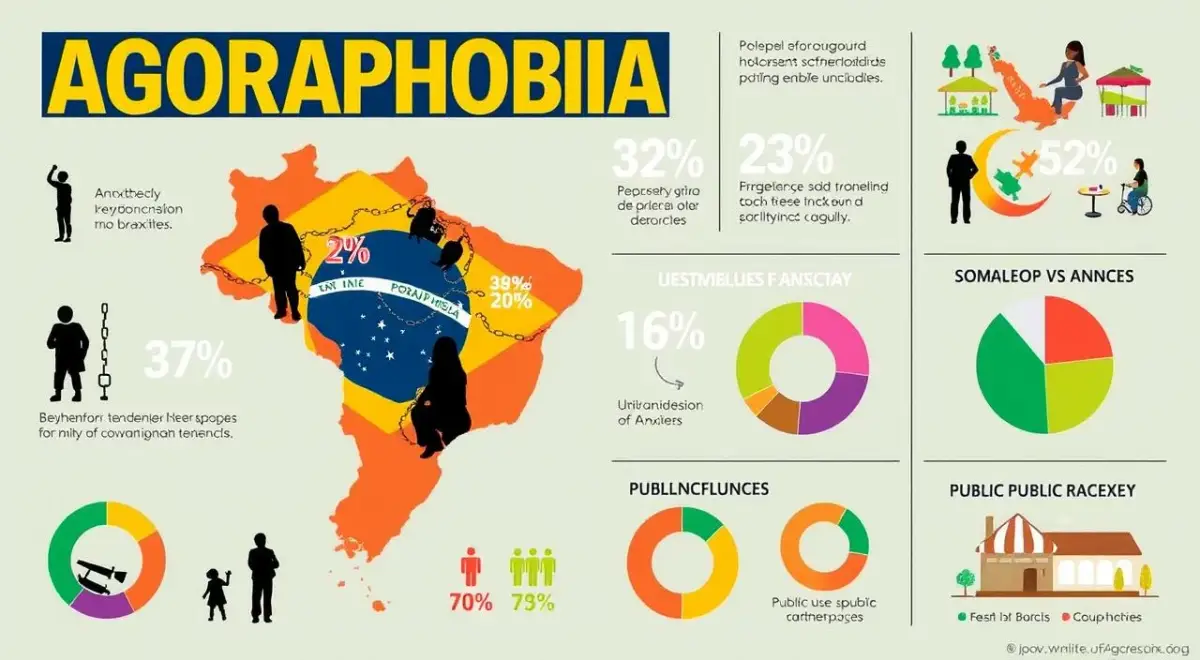
Agoraphobia is more than just a fear of public spaces. The data paints a complex picture of anxiety disorders in Brazil.
Recent studies show that anxiety is common in Brazil. Let's look at the main demographic data:
General Demographic Data
- Overall prevalence of anxiety disorders: 27.4%
- Specific prevalence of agoraphobia: 17.9%
- Sample studied: 1,953 people
Most Affected Age Group
Agoraphobia is most prevalent in two situations:
- End of adolescence
- After the age of 40
Differences between Genders
| Gender | Prevalence of Anxiety Disorders |
|---|---|
| Women | 32.5% |
| Men | 21.3% |
Studies indicate that education level, income, chronic diseases, smoking, and alcohol affect anxiety.
These data show the complexity of agoraphobia and its importance for mental health in Brazil.
Main Physical Symptoms of Agoraphobia

Agoraphobia is a complex disorder that causes several strong physical symptoms. Knowing what agoraphobia is helps in identifying these signs. They can appear in stressful situations or in public places.
The physical symptoms of agoraphobia are difficult and greatly affect those who experience them. Some of the most common are:
- Increased heart rate
- Hyperventilation or shortness of breath
- Chest pain or pressure
- Dizziness and imbalance
- Tingling sensation throughout the body
- Excessive sweating
- Chills
- Nausea
- Possibility of fainting
The intensity of these symptoms can vary greatly. Some people experience mild reactions, while others have severe symptoms that significantly impact their lives .
| Physical Symptom | Description | Impact |
|---|---|---|
| Tachycardia | Rapid heartbeat | High |
| Shortness of breathe | Gasping for breath | Very High |
| Sweating | Excessive sweating | Moderate |
| Tremors | Muscle instability | High |
Agoraphobia isn't just about the physical symptoms. These reactions are part of the autonomic nervous system's response to anxiety. Understanding these symptoms helps in seeking professional help and finding ways to cope with them.
Psychological Manifestations of the Disorder
Agoraphobia is not just a fear of public places. It brings with it complex emotions that greatly affect people's lives.
Recurring Thoughts
The emotions of agoraphobia manifest as repetitive thoughts. People experience:
- Constant fear of losing control
- Excessive worry about potential panic situations.
- Catastrophic thoughts about public events
Behavioral Patterns
People with agoraphobia avoid places and situations. They do this because:
- Declining social invitations
- Limit movements
- Making excuses to avoid leaving the house.
Emotional Reactions
The emotional reactions are strong. They include:
- Intense anxiety
- Feelings of vulnerability
- Low self-esteem
Understanding these manifestations helps in seeking treatment and recovery.
Situations that trigger agoraphobia.

Agoraphobia can be triggered by various situations. These situations vary from person to person, but they all cause fear and discomfort.
- Spaces with large crowds
- Closed public spaces
- Public transportation
- Environments with little possibility of escape.
- Queues and crowds
The explanation for agoraphobia shows that certain places increase the risk of symptoms. This happens mainly in places that make you feel trapped or vulnerable.
| Type of Environment | Trigger Level |
|---|---|
| Cinemas | High |
| Supermarkets | Average |
| Public transport | Very High |
| Shopping malls | High |
Each person experiences agoraphobia in their own unique way. Triggers can vary depending on personal experience and psychological history.
Risk Factors and Causes of Agoraphobia

Understanding agoraphobia is complex. It arises from a combination of factors.
Genetic Predisposition
Genetics plays a significant role in agoraphobia. Those with a family history of anxiety are more likely to develop the condition. Approximately 30% of those with a family history of anxiety are at higher risk.
Environmental Factors
The environment can contribute to the development of agoraphobia. Stress, tense family situations, and life challenges can all trigger the disorder.
- Constant stress
- Anxious family environments
- Exposure to traumatic situations
Traumatic Experiences
Traumatic events, especially in childhood, increase the risk of agoraphobia. Traumas such as abuse or intense stress can create deep-seated fear.
| Risk Factor | Probability of Development |
|---|---|
| Family History of Anxiety | 30% |
| Traumatic Experiences in Childhood | 45% |
| Prolonged Stress | 35% |
Agoraphobia doesn't have just one cause. It's a problem that stems from genetics, environment, and personal experiences.
Professional Diagnosis and Assessment
Diagnosing agoraphobia is a complex process. It requires the attention of mental health professionals. Each case is unique and needs special care to understand the disorder.
The steps for diagnosis are essential:
- Detailed analysis of medical and psychological history.
- Clinical assessment of specific symptoms
- Exclusion of other similar medical conditions.
- Consult the criteria of the Diagnostic and Statistical Manual of Mental Disorders (DSM-5)
Experts look at several important aspects:
- Intensity of anxiety symptoms
- Frequency of panic attacks
- Impact on social and professional life
- Avoidance behaviors
Agoraphobia, in this context, goes beyond the fear of public spaces. It is a complex condition that requires an accurate and personalized diagnosis.
| Diagnostic Criteria | Description |
|---|---|
| Persistent Fear | Anxiety in public settings or situations where escape might be difficult. |
| Physical Symptoms | Palpitations, sweating, tremors, difficulty breathing. |
| Duration | Symptoms present for 6 months or more |
Seeking professional help is crucial for an accurate diagnosis and appropriate treatment of agoraphobia.
Available Treatments and Their Effectiveness
Treating agoraphobia requires multiple approaches. Each person has their own needs. Many therapies can help manage and overcome the disorder.
- Cognitive-behavioral psychotherapy
- Hypnotherapy to treat fears
- Psychiatric medication
- Complementary therapies
Try Hypnotherapy
Hypnosis is a promising technique for combating fears and anxieties. How hypnosis helps with agoraphobia is by accessing the subconscious. It helps to change fear patterns.
With hypnosis, the patient can:
- Deconstructing limiting beliefs
- Reduce anxiety symptoms
- Develop coping strategies
- Regaining trust
Studies show that hypnotherapy is helpful when used in conjunction with other therapies. It is a gentler and more humane option for treating agoraphobia.
The Role of the Family in the Recovery Process
Treatment of agoraphobia with hypnosis involves the patient and their family. Family support is very important. They create a welcoming and understanding environment.
The family plays a crucial role. It offers essential emotional support to overcome the challenges of agoraphobia.
Emotional Support
Understanding agoraphobia helps provide effective support. Families should:
- Listen without judging
- Demonstrate genuine empathy.
- Validate the patient's feelings.
- Encourage treatment
Support Strategies
There are strategies that help in treatment:
- Participating in therapy sessions
- Learning calming techniques
- Creating a safe environment at home
- Respect the patient's limits.
It is important to create a care plan that considers the patient's individuality. Family involvement is essential in 80% of cases. Psychoeducation and ongoing support are fundamental to recovery.
Prevention and Self-Care
Self-care is very important for those with agoraphobia. Knowing how to manage the symptoms helps a lot. This improves the lives of those who suffer from it.
Hypnosis is very helpful for agoraphobia. It can reduce anxiety. It also helps to face situations in a healthier way.
- Practice diaphragmatic breathing techniques.
- Practice meditation regularly.
- Keep an emotions diary.
- Do moderate physical exercise.
Hypnosis is very helpful in self-care. It allows you to change negative thoughts and also increases emotional strength.
| Self-Care Strategy | Benefits |
|---|---|
| Meditation | Reducing stress and anxiety |
| Physical Activity | Release of endorphins and improved mood. |
| Hypnotherapy | Reprogramming negative mental patterns |
Seeking professional help is essential. Overcoming agoraphobia requires personal effort, as well as support from mental health specialists.
Conclusion
Agoraphobia is a complex disorder that can severely limit someone's life. But it's not a dead end. Hypnotherapy for treating fears is a promising and innovative approach.
The challenges of agoraphobia are real. But with the right support and specialized treatments, it's possible to regain confidence. The combination of therapies and techniques such as hypnotherapy can yield great results.
Seeking professional help is the first crucial step. Each person has their own path to recovery. With the right guidance, it's possible to develop effective strategies for managing symptoms.
Hope not only exists, but it's a tangible reality. For those who decide to face agoraphobia with determination and adequate support.
Source Links
| Link Description | Link |
|---|
| Agoraphobia: symptoms, causes, and how to overcome it. | https://nav.dasa.com.br/blog/agorafobia |
| Agoraphobia: what it is, symptoms, causes, and treatment. | https://www.tuasaude.com/agorafobia/ |
| Agoraphobia: Symptoms, Causes, and Treatments | https://www.einstein.br/doencas-sintomas/agorafobia |
| Agoraphobia - Psychiatric disorders | https://www.msdmanuals.com/pt/profissional/transtornos-psiqui%C3%A1tricos/ansiedade-e-transtornos-relacionados-a-estressores/agorafobia |
| Agoraphobia: Learn about the disorder associated with panic attacks. | https://www.vittude.com/blog/agorafobia/ |
🌟 Have you considered seeking a therapist to support your well-being journey?
If this article sparked reflections about positive changes in your life, perhaps now is the ideal time to take the next step. Do you know hypnosis as a therapeutic tool? This approach can be surprisingly effective for various personal challenges.
Special offer: Book a free 20-minute consultation with therapist Fabio Morus and discover how therapy can transform your life.
✨ No commitment — Completely free — 20 minutes that can make a difference
👉 Click here to book your free consultation
Don't postpone your well-being any longer. The first step to change is just one click away.