

Have you ever felt paralyzed by fear in social situations or open spaces? Agoraphobia and social phobia can do that. About 7% of the population has social phobia, while 1% suffers from agoraphobia. These conditions are more than simple shyness; they are complex disorders that greatly affect the lives of those who suffer from them.
In this article, we will explore the difference between agoraphobia and social phobia . We will discover 7 important facts. They can help you understand and overcome these emotional challenges.
Key Points
- Understanding the unique characteristics of agoraphobia and social phobia.
- Identify the specific symptoms of each disorder.
- Understanding the impact on personal and professional life.
- Learning effective coping strategies
- Recognizing the importance of proper treatment
Understanding Anxiety Disorders in Modern Life
Anxiety disorders affect millions of people. In Brazil, 9.3% of the population suffers from them. This highlights a major challenge for mental health today.
The Impact on Quality of Life
The symptoms of agoraphobia and social phobia greatly affect relationships. People with these disorders have difficulty relating to others and being independent.
Differences Between Fear and Disorder
An anxiety disorder is not just about intense fear. It's a condition that lasts a long time and requires professional help.
- Common fear: A specific and controllable reaction.
- Anxiety disorder : A prolonged and debilitating condition.
- Significant impact on daily routine
Physical and Emotional Manifestations
The symptoms of social phobia and agoraphobia appear in various ways. For example:
| Physical Manifestations | Emotional Expressions |
|---|---|
| Excessive sweating | Persistent fear |
| Tremors | Recurring negative thoughts |
| Palpitations | Feeling of loss of control |
Important: Recognizing these symptoms is the first step in seeking professional help and developing effective coping strategies.
Agoraphobia and Social Phobia: Differences and Fundamental Characteristics
It's essential to know the difference between agoraphobia and social phobia . This helps in understanding panic disorders, which affect many people. Each has its own characteristics, even if they share symptoms of anxiety.
Agoraphobia is an intense fear of open spaces. People with agoraphobia feel vulnerable in places such as:
- Public transport
- Crowds
- Open spaces
- Queues and crowded environments
Social phobia, in turn, is the fear of social judgment and humiliation. People with social phobia fear situations that could expose them to negative evaluations, such as:
- Public speaking
- Meeting new people
- To give presentations
- Interacting at social events
| Feature | Agoraphobia | Social Phobia |
|---|---|---|
| Focus of Fear | Spaces and Escape | Social Judgment |
| Main Symptoms | Panic in Open Spaces | Anxiety in Interactions |
| Impact | Spatial Limitation | Interpersonal Restriction |
Understanding these differences is crucial for a correct diagnosis. It also helps in determining the appropriate treatment for each person.
What is Agoraphobia: Symptoms and Manifestations

Agoraphobia is a type of panic disorder . It causes people to have an intense fear of open spaces, as well as situations that can cause anxiety.
Typical Situations That Trigger Agoraphobia
Some situations can be very frightening:
- Using public transportation
- Being in open environments such as squares
- Staying in crowded places
- Being alone away from home
- Walking around in shopping malls and markets
Relationship to Panic Attacks
Agoraphobia is closely linked to panic attacks. Many people are afraid of places where they might have panic attacks without help.
Limitations in Daily Life
Agoraphobia greatly affects the lives of those who suffer from it. The fear of open spaces can cause:
- Social isolation
- Difficulties at work
- Dependence on family members
- Reduced quality of life
| Symptom | Manifestation |
|---|---|
| Physicists | Sweating, tremors, palpitations |
| Psychological | Intense fear, feeling of being out of control. |
| Behavioral | Avoid anxiety-inducing situations. |
Social Phobia: Much More Than Shyness

Social phobia is not just about being shy. It's an anxiety disorder that significantly impacts people's lives. The symptoms go beyond social discomfort, creating a profound fear of interacting with others.
Social anxiety makes it difficult for people to relate to others. It creates invisible barriers. Some key characteristics include:
- Extreme fear of being judged negatively.
- Systematic avoidance of social situations
- Anxious anticipation of interactions
- Intense physical symptoms during social gatherings
Studies show that social phobia is common among teenagers. Prevalence can range from 1.65% to 7.2%. Young males are more affected. In addition, 81% of patients have other medical conditions.
| Type of Social Phobia | Features |
|---|---|
| Mild Social Phobia | Intense fear in specific situations such as public presentations. |
| Severe Social Phobia | Inability to make basic interpersonal contacts |
The physical symptoms can be very bad. They include tachycardia, excessive sweating, tremors, and breathing difficulties. Social anxiety is not just about being shy. It's a disorder that can significantly change someone's life.
It is very important to know that social phobia can be treated. With psychological help and, if necessary, medication, it is possible to overcome the challenges. Thus, it is possible to improve the individual's life.
Key Differences in Social Skills
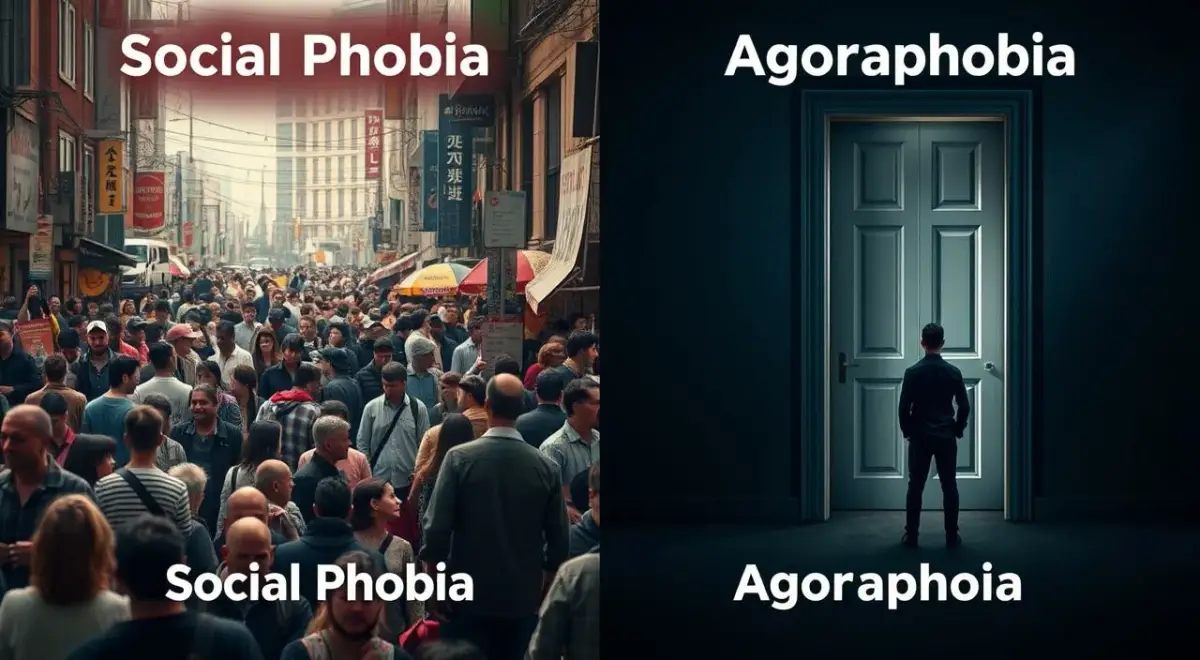
Social anxiety manifests itself in different ways in social phobia and agoraphobia. They reveal complex patterns of behavior and social interaction. Each disorder has unique characteristics that greatly affect people's social skills.
Behaviors in Social Situations
In social phobia, people have an intense fear of specific social situations. This fear usually focuses on:
- Public speaking
- Start conversations
- Meeting new people
- To be observed or judged
Those with agoraphobia, in turn, avoid places where they might feel trapped or without a way out.
Avoidance Patterns
Avoidance strategies differ between social phobia and agoraphobia:
| Social Phobia | Agoraphobia |
|---|---|
| Avoid specific social interactions. | Avoid open spaces or crowds. |
| Fear of social judgment | Fear of panic or uncomfortable situations |
| Avoiding introductions | Restrictions on movement in public spaces |
If left untreated, social phobia can develop into avoidant personality disorder. This leads to more rigid patterns of social behavior. The deficit in social skills is more closely linked to social phobia, creating a cycle of anxiety and avoidance.
Impact on the Professional and Personal Environment

Anxiety disorders change the lives of those who suffer from them. They create barriers in the workplace and at home. Social anxiety isn't just about being shy. It's a major challenge that severely limits the chances of connecting with other people.
At work, people with anxiety disorders face unique challenges:
- Difficulty participating in meetings and presentations.
- Intense fear of interactions with colleagues and superiors.
- Fear of making mistakes or being judged.
- Limitations in networking processes and professional growth.
At home, the effects are even stronger. Social anxiety can cause people to isolate themselves. This greatly affects relationships with family, friends, and romantic partners.
| Affected Area | Consequences |
|---|---|
| Professional Environment | Career stagnation, lower productivity |
| Personal Relationships | Difficulty in establishing intimate connections. |
| Mental health | Increased risk of depression and low self-esteem. |
According to the Albert Einstein Israelite Hospital, 150,000 Brazilians suffer from anxiety disorders. This significantly affects their quality of life. However, with the right treatment, it's possible to regain confidence and learn to cope better with the problem.
Available Treatments and Therapeutic Approaches

Finding the right treatment for agoraphobia and social phobia can be life-changing. There are several therapies that offer hope and help overcome these problems.
Cognitive Behavioral Therapy
Therapy for social phobia is very important. Cognitive behavioral therapy (CBT) helps patients to:
- Identifying negative thought patterns
- Develop coping strategies
- Reinterpreting traumatic experiences
- Reduce anxiety symptoms
Drug Treatment
For agoraphobia, medication can help. The main ones are:
| Category | Function |
|---|---|
| Antidepressants | Reduce anxiety and depressive symptoms. |
| Anxiolytics | Controlling moments of peak anxiety |
Gradual Exposure Techniques
Gradual exposure is essential in therapy for social phobia . It helps the patient to:
- Facing feared situations gradually
- Building trust
- Develop coping strategies
Try Hypnotherapy
Hypnosis for agoraphobia is a promising complementary approach . Hypnotherapy for fears can change mental patterns and reduce anxiety.
Each person is unique. Therefore, it is crucial to seek professional help to find the right hypnosis treatment for social phobia .
How to Identify Which Disorder You Have
Understanding the difference between agoraphobia and social phobia can seem difficult. A professional evaluation is necessary to identify these anxiety disorders. Each has unique characteristics that aid in diagnosis.
To find out if you have agoraphobia or social phobia, it's important to consider a few things:
- Agoraphobia involves a fear of open spaces or situations where escape is difficult.
- Social phobia is the fear of interacting with other people and being judged.
- Both disorders cause significant emotional distress.
To find out which disorder you have, observe your behavior and anxiety:
| Features | Agoraphobia | Social Phobia |
|---|---|---|
| Protest Location | Public spaces | Social situations |
| Main Trigger | Loss of control | Negative review |
| Typical Reaction | Avoid leaving home. | Avoid interactions |
Remember: self-diagnosis is not a substitute for evaluation by a mental health professional . Psychologists and psychiatrists have the tools to make an accurate diagnosis.
If you notice any of these symptoms, seek professional help. The right treatment can change your life for the better.
Coping Strategies and Self-Help
Overcoming fears with hypnosis greatly helps those with social phobias and agoraphobia. Learning to help oneself gives more control over anxiety. This improves the lives of those who suffer from it.
There are several practical ways to deal with phobias and anxiety:
- Practice deep breathing techniques
- Perform muscle relaxation exercises.
- Implement mindfulness meditation
- Establish a physical exercise routine.
- Maintain a balanced diet.
Guided hypnotherapy is very helpful in reducing anxiety . Practicing self-hypnosis helps to confront fear gradually.
To overcome fears, it is important to:
- Respect your own limits.
- Celebrate every small victory.
- Maintain a positive and patient attitude.
- Seek professional help when needed.
Every step taken with determination is a great step forward. This helps to overcome fears and regain confidence.
Conclusion
Agoraphobia and social phobia are complex experiences. They can severely limit someone's life. Treatment and therapy are important pathways to recovery and growth.
Hypnotherapy for fears is a promising approach. It helps people understand and change emotional patterns. Studies show that it can greatly reduce symptoms, improving social life.
Each person has their own journey of overcoming challenges. But there is always hope. Seeking professional help and understanding your own feelings are important steps. Remaining open to different therapies also helps a lot.
The first step is recognizing and wanting to change. With the right support, it's possible to learn to relate better. This helps reduce anxiety and live a fuller life.
Source Links
| Link Description | Link |
|---|
| Agoraphobia: symptoms, causes, and how to overcome it. | https://nav.dasa.com.br/blog/agorafobia |
| Agoraphobia: what it is, symptoms, causes, and treatment. | https://www.tuasaude.com/agorafobia/ |
| Agoraphobia: Symptoms, Causes, and Treatments | https://www.einstein.br/doencas-sintomas/agorafobia |
| Agoraphobia - Psychiatric disorders | https://www.msdmanuals.com/pt/profissional/transtornos-psiqui%C3%A1tricos/ansiedade-e-transtornos-relacionados-a-estressores/agorafobia |
| Agoraphobia: Learn about the disorder associated with panic attacks. | https://www.vittude.com/blog/agorafobia/ |
🌟 Have you considered seeking a therapist to support your well-being journey?
If this article sparked reflections about positive changes in your life, perhaps now is the ideal time to take the next step. Do you know hypnosis as a therapeutic tool? This approach can be surprisingly effective for various personal challenges.
Special offer: Book a free 20-minute consultation with therapist Fabio Morus and discover how therapy can transform your life.
✨ No commitment — Completely free — 20 minutes that can make a difference
👉 Click here to book your free consultation
Don't postpone your well-being any longer. The first step to change is just one click away.