
Anxiety can lead to restlessness, difficulty concentrating, and constant tension. But how can you calm an anxious mind quickly and effectively? There are several techniques that help restore emotional balance and reduce the symptoms of anxiety in daily life.
It's very important to find ways to relax. Techniques like meditation can help reduce these symptoms. They improve quality of life.
Key Points
Key Tips
- Learning relaxation techniques , such as controlled breathing and meditation for anxiety , can reduce anxiety.
- Regular physical exercise, such as walking or running, can reduce the risk of anxiety.
- Maintaining a healthy diet, rich in fruits, vegetables, and probiotics, can help produce serotonin and improve mood.
- Establishing a sleep schedule and avoiding screens before bed are important steps to improve mental health.
- Seeking emotional support and maintaining healthy social connections can reduce the impact of anxiety.
- Practicing gratitude and optimism can significantly reduce the effects of anxiety.
What is Anxiety and Its Symptoms?

Anxiety is a common problem. It can cause physical and emotional symptoms. More than 58 million people worldwide have anxiety disorders, according to the World Health Organization (WHO).
Symptoms include constant restlessness and fatigue, as well as muscle tension, headaches, and digestive problems. Additionally, anxiety can cause appetite dysregulation .
To cope with anxiety, it's good to practice relaxation techniques . Meditation for anxiety and mindful breathing are good options. They can reduce symptoms and improve quality of life.
If symptoms are severe or last a long time, it's important to seek help. A healthcare professional can create a treatment plan. They also offer emotional support.
Breathing Techniques to Calm the Mind

Conscious breathing greatly helps to calm the mind. It also reduces anxiety. By using diaphragmatic breathing, we improve the quality of our breathing.
The 4-8 technique is very effective. We inhale up to four and exhale up to eight. This helps to achieve conscious breathing .
Practicing mindfulness exercises regularly also helps. This improves our ability to calm the mind. For example, alternate nostril breathing is a technique that works well.
To incorporate this into your daily routine, practice conscious breathing for at least 15 minutes. This can be done anywhere and combined with other relaxation techniques.
Conscious breathing brings many benefits. It reduces anxiety and stress. It also improves sleep and increases concentration. And practicing mindfulness helps to better cope with difficult situations.
The Importance of Meditation

Meditation is very helpful for mental health, especially for those with anxiety. Studies show that it lowers cortisol, a stress hormone. It also reduces heart rate and blood pressure.
Some benefits of meditation include:
- Reducing anxiety and stress.
- Improved sleep
- Increased levels of serotonin, a neurotransmitter related to well-being.
- Reduction of chronic pain intensity
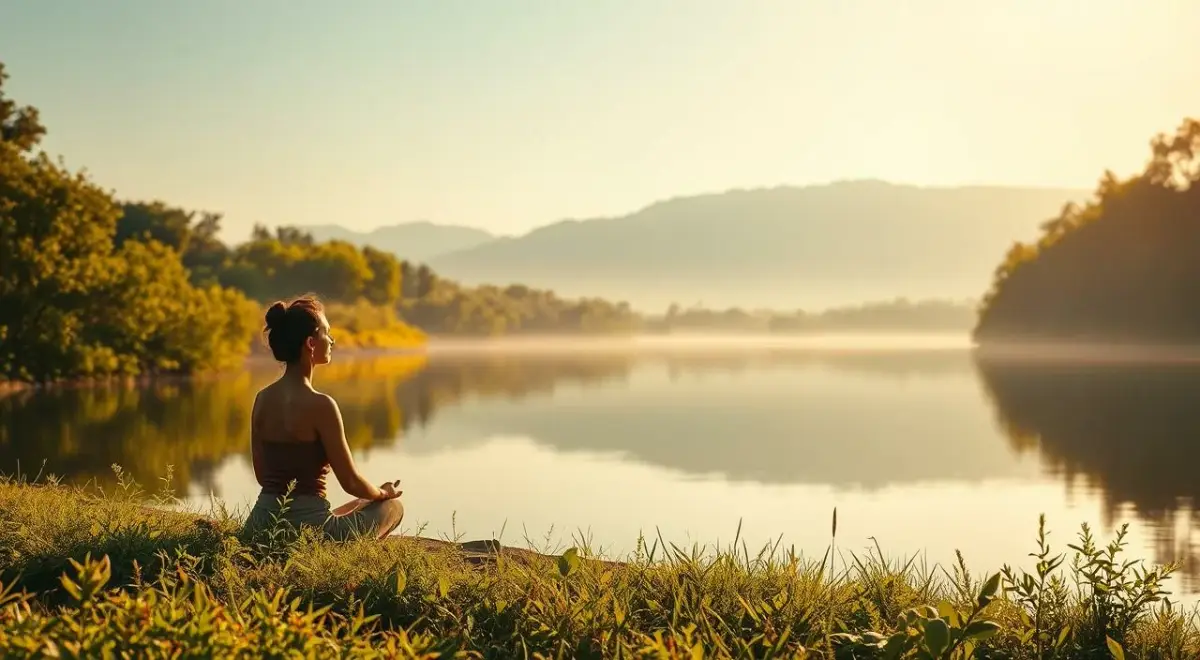
Meditation and mindfulness for anxiety are easy to do. They can be done by anyone, regardless of age or physical condition. Mindfulness exercises can also be done daily to bring calm and tranquility.
With just a few minutes of meditation a day, you can experience significant mental health benefits. Therefore, it's essential to make meditation part of your daily routine. This brings tranquility and well-being.
Physical Activities and Their Effects on Anxiety

Physical activities are very helpful in controlling an anxious mind . They improve mental health. Regular exercise reduces anxiety and improves the lives of those with Generalized Anxiety Disorder (GAD).
In addition, mindfulness exercises also help. They reduce anxiety and improve self-esteem.
Some physical activities that help reduce anxiety include:
- Aerobic exercises, such as walking or running, can help release endorphins and improve mood.
- Yoga and stretching can help reduce stress and anxiety.
- Activities like swimming or dancing can be fun and help reduce anxiety.
Regular physical activity is essential to see the benefits. It's also important to choose something fun that can be done every day.
Healthy Eating and Anxiety

Healthy food is very helpful in combating anxiety. Foods full of nutrients are good for the mind. Some foods are great for mental health, others are not.
To control an anxious mind , eat foods rich in omega-3s, magnesium, tryptophan, and B vitamins. Fruits, vegetables, whole grains, nuts, and oily fish are great examples.
- Fresh fruits and vegetables
- Whole grains
- Nuts and seeds
- Oily fish
Avoid eating too much sugar, caffeine, and unhealthy fats. They worsen anxiety. Relaxation techniques such as meditation and exercise also help.
In short, eating well is crucial for mental health. Nutrient-rich foods and avoiding unhealthy foods improve anxiety. Combining a healthy diet with relaxation techniques improves life.
The Practice of Gratitude

Gratitude can change our lives. It helps reduce anxiety and improve mental health. Studies show that gratitude improves mental health and increases happiness.
Practicing gratitude regularly brings satisfaction. This is different from a lack of gratitude, which leads to dissatisfaction and negativity.
How to Keep a Gratitude Journal
Writing down three things you are grateful for helps a lot. This is an effective way to cultivate gratitude.
Gratitude can be combined with relaxation and meditation techniques for anxiety . This improves mental health.
Guided meditation and mindfulness for anxiety calm the mind. They also reduce anxiety.
Practicing Gratitude Daily
There are many ways to practice gratitude every day. For example:
- Writing in a gratitude journal
- Share three things you are grateful for with a friend or family member.
- Do a guided gratitude meditation.
Muscle Relaxation Techniques

Progressive muscle relaxation is a quick technique. It can be done in five to ten minutes. It helps to reduce anxiety and stress.
To begin, find a quiet and comfortable place. Conscious breathing is crucial. It helps to calm the heart and mind.
Meditation for anxiety is also helpful. It can be done in conjunction with muscle relaxation. This helps you feel calmer and better.
- Find a quiet and comfortable place.
- Practice mindful breathing.
- Perform meditation for anxiety in conjunction with muscle relaxation.
- Practice daily, even if only for a few minutes.
With regular practice, progressive muscle relaxation is very useful. It helps reduce anxiety and improves well-being. Combining it with other relaxation techniques and conscious breathing can further improve life.
The Importance of Sleep for Mental Health

Quality sleep is essential for mental health. Lack of sleep can lead to behavioral problems. This happens even without psychiatric issues. Insomnia is one of the main complaints in psychiatric clinics.
Disorders such as depression and anxiety are also related to lack of sleep. This is one of the criteria for diagnosis.
To reduce mental anxiety and improve sleep, it's crucial to have a sleep routine. This means going to bed and waking up at the same time every day. Create a sleep environment that is dark, quiet, and comfortable.
Avoid eating heavy meals, caffeine, and alcohol before bed.
Practicing mindfulness exercises and relaxation techniques helps. Meditation and deep breathing are good options. Here are some tips to improve sleep:
- Establish a regular sleep routine.
- Create a suitable sleep environment.
- Avoid eating heavy meals, caffeine, and alcohol in the hours leading up to bedtime.
- Practice mindfulness exercises and relaxation techniques.
In summary, quality sleep is essential for mental health. Lack of sleep can cause behavioral problems. This increases the risk of future health problems.
Establishing a healthy sleep routine helps a lot. Practicing mindfulness exercises and relaxation techniques is also important. This way, it's possible to control an anxious mind and improve sleep.
Setting Limits and Prioritizing Time
To reduce anxiety and improve mental health, it's essential to set healthy boundaries. Valuing your time is also important. Practicing relaxation techniques , such as meditation and mindfulness, is very helpful.
Here are some ways to make the most of your time:
- Set priorities and organize tasks with a to-do list.
- Establish healthy boundaries regarding work and social media.
- Practice self-care, including healthy sleep, eating, and exercise habits.
When you prioritize your time and set boundaries, anxiety decreases. This improves your life overall.
The Role of Social Support in Reducing Anxiety
Anxiety affects many people worldwide. Besides meditation and exercise, social support is very helpful. People with strong support systems experience less anxiety.
Social support helps in many ways. Sharing feelings with friends and family is one of them. Participating in support groups also helps. And even doing mindfulness exercises in a group.
Social support also prevents anxiety. It encourages a healthy lifestyle. This includes exercising, eating well, and relaxing.
In conclusion, social support is very important. By connecting with others and living well, we can reduce mental anxiety and improve our mental health.
Positive Coping Strategies
To cope with anxiety, it's essential to use positive strategies. This includes relaxation techniques such as deep breathing and meditation for anxiety . These practices help reduce stress and bring calm.
Mindfulness for anxiety is also very useful. It helps people become more present and attentive to their thoughts and emotions. With practice, these techniques become part of the daily routine. They help control anxiety and improve life.
Some positive coping strategies include:
- Practice relaxation techniques regularly.
- Developing a meditation routine for anxiety.
- Integrating mindfulness for anxiety into daily life.
With these strategies, it's possible to deal with anxiety effectively. This improves mental health.
Conclusion: Towards Mental Tranquility
Finding mental tranquility is a path that requires dedication and daily practice. In this article, we discuss ways to control an anxious mind . We cover breathing techniques, meditation, and the importance of eating well and exercising.
It's crucial to know that anxiety affects people of all ages, and that there are many ways to effectively reduce mental anxiety .
Some important strategies for mental tranquility are:
- Practice mindfulness exercises regularly.
- Maintain a healthy sleep routine.
- Doing physical activities outdoors.
- Cultivate positive and meaningful relationships.
Remember that seeking professional help is an important step. Psychologists and therapists can be of great help. They offer personalized support and guidance to deal with anxiety.
In short, the pursuit of mental tranquility is unique to each individual. It requires physical, emotional, and mental care. With dedication and daily practice, it's possible to reduce mental anxiety and achieve well-being and inner peace.
Closing
We have reached the end of this journey exploring effective methods for calming an anxious mind. We discussed various relaxation techniques , meditation for anxiety , and mindfulness for anxiety . These are essential for our mental well-being.
To achieve lasting results, it's important to apply these techniques regularly. Practicing mindful breathing, having a healthy sleep routine, or engaging in physical activity helps a lot. Every small step is important on the path to mental tranquility.
Therefore, don't hesitate to start using these strategies in your life. Let your experience guide you and adjust them as needed. Believe in your healing potential and embrace yourself with compassion. A peaceful mind is a treasure to be cultivated, and you have all the power to make it a reality.
Want to learn more about relaxation techniques?
Schedule your free 20-minute consultation now and discover which technique works best for you! Access the website and book your appointment .
Source Links
- Dealing with anxiety without medication: effective methods - Yoga Leve - https://yogaleve.com/lidar-com-a-ansiedade-sem-medicamentos-metodos-eficazes-que-realmente-funcionam/
- Treatments for Anxiety: Effective Options - https://www.clinicaazzi.com.br/tratamentos-para-ansiedade-opcoes-eficazes-para-melhorar-sua-qualidade-de-vida/
- Check out 5 tips for daily actions to reduce anxiety - https://portal.pucrs.br/noticias/pesquisa/5-dicas-acoes-diarias-para-reduzir-a-ansiedade/
- Anxiety: what it is, how to control it, and main symptoms | CNN Brazil - https://www.cnnbrasil.com.br/saude/ansiedade/
- Anxiety | CUF - https://www.cuf.pt/saude-az/ansiedade
- 4 breathing techniques to reduce anxiety and stress - https://hospital.mackenzie.br/huem/noticias/arquivo?tx_news_pi1[action]=detail&tx_news_pi1[controller]=News&tx_news_pi1[news]=34614&cHash=59e893ddf9f9ac1f585fa70769d402ea
- 3 breathing techniques to relieve anxiety - https://nav.dasa.com.br/blog/tecnicas-de-respiracao-para-ansiedade
- Benefits of meditation for mental health — Health Portal - https://saude.mpu.mp.br/noticias/beneficios-da-meditacao-para-a-saude-mental
- What is meditation and how can it improve mental health? - https://www.nationalgeographicbrasil.com/ciencia/2023/05/o-que-e-meditacao-e-como-ela-pode-melhorar-a-saude-mental
- What is the importance of physical exercise for anxiety? - https://vidasaudavel.einstein.br/entenda-a-importancia-dos-exercicios-fisicos-para-a-ansiedade/
- Does physical exercise worsen anxiety? - Drauzio Varella Portal - https://drauziovarella.uol.com.br/atividade-fisica/exercicio-fisico-piora-a-ansiedade/
- 6 exercises to calm the mind - https://www.unimedcampinas.com.br/blog/saude-emocional/6-exercicios-para-acalmar-a-mente
- What foods can help reduce anxiety? - Drauzio Varella Portal - https://drauziovarella.uol.com.br/alimentacao/quais-alimentos-podem-ajudar-a-diminuir-a-ansiedade/
- Foods that combat anxiety and stress - https://www.tuasaude.com/alimentos-contra-a-ansiedade/
- The Power of Gratitude - https://maisconsciente.com.br/meditacao-mindfulness/o-poder-da-gratidao/
- Gratitude: How this habit strengthens mental health - https://www.psicologoeterapia.com.br/blog/gratidao-como-este-habito-fortalece-a-saude-mental/
- Gratitude and Anxiety: Giving Thanks Can Reduce Stress - https://www.tiberioz.com.br/gratidao-e-ansiedade-agradecer-pode-reduzir-o-estresse/
- 8 relaxation techniques to calm the mind - https://www.tuasaude.com/acalmar-a-mente/
- Just 10 minutes: see how to practice progressive muscle relaxation and relieve tension | CNN Brazil - https://www.cnnbrasil.com.br/saude/so-10-minutos-veja-como-praticar-o-relaxamento-muscular-progressivo-e-aliviar-a-tensao/
- Relaxation techniques to calm the mind - https://www.psicologosberrini.com.br/blog/acalmar-a-mente-tecnicas-relaxamento/
- Sleep and mental health: insomnia may be a sign of a psychiatric disorder - Ceará State Health Department - https://www.saude.ce.gov.br/2023/03/16/sono-e-saude-mental-insonia-pode-ser-indicio-de-algum-transtorno-psiquiatrico/
- See how sleep affects mental health and 9 tips for better sleep - https://blog.allcare.com.br/como-sono-afeta-a-saude-mental/
- The Importance of Sleep for Mental Health – Psychiatrist in São Paulo and Indaiatuba - https://psiquiatriageriatricasp.com.br/a-importancia-do-sono-na-saude-mental/
- Effective Strategies to Reduce Anxiety and Improve Your Well-being - https://draanabeatriz.com.br/estrategias-eficazes-para-reduzir-a-ansiedade-e-melhorar-seu-bem-estar/
- Anxiety and Relaxation Strategies - https://neuropsicognitivo.com.br/ansiedade-e-estrategias-de-relaxamento/
- Anxiety and Stress: Managing and Improving Mental Health - https://hospitalsantamonica.com.br/ansiedade-e-estresse-estrategias-para-gerenciamento-e-melhoria-da-saude-mental/
- How to use anxiety to your advantage - BBC News Brazil - https://www.bbc.com/portuguese/geral-63815685
- Anxiety: what it is, main symptoms and how to control it - https://www.psicologosberrini.com.br/blog/ansiedade-sintomas-e-tratamento/
- Healthy Coping Mechanisms - https://www.psymeetsocial.com/blog/artigos/mecanismos-de-enfrentamento-saudaveis
- How to calm down: 11 coping techniques for anxiety - https://pill.com.br/blogs/artigos/11tecnicas-enfrentar-ansiedade?srsltid=AfmBOoro7ORy-Y0KR_W_56pwaHM1-jZzTeGKzUWhcJq2qMNnvVsoYVmw
- Techniques and strategies for dealing with stress in daily life - https://www.terra.com.br/vida-e-estilo/valesaude/tecnicas-e-estrategias-para-lidar-com-o-estresse-no-dia-a-dia,2095eae7af804128f2de211683897b352f7h4ym6.html
- LZ Applied Psychology | Anxiety Crisis: Learn How to Deal With It! - https://lzpsicologia.com.br/blog/crise-de-ansiedade
- What is Mental Tranquility and Its Benefits? - https://coreus.com.br/glossario/o-que-e-tranquilidade-mental-e-seus-beneficios/
- How to prevent anxiety attacks and crises? - https://www.generalitranquilidade.pt/blog/saude/conselhos-prevenir-ataques-ansiedade
- 6 ways to train your brain to deal with anxiety, an ailment affecting 13 million Brazilians - BBC News Brazil - https://www.bbc.com/portuguese/geral-41689217
- How to Relieve Anxiety: 7 Practical Steps | Psitto - https://www.psitto.com.br/blog/como-aliviar-ansiedade/
🌟 Have you considered seeking a therapist to support your well-being journey?
If this article sparked reflections about positive changes in your life, perhaps now is the ideal time to take the next step. Do you know hypnosis as a therapeutic tool? This approach can be surprisingly effective for various personal challenges.
Special offer: Book a free 20-minute consultation with therapist Fabio Morus and discover how therapy can transform your life.
✨ No commitment — Completely free — 20 minutes that can make a difference
👉 Click here to book your free consultation
Don't postpone your well-being any longer. The first step to change is just one click away.