

Imagine a planet where 1 in 8 individuals faces daily psychological challenges. Recent data reveals that emotional disorders are already the leading cause of disability globally, affecting everyone from teenagers to adults. In Brazil, this reality is reflected in entire communities that lack adequate support.
The numbers are alarming: 58% of deaths from preventable causes occur before the age of 50 , many linked to untreated suffering. This scenario demands immediate action – and that's where international guidelines come in.
The World Health Organization has outlined a groundbreaking plan with 10 strategic objectives. These measures not only propose structural changes to healthcare systems, but also offer practical pathways to transform local realities.
In this guide, I will show you how these goals can be adapted to our culture, enhancing community initiatives and public policies. You will discover simple tools that professionals and citizens can use to create a significant impact on collective well-being.
Together, we'll explore solutions that are already changing lives around the world – and how you can be part of that transformation.
Introduction to the Global Mental Health Landscape

Over the past three decades, global conflicts and social transformations have shaped our relationship with psychological well-being. Events such as the 2008 financial crisis left deep marks: anxiety rates rose 33% in affected countries, according to international reports.
Roots of a Silent Crisis
The pandemic accelerated worrying trends. In 2020, 1 in 5 adults reported symptoms of depression – a historic increase never before recorded. Data reveals alarming disparities:
| Historical Factor | Current Impact | Relevant Data |
|---|---|---|
| Wars (1990-2010) | Transgenerational traumas | 40% higher risk of disorders |
| Global Economic Crisis | Chronic financial stress | +18% of burnout cases |
| COVID-19 pandemic | Prolonged social isolation | 25% increase in diagnoses |
Framework for Concrete Action
This guide was designed around three fundamental pillars. First, understanding the root causes of emotional challenges. Second, mapping out research-proven strategies. Third, offering tools for practical implementation in different contexts.
Each chapter connects theory and practice—from sociocultural analyses to models of community intervention. In the following topics, you will discover how simple initiatives can transform local realities, even in complex scenarios.
WHO's 10 Priority Goals Guidelines
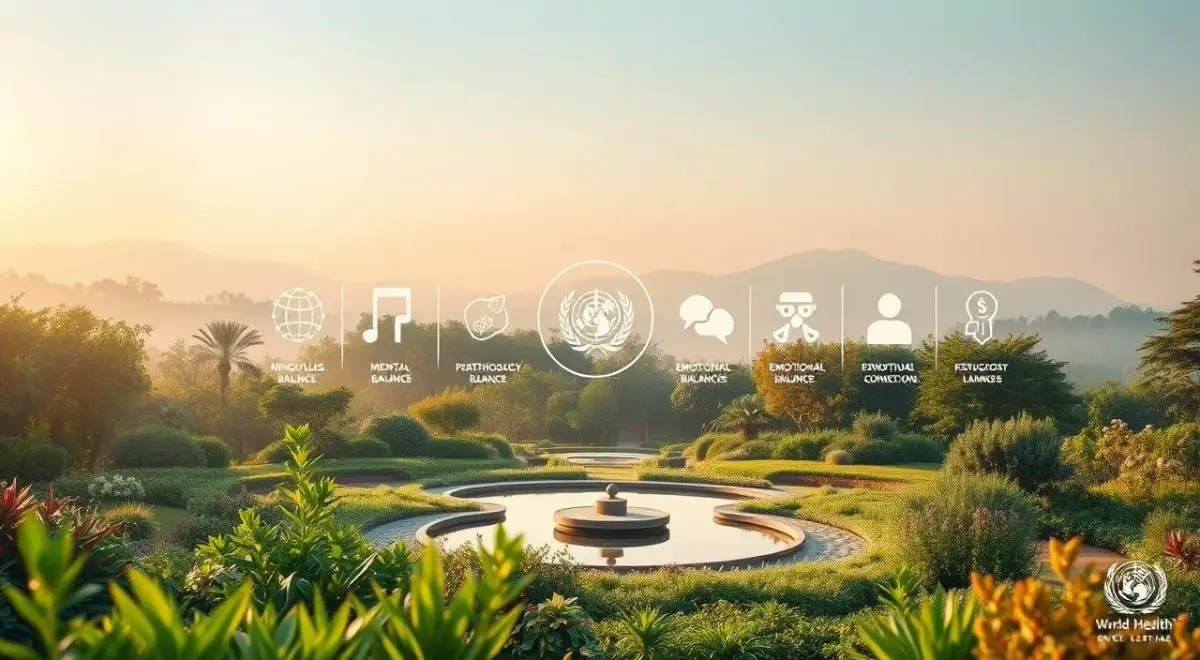
Have you ever stopped to think about how global strategies can revolutionize emotional care? The WHO plan proposes a paradigm shift, uniting science and practice in three transformative areas. Each goal was designed as a piece of a puzzle capable of rebuilding entire systems.
Overview of global goals and strategies
The first approach prioritizes psychological well-being as a collective priority. Countries like Portugal have already reduced psychiatric hospitalizations by 40% using community-based approaches. The second axis reorganizes key environments:
- Schools with emotional intelligence programs
- Companies adopting anti-stress policies
- Basic care units integrating care
Analysis of the benefits for the population
Implementing these guidelines generates ripple effects. In New Zealand, communities that adopted the plan saw:
| Indicator | Before | After 5 years |
|---|---|---|
| Access to treatments | 33% | 78% |
| Social stigma | 61% | 29% |
| Productivity | R$ 2.1 billion | R$ 3.8 billion |
These figures show how protecting human rights and investing in prevention creates more resilient societies. The secret lies in intelligent adaptation to local realities – whether in metropolises or rural areas.
Challenges and opportunities in mental health

We face a historic crossroads where 7 out of 10 people do not receive essential care. As global crises multiply, psychological support systems struggle to keep up with the growing demand. True transformation begins by recognizing obstacles and leveraging existing solutions.
Key risk factors and emerging problems
New threats are emerging alongside traditional challenges. Armed conflicts and economic inequalities now share the spotlight with:
- Excessive digital exposure in young people
- Pressure for performance in virtual environments
- Extreme weather events
Data reveals that 45% of anxiety cases in adolescents are related to cyberbullying. Childhood traumas, such as sexual violence, increase the risk of developing disorders in adulthood by 300%.
| Traditional Factors | Emerging Risks | Impact (%) |
|---|---|---|
| Extreme poverty | Digital loneliness | 28 |
| Wars | Pressure on social media | 34 |
| Chronic diseases | Climate change | 19 |
Opportunities for public policy and investment
Countries that allocate 5% of their budget to psychological care reap impressive results:
- 40% reduction in work absences
- 22% increase in school productivity
- Savings of R$ 4.7 billion/year in hospital expenses.
Community initiatives and telehealth have shown proven effectiveness. In Northeast Brazil, local projects have already increased access to treatments by 65% using simple and low-cost technology.
Strategies and Recommendations for Implementation

Transforming care systems requires more than good intentions. International organizations highlight the urgency of combining physical and psychological care – those living with emotional disorders have a 70% higher risk of developing cardiovascular diseases, for example.
Integration of physical and mental health services
Countries like Canada and Portugal show the way. Family clinics with integrated psychologists have reduced avoidable hospitalizations by 40%. The key lies in:
- Training doctors to identify emotional cues
- Create joint protocols between specialties.
- Using unified electronic health records
Methods for overcoming stigma and discrimination
Projects in Northeast Brazil prove that community dialogue works. When local leaders share real-life stories, acceptance increases by 55%. Effective strategies include:
- Workshops in schools and companies
- Partnerships with digital influencers
- Patient mentoring programs
Investing in integrated prevention is not a cost, but an economy. Every R$1 invested in combined actions generates R$4 in social benefits. Start today: small changes in health services create big transformations.
🌟 Have you considered seeking a therapist to support your well-being journey?
If this article sparked reflections about positive changes in your life, perhaps now is the ideal time to take the next step. Do you know hypnosis as a therapeutic tool? This approach can be surprisingly effective for various personal challenges.
Special offer: Book a free 20-minute consultation with therapist Fabio Morus and discover how therapy can transform your life.
✨ No commitment — Completely free — 20 minutes that can make a difference
👉 Click here to book your free consultation
Don't postpone your well-being any longer. The first step to change is just one click away.