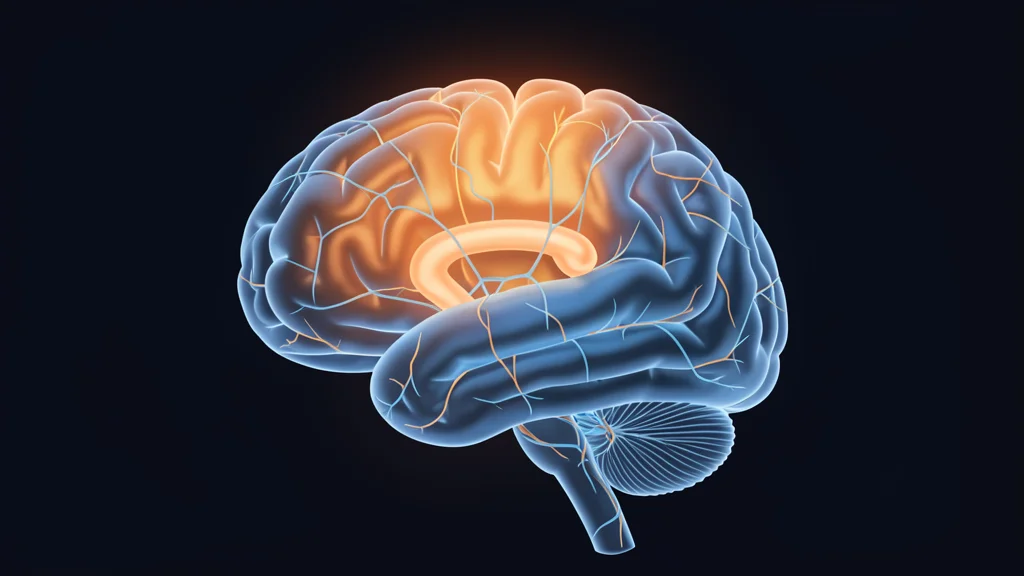

Living with Functional Neurological Disorder (FND) is a lesson in uncertainty. One day you’re walking fine; the next, your leg gives out or your speech slurs without warning. This unpredictability doesn’t just affect your body—it creates a permanent state of high alert in your mind. We call this health anxiety.
If you feel like every new twitch is a sign of a permanent crash, you aren’t “losing it.” You’re stuck in a loop where two distinct conditions feed each other. Understanding how FND and health anxiety interact is the only way to stop the cycle and retrain your nervous system.

How Health Anxiety Becomes Fuel for FND
FND isn’t about structural damage; it’s a “software” problem in the brain. Health anxiety is the persistent fear that these glitches are signs of something even more serious.
When they meet, they create a perfect storm. Your tremors or weakness are real, but your brain’s fixation on them acts like a magnifying glass. Every time you scan your body for symptoms, you’re telling your brain that these sensations are “danger signals.”
In response, your nervous system stays in fight-or-flight mode. This state actually makes FND symptoms more likely to trigger. It’s a closed loop: the symptoms cause worry, and the worry reinforces the very pathways that produce the symptoms.

Attention is the Catalyst
The neuroscience here is simple but frustrating. Your brain has a limited “bandwidth” for attention. In FND, that bandwidth is mismanaged.
By constantly monitoring your body—a classic health anxiety behavior—you’re turning up the volume on your neural circuits. Health anxiety magnifies sensations that a typical brain would simply filter out.
This is why symptoms often vanish when you’re deeply distracted and flare up the moment someone asks how you’re feeling. Your attention is the trigger.
FND and Health Anxiety: Knowing the Difference
Having health anxiety doesn’t mean your physical symptoms are “in your head.”
- FND is the physical manifestation—the motor or sensory glitches with specific neurological features.
- Health Anxiety is the psychological distress and the constant “what if” about those symptoms.
You can have one without the other. But when they coexist, health anxiety usually becomes the driver. If you don’t address the worry, the physical symptoms will keep finding reasons to stick around.

Practical Steps to Break the Cycle
Recovery isn’t just about waiting for symptoms to stop. It’s about taking active steps to lower the pressure on your nervous system.
- Grounding: When a symptom flares, shift your focus outward immediately. Use the 5-4-3-2-1 technique (look for 5 objects, listen for 4 sounds) to pull your brain away from internal scanning.
- Stop the Search: Quit checking your pulse, testing your strength, or Googling symptoms. These are “safety behaviors” that feel like they help but actually keep your brain in a state of alarm.
- Reframe the Signal: Instead of “I’m having a relapse,” tell yourself: “My brain is sending a noisy signal right now. It’s a glitch, not a disaster.”

How Hypnotherapy Rewires the Response
This is where clinical hypnotherapy makes a massive difference. We don’t just talk about the anxiety; we work directly with the subconscious—the part of the brain responsible for the “software” glitches and the automatic fear response.
Through hypnosis, we can:
- Desensitize the trigger: Train the brain to see sensations as “information” rather than “threats.”
- Redirect focus: Quiet the “internal scanner” and teach the nervous system to prioritize stability.
- Lower the Baseline: Reduce the overall “noise” in your nervous system, making it harder for FND symptoms to trigger in the first place.
When you remove the fuel (the anxiety), the FND symptoms lose their power.
Conclusion
FND and health anxiety are a tough combination, but they aren’t a life sentence. Your brain is plastic—it can learn new ways of responding. The goal isn’t just to “stop worrying”; it’s to teach your nervous system that you are safe.
If you’re ready for a simple first step, download the free ANXIETY ZERO ebook. And if you need to break the FND loop with direct support, let’s talk. Contact Fabio Morus to see how we can retrain your brain.