How to Manage Anxiety: 5 Clinically Validated Strategies
Do you feel like anxiety is running your life more than you’d like? Sleepless nights, a racing heart, worries that never quiet down. These are far more common than most people realize. According to the Covitel 2023 survey, conducted with 9,000 Brazilians by Vital Strategies and the Federal University of Pelotas, 26.8% of Brazil’s adult population has a formal anxiety diagnosis (CNN Brasil, 2023). Among women, that figure rises to 34.2%. Globally, the WHO estimates that 359 million people live with an anxiety disorder (WHO, 2025).
The good news is that there are clinically supported strategies for this problem. Not “think positive” or breathe deeply without any method. In this article you will find five evidence-based approaches, organized from immediate relief to long-term treatment.
Key Takeaways
- 26.8% of Brazilian adults have an anxiety diagnosis (Covitel, 2023)
- Breathing techniques significantly reduced stress and restlessness in 75% of clinical studies reviewed (Brain Sciences, 2023)
- Regular physical exercise reduces the likelihood of developing an anxiety disorder by 26% (PMC, 2023)
- CBT is the psychological treatment with the strongest support in meta-analyses for Generalized Anxiety Disorder
- Seeking professional help is the most effective step for people who have been struggling for months without improvement
What Is Anxiety and When Does It Become a Problem?
Anxiety in itself is not a disease. It is the body’s response to perceived danger, whether real or imagined. The problem starts when that response becomes disproportionate, frequent, or persistent. Hospital admissions for anxiety disorders in Brazil more than doubled over four years: from 794 to 2,100 annual cases between 2018 and 2022, a 164% increase (IESS, 2023). If attacks come on very fast and peak quickly, it is also worth understanding how to stop a panic attack with techniques that work within minutes.
Understanding what you are going through is the first concrete step toward change.
Physical and Emotional Symptoms of Anxiety
The body and mind respond together. The most common physical symptoms include:
- Palpitations or tachycardia with no identifiable cardiac cause
- Muscle tension, especially in the shoulders, neck, and jaw
- Excessive sweating in high-pressure or anticipatory situations
- Shortness of breath or a sense of suffocation
- Trembling and weakness in the legs
- Sleep disturbances: difficulty falling asleep or waking repeatedly during the night
On the emotional level, anxiety typically shows up as persistent worry, difficulty concentrating, irritability, and a constant sense that something bad is about to happen. Many people describe the state as “being permanently on alert” — unable to relax even when everything is fine.
Normal Anxiety vs. Anxiety Disorder
The difference is not in the intensity of what you feel, but in the pattern. Situational anxiety before a job interview or a medical appointment is normal and passes. An anxiety disorder, such as Generalized Anxiety Disorder (GAD), panic disorder, or social anxiety disorder, is characterized by symptoms that:
- Persist for more than six months, as defined by the DSM-5 (Diagnostic and Statistical Manual of Mental Disorders)
- Interfere with daily functioning: work, relationships, and basic routines
- Cause significant distress, even when the person actively tries to control their thoughts
If you recognize yourself in all three criteria, this article is useful, but it does not replace a professional evaluation.
Strategy 1 — Controlled Breathing: The Fastest-Acting Intervention
A systematic review published in Brain Sciences (2023) analyzed 58 clinical studies on breathing techniques and found that 75% of them significantly reduced stress and restlessness. For populations with elevated anxiety, that rate reached 100% (PMC, 2023). The mechanism is physiological: slow, controlled breathing activates the parasympathetic nervous system, the same system that comes online when the body is at rest.
This means you can, within minutes, pull yourself back from a state of acute alertness, provided the technique is applied deliberately.
Diaphragmatic Breathing: How to Practice
Most people in a state of anxiety breathe shallowly and quickly, primarily using the chest. This raises the heart rate and feeds back into the sense of panic. Diaphragmatic breathing reverses that cycle.
To practice:
- Sit in a chair with your back supported, or lie flat on your back
- Place one hand on your chest and the other on your abdomen, just below the navel
- Inhale through your nose, silently counting to 4. Your abdomen should expand; the hand on your chest should move as little as possible
- Exhale slowly through your mouth, counting to 6 or 8, feeling your abdomen fall
- Repeat 5 to 10 cycles
With regular practice, the body learns to activate this response more quickly, without needing to count.
The 4-7-8 Technique and Box Breathing (4x4)
The 4-7-8 technique is recommended for acute anxiety and for winding down before sleep: inhale for 4 seconds, hold for 7 seconds, exhale completely for 8 seconds. Repeat four cycles.
Box breathing, used by military personnel and emergency responders, is easier to apply in public settings: inhale for 4, hold for 4, exhale for 4, hold for 4. Repeat four to six cycles.
For immediate crises, box breathing tends to be simpler to execute. For daily use and improving sleep quality, 4-7-8 produces a deeper effect.
There is a physiological detail that explains why both techniques work, and it is not intuitive: what calms the nervous system is not inhaling deeply, it is exhaling more slowly than you inhale. In 4-7-8, the exhale lasts twice as long as the inhale (8 versus 4 seconds); in box breathing, they are equal. It is the extended exhale phase that stimulates the vagus nerve and slows the heart rate. This is why people who try to breathe deeply and quickly during a crisis often feel worse: the most common mistake is cutting the outbreath short.
Research summary: A systematic review of 58 clinical studies (Morgan, Lengacher & Seo, 2023) found that 75% of breathing-based interventions significantly reduced stress and anxiety. In populations with elevated anxiety, every intervention assessed produced measurable improvement (Brain Sciences, PMC10741869).
Strategy 2 — Mindfulness: Training Attention to Reduce Anxiety
A meta-analysis published in Frontiers in Public Health (2023), covering 1,824 participants across 11 randomized controlled trials, showed that mindfulness-based interventions reduced restlessness with SMD = -0.35 (95% CI: -0.46 to -0.25; p < 0.00001) compared to control groups (Frontiers, 2023). A complementary review of 16 studies (Pan et al., 2024) found a convergent result with MBSR: SMD = -0.29 (PMC, 2024). Participants who practiced mindfulness regularly reported significantly fewer anxiety symptoms.
Why Mindfulness Works for Anxiety
Mindfulness is not about emptying your mind. It is about training your ability to notice what is happening in the present moment, including anxious thoughts, without merging with them. Anxiety feeds on anticipation: “what if this happens?”, “what if I fail?”, “what if it gets worse?” When you learn to observe that type of thought as a mental event rather than a reality, it loses much of its grip.
Neurobiologically, regular mindfulness practice is associated with reduced reactivity in the amygdala, the brain region responsible for triggering the alarm response, and increased activity in the prefrontal cortex, the region linked to emotional regulation and rational thinking.
Research shows that 10 to 15 minutes of daily practice, maintained over 8 weeks, already produces measurable changes in anxiety symptoms.
How to Start Without an App or Course
A practical starting point is the S.T.O.P. technique, which can be applied at any moment during the day:
- S (Stop): Pause what you are doing for a moment
- T (Take a breath): Take one deliberate diaphragmatic breath
- O (Observe): Notice what you are feeling in your body, without judgment
- P (Proceed): Continue with what you were doing, with greater presence
This technique works during a difficult meeting, before an important conversation, or whenever you notice your thoughts accelerating.
Another useful tool for acute episodes is the A.C.C.E.P.T. technique, developed from CBT and mindfulness principles: Accept the anxiety without fighting it, Center your attention on the present moment, Choose a constructive action to take, Examine intrusive thoughts without judgment, Pursue mindful breathing consciously, Track what triggered the episode and name it.
Research summary: Two independent meta-analyses (Frontiers in Public Health, 2023; Pan et al., 2024) confirmed that mindfulness-based interventions reduce anxiety with a significant effect: SMD between -0.29 and -0.35 compared to control groups, across 11 and 16 RCTs respectively.
Strategy 3 — Movement and Routine: The Impact of Daily Habits on Symptoms
People who exercise regularly have a 26% lower likelihood of developing an anxiety disorder than sedentary individuals (AOR = 0.74; 95% CI: 0.62-0.88), according to a review of 37 primary studies published in PMC in 2023 (PMC10546525). This is not a coincidence: physical exercise alters brain chemistry in ways directly relevant to anxiety, releasing endorphins, reducing cortisol, and improving regulation of the HPA axis, the body’s core stress-response system.
Exercise: Type, Frequency, and Intensity
A meta-analysis published in Frontiers in Psychology (2023), with 483 participants, showed that aerobic activities reduce anxiety with SMD = -0.55 and yoga with SMD = -0.76 (Frontiers, 2023). The frequency that produced the best results was three to four times per week at moderate to high intensity.
In practice:
- Brisk walking (30 minutes, 3 to 5 times per week) produces a measurable effect without requiring any equipment
- Light jogging or cycling raises the heart rate and amplifies the release of neurotransmitters linked to well-being
- Yoga combines movement, controlled breathing, and focused attention, a triple benefit for people who struggle with nervous tension
- Strength training has growing evidence for anxiety reduction, though smaller than aerobic activities
The point is not to find the perfect exercise. It is to build consistency, a habit that holds over time.
Sleep and Nutrition as Mood Stabilizers
Anxiety and sleep deprivation have a bidirectional relationship: tension worsens sleep, and poor sleep amplifies restlessness. Keeping a consistent sleep and wake schedule, even on weekends, helps stabilize the circadian rhythm and emotional regulation.
Excess caffeine, especially after 2 p.m., increases physiological arousal and can mimic or intensify anxiety symptoms. Skipping meals creates blood sugar fluctuations that produce irritability and a sense of urgency. Adjustments to eating patterns have a direct impact on emotional state throughout the day.
Research summary: A review of 37 primary studies (PMC, 2023) concluded that physically active people have a 26% lower likelihood of developing anxiety than sedentary individuals (AOR = 0.74; 95% CI: 0.62-0.88), with probable causality established (PMC10546525).
Strategy 4 — CBT (Cognitive Behavioral Therapy): The Treatment with the Strongest Research Support
CBT is widely recognized as the first-line psychological treatment for most anxiety disorders. A meta-analysis published in Current Psychiatry Reports (2023), with 10 controlled studies and 1,250 participants, confirmed significant efficacy of CBT for symptom reduction compared to active placebo (PubMed, 2023). That criterion matters because effect versus active placebo is a more rigorous test than comparison with a waiting list, meaning CBT works beyond the effect of simply doing something.
Most anxiety treatments with CBT last between 12 and 20 sessions, with defined goals and structured techniques.
How CBT Changes Your Relationship With Anxious Thoughts
CBT is built on the principle that emotional suffering does not come directly from events, but from the interpretations we place on them. When someone with anxiety thinks “I will make a mistake and everyone will judge me,” that thought triggers physical and behavioral reactions: avoidance, procrastination, excessive checking.
The therapeutic work involves identifying that pattern (called an automatic negative thought), questioning its accuracy with concrete evidence, and replacing it with a more realistic interpretation. This is not positive thinking. It is thinking with greater precision.
Other Evidence-Based Approaches for Anxiety
CBT is not the only option. Other research-supported approaches include:
- EMDR (Eye Movement Desensitization and Reprocessing): effective for anxiety linked to trauma and distressing memories
- Acceptance and Commitment Therapy (ACT): works with acceptance of internal states and values-guided action, an extension of CBT
- Clinical hypnotherapy: useful as a complementary intervention for performance anxiety, phobias, and stress-related habits, when conducted by a qualified practitioner
- Medication: in moderate to severe cases, it may be indicated as support. The decision belongs to a psychiatrist, with periodic reassessment
The best treatment depends on the type of anxiety, clinical history, and each person’s preferences. No single approach works the same way for everyone.
Research summary: A meta-analysis of 10 RCTs with 1,250 participants (Current Psychiatry Reports, 2023) confirmed significant efficacy of CBT for anxiety disorders compared to active placebo. CBT is recognized as a first-line treatment by the major international clinical guidelines (PubMed 36534317).
Strategy 5 — Social Connection: Why Isolation Amplifies Anxiety
Social isolation is an established risk factor for anxiety disorders and depression. It is not simply about being physically alone. Emotional isolation, the sense of having no one to share your worries with, can be just as harmful.
Social connection functions as an external emotional regulator. Conversations with trusted people, support groups, and relationships that offer acceptance without judgment activate neurobiological systems tied to safety and belonging, the very systems anxiety tends to shut down.
Longitudinal studies link regular social connection to a lower risk of depressive disorder and persistent anxiety over months of follow-up, even when controlling for socioeconomic and prior health factors. Quality of interaction matters more than quantity: a meaningful 15-minute conversation with someone you trust produces a measurable reduction in cortisol, the stress hormone.
In practice:
- Talk about what you are feeling with someone you trust, not to receive answers, but so you are not carrying the weight alone
- Keep emotional bonds active, even when anxiety pushes you toward withdrawal (a common response, but one that reinforces the cycle)
- Consider support groups, formal or informal, with people who are going through similar experiences
- Do not confuse seeking support with dependence: asking for help is an adaptive strategy, not a sign of weakness
The number of psychological consultations in Brazil grew 60.8% between 2019 and 2022, from 21.7 million to 34.9 million sessions per year (IESS, 2023). Part of that growth reflects a greater openness to seeking help. It is a movement in the right direction.
Research summary: Longitudinal research links regular social connection to a lower risk of persistent anxiety over months of follow-up. The quality of interaction, meaningful conversations with trusted people, matters more than the number of contacts. Emotional isolation activates the same brain alert circuits that anxiety tends to amplify.
When to Seek Professional Help
The five strategies are not in competition with each other; they operate on different timescales. Breathing works in minutes, mindfulness and exercise in weeks, CBT in months, and social connection over years. Someone who tries to resolve chronic anxiety with breathing alone will become frustrated, because they are using an acute-action tool for a maintenance problem. Someone who skips breathing and goes straight to therapy misses the immediate relief that sustains the longer-term work. The order of this article is intentional: from fastest-acting to most durable.
Some people can manage mild symptoms with the strategies described above. Others need clinical support to make progress. Seeking professional help is advisable when:
- Anxiety consistently interferes with work, studies, or relationships
- Symptoms persist for more than six months without noticeable improvement
- Panic attacks become frequent, more than once a week
- You systematically avoid situations out of fear or anticipatory dread
- Your sleep has been compromised for weeks
- Intrusive thoughts are difficult to control
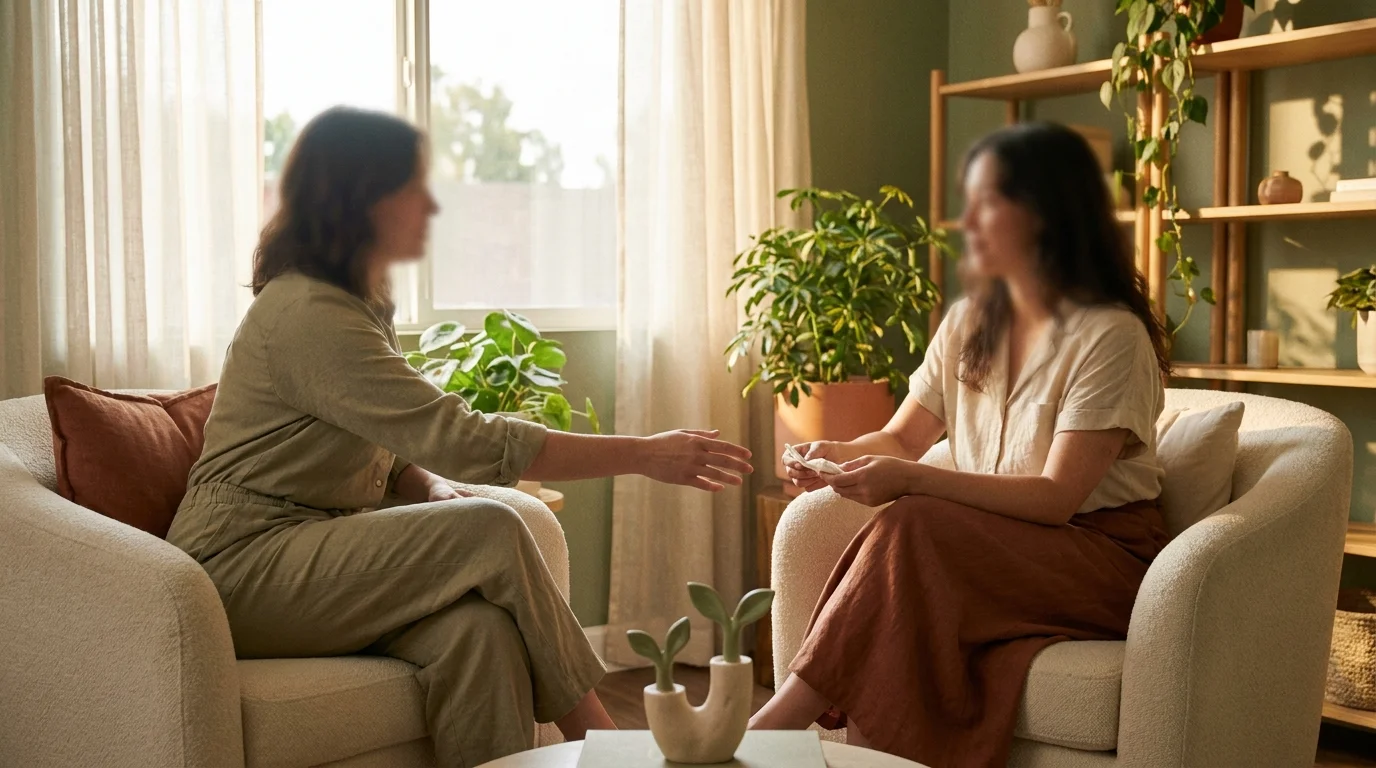
A clinical psychologist can provide assessment and treatment. A psychiatrist is recommended when there is a need to evaluate medication. In many cases, combining both approaches produces faster results than either one alone.
If you are in acute crisis or experiencing thoughts of self-harm: International crisis support: findahelpline.com or contact your local emergency services.
Ready to explore whether professional support is the right next step? Schedule a free 20-minute conversation.
Frequently Asked Questions
How do I control an anxiety attack in the moment?
The fastest response is controlled breathing. Inhale through your nose to a count of 4, hold for 7 seconds, exhale slowly through your mouth to a count of 8. Repeat four cycles. This technique, known as 4-7-8 breathing, activates the parasympathetic nervous system within minutes. In public settings, box breathing (inhale 4, hold 4, exhale 4, hold 4) is less noticeable and equally effective at interrupting the panic cycle.
When should I see a therapist for anxiety?
Seek a clinical evaluation when anxiety interferes with work, relationships, or sleep for more than a few weeks running. CBT (Cognitive Behavioral Therapy) is the treatment with the strongest support in meta-analyses for anxiety disorders, but the type and intensity of treatment depend on an individualized assessment with a qualified professional.
Can anxiety be cured?
Anxiety disorders are treatable, though not necessarily curable in the sense of never feeling anxious again. Most people with adequate treatment manage to reduce symptoms to a level that no longer interferes with daily functioning. For many, therapy produces lasting changes, especially when combined with regular self-regulation practices such as breathing techniques, mindfulness, and physical exercise.
Does exercise really help with anxiety?
Yes, with solid evidence. Physically active people have a 26% lower likelihood of developing anxiety than sedentary individuals (PMC, 2023). Aerobic activities such as walking, running, and swimming, as well as yoga, showed the largest effects in controlled studies. The optimal frequency is three to four times per week, in sessions of 30 to 45 minutes.
What is the difference between normal anxiety and an anxiety disorder?
Situational anxiety is normal and passes once the situation resolves. An anxiety disorder is characterized by symptoms that persist for more than six months (DSM-5 criterion), interfere with daily functioning, and cause significant distress, even when the person actively tries to control their thoughts. If you are unsure, an evaluation with a psychologist or psychiatrist is the most reliable path forward.
This content is informational and does not replace clinical evaluation, diagnosis, or professional treatment. Results vary from person to person. Consult a qualified health professional before making decisions based on this information.